
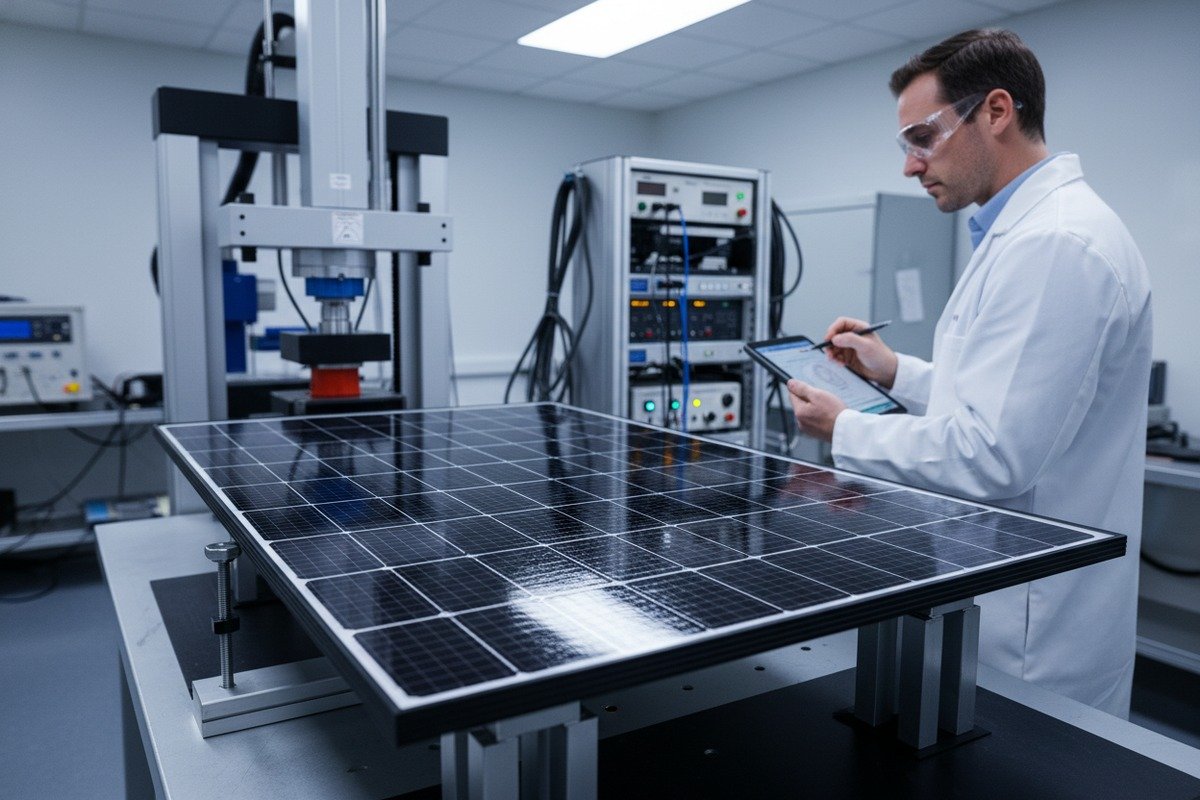
Over 20 years on our production lines, we have seen buyers lose entire shipments—and their reputations—because they trusted suppliers who could not produce legitimate test documentation.
You should request fire rating reports (UL 790 Class A), impact resistance certifications (UL 2218 Class 4 or FM 4473), wind uplift test results (ASTM D3161 Class F), IEC 61215/61730 PV performance and safety reports, waterproofing test data, and accelerated aging documentation—all from accredited third-party laboratories, never from the supplier’s internal testing alone.
Each of these certifications addresses a specific failure risk ASTM D3161 Class F 1. Let me walk you through exactly what to request, why it matters, and how to spot red flags before you sign a purchase order.
Which TUV and CE certifications are essential for me to legally import solar shingles into Europe?
Many buyers assume a simple CE mark is enough. Our export team in Hainan has handled dozens of European customs clearances, and we have learned that incomplete certification packages cause costly delays at the border Low Voltage Directive 2.
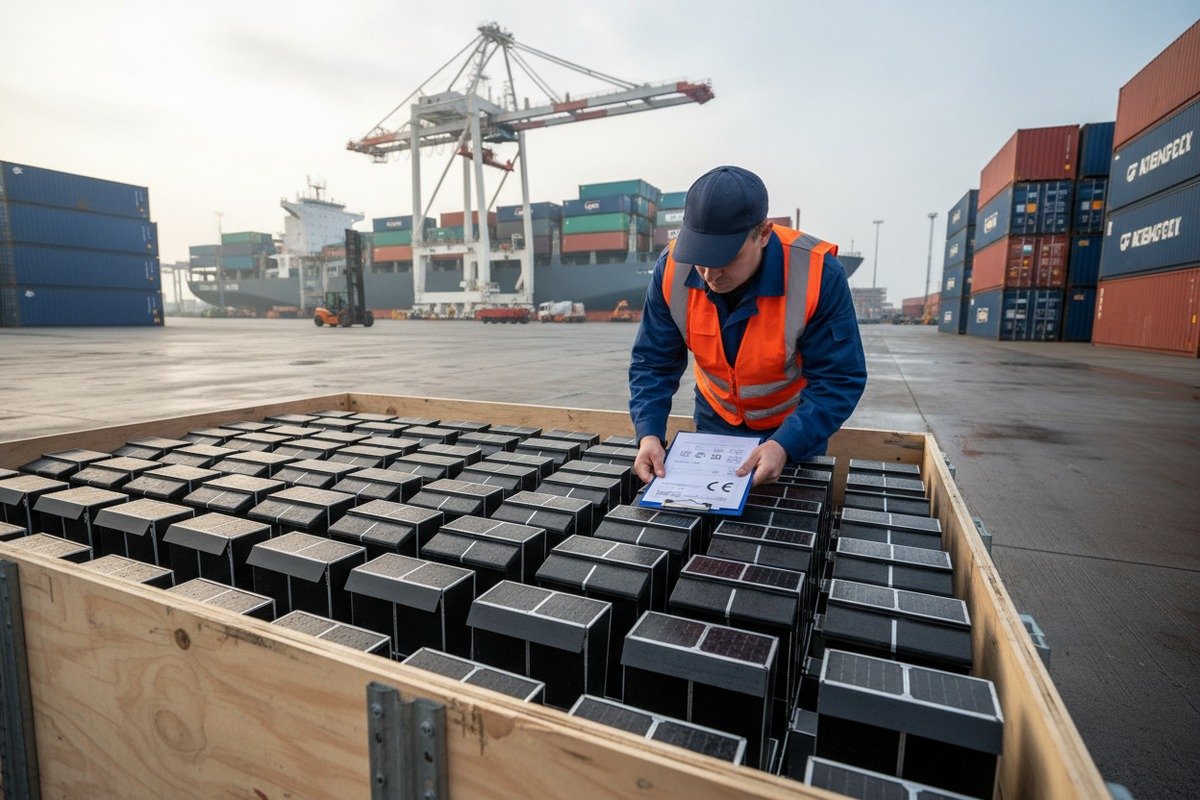
To legally import solar shingles into Europe, you need CE marking under the Construction Products Regulation (CPR) and the Low Voltage Directive (LVD), plus TUV-certified IEC 61215 (performance) and IEC 61730 (safety) reports. Without these, customs authorities in France, Germany, and most EU countries will reject or hold your shipment.
Understanding CE Marking for BIPV Products
CE marking for solar roof shingles is not a single certificate Electromagnetic Compatibility Directive 3. It covers multiple EU directives. Because solar shingles are both a building material and an electrical device, they fall under at least two regulatory frameworks.
First, the Construction Products Regulation (CPR, EU 305/2011) requires a Declaration of Performance (DoP) covering fire reaction class, mechanical resistance, and water tightness. Second, the Low Voltage Directive (LVD, 2014/35/EU) covers electrical safety for PV modules operating between 50 V and 1000 V AC. Some products also need compliance with the Electromagnetic Compatibility Directive (EMC, 2014/30/EU).
A TUV certificate adds credibility because TUV Rheinland 4, TUV SÜD, and similar Notified Bodies are recognized across all EU member states. Our products carry both CE and TUV certifications, which means our buyers face zero friction at European ports.
Key Certifications at a Glance
| Certification | Directive / Standard | What It Covers | Required For |
|---|---|---|---|
| CE (CPR) | EU 305/2011 | Fire reaction, mechanical load, water tightness | All building products sold in EU |
| CE (LVD) | 2014/35/EU | Electrical safety | PV modules 50–1000 V |
| CE (EMC) | 2014/30/EU | Electromagnetic compatibility | Grid-connected PV systems |
| TUV IEC 61215 5 | IEC 61215:2021 | Long-term PV performance qualification | Market acceptance, bankability |
| TUV IEC 61730 6 | IEC 61730:2016 | PV module safety (mechanical + electrical) | Legal requirement in most EU markets |
| ISO 9001:2015 7 | Quality Management | Manufacturing process consistency | Buyer confidence, tender requirements |
Red Flags to Watch For
If a supplier shows you a CE mark but cannot provide the underlying Declaration of Performance or the Notified Body number, walk away. Some suppliers apply a CE mark based on self-declaration without proper testing. In our experience, legitimate suppliers will share the full test report—not a marketing summary—within 48 hours of your request.
Also verify that the IEC 61215 and IEC 61730 certificates are current. These standards get revised. An outdated certificate may not satisfy your local building authority. We update our certifications with every standard revision precisely because our European distributors depend on it.
How do I confirm that the solar tiles meet local building codes for fire ratings and wind resistance?
When we began exporting to southern France and coastal Germany, local building inspectors pushed back hard on products that only had PV certifications but lacked roofing-grade fire and wind documentation. That experience shaped how we now prepare documentation for every export order.
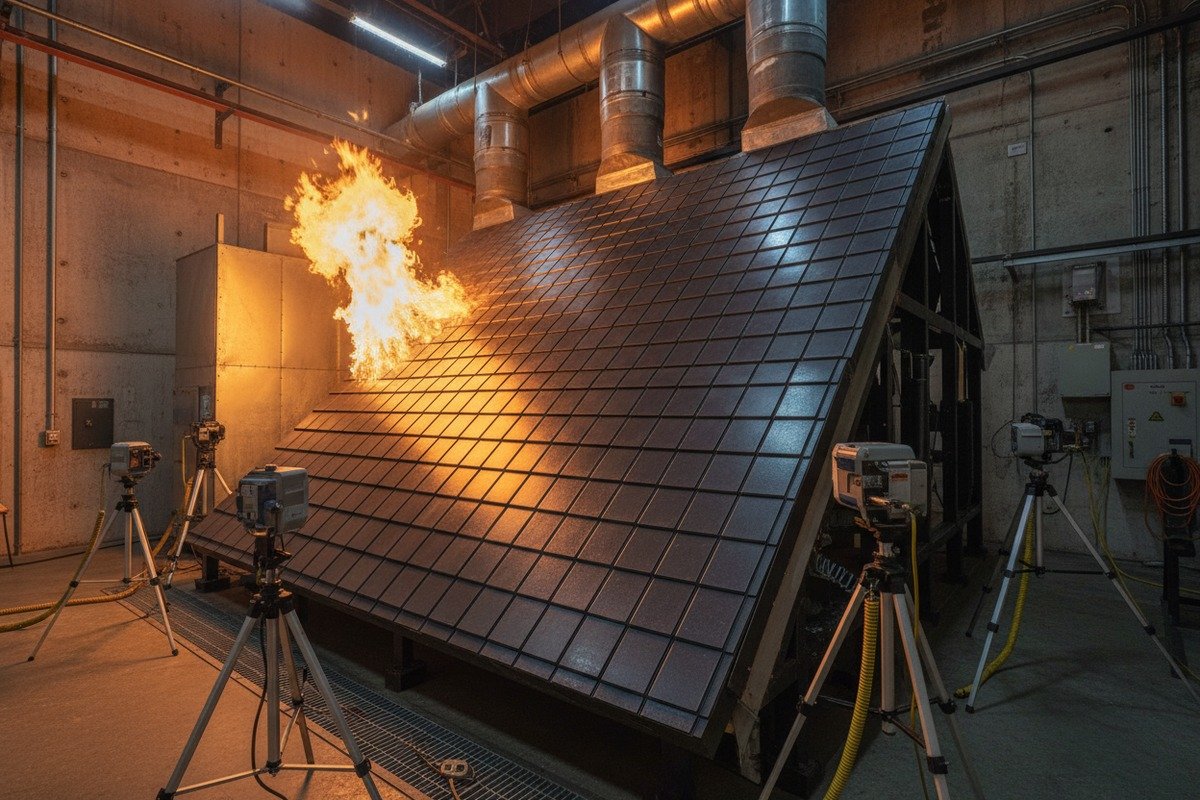
Request UL 790 or ASTM E108 Class A fire test reports conducted on the full roof assembly—not just the panel—and ASTM D3161 Class F or ASTM D7158 Class H wind resistance reports. For hurricane zones, also ask for Florida HVHZ approval (e.g., FL7263-R7) or FM 4474 wind uplift testing. These assembly-level tests confirm code compliance where it matters: on an actual roof.
Fire Ratings: Why Assembly-Level Testing Matters
A common mistake is accepting a fire test report that only tested the solar cell laminate. Building codes require fire performance of the entire roofing assembly—tile, underlayment, and deck together. UL 790 Class A 9 is the highest fire rating in North America and is widely accepted in Europe as a benchmark. It tests three things: flame spread, intermittent flame exposure, and resistance to burning brands.
Our engineers learned early that achieving Class A on the panel alone does not guarantee Class A once the shingle is installed on plywood decking with waterproof membrane. That is why we test the full assembly. Ask your supplier: "Was the fire test performed on the complete roof assembly or just the module?"
Wind Resistance: Class F Is the Minimum You Should Accept
ASTM D3161 measures wind resistance through fan-induced uplift on shingle tabs. Class F, the highest classification under this standard, indicates survival at wind speeds of 110 mph. ASTM D7158 uses a different method and classifies up to Class H (150 mph equivalent). For European coastal zones, Class F is the practical minimum.
If your projects include Mediterranean or Atlantic-facing roofs, also request UL 1897 uplift test data. This standard tests large deck sections (up to 12×24 ft) under negative pressure, simulating real-world wind forces on the entire roof plane.
Fire and Wind Standards Comparison
| Standard | Test Type | Highest Class | What It Proves |
|---|---|---|---|
| UL 790 / ASTM E108 | Fire (assembly) | Class A | No flame spread, no burn-through |
| ASTM D3161 | Wind (tab method) | Class F (110 mph) | Shingle stays attached in high wind |
| ASTM D7158 | Wind (uplift method) | Class H (150 mph) | Shingle resists negative pressure |
| UL 1897 | Wind uplift (deck) | Pass/Fail at rated pressure | Full roof deck survives uplift |
| FM 4474 | Wind (FM protocol) | FM Approved | Meets FM Global insurability |
| Florida HVHZ | Wind (hurricane) | Approved / Not Approved | Legal for High Velocity Hurricane Zone |
Practical Verification Steps
Do not simply accept a certificate number. Download the full report. Look for the test specimen description—it should match the exact product model you are ordering. Check the accreditation mark on the report (ILAC, A2LA, or equivalent). If the lab is not accredited, the report may not satisfy your local building authority.
At our facility, we maintain test reports for every SKU and every assembly configuration. When a buyer in Lyon needed documentation showing our shingles met French DTU 40.11 wind requirements, we mapped our ASTM D7158 Class H data to the local standard within a week. That is the level of support you should expect from any serious supplier.
What specific test reports should I request to ensure the shingles are 100% waterproof and hail-resistant?
Waterproofing failures are the most expensive problem in BIPV roofing. Our R&D team spent three years perfecting our interlocking drainage channel precisely because one European client told us a competitor's leak caused €40,000 in interior damage to a single home. Hail damage is equally devastating—cracked cells mean power loss and warranty claims.
Request water penetration test reports per TAS-100 (or ASTM D7281 for driven rain), hydrostatic pressure test data on the interlocking joints, UL 2218 Class 4 impact resistance reports (2-inch steel ball dropped from 20 feet with no cracking), and FM 4473 hail classification. Ensure all tests were performed by an accredited third-party lab such as Intertek, UL, or FM Global.

Waterproofing: Beyond Simple Splash Tests
True waterproofing verification goes far beyond pouring water on a sample tile. The TAS-100 standard (Testing Application Standard, commonly required in Florida) applies water at specific pressures while cycling air pressure to simulate wind-driven rain. ASTM D7281 is a similar standard used more broadly.
What many buyers overlook is joint waterproofing. A single shingle might be watertight, but the connection points between shingles are where leaks happen. Ask your supplier for hydrostatic pressure test results on the assembled joint—not just the tile face. Our interlocking design has been tested at pressures exceeding 1,200 Pa, which simulates extreme storm conditions. If a supplier cannot provide joint-level water test data, consider it a serious red flag.
Hail Resistance: Class 4 Is Non-Negotiable for Most Markets
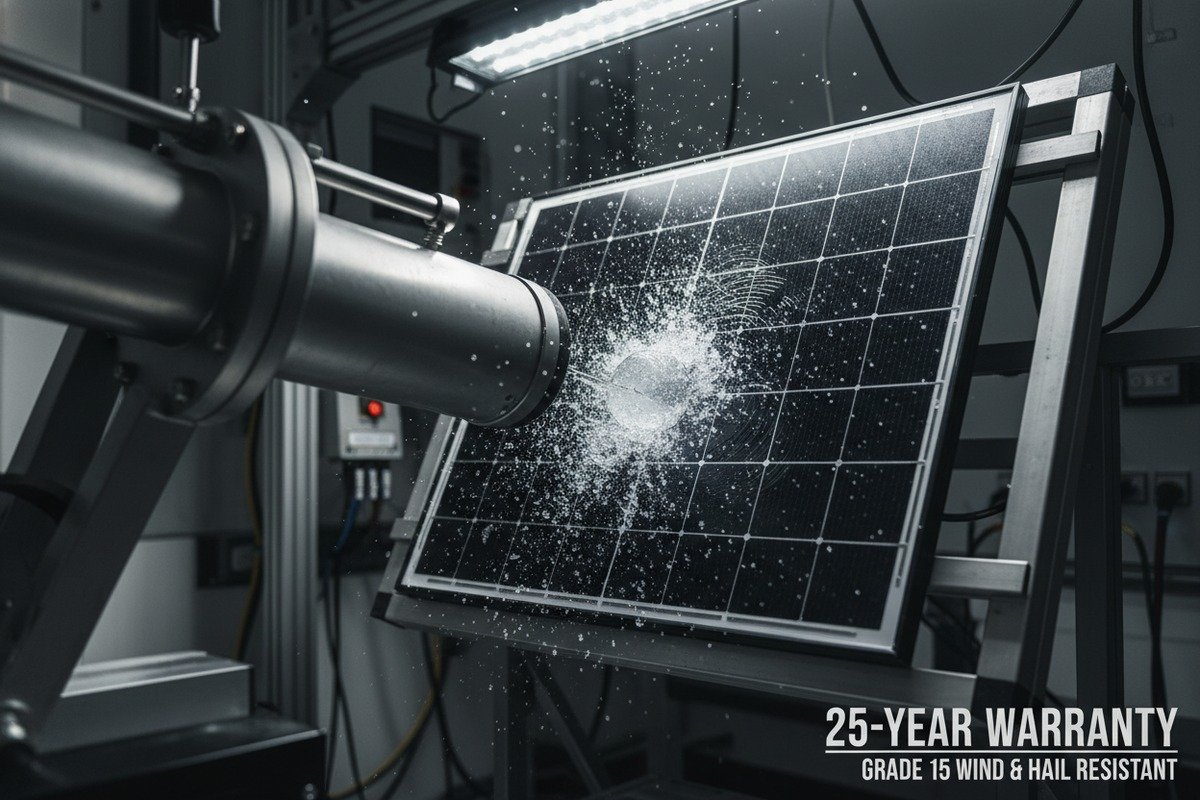
Hail testing follows a straightforward protocol. Under UL 2218, a 2-inch (51 mm) steel ball is dropped from 20 feet onto the shingle surface. To earn Class 4—the highest rating—the shingle must show no cracking, splitting, or rupture. Our shingles withstand 35 mm hail impacts, and we have the UL 2218 Class 4 10 documentation to prove it.
FM 4473 is another widely recognized hail standard, particularly valued by insurance companies. FM's testing is considered more rigorous by some engineers because it also evaluates the impact on electrical performance post-hail. A product with FM 4473 Class 4 certification is more insurable in storm-prone regions, which directly benefits your end customers.
The Tesla Debate: Class 3 vs. Class 4
It is worth noting that Tesla's Solar Roof has been rated FM 4473 Class 3, not Class 4. This has sparked debate in the industry. Class 3 uses a 1.75-inch ball instead of 2-inch. For regions with frequent large hailstorms, Class 3 may not provide adequate protection. If your buyers are in hail-prone areas of central Europe or the American Midwest, insist on Class 4.
Waterproof and Hail Test Standards Summary
| Test Standard | What It Measures | Key Requirement | Why It Matters |
|---|---|---|---|
| TAS-100 | Water penetration under wind pressure | No water intrusion at rated pressure | Proves storm-driven rain resistance |
| ASTM D7281 | Wind-driven rain resistance | Pass/Fail at specified pressure | Broader U.S. acceptance |
| Hydrostatic joint test | Water pressure on tile joints | No leakage at ≥1,200 Pa | Joints are the weakest point |
| UL 2218 Class 4 | Hail impact (2" steel ball, 20 ft) | No crack, split, or rupture | Highest impact rating available |
| FM 4473 Class 4 | Hail impact (FM protocol) | No functional damage | Insurance company preferred |
| IEC 61215 (clause 10.17) | Hail test (25 mm ice ball at 23 m/s) | No major visual or power defect | International PV hail baseline |
What to Look for in the Report
Open the actual PDF. Check that the product model number matches your order. Verify the lab's accreditation. Look at the number of samples tested—reliable tests use multiple specimens. If the report only tested one tile at one pressure, it is insufficient. Our reports include minimum five specimens per test condition, which is standard practice at accredited facilities.
How can I verify the supplier's 25-year performance warranty through actual laboratory aging tests?
A 25-year warranty printed on a brochure means nothing if it is not backed by hard data. When we developed our current product line, our engineers insisted on running full IEC 61215 accelerated aging sequences before we ever offered a 25-year guarantee to our distribution partners.
To verify a 25-year warranty, request IEC 61215 accelerated aging test reports covering thermal cycling (200+ cycles from -40°C to +85°C), damp heat exposure (1,000+ hours at 85°C/85% RH), humidity freeze testing, UV preconditioning, and mechanical load tests. Also ask for PID (Potential Induced Degradation) test results and the supplier's annual degradation rate data confirmed by independent labs.
What IEC 61215 Actually Tests
IEC 61215 is the international benchmark for PV module long-term qualification. It simulates decades of real-world exposure through a battery of accelerated stress tests. Here is what the key sequences involve:
Thermal cycling rapidly alternates temperature between -40°C and +85°C. The standard requires 200 cycles, but many top manufacturers—including our facility—run 400 or 600 cycles to demonstrate higher reliability. Each cycle stresses solder joints, cell interconnections, and encapsulant adhesion.
Damp heat holds modules at 85°C and 85% relative humidity for 1,000 hours. This brutal test accelerates corrosion, delamination, and moisture ingress. If a solar shingle survives 1,000 hours of damp heat without significant power loss, its encapsulation and sealing are genuinely robust.
Humidity freeze combines moisture saturation with rapid freezing to test seal integrity. This is especially relevant for solar shingles because they sit flush against the roof deck with less ventilation than rack-mounted panels.
Beyond IEC 61215: Extended and Real-World Testing
IEC 61215 is a pass/fail qualification—not a reliability prediction. A module that barely passes 200 thermal cycles is not equal to one that passes 600. Ask your supplier:
- How many thermal cycles were run beyond the minimum 200?
- Was extended damp heat testing (2,000+ hours) performed?
- Is there PID (Potential Induced Degradation) test data per IEC 62804?
- What is the measured annual degradation rate from outdoor test sites?
Our shingles show less than 0.5% annual power degradation in third-party field monitoring, which supports our 25-year warranty of ≥80% rated power output. We provide this data openly to every B2B buyer.
Warranty Verification Checklist
When you receive a supplier's warranty document, cross-reference it with actual lab data:
- Match the product model on the warranty to the model on the test report.
- Check the lab accreditation—ISO 17025 is the standard for testing laboratories.
- Verify the degradation curve—the warranty's year-25 power guarantee should align with the tested degradation rate.
- Ask for outdoor exposure data—IEC TS 63209 (extended stress testing) or real-world monitoring data from pilot installations adds confidence.
- Confirm financial backing—a warranty is only as strong as the company behind it. Ask about the supplier's insurance or escrow arrangements for long-term claims.
Why Internal Testing Alone Is Not Enough
Some suppliers conduct impressive-sounding 35-item internal quality checks. While these are valuable for process control, they cannot replace third-party testing. Building codes, insurance underwriters, and financing institutions all require independent lab reports. Our quality management system is ISO 9001:2015 certified, and every batch undergoes internal EL (electroluminescence) imaging—but we never ask buyers to accept internal data as a substitute for accredited third-party reports.
This dual approach—rigorous internal control plus independent verification—is what separates reliable suppliers from those who may disappear before year five of a 25-year warranty.
Conclusion
Requesting the right test reports protects your business, your customers, and your reputation. Demand third-party documentation for every claim—fire, wind, water, hail, and aging. If you need certified solar shingles backed by 20 years of manufacturing experience, contact us at www.lonsontech.com.
Footnotes
1. Explains the highest wind resistance rating for roofing shingles. ↩︎
2. Official EU information on the directive for electrical equipment safety. ↩︎
3. Official EU information on the directive for electromagnetic compatibility. ↩︎
4. Official website of a globally recognized testing and certification body. ↩︎
5. Provides an overview of the international standard for PV module performance. ↩︎
6. Replaced HTTP 403 with the official International Electrotechnical Commission (IEC) page for the IEC 61730 standard. ↩︎
7. Provides an overview of the international standard for quality management systems. ↩︎
8. Official government guidance on the EU regulation for construction products. ↩︎
9. Explains the highest fire rating for roofing materials. ↩︎
10. Details the highest impact resistance rating for shingles. ↩︎