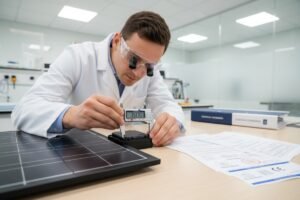

Every year, our after-sales team reviews warranty claims from across Europe, and the pattern is striking anodized aluminum alloy frames 1. The vast majority of solar shingle failures trace back not to electrical faults, but to water ingress 2 caused by poor frame sealing.
To evaluate solar roof shingle frame sealing for long-term waterproofing, inspect the frame material quality, interlocking drainage geometry, adhesive durability under thermal cycling, and relevant certifications. The frame must serve as the primary water barrier, not a secondary component relying on underlayment alone.
This guide breaks down the exact criteria you need to assess. Whether you are a roofing distributor, a project developer, or a purchasing manager sourcing from China, these checkpoints will help you separate genuinely waterproof solar shingles from products that will fail in the field.
What frame materials should I look for to ensure my solar shingles remain watertight for 25 years?
Over two decades of producing solar roof tiles, our engineering team has tested nearly every frame alloy and sealing compound on the market. Material choice is the foundation of waterproofing, and cutting corners here always shows up later.
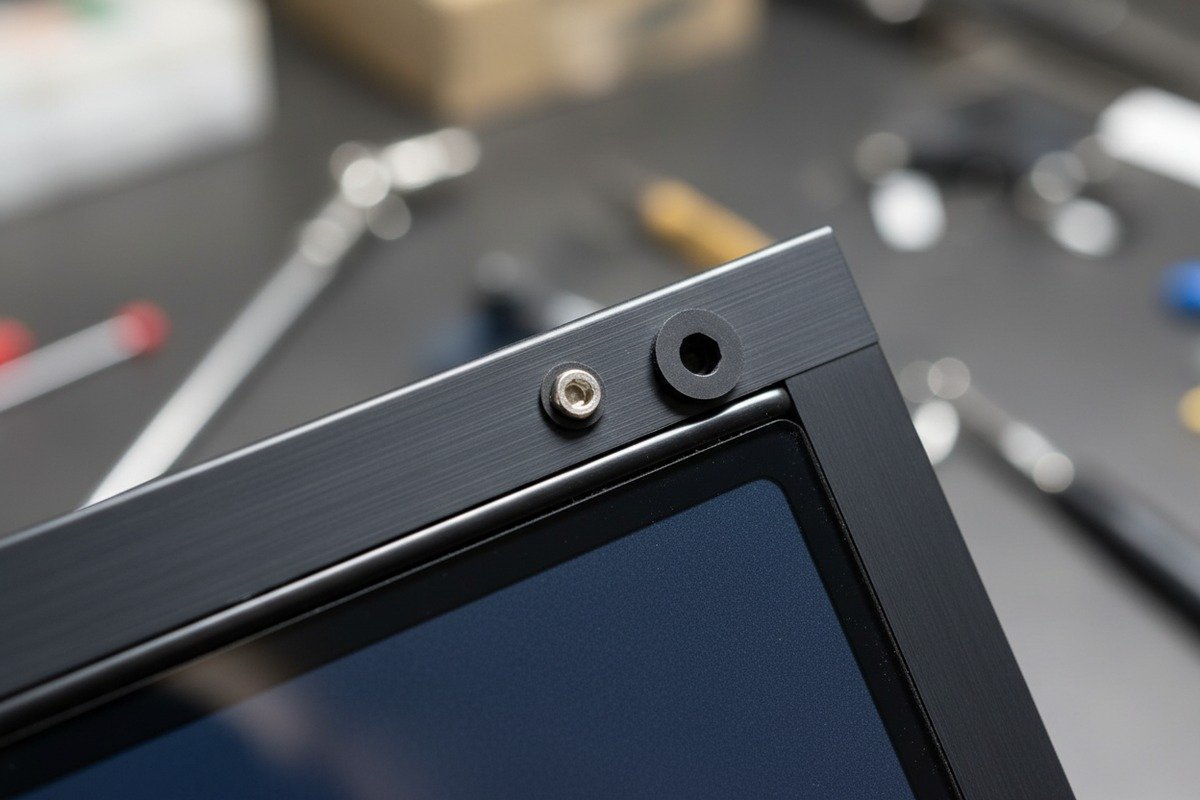
Look for anodized aluminum alloy frames (6063-T5 or higher) sealed with PV-grade structural adhesive. The frame must encapsulate the laminate completely, creating a continuous barrier. Stainless steel fasteners and EPDM gaskets are essential to prevent galvanic corrosion and maintain seal integrity over 25 years.
Why Aluminum Alloy Grade Matters
Not all aluminum is equal. The 6063-T5 alloy 3 offers an excellent balance of corrosion resistance, extrudability, and strength. It resists oxidation even in coastal environments where salt spray degrades lesser metals. When we source aluminum for our production lines, we test each batch for tensile strength, anodic layer thickness, and surface porosity. A thin or inconsistent anodic layer allows micro-pitting, which becomes a leak pathway within a few years.
The Role of PV-Grade Adhesive
The adhesive that bonds the glass laminate into the frame is arguably the most overlooked waterproofing component. Standard silicone sealants degrade under UV and thermal stress. PV-grade structural adhesives 4 — the same type used in high-end module manufacturing — maintain flexibility and adhesion across temperature swings from -40°C to +85°C. During our R&D testing, we found that frameless tile designs consistently failed water penetration tests because they lacked this sealed encapsulation layer.
Fastener and Gasket Selection
Galvanic corrosion 5 occurs when dissimilar metals contact each other in the presence of moisture. If your frame is aluminum but the fasteners are carbon steel, corrosion will eat through the joint within five to ten years. Stainless steel 304 or 316 fasteners paired with EPDM rubber gaskets 6 eliminate this risk.
| Component | Recommended Specification | Why It Matters |
|---|---|---|
| Frame Alloy | 6063-T5 Anodized Aluminum | Corrosion resistance, structural integrity |
| Adhesive | PV-grade structural sealant | UV and thermal stability, long-term bond |
| Fasteners | Stainless Steel 304/316 | Prevents galvanic corrosion |
| Gaskets | EPDM Rubber | Maintains compression seal across temperature range |
| Anodic Layer | ≥15 µm thickness | Resists micro-pitting and surface degradation |
Red Flags to Watch For
If a supplier cannot specify the alloy grade, adhesive type, or fastener material, that is a serious warning sign. Ask for material test reports. Reputable manufacturers — ourselves included — provide these as standard documentation. A 25-year warranty means nothing if the materials cannot physically last that long.
How can I verify if the interlocking drainage design will prevent leaks during heavy European rainstorms?
When our team designs interlocking profiles for the European market, we test against some of the continent's worst rainfall scenarios — think 100 mm per hour cloudbursts in southern France or prolonged low-angle rain driven by North Sea gales. The interlock is your first line of defense.
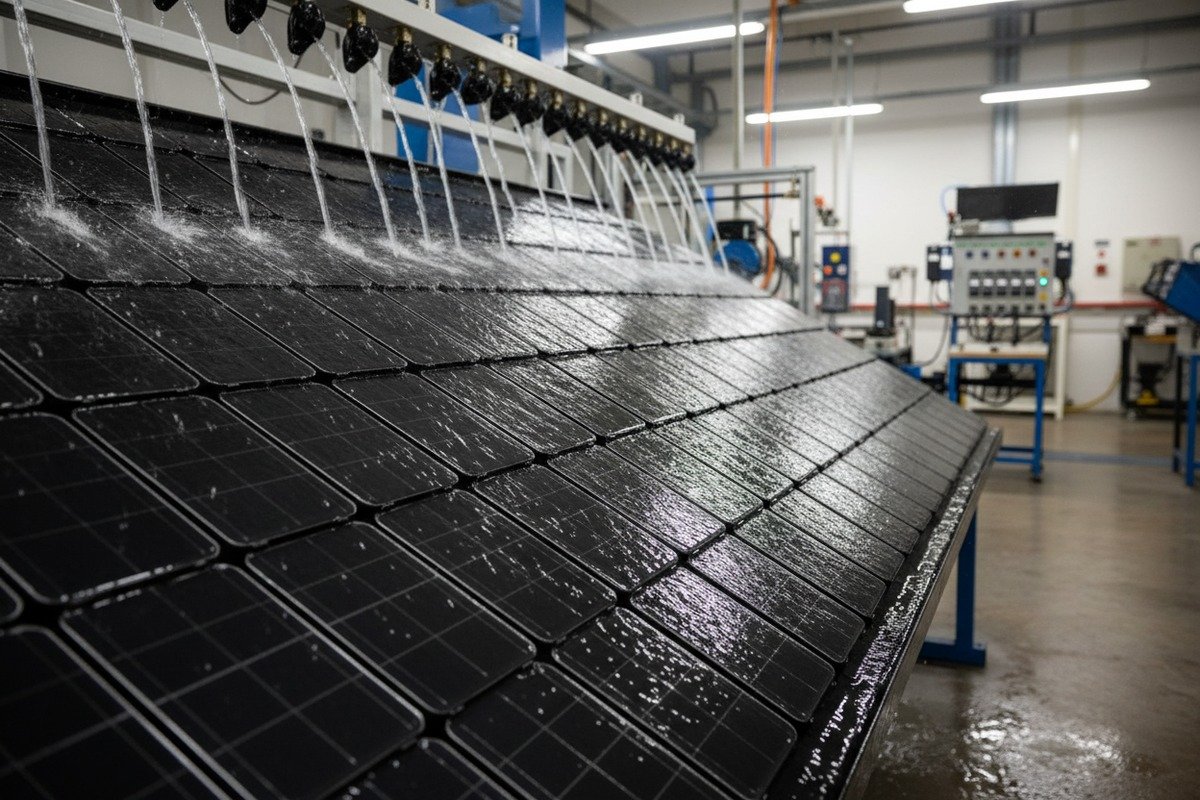
Verify interlocking drainage by requesting wind-driven rain test reports (EN 15601 or equivalent), inspecting the overlap geometry for capillary break channels, and confirming that drainage paths remain unobstructed at standard installation pitch. A minimum 30 mm overlap with integrated water channels is the baseline for heavy European rain conditions.
Understanding Capillary Break Design
Water does not only flow downhill. Capillary action 7 can pull water upward and sideways through narrow gaps between overlapping tiles. A proper interlocking design includes a capillary break — a deliberate gap or channel that interrupts this upward pull. Without it, water creeps into joints that look sealed from the outside. Our engineers integrate a stepped channel into each tile edge specifically to break capillary flow.
Overlap Geometry and Pitch Requirements
The overlap between upper and lower tile courses determines how much wind-driven rain the system can handle. In traditional slate roofing, minimum overlap depends on roof pitch. The same principle applies to solar shingles. Lower pitches need greater overlap. Here is a general guideline we follow:
| Roof Pitch | Minimum Tile Overlap | Drainage Channel Width | Recommended for Region |
|---|---|---|---|
| 15°–20° | 45 mm | ≥ 5 mm | Low-slope urban roofs, Netherlands |
| 20°–30° | 35 mm | ≥ 4 mm | Standard residential, France/Germany |
| 30°–45° | 30 mm | ≥ 3 mm | Steep pitch, Alpine regions |
| > 45° | 25 mm | ≥ 3 mm | Historic steep roofs, Scandinavia |
Wind-Driven Rain Testing
European standards such as EN 15601 8 simulate rain propelled by strong winds at various angles. Ask your supplier for test reports showing performance at wind speeds of at least 110 km/h with concurrent rainfall. If the test was only conducted at zero wind speed, the results are meaningless for real-world conditions in places like Brittany, the Scottish Highlands, or the Dutch coast.
Drainage Path Obstruction
Even a perfectly designed interlock can fail if debris, ice, or installation errors block drainage channels. Evaluate the tile profile for self-cleaning geometry — channels wide enough that leaf fragments and grit wash through rather than accumulate. During installation, each row must be checked to ensure no adhesive, sealant overflow, or displaced gasket material blocks the water path.
The Underlayment Backup Layer
A well-designed system treats underlayment as backup, not primary defense. However, in regions with extreme rainfall, a breathable waterproof membrane (such as a Class W1 underlayment per EN 13859-1) beneath the solar tiles provides critical redundancy. The interlock handles 99% of water. The underlayment catches the rest. If a supplier tells you the underlayment is the main waterproofing layer, that is a design weakness, not a feature.
Which specific waterproofing certifications should I demand from my Chinese solar tile supplier?
Our compliance team spends significant time and budget maintaining certifications for the European market, and we see many buyers who do not know what to ask for. The certification landscape for BIPV products sits at the intersection of electrical safety and building construction — two worlds with very different testing regimes.
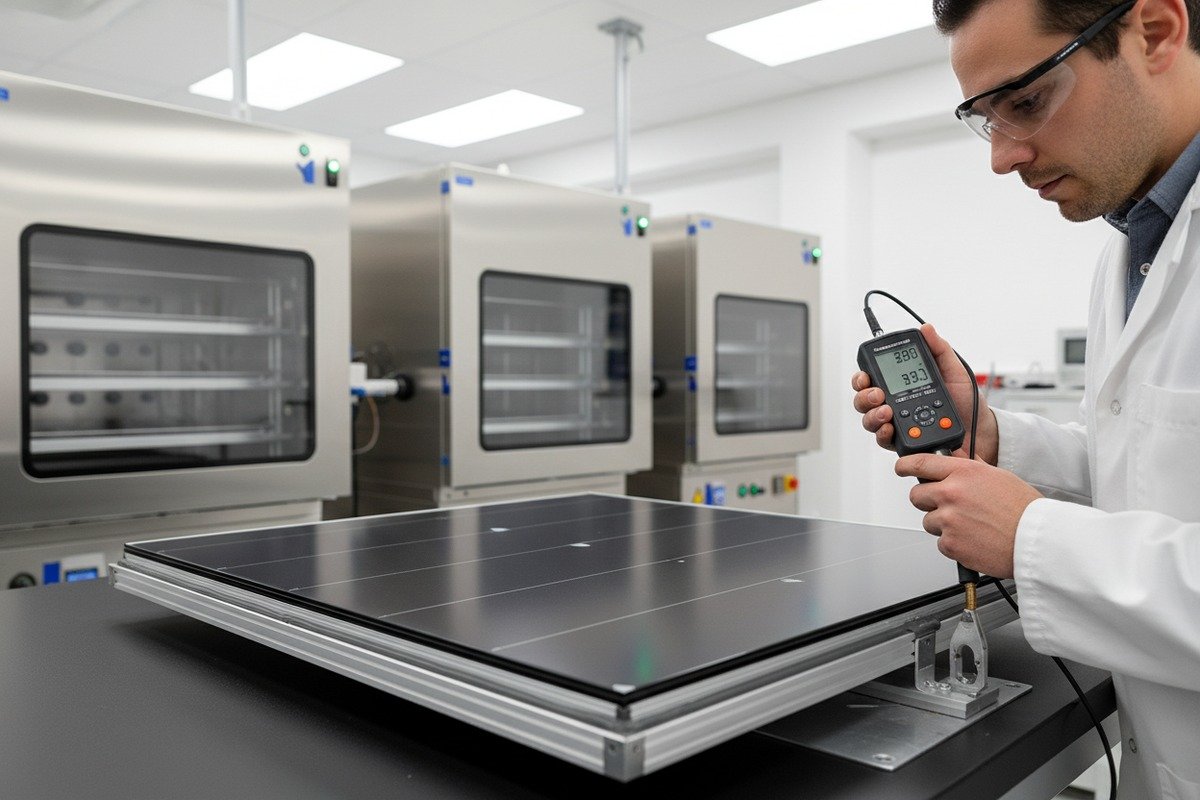
Demand CE marking under the Construction Products Regulation (CPR), IEC 61215 for PV module durability, IEC 61730 for electrical safety, and specific water penetration testing per EN 12056 or EN 539-1. TUV or equivalent third-party certification of both electrical and building-material performance is the minimum threshold for European market compliance.
The Dual Certification Problem
Solar roof tiles exist in a regulatory gray zone. They are simultaneously electrical devices and building envelope components. Many Chinese manufacturers hold IEC 61215 9 and IEC 61730 — the standard PV module certifications. But these only cover electrical performance and safety. They say nothing about water penetration, wind load resistance, or fire behavior as a roofing material.
The Construction Products Regulation (CPR) 10 in Europe requires that building products — including products that form part of the roof envelope — meet specific performance criteria. If your solar tile supplier only has electrical certifications, the product may be illegal to install as a roofing material in many EU countries.
Key Certifications Checklist
| Certification | Covers | Why You Need It |
|---|---|---|
| CE (CPR) | Building product compliance | Legal market entry in EU for roofing use |
| IEC 61215 | PV module design qualification | Confirms electrical durability |
| IEC 61730 | PV module safety | Confirms electrical safety classification |
| EN 539-1 | Water impermeability of roof tiles | Validates waterproofing as a building element |
| EN 14437 | Wind uplift resistance | Confirms structural performance under wind |
| TUV Rheinland / TUV SUD | Independent third-party validation | Confirms tests were conducted by accredited labs |
| Fire Rating (per national code) | Fire behavior of roofing material | Required in France (NF), Germany (DIN), UK (BS) |
How to Verify Authenticity
Certificates can be fabricated. Here is how to verify:
- Check the certificate number on the issuing body's online database (TUV, Bureau Veritas, SGS all have public search tools).
- Confirm the certificate covers the exact product model you are purchasing, not a similar variant.
- Request the full test report, not just the certificate. The report contains detailed results including water penetration volumes, failure modes, and test conditions.
- Ask if the factory holds a valid production quality management audit (such as ISO 9001 with annual surveillance).
Regional Variations
France, Germany, the Netherlands, and the UK each have additional national requirements layered on top of EU-wide standards. For example, French building insurance (décennale) requires specific documentation. German building codes reference DIN standards for roof covering. Before importing, map the specific requirements for your target country. Our export team routinely prepares country-specific compliance packages for this reason — it saves weeks of customs delays and prevents costly rejections at the project site.
How do I assess if the frame sealing can withstand thermal expansion without compromising my roof's integrity?
During summer testing at our facility, we recorded surface temperatures on dark solar tiles exceeding 80°C, followed by rapid cooling during afternoon thunderstorms. This daily thermal shock is the silent killer of frame seals. If a seal cannot flex, it will crack — and once it cracks, water finds its way in.
Assess thermal expansion resilience by reviewing the frame's coefficient of thermal expansion relative to the glass laminate, confirming the use of flexible (not rigid) sealants rated for at least -40°C to +85°C, and verifying that the interlocking design includes expansion gaps. Accelerated aging test results per IEC 61215 thermal cycling protocols provide measurable evidence.
Why Thermal Cycling Destroys Rigid Seals
Aluminum expands and contracts at a rate roughly three times that of glass. On a solar tile where the aluminum frame surrounds a glass laminate, every temperature swing creates differential movement. A rigid sealant bonded to both surfaces will experience shear stress at every cycle. Over 25 years, that adds up to thousands of stress cycles. The sealant cracks. Then it peels. Then water enters.
This is exactly why the established roofing industry (NRCA standards) insists on mechanical flashing as the primary barrier, with sealant as backup. Sealant-only methods fail specifically because of thermal cycling. The same principle applies to solar shingle frame design.
What "Flexible" Really Means
Not all flexible sealants remain flexible. Some cure to a rubbery state initially but harden over years as plasticizers leach out. PV-grade structural adhesives are formulated with long-term flexibility in mind. They maintain their shore hardness and elongation at break for the rated product lifespan. Ask the supplier for the sealant's technical data sheet and look for:
- Elongation at break: Should be ≥ 25% after aging.
- Service temperature range: Must cover -40°C to +85°C minimum.
- Accelerated aging performance: Should show less than 10% modulus change after 1,000 hours of heat aging.
Expansion Gap Design
The interlock profile must include deliberate expansion gaps — small clearances that allow tiles to shift slightly without breaking the seal or binding against each other. These gaps are typically 1–3 mm wide and are concealed within the overlap so they do not create a water pathway.
Our design team uses finite element analysis (FEA) to model thermal movement across an entire roof surface. A single tile might expand by fractions of a millimeter, but across a 200-square-meter roof with hundreds of tiles, cumulative movement is significant. The interlock must accommodate this movement at every joint.
Accelerated Aging and Real-World Correlation
IEC 61215 includes a thermal cycling test: 200 cycles between -40°C and +85°C. This is a baseline. For European climates with extreme seasonal variation — think Nordic countries or Alpine regions — extended cycling tests (500 or 1,000 cycles) provide better confidence. Ask your supplier if they have conducted extended thermal cycling and what the results showed for water penetration before and after.
Dynamic Load Interaction
Thermal expansion does not occur in isolation. Wind uplift, snow loads, and building settlement all impose additional forces on the frame seal simultaneously. A seal that survives thermal cycling alone might fail when combined with wind-induced vibration. The best frame designs decouple the waterproofing seal from structural load paths, so that movement in one axis does not stress the seal in another.
Self-healing sealant technologies are emerging in the industry. These materials contain microcapsules that release sealant when a crack forms, autonomously repairing minor breaches. While not yet mainstream in BIPV, this technology represents a promising direction for extending frame seal lifespan beyond current limits.
Conclusion
Evaluating solar shingle frame sealing comes down to materials, design geometry, certifications, and thermal resilience. The frame is your roof's primary water barrier — treat it with the scrutiny it deserves, and demand the evidence to back every claim.
Footnotes
1. Explains the durability, corrosion resistance, and benefits of anodized aluminum. ↩︎
2. Defines water ingress in buildings and its potential causes. ↩︎
3. Describes the specific properties and common applications of 6063-T5 aluminum alloy. ↩︎
4. Explains the use and benefits of structural adhesives in photovoltaic panel manufacturing. ↩︎
5. Provides a clear definition and explanation of galvanic corrosion. ↩︎
6. Details the properties and applications of EPDM rubber, including its weather resistance. ↩︎
7. Defines capillary action and its occurrence in narrow spaces. ↩︎
8. Describes the standard for wind-driven rain testing of roofing products. ↩︎
9. Authoritative source (IECEE/IEC) for the standard. ↩︎
10. Explains the EU regulation for construction products and its requirements. ↩︎