
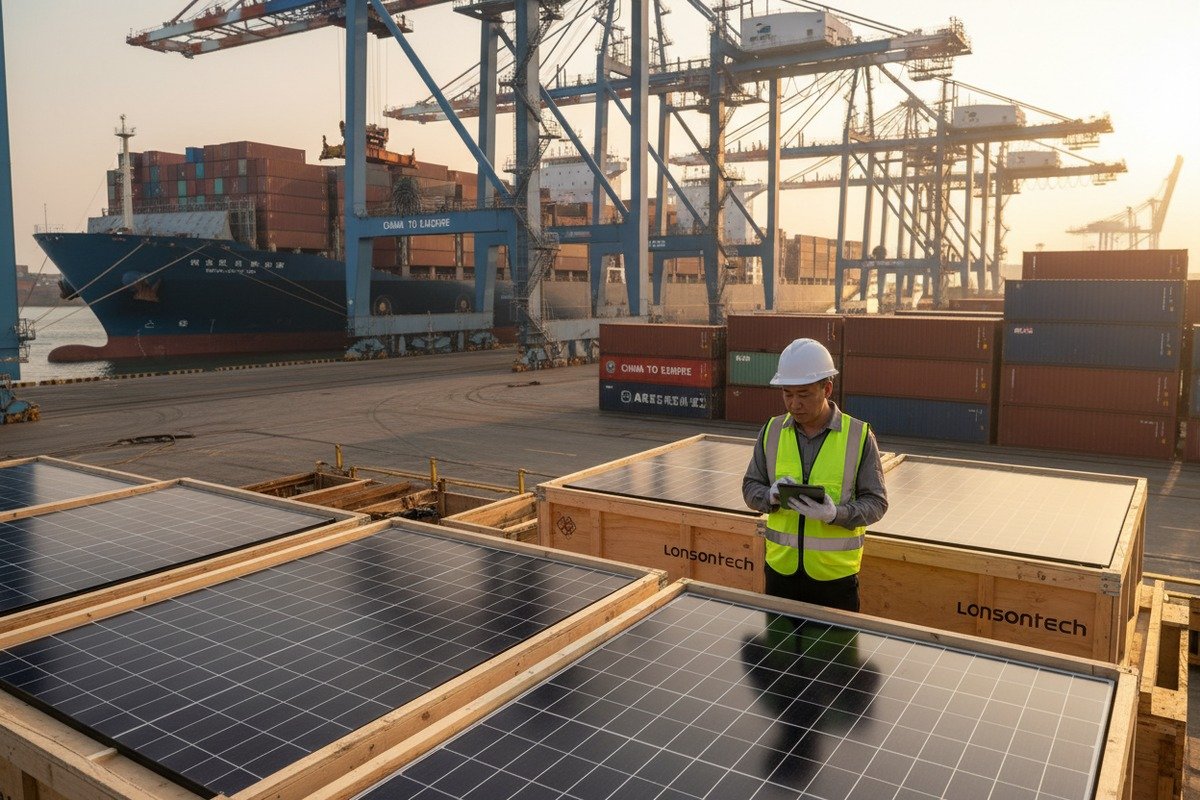
Every week, our export team in Hainan fields the same question from European roofing distributors and developers: “Should I buy your solar shingles on FOB or CIF terms?” The answer seems simple on the surface. But after shipping thousands of containers of fragile, glass-integrated solar roof tiles to ports across Europe, we have seen how the wrong Incoterm choice 1 quietly erodes margins. The problem is not just the shipping cost itself. It is the chain reaction—inflated duty bases, surprise terminal fees, minimal insurance on premium BIPV products, and lost control over customs classification Terminal Handling Charges (THC) 2. These hidden cost layers can turn a competitive quote into a budget disaster.
FOB and CIF Incoterms impact total landed costs of solar roof shingles differently through tariff base calculation, freight transparency, insurance adequacy, and destination port fee control. FOB generally saves experienced importers 15–25% on total costs by keeping freight separate from the dutiable value and giving buyers direct logistics control.
Below, we break down each critical cost factor so you can make the right call for your next solar shingle order from China. We use real numbers, real scenarios, and lessons learned from two decades of BIPV manufacturing and export.
How can I accurately compare the total landed cost of FOB versus CIF for my solar shingle order?
When we prepare quotations for roofing companies across France, Germany, or the Netherlands, we always walk them through the full cost picture—not just the unit price on the proforma invoice 3. Most buyers focus on the per-watt or per-piece price and miss the downstream costs that differ sharply between FOB and CIF.
To accurately compare landed costs, build a line-by-line breakdown including product price, ocean freight, insurance, import duties calculated on the correct Incoterm value, VAT, terminal handling charges, and last-mile delivery. FOB keeps freight and insurance off the duty base, often reducing total costs by 10–20%.

The Landed Cost Formula You Need
The basic formula is straightforward:
Total Landed Cost = (Product Price + Freight + Insurance) + Import Duties + VAT + Port Handling + Inland Transport
The critical difference is where freight and insurance sit. Under FOB, your product price on the commercial invoice excludes freight and insurance. Under CIF, both are bundled in. European customs authorities 4 assess duties on the CIF value. So when you choose CIF, your duty base is automatically higher.
A Real-World Cost Comparison
Let us use a typical order: a 40HQ container of our charcoal-black solar roof shingles, rated at 15–20W per shingle, shipping from Ningbo to Rotterdam.
| Cost Component | FOB Ningbo | CIF Rotterdam |
|---|---|---|
| Product Price (solar shingles) | €38,000 | €38,000 |
| Ocean Freight | €4,200 (buyer-arranged) | €5,800 (seller-arranged, marked up) |
| Marine Insurance | €210 (buyer's full coverage) | €190 (seller's minimum, Clause C) |
| Dutiable Value | €38,000 | €44,000 |
| Import Duty (assume 8%) | €3,040 | €3,520 |
| VAT (21% Netherlands) | €9,544 | €10,217 |
| THC + Port Fees | €650 (buyer's forwarder) | €1,100 (seller's agent) |
| Last-Mile Trucking | €480 | €480 |
| Total Landed Cost | €56,124 | €59,307 |
That is a difference of over €3,100 on a single container—roughly 5.5%. On a project requiring five containers for a mid-size residential development, you are looking at €15,000+ in avoidable costs under CIF.
Why the Freight Markup Matters
Our experience exporting to the EU has shown us that when a Chinese supplier quotes CIF, the freight component is rarely at market rate. Suppliers often add a 15–30% margin on the freight line because they use their own forwarding agents. Under FOB, your freight forwarder in Europe negotiates directly with carriers. You see the real rate. You control the routing.
The Duty Multiplier Effect
This is the part most buyers miss. The duty is not just calculated on the freight difference—it multiplies through VAT as well. In the table above, the €480 difference in duty then gets hit by 21% VAT again. Small freight overcharges compound into meaningful cost increases. For solar shingles, which already carry tight margins in the European roofing market, this matters enormously.
When CIF Still Makes Sense
For a first-time buyer ordering a single LCL shipment—say 200 shingles for a pilot project—CIF can simplify things. You get one price, one invoice, and the supplier handles logistics. But the moment you scale beyond trial orders, FOB becomes the smarter path.
Who takes responsibility if my fragile solar roof tiles are damaged during transit under CIF terms?
Our production line produces solar roof shingles with tempered glass surfaces, precision-welded junction boxes, and interlocking frames designed to survive 35mm hailstones. But ocean freight is a different beast. We have seen containers arrive in Hamburg with shingles cracked from improper stacking, moisture damage from poor ventilation, and even full pallets shifted from rough seas.
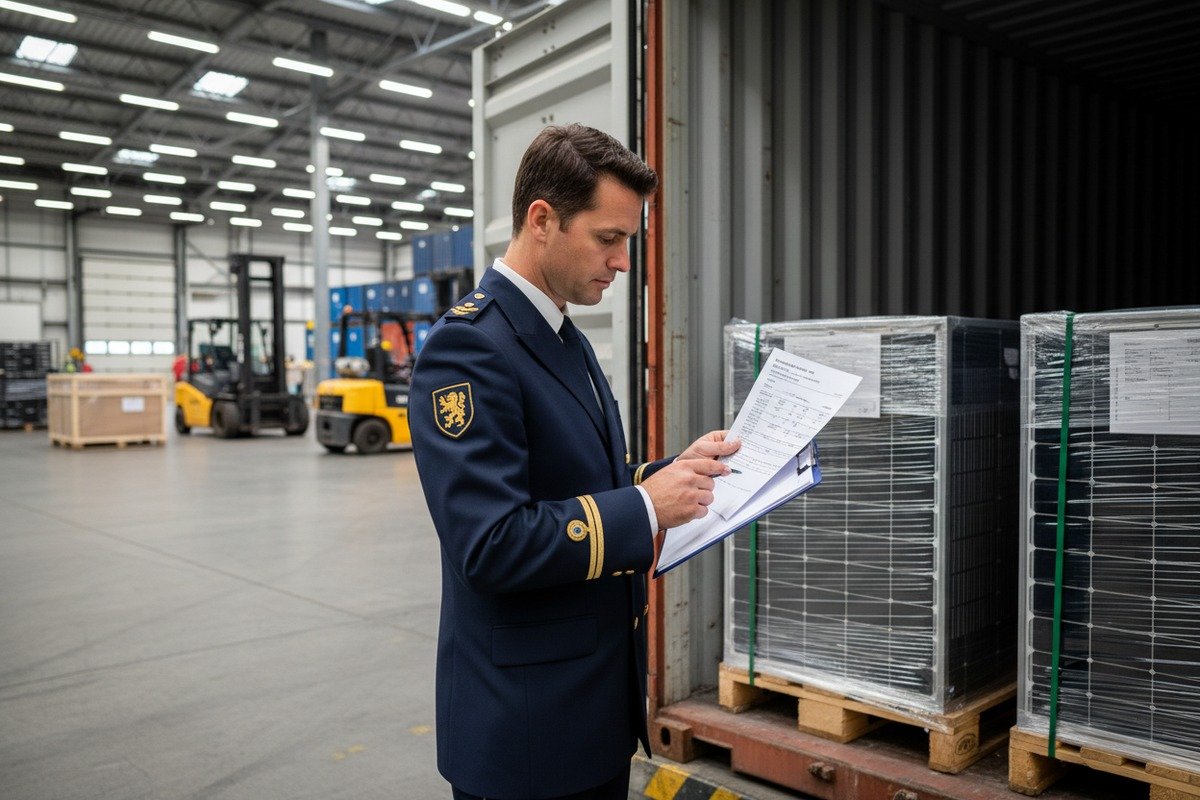
Under CIF, the seller's risk ends once goods cross the ship's rail at the origin port. The basic insurance included (Institute Cargo Clauses C) covers only major incidents like sinking or fire—not breakage, moisture, or rough handling. The buyer bears most transit damage risk despite the seller arranging insurance.
Understanding the Risk Transfer Point
This is the most misunderstood part of CIF. Many buyers assume "the seller pays for insurance, so the seller is responsible for damage." That is wrong. Under CIF Incoterms 2020 5, risk transfers from seller to buyer at the port of loading—the same moment as FOB. The seller simply pays for freight and a basic insurance policy on the buyer's behalf. If tiles arrive damaged, the buyer must file the claim.
Insurance Coverage Comparison
| Coverage Aspect | CIF (Seller's Insurance) | FOB (Buyer's Insurance) |
|---|---|---|
| Policy Type | Institute Cargo Clauses C 6 (minimum) | Buyer chooses—typically Clauses A (all-risk) |
| Breakage from Rough Handling | Not covered | Covered |
| Moisture / Condensation Damage | Not covered | Covered |
| Theft or Pilferage | Not covered | Covered |
| Total Loss (sinking, fire) | Covered | Covered |
| Coverage Value | 110% of invoice value (minimum) | Buyer sets—often 120–130% |
| Claims Process | Through seller's insurer (foreign) | Through buyer's own insurer (local) |
For a product like our anti-glare solar roof shingles—with a smooth, semi-reflective glass finish and precision interlocking edges—breakage from rough handling is the number one transit risk. Clauses C simply does not cover this.
The Claims Nightmare Under CIF
When damage occurs under CIF, the buyer must file a claim through the seller's insurance company. This insurer is typically based in China. The process involves Chinese-language documentation, different time zones, and an insurer who has no relationship with the buyer. We have witnessed European clients wait 4–6 months for claim resolution under CIF insurance. Under FOB, you call your local insurer, file with familiar documentation standards, and resolve in weeks.
What We Recommend for Solar Shingle Shipments
Our engineering team designs packaging specifically for ocean freight: reinforced corner protectors, anti-vibration foam layers, and humidity indicator cards inside every pallet. But packaging alone cannot prevent all damage. We always advise our European partners to buy FOB, arrange their own all-risk insurance 7 (Clauses A), and specify their preferred freight forwarder. This way, they control the carrier selection, get full coverage for glass breakage, and have a direct claims path if anything goes wrong.
The Real Cost of "Free" CIF Insurance
The insurance included in CIF is not free. It is embedded in the CIF price. You are paying for inadequate coverage. Adding your own supplemental all-risk policy on top of CIF means you are paying for insurance twice. Under FOB, you pay once for the right coverage. The math is simple.
Will choosing CIF limit my control over customs clearance and HS code classification in the EU?
When we ship our BIPV solar roof tiles to European markets, we know that HS code classification 8 is one of the trickiest compliance hurdles our clients face. Solar roof shingles sit in a regulatory gray area—are they photovoltaic modules (HS 8541.40) or building materials (HS 6907 or 7016)? The classification determines duty rates, VAT treatment, and even eligibility for green energy import incentives.
Yes, CIF limits your control over customs clearance because the seller's freight agent typically handles the Bill of Lading and shipping documentation, which can delay your access to paperwork needed for timely customs filing. FOB gives you direct document control, enabling accurate HS code classification and smoother EU customs clearance.

The HS Code Problem for Solar Shingles
Solar roof shingles are a hybrid product. They generate electricity like a solar panel but function structurally like a roofing tile. In the EU, how customs classifies your product affects everything downstream.
| HS Code | Description | Typical EU Duty Rate | Notes |
|---|---|---|---|
| 8541.40 | Photovoltaic cells/modules | 0% (under certain conditions) | May trigger anti-dumping scrutiny for Chinese origin |
| 6907.xx | Ceramic roofing tiles | 4–8% | Misclassification risk for BIPV tiles |
| 7016.xx | Glass building elements | 5–7% | Could apply to glass-surfaced solar shingles |
| 8541.43 | PV modules (post-2022 update) | 0% | Requires proper documentation of PV function |
Getting the classification right is not just about saving on duties. A wrong HS code can trigger customs holds, additional inspections, and even anti-dumping investigations. Our CE and TUV certifications help prove the PV functionality of our shingles, but the importer's customs broker must present this documentation correctly.
How CIF Complicates the Process
Under CIF, the seller's shipping agent controls the Bill of Lading 9 and often the cargo manifest details. The agent at the destination port is chosen by the seller—not by you. This agent may not understand EU customs requirements for BIPV products. They may default to a generic HS code that triggers higher duties or additional scrutiny.
We have seen cases where a seller's agent in Rotterdam classified our solar shingles under a general glass products code, resulting in a 5% duty that should have been 0% under the correct PV classification. The buyer discovered this only after clearance and had to file a retroactive correction—a process that took three months and cost €2,400 in broker fees.
FOB Puts You in the Driver's Seat
With FOB, you appoint your own customs broker. You provide the technical documentation—data sheets, CE certificates, TUV test reports, and our product-specific classification guidance. Your broker files the correct HS code from day one. There is no intermediary agent with misaligned incentives.
Beyond Classification: Document Timing
Under CIF, the seller's agent may not release the Delivery Order promptly. Delays of 3–5 working days are common. Each day your container sits at the terminal, you incur demurrage and storage charges. Under FOB, your freight forwarder tracks the vessel, pre-files customs entries, and has the Delivery Order ready for same-day pickup after arrival. For time-sensitive solar projects with installation schedules, this speed matters.
Our Recommendation for EU-Bound BIPV Shipments
We always provide our European partners with a detailed product classification memo, including suggested HS codes, supporting technical documentation, and our dual CE/TUV certification packages. But this documentation is only effective when it reaches the right hands—your customs broker, not a third-party agent appointed by a CIF seller with no stake in your compliance outcome.
What hidden destination port charges should I expect if I let the supplier handle the shipping via CIF?
Over the past few years, our logistics team has tracked a troubling pattern. European clients who initially chose CIF for convenience often come back to us requesting FOB on their second order. The reason is always the same: unexpected port charges that nobody warned them about. These fees do not appear on the proforma invoice. They show up as a separate bill from the seller's destination agent—sometimes weeks after the goods have cleared customs.
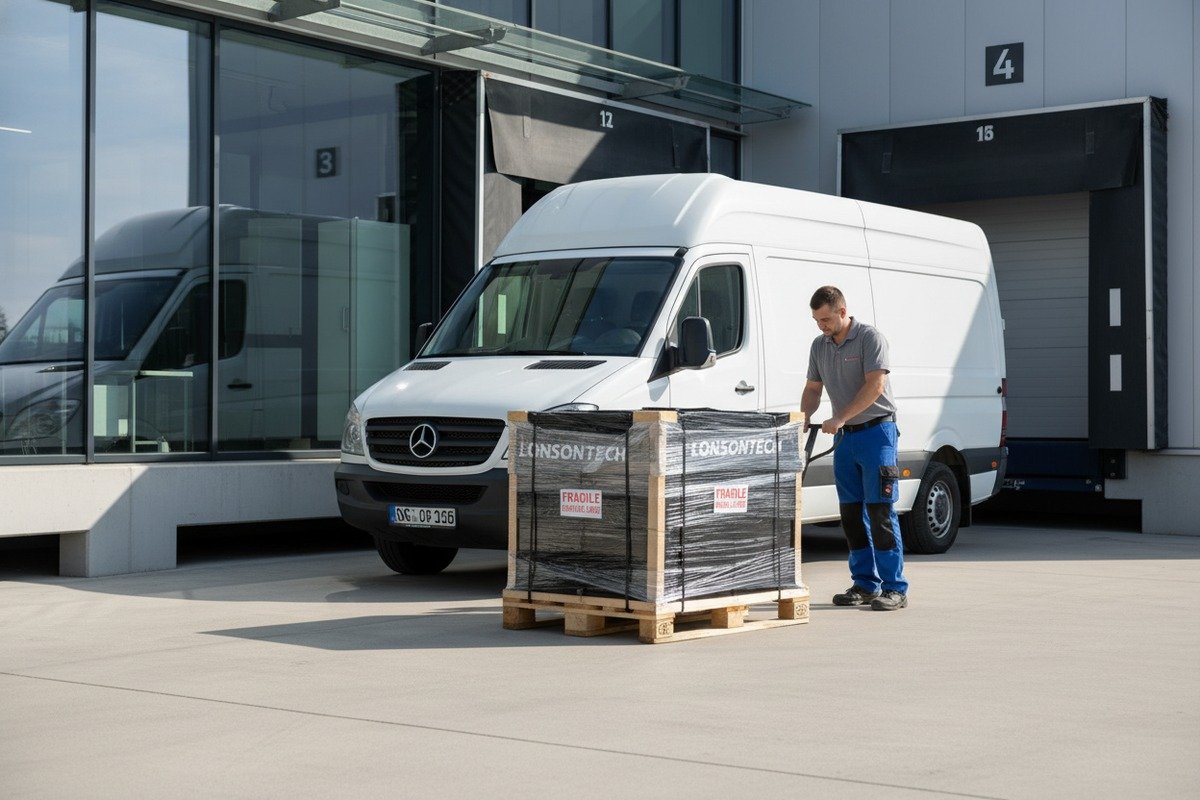
Under CIF, expect hidden charges including Terminal Handling Charges (THC), Delivery Order fees, container scanning fees, documentation fees, demurrage, and agent service surcharges. These can add €500–€1,500 per container beyond the quoted CIF price, eroding your expected margins on solar shingle imports.
The Fee Breakdown Nobody Talks About
When a supplier quotes CIF Rotterdam, they mean the freight is paid to the port. But "to the port" does not mean "to your warehouse." Between the vessel arriving and your goods leaving the terminal, a long list of charges accumulates. Under CIF, the seller's agent handles these—and passes them to you with markups.
Here is what a typical CIF destination charge sheet looks like for a 40HQ container at a major European port:
| Charge | Typical Range (EUR) | Who Pays Under CIF | Who Pays Under FOB |
|---|---|---|---|
| Terminal Handling Charge (THC) | €180–€350 | Buyer (via seller's agent) | Buyer (via own forwarder) |
| Delivery Order Fee | €50–€100 | Buyer | Buyer |
| Container Scanning / X-Ray | €40–€80 | Buyer | Buyer |
| Documentation / BL Release Fee | €60–€120 | Buyer (markup common) | Buyer (direct, lower) |
| Demurrage (per day, after free days) | €80–€150/day | Buyer | Buyer |
| Agent Service Surcharge | €150–€400 | Buyer (CIF only) | N/A |
| ISPS Security Fee | €15–€30 | Buyer | Buyer |
| Customs Examination (if triggered) | €200–€500 | Buyer | Buyer |
| Total Typical Range | €575–€1,730 | — | — |
The Agent Service Surcharge: CIF's Hidden Tax
The most frustrating charge is the agent service surcharge. Under CIF, the seller's forwarding agent at the destination port handles your container release. This agent charges the buyer a service fee for doing so—typically €150–€400 per shipment. Under FOB, this fee does not exist because your own forwarder handles everything directly.
We had a client in Lyon who ordered three containers of our deep obsidian black solar roof tiles on CIF terms. The destination agent charged €380 per container as a "handling and coordination fee." That is €1,140 on a single order that would have been zero under FOB. After that experience, the client switched to FOB and has saved an estimated €4,500 across subsequent orders.
Demurrage: The Silent Killer
Under CIF, the seller's agent may not prioritize your container release. If documentation is delayed—common when the agent manages multiple clients—your container sits in the terminal beyond the free storage period. Demurrage charges in Rotterdam or Hamburg range from €80–€150 per day. A five-day delay costs €400–€750. Under FOB, your forwarder is motivated to clear your goods immediately because that is their sole focus.
How to Protect Yourself If You Must Use CIF
If CIF is unavoidable for your first order, take these steps:
- Request a full destination charge estimate from the supplier before signing.
- Ask for the name of the destination agent and contact them directly for a fee schedule.
- Negotiate a cap on agent surcharges in the purchase contract.
- Insist on immediate BL release upon vessel departure to avoid documentation delays.
- Switch to FOB on your second order once you have established a freight forwarder relationship.
The Bottom Line on Hidden Fees
CIF convenience comes at a measurable cost. For solar roof shingles—where margins are already compressed by competition and tariff uncertainty—every €500–€1,500 in hidden fees matters. Our standard recommendation to European partners is clear: buy FOB, control your logistics chain, and keep every euro of margin where it belongs—in your business.
Conclusion
Choosing between FOB and CIF for solar roof shingles from China is not just a logistics decision—it is a profitability decision. FOB gives you control over freight rates, insurance quality, customs accuracy, and destination fees. For experienced European importers, it consistently delivers lower total landed costs 10 and fewer surprises. Whether you are a roofing company scaling up BIPV installations or a distributor building a private-label solar shingle brand, understanding these Incoterm differences protects your margins on every container.
Footnotes
1. Replaced with an authoritative .gov source providing an overview of Incoterms rules. ↩︎
2. Defines fees charged by terminals for handling containers at ports. ↩︎
3. Explains the purpose and function of a proforma invoice in international transactions. ↩︎
4. Official EU source detailing customs regulations and valuation for duties. ↩︎
5. Replaced with the official International Chamber of Commerce (ICC) page specifically detailing Incoterms 2020. ↩︎
6. Explains the limited coverage provided by Institute Cargo Clauses C for marine insurance. ↩︎
7. Describes comprehensive ‘all risks’ coverage, typically Institute Cargo Clauses A. ↩︎
8. Official source explaining the Harmonized System for product classification in global trade. ↩︎
9. Explains this legal document issued by a carrier acknowledging receipt of cargo. ↩︎
10. Defines total landed cost and its components in international trade. ↩︎