
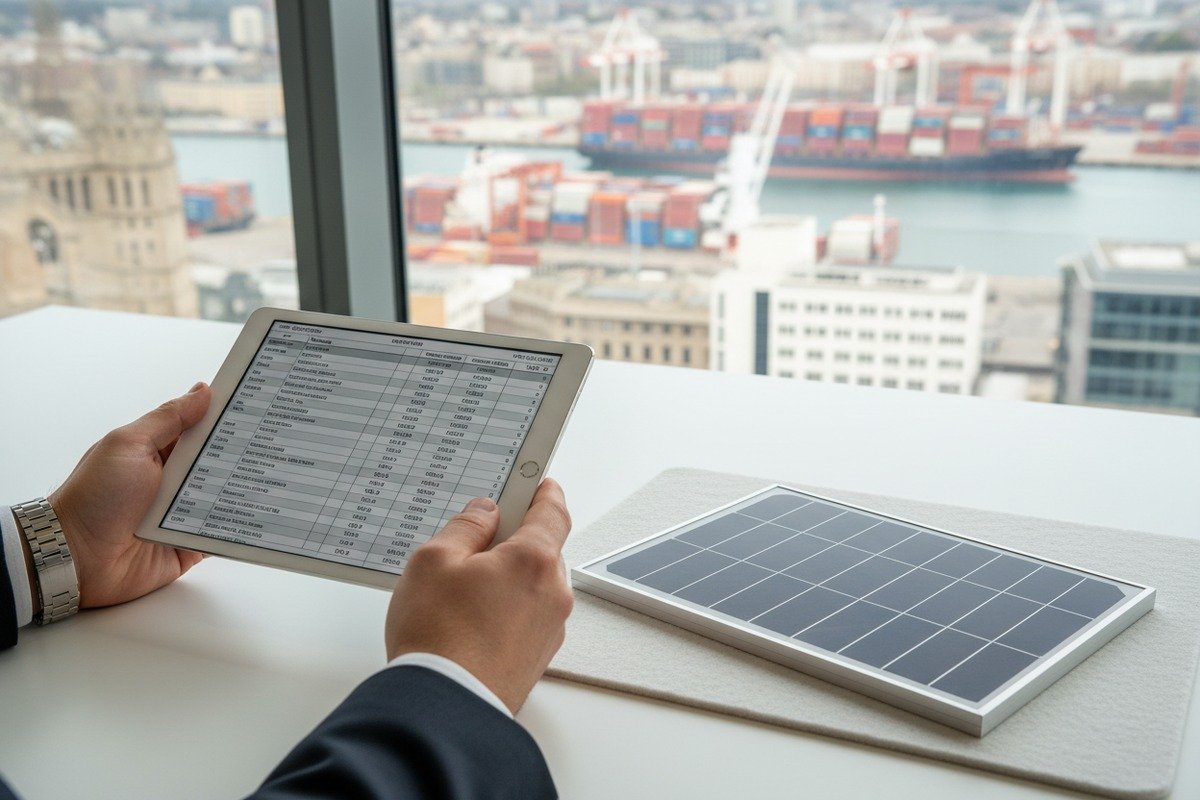
Every year, our shipping team processes hundreds of pallets of solar roof shingles bound for European ports Carbon Border Adjustment Mechanism 1. Yet the question we hear most from buyers is deceptively simple: “What will this actually cost me, door to door?” The frustration is real. Between fluctuating freight rates, surprise customs duties, and breakage losses, the final invoice often looks nothing like the initial quote DDP (Delivered Duty Paid) 2. That gap between expected cost and landed cost has killed margins for more than a few importers we work with.
To calculate total logistics costs for sourcing solar roof shingles from China to Europe, add your FOB product price, inland Chinese transport, ocean or rail freight, EU customs duties and VAT, cargo insurance, destination port charges, and last-mile delivery. Expect logistics to add 15–30% on top of FOB.
In this guide, we break down each cost layer so you can build an accurate budget. We will compare transport modes, uncover hidden duties, account for breakage risk, and evaluate whether DDP terms save you money. Let’s dig in.
How do I compare sea freight and rail transport costs for my bulk solar shingle order?
When we quote freight for a 40-foot container of solar shingles 3 leaving our Hainan facility, the first fork in the road is always the same: ocean or rail?
Sea freight from Shanghai to Rotterdam costs roughly USD 2,500–4,500 per 40ft container and takes 35–45 days, while China-Europe rail freight costs USD 4,000–7,000 per container but arrives in 18–25 days. Choose sea for cost, rail for speed.
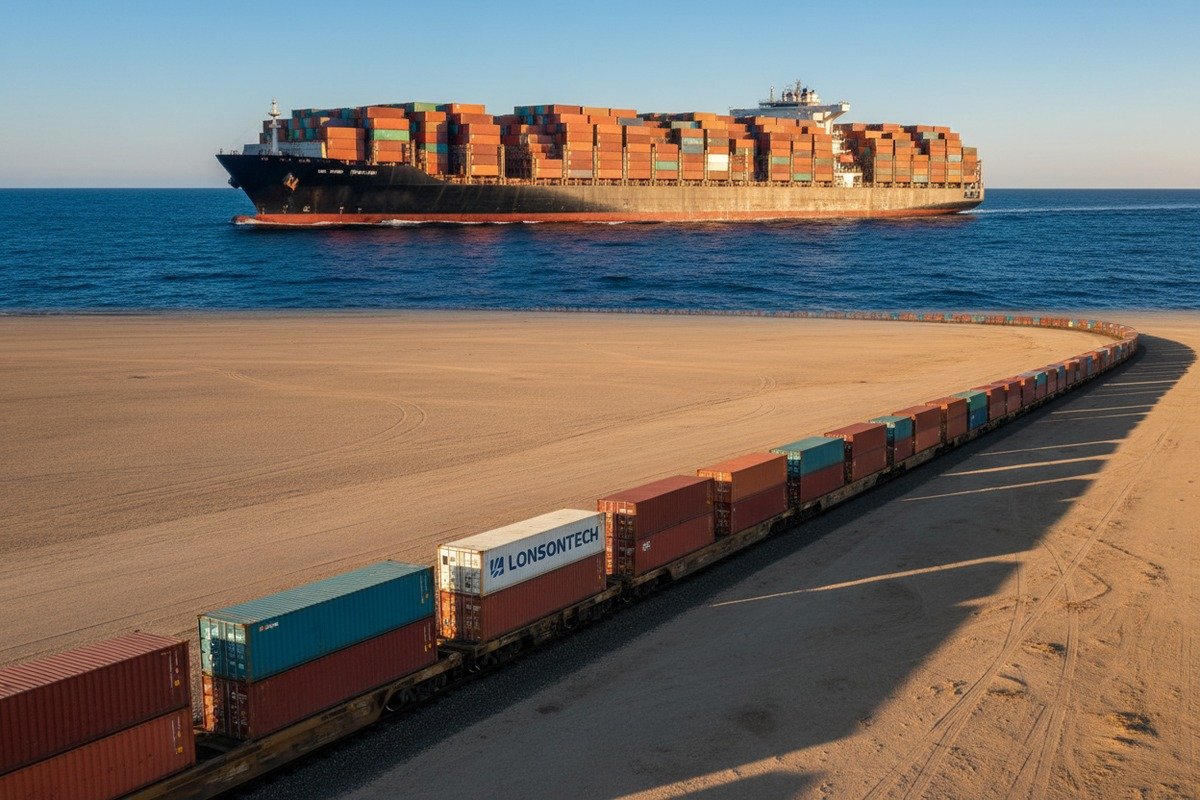
Sea Freight: The Budget Workhorse
Ocean shipping remains the default for bulk BIPV shipments. A standard 40ft high-cube container holds about 24–28 pallets of solar shingles depending on tile dimensions. From major Chinese ports like Shanghai and Ningbo, the route to Rotterdam or Hamburg runs through the Suez Canal 4 and typically takes 35–45 days.
Post-2024, rates have stabilized compared to the pandemic-era spikes. However, Red Sea disruptions can still force vessels around the Cape of Good Hope, adding 10–14 days and inflating costs by 20–50%. Always ask your forwarder for a Suez-route quote and a Cape-route contingency.
Rail Freight: The Middle Ground
The China-Europe railway network 5 runs through Kazakhstan and Poland before reaching Western Europe. Transit time averages 18–25 days. Rail is a smart option when you need goods faster than ocean but cannot justify air freight costs. The downside is a higher per-container price and limited capacity during peak seasons.
Air Freight: Emergency Only
Air freight for solar shingles runs USD 4–8 per kilogram. Given that a single pallet weighs 800–1,200 kg, the math rarely works except for sample shipments or warranty replacements.
Cost Comparison Table
| Factor | Sea Freight | Rail Freight | Air Freight |
|---|---|---|---|
| Cost per 40ft container | USD 2,500–4,500 | USD 4,000–7,000 | N/A (per kg) |
| Cost per kg | USD 0.08–0.15 | USD 0.15–0.30 | USD 4–8 |
| Transit time | 35–45 days | 18–25 days | 5–10 days |
| Best for | Bulk orders | Mid-size urgent orders | Samples / spares |
| Red Sea risk | High | None | None |
| Container capacity | 24–28 pallets | 24–26 pallets | Limited |
Which Should You Pick?
For most European distributors and roofing companies ordering full containers, sea freight delivers the best per-watt economics. Our recommendation is to plan orders 8–10 weeks ahead to absorb ocean transit time. If a project deadline is tight, rail is worth the premium. We often help buyers split shipments: the first batch by rail to start installation, the remainder by sea to keep costs down.
Also factor in inland China transport. Getting containers from our facility to Shanghai port adds USD 300–600 per container depending on distance and truck availability. This cost is usually included in the FOB quote, but always confirm.
What hidden customs duties and VAT will I face when importing BIPV products into the EU?
One of the most common shocks our European partners encounter is the customs bill. The product price looked great on paper, but duties and VAT added 25–50% to the landed cost.
EU importers of Chinese BIPV solar shingles face standard customs duties of around 0–4% for photovoltaic modules, potential anti-dumping duties of 10–65%, and destination-country VAT of 19–27%. HS code classification as a building material versus a PV product directly determines the duty rate.
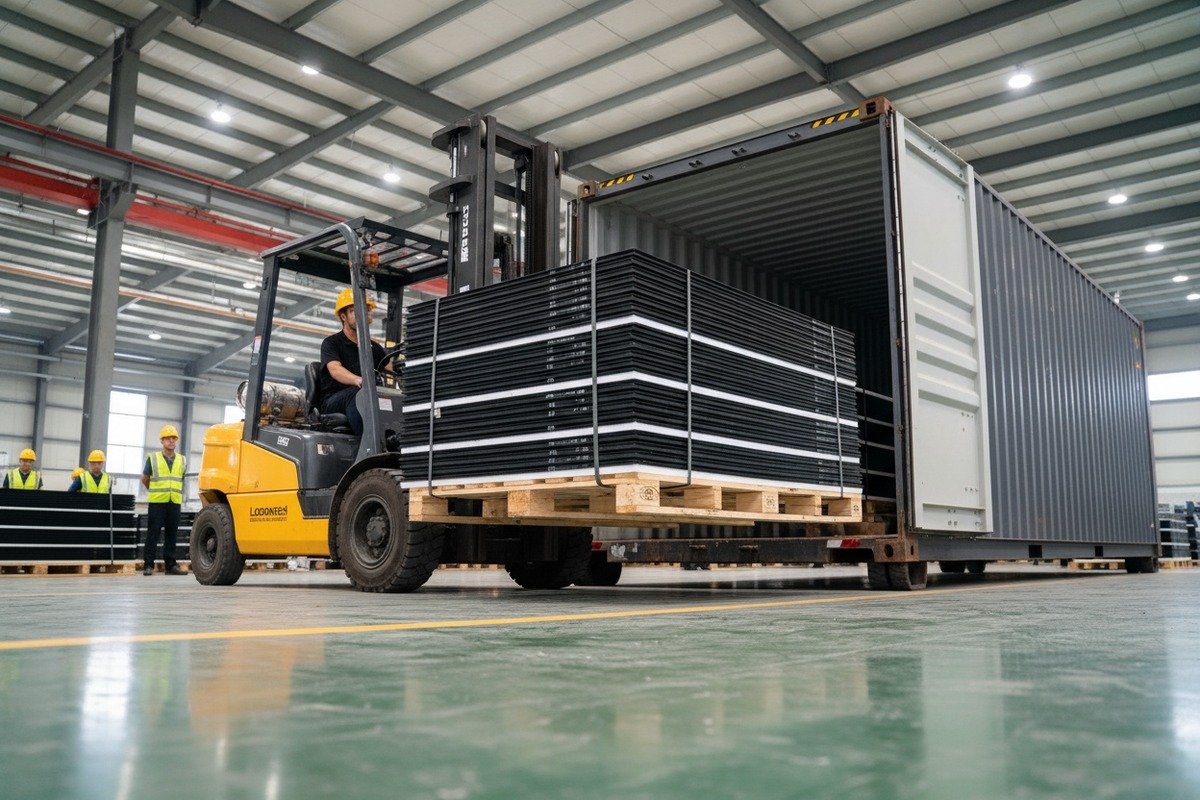
The HS Code Trap
Solar roof shingles sit in a grey zone. Traditional solar panels fall under HS code 8541.40 (photovoltaic cells/modules). Building-integrated products like our solar shingles could also be classified under Chapter 69 (ceramic roofing) or Chapter 70 (glass products). The classification matters enormously because duty rates differ.
If customs classifies your shingles as photovoltaic modules, they may trigger EU anti-dumping or anti-subsidy duties on Chinese solar imports. These duties have fluctuated between 10% and 65% over the past decade, with periodic reviews adjusting rates. As of 2024–2025, the EU has been reassessing its approach, but the risk remains real.
Our advice: get a Binding Tariff Information 6 (BTI) ruling from the customs authority in your destination country before your first shipment. This locks in the HS code and prevents surprises.
VAT by Country
VAT is charged on the CIF value plus duties. It varies by EU member state.
| Country | Standard VAT Rate | Notes |
|---|---|---|
| Germany | 19% | Reduced rate for some PV products (0% since 2023 for certain residential PV) |
| France | 20% | 5.5% reduced rate may apply for energy renovation |
| Netherlands | 21% | 0% VAT on solar panels sold to homeowners since 2023 |
| Spain | 21% | Standard rate applies |
| Italy | 22% | 10% reduced rate possible for renovation |
| Poland | 23% | Standard rate applies |
| Hungary | 27% | Highest EU VAT rate |
Germany and the Netherlands now offer 0% VAT on qualifying solar products sold to residential end-users. However, as a B2B importer, you typically pay VAT at import and reclaim it later through your VAT return. Cash flow impact can be significant on a EUR 200,000 shipment.
Anti-Dumping and Countervailing Duties
The EU previously imposed Minimum Import Prices (MIP) and anti-dumping duties on Chinese solar cells and modules. These measures expired in 2018 but new investigations could reopen at any time given the political push for EU solar manufacturing under the Net-Zero Industry Act 7 (NZIA). Budget a 20–30% duty contingency in your financial model.
Compliance Certificates
CE marking, TUV certification, and increasingly CPR (Construction Products Regulation 8) compliance are required. Non-compliant goods are held at customs. Our products carry both CE and TUV certifications, which smooths clearance. Budget EUR 0.005/W for compliance documentation and testing costs if your supplier does not already hold these certifications.
The Carbon Border Adjustment Mechanism (CBAM)
Starting in 2026, the EU's CBAM will require importers to purchase carbon certificates covering the embedded emissions in certain goods. Solar modules are not yet on the CBAM list, but BIPV products straddling the building-material boundary could be drawn in as rules evolve. Watch this space closely.
How can I account for potential breakage and insurance costs in my final logistics budget?
Our quality control team has spent years perfecting packaging for tempered glass solar shingles. Still, the reality of ocean freight means vibration, stacking pressure, and port handling can cause damage.
Budget 0.5–2% of cargo value for marine insurance and an additional 1–3% for potential breakage losses. Use reinforced corner protectors, foam dividers, and full-pallet shrink wrapping. Insure for CIF value plus 10% to cover replacement and re-shipping costs.
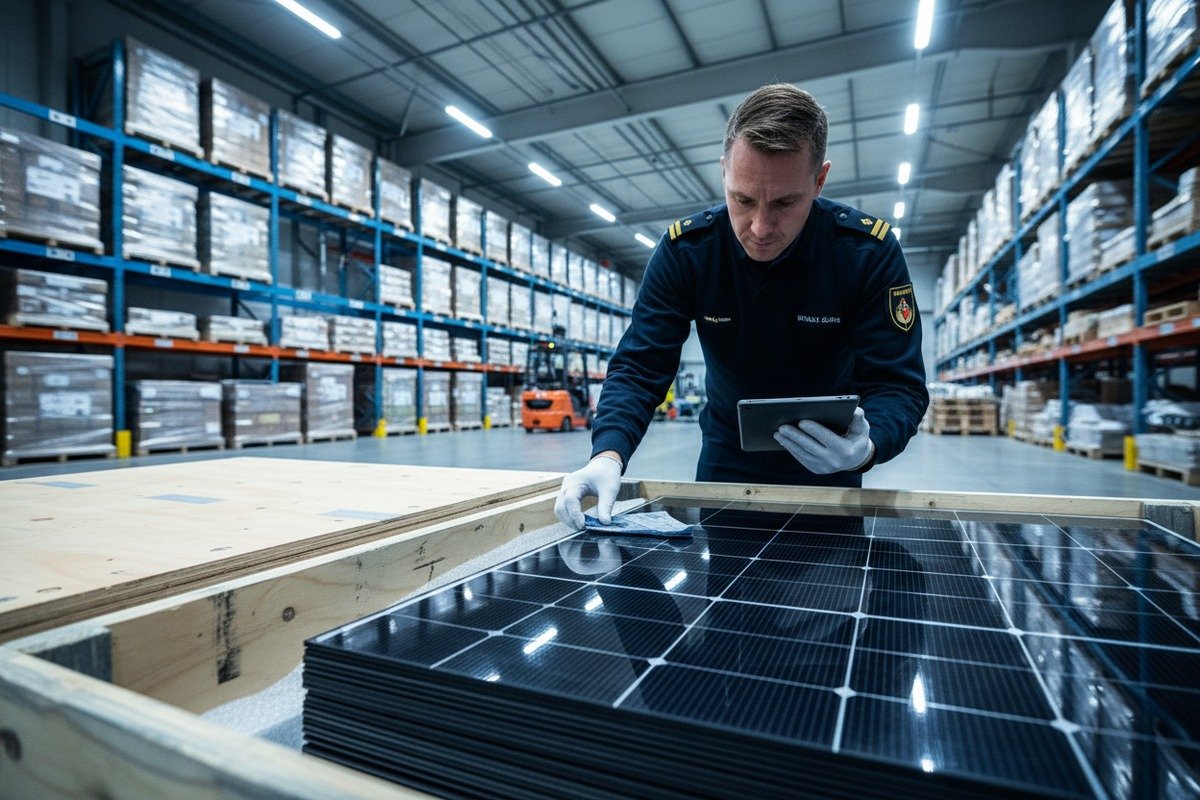
Why Solar Shingles Are High-Risk Cargo
Solar roof shingles combine tempered glass, photovoltaic cells, and precision interlocking edges. Unlike flat solar panels that ship in simple cardboard boxes, shingles have curved or stepped profiles. A cracked edge means the waterproof seal is compromised and the tile is unusable. Even micro-cracks invisible to the naked eye can degrade electrical output over time.
From our shipping records, uninsured breakage rates for poorly packaged solar tiles run 3–5%. With our proprietary packaging system — which uses EPE foam inserts, wooden crate reinforcement, and corner guards — we bring that below 1%.
Packaging Best Practices
Here is what works based on our two decades of export experience:
- Individual tile wrapping with EPE foam sleeves.
- Foam dividers between every two layers in the pallet.
- Rigid wooden crates for full pallets, not just cardboard.
- Corner protectors on all four pallet edges.
- Strapping and shrink wrap over the entire pallet.
- "Fragile" and "This Side Up" labels in multiple languages.
Insurance: What to Buy and What It Costs
| Insurance Type | Coverage | Typical Cost | Best For |
|---|---|---|---|
| Institute Cargo Clause A 10 (All Risks) | All risks including breakage, theft, water damage | 0.5–1.0% of CIF+10% | Recommended for solar shingles |
| Institute Cargo Clause B | Named perils (fire, sinking, collision) | 0.3–0.5% of CIF | Insufficient for fragile goods |
| Institute Cargo Clause C | Major casualties only | 0.1–0.3% of CIF | Not recommended |
| War and Strikes Extension | Political disruption, Red Sea rerouting | 0.05–0.15% additional | Add during geopolitical tensions |
Always insure for CIF value plus 10%. This margin covers the cost of re-ordering and re-shipping replacement tiles. Some insurers offer "nail-to-nail" coverage from the factory door to the project site. This is worth the premium for high-value BIPV shipments.
Building Breakage Into Your Budget
Even with insurance, there are deductibles and claim processing times. We advise buyers to add a 2–3% breakage buffer on top of insurance costs. If you order 1,000 square meters of shingles, budget material and shipping costs for 1,020–1,030 square meters. This prevents project delays while insurance claims are processed.
Filing a Claim
Document everything. Photograph damaged pallets at the port before signing the delivery receipt. Note damage on the Bill of Lading or delivery note. File the insurance claim within 3 days of delivery. We provide our buyers with a pre-shipment photo and video inspection report, which insurers accept as baseline evidence.
Is a DDP shipping agreement the most cost-effective way for me to manage door-to-door delivery?
When we first started offering DDP terms to our European clients, many were skeptical. They assumed handling logistics themselves would be cheaper. The math often proves otherwise.
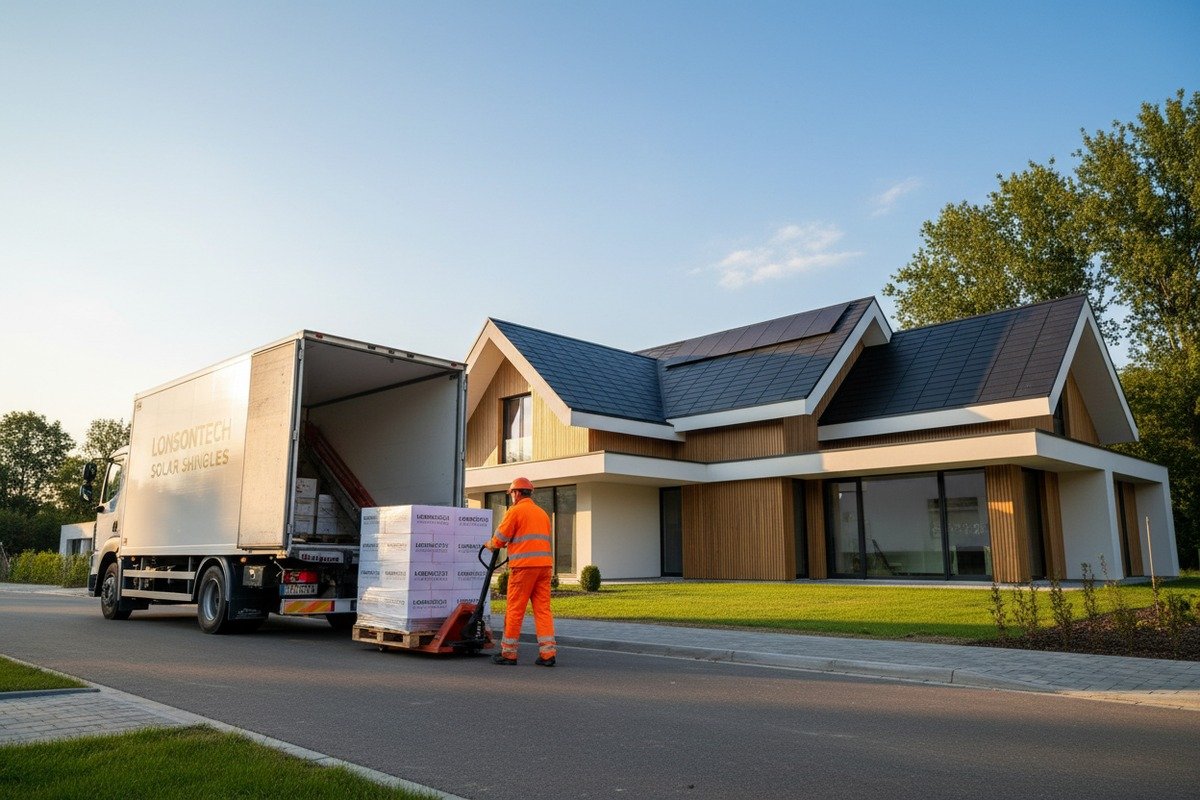
DDP (Delivered Duty Paid) shifts all logistics responsibility to the seller, including freight, customs, duties, and local delivery. For buyers lacking EU customs expertise or freight volume leverage, DDP simplifies budgeting and often reduces total landed cost by 5–10% compared to self-managed FOB imports.
Understanding Incoterms for Solar Shingle Imports
Incoterms define who pays what and who bears risk at each stage. The most common for China-to-Europe solar imports are:
- EXW (Ex Works): Buyer handles everything from the factory gate. Maximum control, maximum complexity.
- FOB (Free on Board): Seller delivers to the Chinese port. Buyer handles ocean freight onward.
- CIF (Cost, Insurance, Freight): Seller pays freight and insurance to the EU port. Buyer handles customs and inland delivery.
- DDP (Delivered Duty Paid): Seller handles everything to the buyer's warehouse door, including customs and duties.
When DDP Makes Sense
DDP works best when:
- You are a small or mid-size importer without a dedicated customs broker in the EU.
- You want one predictable line item for budgeting rather than juggling five vendors.
- Your supplier has established logistics partnerships in Europe.
- HS code classification is complex (as with BIPV products) and you want the supplier to take the customs risk.
At Lonsontech, we maintain freight forwarding agreements with partners at Rotterdam, Hamburg, and Marseille. Because we ship regularly, we negotiate volume rates that individual buyers typically cannot access. We pass these savings through in our DDP quotes.
When FOB or CIF Might Win
If you are a large distributor importing 20+ containers per year, your own freight contracts may beat our DDP pricing. You also gain flexibility to consolidate shipments from multiple Chinese suppliers into one container. In this case, FOB is often the better Incoterm.
DDP vs. FOB Cost Comparison Example
Consider a 1 MW solar shingle order (approximately two 40ft containers) from China to a warehouse near Frankfurt, Germany.
| Cost Component | FOB (Buyer Manages) | DDP (Seller Manages) |
|---|---|---|
| Product price (FOB) | EUR 110,000 | Included in DDP |
| Ocean freight (2 × 40ft) | EUR 5,500 | Included |
| Cargo insurance | EUR 800 | Included |
| EU customs duties (~4%) | EUR 4,400 | Included |
| VAT (19%, reclaimable) | EUR 22,900 | EUR 22,900 |
| Customs brokerage | EUR 600 | Included |
| Port handling / THC | EUR 900 | Included |
| Inland delivery to Frankfurt | EUR 1,200 | Included |
| Total (excl. reclaimable VAT) | EUR 123,400 | EUR 118,000–120,000 |
In this example, the DDP quote saves roughly EUR 3,000–5,000 because the supplier leverages better freight rates and absorbs brokerage fees. The buyer also saves time — no chasing customs agents, no surprise port storage charges.
Risk Transfer Under DDP
Under DDP, risk stays with the seller until goods are delivered to the buyer's named location. This means if containers are delayed, damaged at port, or hit with unexpected duty increases, the seller absorbs the cost. For buyers, this is a significant de-risking benefit. However, make sure your DDP contract specifies the exact delivery point and any exclusions.
The Cash Flow Angle
One hidden advantage of DDP is simpler cash flow. You make one payment covering everything. Under FOB, you pay the supplier, then the freight forwarder, then the customs broker, then the haulier — each with different payment terms and currencies. For smaller companies, consolidating into one DDP invoice with clear payment milestones reduces administrative burden and currency conversion costs.
Conclusion
Calculating total logistics costs for solar roof shingles from China to Europe requires adding freight, duties, insurance, and delivery to your FOB price. Budget 15–30% above FOB for a realistic landed cost.
Footnotes
1. Official details on the EU’s Carbon Border Adjustment Mechanism to reduce carbon emissions. ↩︎
2. Defines the Incoterm DDP and its implications for seller responsibility in international trade. ↩︎
3. Replaced with a Wikipedia page providing a comprehensive overview of solar shingles. ↩︎
4. Explains the strategic importance of the Suez Canal for global shipping routes. ↩︎
5. Replaced with the Wikipedia page for Eurasian Land Bridge, which describes the rail transport routes connecting China and Europe. ↩︎
6. Provides official information on obtaining a Binding Tariff Information ruling from EU customs. ↩︎
7. Provides background on the EU’s Net-Zero Industry Act for scaling clean technologies. ↩︎
8. Explains the EU regulation for construction products and its harmonized rules. ↩︎
9. Replaced with an authoritative government source (International Trade Administration) explaining HS codes. ↩︎
10. Explains the comprehensive ‘All Risks’ coverage of Institute Cargo Clause A in marine insurance. ↩︎