
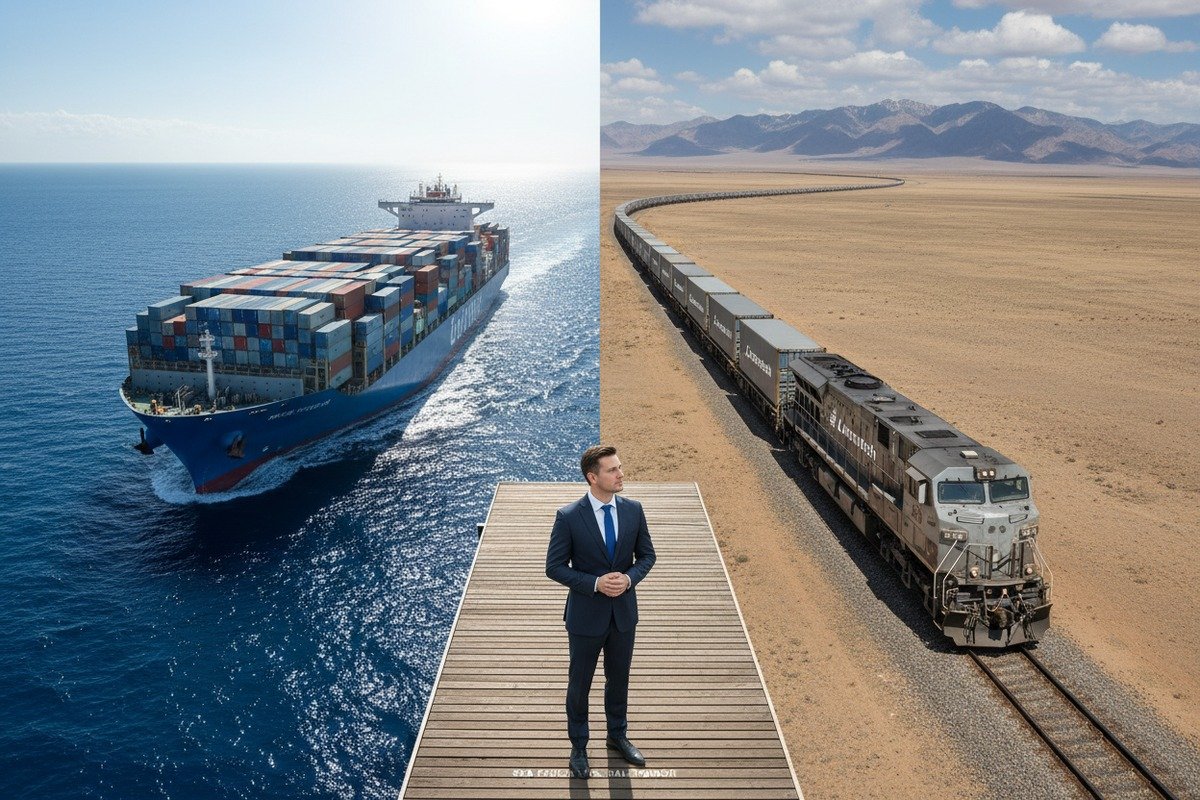
Every week, our logistics team fields the same question from European buyers 1 placing their first container orders of solar roof shingles.
Sea freight costs 25–75% less than rail for shipping solar roof shingles from China to Europe, but rail cuts transit time in half. The best choice depends on your project timeline, order volume, and tolerance for risk. Sea suits large, flexible orders; rail fits urgent or disruption-prone corridors.
The decision is not just about price tags. It touches insurance, breakage rates, customs clearance 2, carbon footprint, and whether your installation crew will be standing idle waiting for materials. Below, we break down four critical angles to help you pick the right mode for your next solar shingle shipment.
How much can I lower my landed cost by choosing sea freight over rail for my solar shingle order?
When we quote DDP prices for our European distributors, shipping cost is almost always the first line item they scrutinize Delivered Duty Paid 3.
Sea freight can save you $2,000–$6,000 per 40-foot container compared to rail when shipping solar roof shingles from China to Europe. For orders exceeding 100 tons, sea freight dramatically lowers your per-unit landed cost, though longer transit ties up working capital for 4–8 weeks.
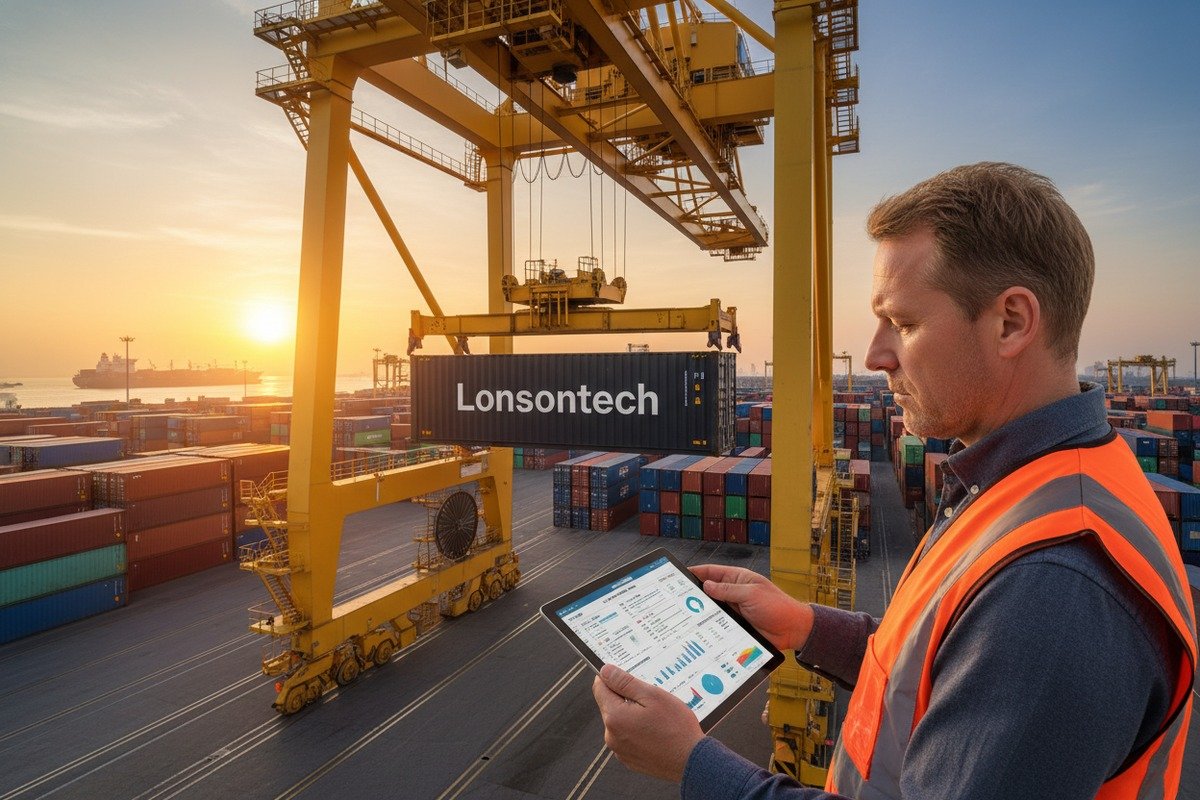
Direct Freight Rate Comparison
The raw numbers tell a clear story. Here is what we typically see for a 40-foot full container load (FCL) of our solar roof shingles headed to Western Europe:
| Cost Factor | Sea Freight | Rail Freight |
|---|---|---|
| Base rate per 40ft container | $6,000–$8,000 | $10,000–$14,000 |
| Insurance (fragile solar goods) | 1.5–2.0% of cargo value | 1.0–1.5% of cargo value |
| Typical transit time | 35–60 days | 15–25 days |
| Inventory holding cost impact | Higher (capital tied up longer) | Lower (faster turnover) |
| Fuel surcharge volatility | High (bunker fuel swings) | Moderate (more stable) |
At first glance, sea freight wins by a wide margin on sticker price. A distributor ordering five containers of our charcoal-black solar shingles could save $10,000–$30,000 in direct freight costs alone by choosing ocean over rail.
The Hidden Costs Most Buyers Miss
But landed cost is not just the freight bill. Our finance team tracks a metric we call "total cost of ownership per tile delivered." It includes capital lock-up, warehousing at destination, potential stockout penalties, and breakage replacement.
Sea freight locks your money in transit for 5–8 weeks. If you are financing inventory, that is real interest expense. For a €200,000 container of solar shingles, even a modest 5% annual financing rate means roughly €1,000–€1,500 in extra carrying cost per shipment just from the longer voyage.
Rail freight also tends to have fewer transshipment points. Fewer crane lifts and fewer port transfers mean a lower breakage claim rate. We have seen ocean shipments arrive with 2–3% tile damage on rough winter routes, while rail damage sits closer to 0.5–1%. On a container holding 1,200 tiles, that difference adds up fast.
When Sea Freight Clearly Wins
If your annual volume exceeds 100 tons and your warehouse can absorb 6–8 weeks of lead time, sea freight is almost always the smarter financial choice. We recommend it for our distributors who plan seasonal stock builds — ordering in January for a spring installation season, for example. The savings compound across multiple containers and free up budget for marketing or installation training.
When Rail Closes the Cost Gap
During disruption periods — like the Red Sea rerouting events of 2024 that pushed ocean rates up sharply — rail pricing stays relatively stable. In those windows, the cost gap narrows to just $1,000–$2,000 per container. Our logistics partners reported sea rates spiking 30–40% during peak disruption, while rail held steady on the Xi'an-to-Hamburg corridor.
Also, with Beijing scrapping solar export tax rebates 4 from April 2026, a rush of PV shipments has already driven container futures up 11% on Asia-Europe routes. This policy-driven surge tightens ocean capacity and inflates spot rates, making rail even more competitive for time-sensitive orders.
Will rail freight provide a safer transit environment to prevent breakage of my fragile solar roof tiles?
Our quality control team tracks every damage claim that comes back from European customers, and the shipping mode matters more than most buyers expect.
Rail freight generally results in lower breakage rates for solar roof shingles because it involves fewer transshipment points, avoids rough ocean swells, and provides smoother inland transit. Typical rail damage rates sit at 0.5–1%, compared to 2–3% for sea freight on winter or rerouted voyages.
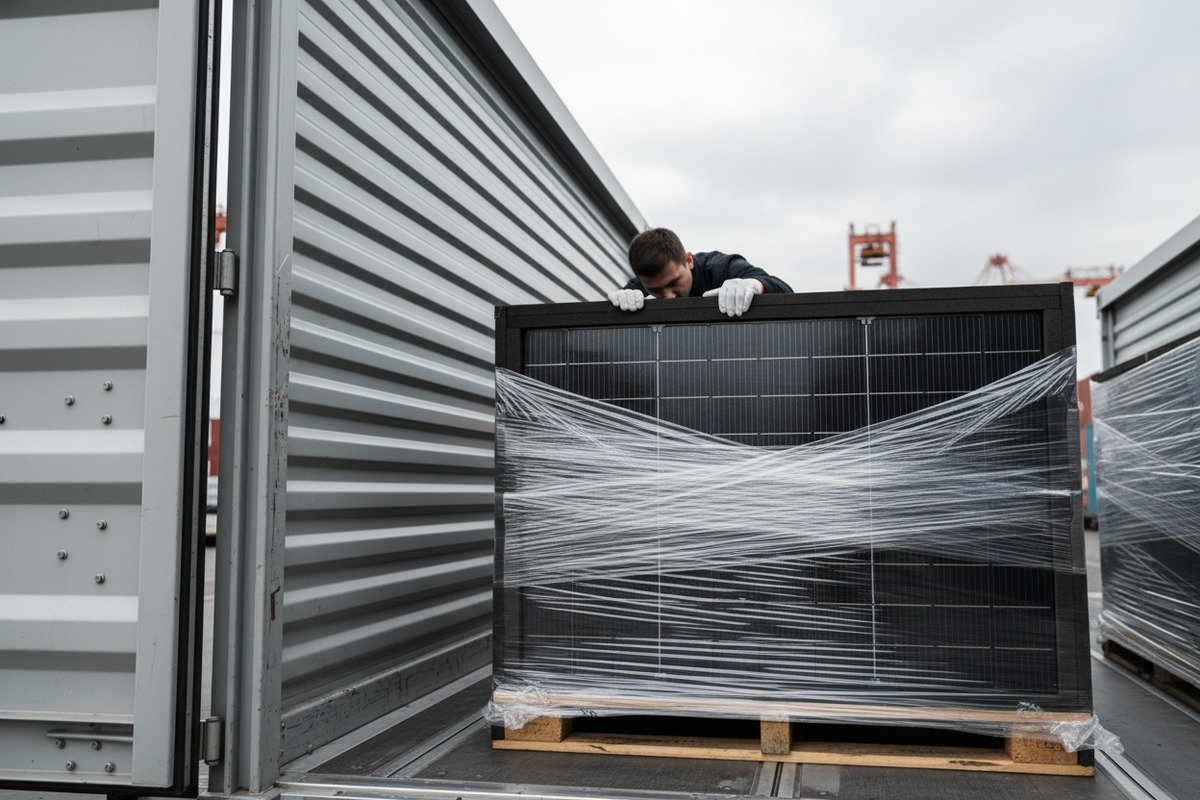
Why Solar Shingles Are Especially Vulnerable
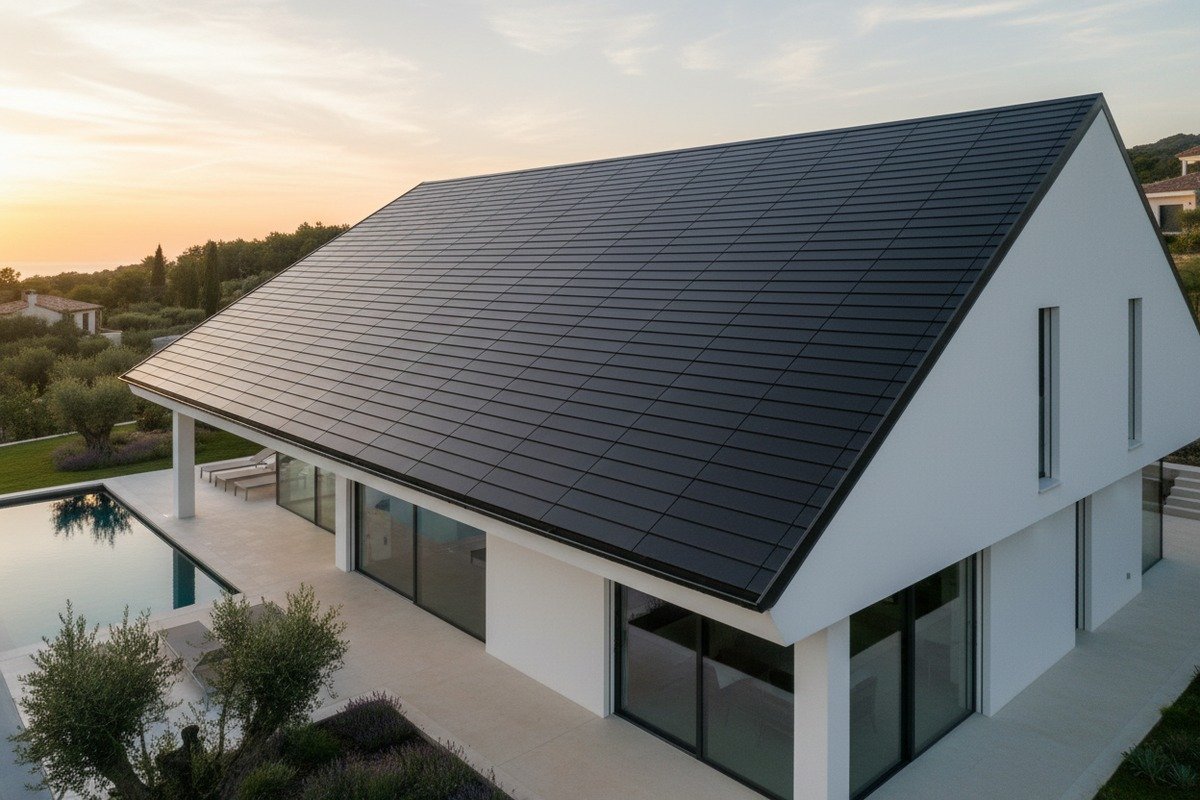
Our solar roof shingles feature tempered glass surfaces 5, precision-machined aluminum frames, and embedded photovoltaic cells. They are heavy — a single 40ft container can weigh over 20 tons loaded — and the glass faces are sensitive to point impacts. Unlike standard roofing materials, a cracked solar cell does not just look bad; it kills the electrical output of the entire tile.
We design our tiles to withstand 35mm hail and Grade 15 winds once installed. But during shipping, stacked pallets face lateral forces, vibration, and humidity that rooftop mounting never produces. The risk profile during transit is fundamentally different from in-service conditions.
Comparing Damage Risks by Mode
| Risk Factor | Sea Freight | Rail Freight |
|---|---|---|
| Number of crane lifts/transshipments | 3–5 (port to port, feeder vessels) | 1–2 (origin rail terminal to destination) |
| Exposure to ocean swell/rolling | Yes (especially rough weather routes) | No |
| Humidity and condensation risk | High (containers sweat in temp changes) | Moderate (shorter transit, less temp swing) |
| Vibration profile | Low-frequency, high-amplitude | Higher-frequency, low-amplitude |
| Average breakage rate (our data) | 2–3% | 0.5–1% |
How We Pack to Minimize Risk on Either Mode
At our Hainan facility, we use custom foam-lined crate inserts and double-wall corrugated edge protectors for every pallet. For sea freight, we add desiccant packs and moisture barrier liners inside the container to combat condensation. For rail, the main concern is lateral shifting, so we use additional strap tensioners and anti-slip mats between pallet layers.
Even with best-practice packing, the physics of ocean shipping work against fragile goods. A container on a vessel rounding the Cape of Good Hope in winter can experience 15–20 degree roll angles. That puts enormous lateral force on stacked pallets. Rail containers, by contrast, sit on flat wagons and rarely tilt beyond 2–3 degrees.
Insurance Implications
Because breakage history directly affects insurance premiums, the mode choice has a financial echo. Our freight partners quote marine cargo insurance at 1.5–2.0% of declared value for ocean shipments of solar tiles, versus 1.0–1.5% for rail. On a container valued at €200,000, that is a €1,000–€2,000 difference per shipment — not enormous, but it accumulates across a year of regular orders.
Our Recommendation for Fragile Shingles
If your project absolutely cannot tolerate any installation delay from damaged tiles, rail freight reduces your risk. For standard warehouse-stocked inventory where you can absorb a small replacement buffer, sea freight with proper packing is perfectly viable. We ship thousands of containers by sea every year with acceptable loss rates. But for first orders, sample shipments, or showcase projects where every tile matters, rail gives you peace of mind.
How do I choose the right shipping method based on my project's specific installation timeline?
Our project coordination team has helped over 200 European roofing companies align their material deliveries with construction schedules, and timing mismatches are the single biggest source of frustration.
If your installation date is 8 or more weeks away, sea freight fits comfortably. If you need materials within 3–4 weeks, rail is your only realistic containerized option. For anything in between, factor in 1–2 weeks of customs and local delivery to build a safe buffer around your crew's start date.
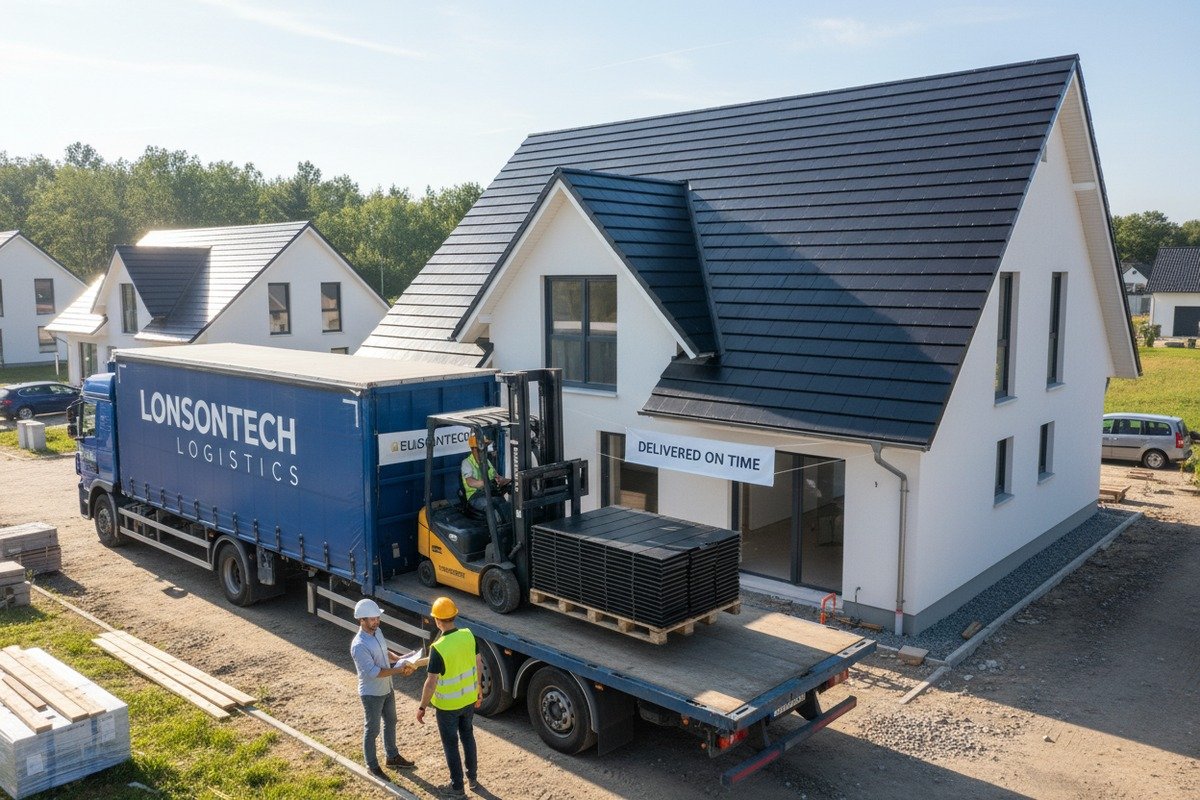
Mapping Transit to Your Construction Calendar
European construction is seasonal. Most residential roofing projects kick off between April and September. That means orders placed in January or February can afford slow ocean transit. Orders placed in March for a May start need rail speed.
Here is a practical timeline comparison from our factory gate in Hainan to a job site in Hamburg:
| Milestone | Sea Freight | Rail Freight |
|---|---|---|
| Factory to Chinese port/rail terminal | 2–3 days | 2–3 days |
| Main transit (China to Europe) | 35–55 days | 15–22 days |
| European customs clearance | 3–7 days | 3–5 days |
| Last-mile delivery to job site | 2–5 days | 2–5 days |
| Total door-to-door | 42–70 days | 22–35 days |
Building a Buffer for the Unexpected
We always tell buyers: add at least one week to any quoted transit time. Port congestion 6 in Rotterdam or Hamburg can absorb 3–5 days without warning. Chinese holidays — especially Lunar New Year in January/February — can delay factory dispatch by two weeks if you have not planned ahead.
For sea freight, that means working backward from your installation date by a full 10–11 weeks to place your order. For rail, 5–6 weeks is a safer planning horizon.
The 2026 Tax Rebate Rush Factor
Right now, the timing question is even more urgent. Beijing's decision to scrap solar export tax rebates from April 1, 2026 has triggered a surge of PV product shipments. Container futures on Asia-Europe routes jumped 11%. This means ocean capacity is tighter, transit times are stretching, and booking a slot requires longer lead times than usual.
Rail corridors like Chengdu-Łódź and Xi'an-Hamburg have absorbed some of this overflow, but they too are seeing higher utilization. If your project falls in the Q2 2026 window, we strongly recommend booking freight — either mode — at least 2–3 weeks earlier than you normally would.
Matching Mode to Project Type
Not every project has the same urgency profile. Here is how we guide our buyers:
- Large residential developments (50+ homes): Sea freight. Order in bulk 3–4 months before phase-one installation. Stockpile at a local warehouse.
- Single showcase homes or exhibition builds: Rail freight. Every day of delay costs reputation. Pay the premium for speed and reliability.
- Retrofit or renovation projects: Depends on permitting timeline. If permits are uncertain, use sea freight to avoid paying rail rates for materials that sit in a warehouse waiting for approval.
- Emergency replacement orders: Rail or even air for small quantities. We have air-shipped sample pallets for urgent warranty replacements, though the cost per tile is 5–10x higher.
Multimodal Hybrid Approaches
Some of our larger European partners use a combined strategy. They ship the bulk of their seasonal inventory by sea in Q1, then top up with rail shipments in Q2 as project bookings firm up. This balances cost efficiency with responsiveness. It also diversifies supply chain risk — if ocean routes face disruption, the rail pipeline keeps projects on track.
Can I rely on DDP services for both sea and rail freight to avoid customs delays in Europe?
Our export operations team handles DDP shipments to over a dozen European countries, and we have learned that the customs experience varies significantly between sea and rail entry points.
Yes, DDP (Delivered Duty Paid) services are available for both sea and rail freight from China to Europe. A reliable DDP provider handles customs classification, duty payment, and VAT on your behalf. However, solar roof shingles face HS Code ambiguity — classified as building materials or photovoltaics — so working with an experienced forwarder is critical to avoid delays.
What DDP Actually Covers
DDP means the seller — or in our case, the manufacturer and our appointed freight partner — takes responsibility for the shipment all the way to your door. That includes export customs in China, main transit, import customs in Europe, duties, VAT, and final delivery. You receive the goods with no further formalities.
For solar roof shingles, the DDP service solves a real pain point. BIPV products sit in a gray area between HS codes 7 for photovoltaic modules (8541.40) and building materials (various chapters 68–69). A wrong classification can trigger unexpected duties, delays at customs, or even seizure for inspection.
Sea vs. Rail Customs Experience
The customs process itself is similar for both modes, but the entry points differ, and that affects clearance speed.
Sea freight enters through major ports — Rotterdam, Hamburg, Antwerp, Piraeus. These ports handle enormous volumes. Customs queues can be long, especially during peak shipping season. Automated clearance helps, but physical inspections still happen randomly and add 2–5 days.
Rail freight enters through land borders — Małaszewicze (Poland), Brest (Belarus/Poland), or Dostyk (Kazakhstan/China). These crossings are increasingly efficient thanks to Belt and Road 8 investments, with pre-clearance protocols reducing border dwell time. In our experience, rail customs clearance in Poland takes 2–3 days on average, versus 3–7 days for sea customs in Rotterdam during busy periods.
The HS Code Challenge for Solar Shingles
This is where many importers get caught. Traditional solar panels 9 have a well-established HS code. Solar roof shingles, which integrate PV cells into a building envelope product, do not always fit neatly. Different European customs offices have interpreted the classification differently.
We work with customs brokers 10 who specialize in BIPV products. They prepare detailed product descriptions, technical data sheets, and test certificates (CE, TUV) that demonstrate both the electrical and construction functions of our tiles. This proactive documentation approach reduces the chance of a classification dispute at the border.
VAT and Duty Deferral Options
For buyers importing into the EU, VAT deferral schemes exist in several countries. The Netherlands, Belgium, and Poland all offer postponed VAT accounting, which means you do not pay import VAT upfront — it goes on your periodic VAT return instead. This can free up significant cash flow on high-value solar tile shipments.
Our DDP service includes coordination with local fiscal representatives where needed. Whether your container arrives by sea in Rotterdam or by rail in Łódź, we ensure the duty and VAT treatment is optimized for your specific market.
Practical Tips for Smooth DDP Clearance
- Provide your EORI number early. Without it, customs clearance cannot begin.
- Confirm HS code classification before shipping. We provide binding tariff information (BTI) support.
- Keep certificates accessible. CE, TUV, and CCC documents must be ready for inspection — not buried in a filing cabinet.
- Choose a forwarder with BIPV experience. Generic freight agents often misclassify solar shingles, causing delays.
Whether you choose sea or rail, DDP is the cleanest way to import solar roof shingles. It removes customs risk from your plate and lets you focus on installation and sales. The key is selecting a supplier — and a logistics partner — who understands the unique classification challenges of integrated solar roofing products.
Conclusion
Choosing between sea and rail freight for solar roof shingles comes down to your volume, timeline, and risk tolerance. Plan early, pack smart, and partner with experienced logistics providers.
Footnotes
1. Overview of trade relations between the EU and China. ↩︎
2. Authoritative guide on EU customs procedures. ↩︎
3. Wikipedia entry for international commercial terms (Incoterms). ↩︎
4. WTO information on trade subsidies and export rebates. ↩︎
5. Technical background on the properties of tempered glass. ↩︎
6. World Bank data on global container port performance. ↩︎
7. WCO explanation of the Harmonized System for product classification. ↩︎
8. Background on the trans-Eurasian rail infrastructure project. ↩︎
9. EPA information on solar technology and environmental impact. ↩︎
10. Official EU resource for economic operator identification. ↩︎