Every week, our sales team fields calls from European buyers who want to visit or audit our production lines before placing their first order. The concern is real. With UFLPA enforcement 1 tightening and building-code compliance growing more complex, a bad audit—or no audit at all—can mean seized shipments, failed installations, or destroyed reputations.
Leading third-party agencies that can audit China solar roof shingle factories include TÜV SÜD, SGS, Intertek, Sinovoltaics, QIMA, TESTCOO, and Spire Solar (Eternal Sun group). These firms offer factory audits, inline quality checks, supply chain traceability verification, and certification testing for IEC, CE, and building material compliance standards.
Below, we break down which agencies to hire, what they should check, and how to avoid the most common pitfalls. Whether you are a roofing company in France or a distributor in Germany, this guide will help you protect your investment.
Which international inspection companies should I hire to audit my solar shingle supplier in China?
When we prepare our factory for buyer audits, we see a wide range of inspection firms walk through the doors. Some focus purely on photovoltaics. Others bring a broader building-materials lens. Knowing the difference saves you time and money.
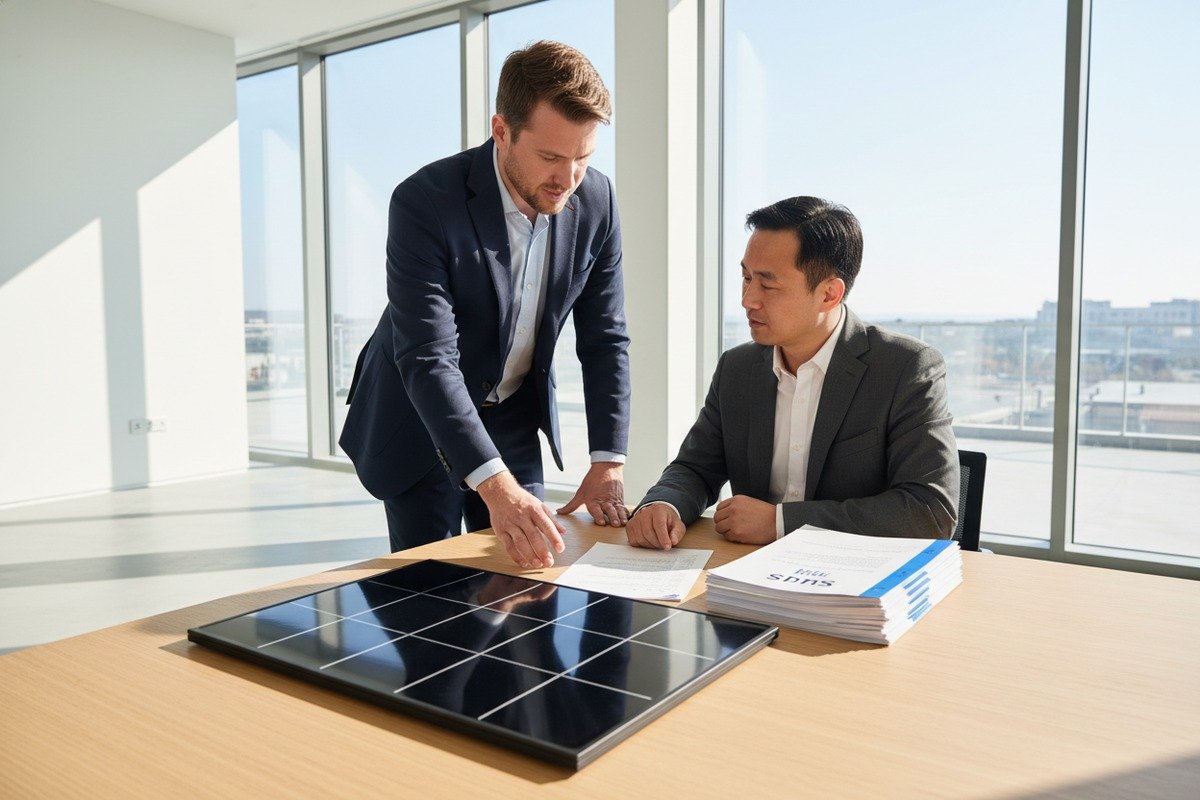
You should consider hiring globally recognized firms like SGS, Intertek, TÜV SÜD, or Sinovoltaics for comprehensive solar shingle factory audits. For cost-effective inline inspections, specialized firms such as QIMA, TESTCOO, and Spire Solar (Eternal Sun) offer focused PV production audits with local teams based in major Chinese manufacturing hubs.
Understanding the Agency Landscape
Not all audit firms are equal. Some specialize in electrical safety. Others focus on supply chain ethics. A few do both. Here is a quick overview of the main players.
| Agency | Headquarters | Core Strength for Solar Shingles | Typical Audit Scope |
|---|---|---|---|
| TÜV SÜD 2 | Germany | IEC/CE certification, SSI audits | Electrical safety, ESG, factory capability |
| SGS 3 | Switzerland | Broad testing and inspection | Pre-shipment, lab testing, factory audit |
| Intertek 4 | UK | 1,000-point checklists, risk classification | Full production audit, benchmarking |
| Sinovoltaics | Hong Kong/China | PV-specific traceability and quality | Supply chain traceability, EL imaging |
| QIMA | Hong Kong | Cost-effective on-site inspections | Inline QC, pre-shipment, social audits |
| TESTCOO | China | Local PV hub coverage | Factory audit, inline supervision |
| Spire Solar (Eternal Sun) | Netherlands/China | PV flash testing, performance verification | Production readiness, lab testing |
How to Choose the Right Firm
Start by asking yourself three questions. First, do you need a certification audit or a quality inspection? Certification audits from TÜV or Intertek verify that products meet IEC 61215 5, IEC 61730, or EN standards. Quality inspections from QIMA or TESTCOO check whether the factory actually builds what the spec sheet claims.
Second, do you need supply chain traceability? If you import into the US or plan to in the future, UFLPA compliance is mandatory. Sinovoltaics and TÜV SÜD both offer polysilicon traceability audits that map the supply chain back to the ingot stage.
Third, what is your budget? A full TÜV SÜD factory audit can cost several thousand euros. A QIMA inline inspection might run a few hundred. Many of our European clients use a tiered approach: they start with a QIMA or TESTCOO factory check, then bring in TÜV or Intertek for the formal certification review.
Scheduling and Lead Times
Most agencies need two to three weeks to schedule an audit in China. Peak season is Q1 and Q3, when production ramps up for spring and autumn installation windows. Book early. If you wait until your order is already on the line, you lose leverage.
One tip from our experience: ask the agency for the auditor's CV. You want someone who has inspected solar manufacturing before—not just general electronics. Solar roof shingles sit at the intersection of PV and building materials. That dual expertise matters.
How do I ensure the auditor checks for both TUV electrical safety and European building material compliance?
Our engineering team has spent years aligning production with both TÜV electrical requirements and European Construction Products Regulation (CPR) 6 standards. We know firsthand that many auditors check one side but forget the other. That gap is where costly problems hide.
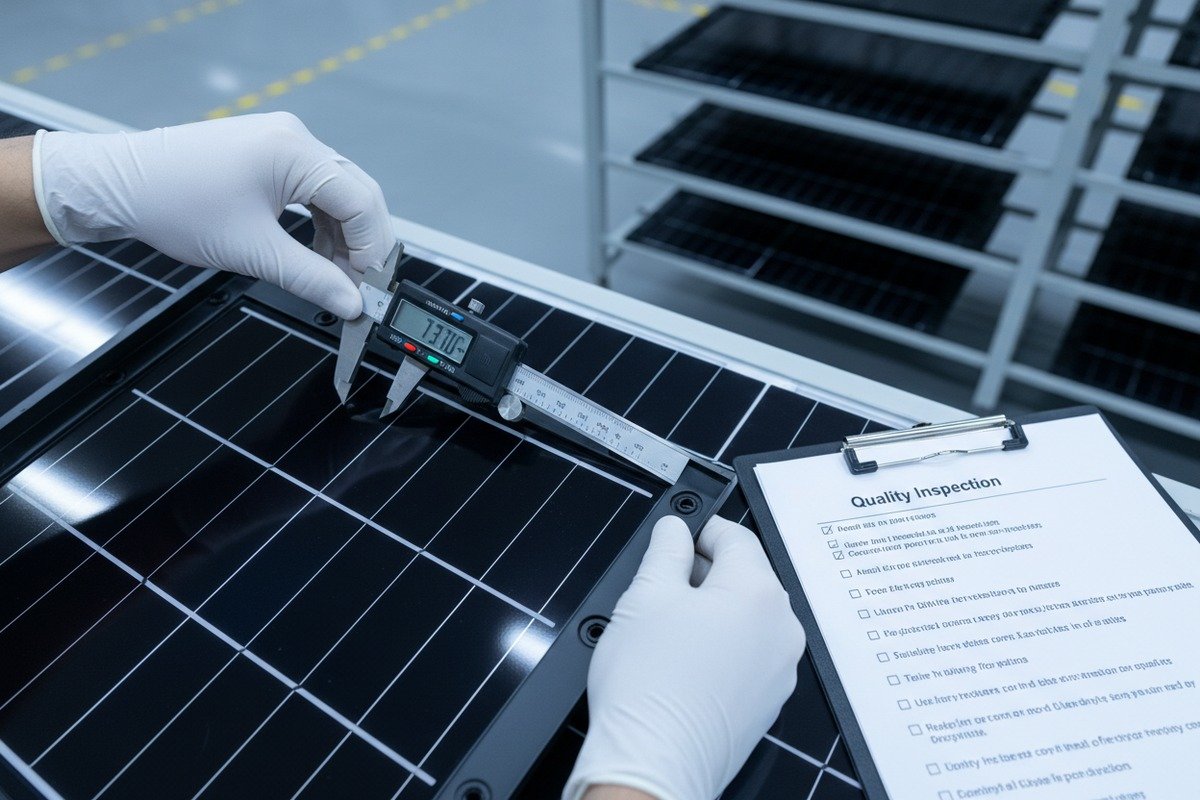
To ensure your auditor covers both dimensions, you must provide a dual-requirement audit checklist that explicitly lists TÜV electrical safety tests (IEC 61215, IEC 61730) alongside European building material compliance criteria (CPR fire rating, wind load EN 14437, water penetration), and verify the auditor's qualifications cover both PV and construction product standards.
The Dual-Certification Problem
Solar roof shingles are not just solar panels. They are also building materials. In Europe, this means they must satisfy two separate regulatory frameworks. The electrical side falls under IEC and CE marking for PV modules. The building side falls under the Construction Products Regulation (CPR), which governs fire behavior, mechanical resistance, and weather tightness.
Many buyers only verify the electrical certificates. They receive TÜV or CE marks for IEC 61215 and IEC 61730 and assume everything is covered. But a solar shingle that passes all electrical tests can still fail CPR requirements for fire classification, hail resistance, or water penetration. In France, for example, fire rating requirements for roofing materials are strict and region-specific.
Building Your Dual Checklist
Here is a framework you can hand directly to your auditor:
| Compliance Area | Standard / Test | What to Verify |
|---|---|---|
| Electrical Safety | IEC 61730 | Insulation resistance, dielectric strength, ground continuity |
| PV Performance | IEC 61215 | Thermal cycling, damp heat, UV exposure, mechanical load |
| Fire Rating (CPR) | EN 13501-5 | External fire exposure to roofs classification (BROOF) |
| Wind Load | EN 14437 / local codes | Uplift resistance at edges and corners |
| Water Penetration | EN 539-1 | Impermeability under simulated rainfall |
| Hail Resistance | EN 12209 or IEC 61215 MQT | Impact test with specified ice ball diameter |
| Mechanical Fastening | CPR / ETA guidelines | Pull-out strength of mounting clips, interlock integrity |
Verifying the Auditor's Qualifications
Before you sign a contract with any agency, ask for proof that the assigned auditor holds credentials in both PV testing and construction product assessment. TÜV SÜD and Intertek have dedicated BIPV teams that understand both worlds. If you use a general firm, insist on adding a specialist sub-contractor for the building-material side.
We also recommend contacting the issuing laboratory directly. Certificates can be forged or applied to products outside their original scope. A five-minute email to the TÜV or SGS lab that supposedly tested the product can confirm whether the certificate number, product model, and factory address all match.
The SSI Standard as a Bridge
The Solar Stewardship Initiative (SSI) 7 is emerging as a bridge standard. TÜV SÜD certified Trina Solar's Yancheng Dafeng and Yiwu factories under SSI in 2024—the first in the industry. SSI covers ESG, quality, and traceability in one framework. While it does not replace CPR testing, it signals that a factory operates at a high baseline. Ask your auditor whether the factory holds or is pursuing SSI certification.
What specific quality control points should I ask my third-party agency to verify at the factory?
When our quality team runs internal checks, we follow a multi-stage process that catches defects at the source—not at the port. We have seen buyers lose entire containers because they skipped inline inspection and only checked finished goods. The cost of that mistake is enormous.
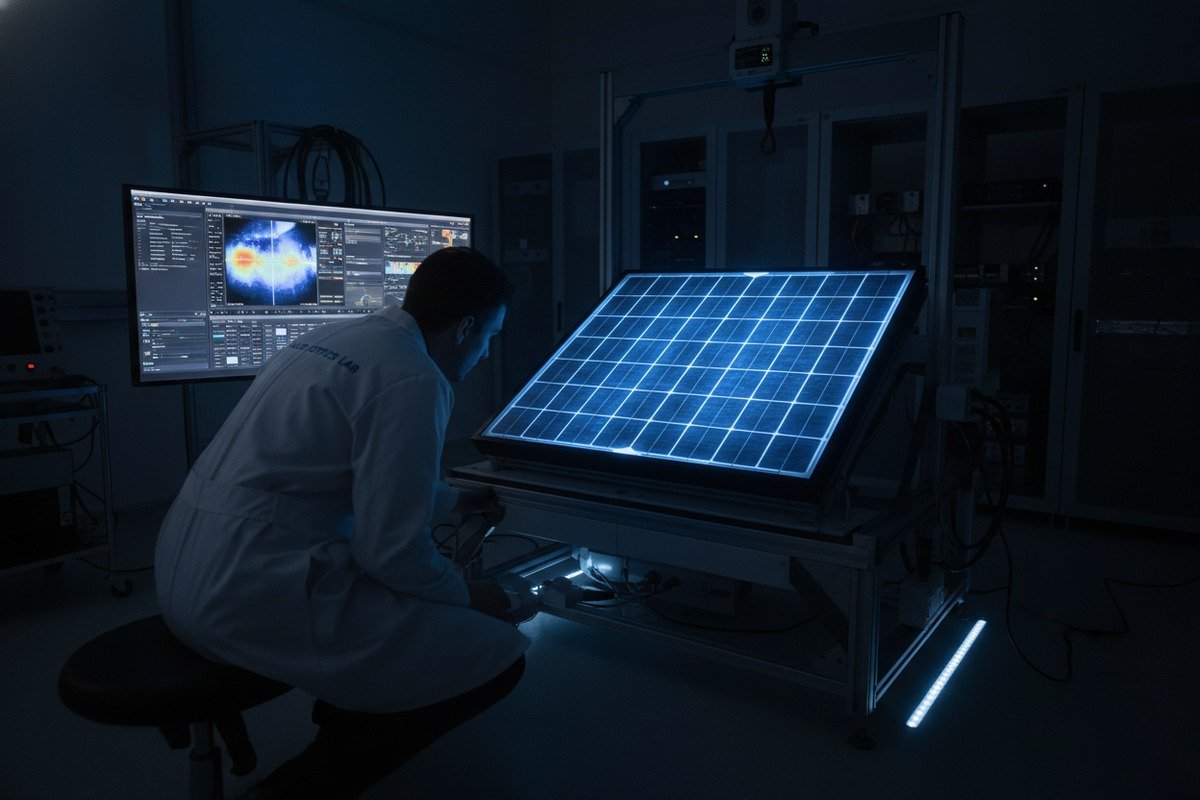
Ask your third-party agency to verify raw material certificates, cell-to-module soldering quality via Electroluminescence (EL) imaging, lamination integrity, flash test data against nameplate specs, waterproof interlocking mechanism function, color consistency across batches, and final pre-shipment AQL sampling—covering both electrical performance and structural building-material criteria.
The Three-Stage Verification Process
The most effective audit follows three stages: document review, production-line inspection, and independent lab testing. Skipping any stage creates blind spots.
Stage 1: Document Review. Before anyone enters the factory, the auditor should collect and verify raw material certificates (silicon wafer source, glass temper reports, EVA/backsheet specs), ISO 9001 management system 8 records, calibration logs for testing equipment, and historical defect rate data. This stage can be done remotely via video call and document sharing.
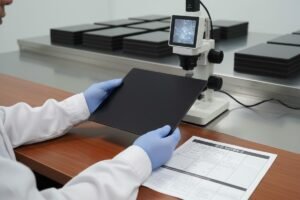
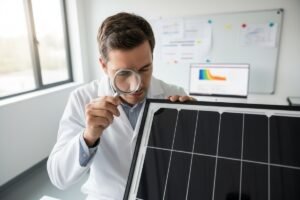
Stage 2: Inline Production Inspection. This is where the auditor physically walks the line. Key checkpoints include:
- Cell sorting accuracy: Are cells binned correctly by efficiency class?
- Soldering quality: Are ribbon connections uniform? Any cold joints?
- EL imaging: Every module should pass EL testing to reveal micro-cracks, dead cells, and soldering defects invisible to the naked eye.
- Lamination: Check for bubbles, delamination, or EVA yellowing in the laminator output.
- Waterproof interlock: For solar shingles specifically, the interlocking and drainage channel design must be inspected for dimensional accuracy. A 0.5mm deviation can cause leaks.
Stage 3: Independent Lab Testing. Pull random samples from the production batch and send them to an independent lab (not the factory's own lab) for flash testing, insulation resistance, and mechanical load testing.
Critical Checkpoints Specific to Solar Shingles
Solar shingles have unique failure modes that standard panel inspections miss. Here are the ones that matter most:
| Checkpoint | Why It Matters | Pass Criteria |
|---|---|---|
| Color consistency (ΔE value) | Patchy roofs get rejected by European homeowners | ΔE < 2.0 across production batch |
| Interlock dimensional tolerance | Ensures waterproof fit on roof | ±0.3mm from design spec |
| Glass edge micro-chips | Chips propagate cracks under thermal stress | Zero chips visible at 3x magnification |
| Junction box adhesion | Poor adhesion leads to water ingress | Pull-off force ≥ 50N per manufacturer spec |
| Flash test Pmax deviation | Confirms power output matches datasheet | Within ±3% of rated Pmax |
| Hail impact test | Structural integrity under extreme weather | No crack after 35mm ice ball at 30 m/s |
AI and Digital Tools Enhancing Inspections
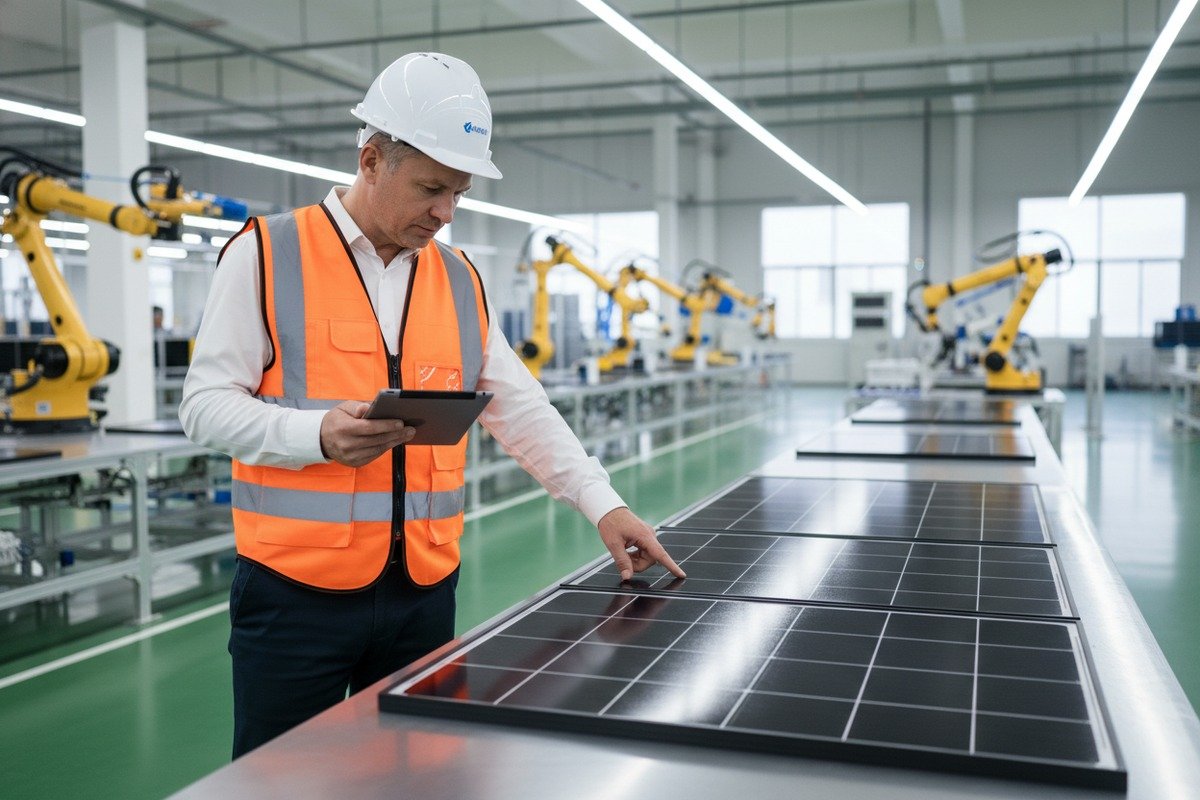
A growing number of factories, including ours, now integrate AI-powered visual inspection systems on the production line. These systems photograph every cell and module, detecting micro-defects that human inspectors miss. Ask your auditor whether the factory uses automated optical inspection (AOI) or AI-based EL analysis. Factories that invest in these tools typically show lower field failure rates.
Digital twin technology 9 is also entering the picture. Some advanced lines maintain a real-time digital replica of the manufacturing process. This allows engineers to predict when a laminator's vacuum seal will degrade or when a stringer's alignment drifts. If the factory you are auditing uses digital twins, it is a strong quality signal.
Can I trust a local Chinese inspection firm, or should I stick with global names like SGS or Intertek?
Our factory has been audited by both global giants and small local firms. The quality of the audit depends less on the brand name and more on the individual auditor's experience and the scope of work you define. Still, there are important differences buyers should understand.
You can trust reputable local Chinese inspection firms like TESTCOO or CCIC for routine factory audits and inline quality checks, especially in PV manufacturing hubs. However, for certification audits, UFLPA traceability, and reports that European regulators or banks will accept, global firms like SGS, Intertek, or TÜV SÜD carry significantly more weight and credibility.

The Case for Global Firms
Global firms offer three things local firms usually cannot. First, international recognition. When you present an SGS or TÜV report to a European bank, insurer, or building authority, they accept it without questions. A report from a small local firm may require additional verification.
Second, global benchmarking. Intertek, for example, maintains a database of thousands of factory audits across multiple countries. They can classify your supplier's risk level relative to global peers. This comparative context helps you understand whether a 2% defect rate is good or bad for the industry.
Third, multi-discipline expertise. Global firms employ specialists in PV engineering, building materials, fire safety, and ESG compliance under one roof. For solar shingles—which straddle multiple regulatory domains—this breadth is valuable.
The Case for Local Firms
Local Chinese firms have their own advantages. They are cheaper. A TESTCOO factory audit might cost 30–50% less than an equivalent SGS audit. They are faster to deploy. With teams based in Jiangsu, Zhejiang, and Guangdong—where most solar manufacturing happens—they can arrive on short notice.
Local firms also understand Chinese factory culture. They know when a factory is staging a "show line" for the audit versus running normal production. They catch subtle cues that a foreign auditor might miss.
The Limitations and Risks
Here is where it gets nuanced. Critics argue that no third-party audit—local or global—can fully verify labor conditions or polysilicon sourcing in China's controlled environment. The comparison to the Kimberley Process for conflict diamonds is apt. Auditors cannot freely access restricted regions. They rely on documents the factory provides. If those documents are fabricated, the audit fails silently.
The SSI framework attempts to address this by requiring multi-level traceability audits. But as of 2024, SSI has only certified specific factories (Trina's Yancheng Dafeng and Yiwu), with pilot assessments underway at Yangzhou and Huai'an. Plans call for auditing 100GW of annual module capacity and 20GW of cell capacity by Q1 2025. The program is promising but still voluntary and limited in geographic reach.
A Practical Hybrid Approach
Many of our European clients use a hybrid strategy:
- Initial screening: QIMA or TESTCOO conducts a factory capability audit and social compliance check.
- Production monitoring: A local firm performs inline inspections during the production run.
- Certification and traceability: TÜV SÜD or Intertek handles the formal IEC/CPR certification review and polysilicon traceability audit.
- Pre-shipment: SGS or CCIC performs final container loading inspection with photo documentation.
This layered approach balances cost, speed, and credibility. It also creates multiple independent checkpoints, making it harder for any single point of failure to slip through.
Future Trends: Blockchain and EU Regulations
Looking ahead, blockchain-based traceability is gaining traction. By creating an immutable digital record from polysilicon ingot to finished shingle, blockchain can supplement traditional audits with tamper-proof data. Several industry groups, including the Solar Energy Industries Association (SEIA), are piloting these systems.
The EU is also expected to introduce mandatory due diligence legislation for solar imports, similar to UFLPA but with a European framework. When that happens, the demand for credible third-party audits will surge. Buyers who establish audit relationships now will be ahead of the curve.
Future audits will also increasingly incorporate recyclability criteria. As circular economy regulations tighten, auditors will check whether solar shingle components can be disassembled and recycled at end of life. This is a new frontier, but forward-thinking manufacturers are already designing for it.
Conclusion
Choosing the right third-party audit agency protects your supply chain, your compliance standing, and your reputation. Use a layered approach—local firms for speed, global firms for credibility—and always demand dual coverage of electrical safety and building material standards.
Footnotes
1. Official U.S. Customs and Border Protection page on the Uyghur Forced Labor Prevention Act. ↩︎
2. Official website of TÜV SÜD, a global leader in testing, inspection, and certification. ↩︎
3. Official website of SGS, a leading company in inspection, verification, testing, and certification. ↩︎
4. Official website of Intertek, a multinational assurance, inspection, product testing, and certification company. ↩︎
5. Wikipedia provides a comprehensive overview of the IEC 61215 standard for PV modules. ↩︎
6. Official European Commission page detailing the Construction Products Regulation. ↩︎
7. Replaced with the official homepage of the Solar Stewardship Initiative (SSI), which is dedicated to supply chain sustainability in the solar PV sector. ↩︎
8. Official ISO page explaining the ISO 9001 quality management system standard. ↩︎
9. NIST provides an authoritative explanation of digital twin technology in manufacturing. ↩︎
10. Wikipedia provides a good technical explanation of electroluminescence, relevant to solar panel inspection. ↩︎