
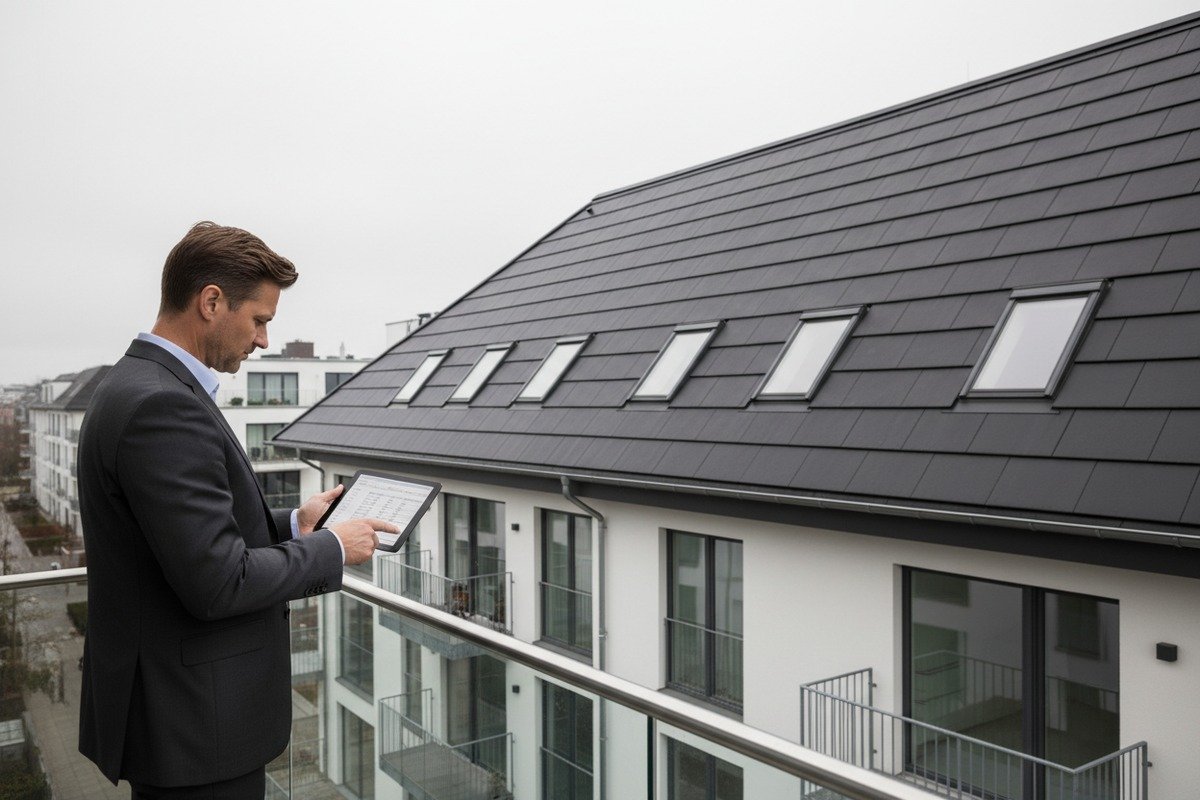
Every year, we ship containers of solar roof shingles to Northern Europe — and every year, the same worry comes back from buyers: “Will these actually produce enough power under our grey skies?” It is a fair concern. Low irradiance, persistent cloud cover, and harsh winters can turn a promising solar investment into an expensive disappointment low-irradiance performance data 1. The problem gets worse when sourcing decisions are based on Standard Test Conditions 2 alone, which rarely reflect real rooftop performance in Hamburg, Oslo, or Manchester.
To evaluate solar roof shingle performance for low-sunlight Europe, verify low-irradiance efficiency ratings beyond STC, confirm CE/TUV and CPR certifications, check snow and wind load compliance, and scrutinize long-term warranty terms for humidity and degradation under real Northern European conditions.
This guide walks you through every critical checkpoint — from lab data to real-world yield, from certifications to warranty fine print PVGIS simulation data 3. Whether you are a distributor, roofing contractor, or developer sourcing from China, the steps below will help you avoid costly mistakes and select shingles that actually deliver in Europe’s toughest climates.
How can I verify the low-light efficiency of solar shingles for my projects in Northern Europe?
Our R&D team spent years optimizing cell selection specifically for diffuse-light conditions Eurocode EN 1991-1-3 4. Yet we still see buyers making sourcing decisions based only on peak-watt ratings — numbers measured under 1000 W/m² of direct sunlight that Northern Europe almost never delivers consistently.
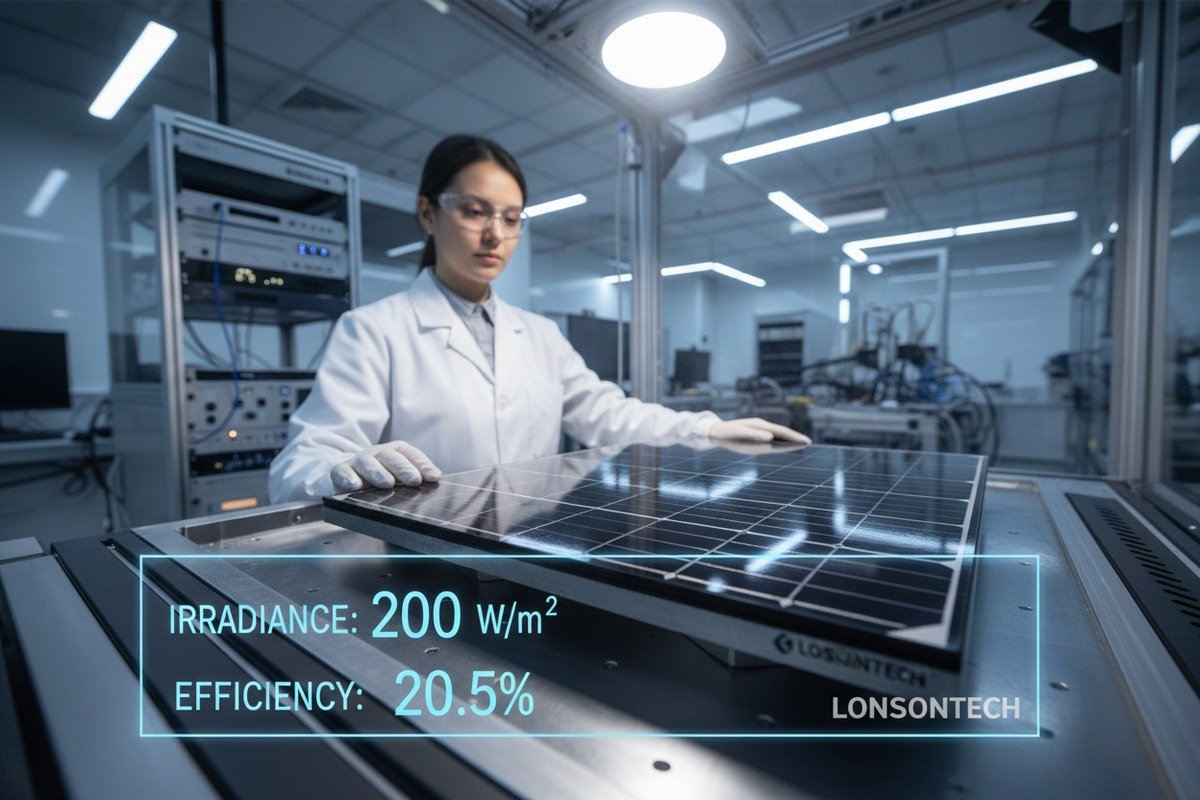
Request low-irradiance performance data measured at 200 W/m², compare monocrystalline PERC cells against thin-film alternatives, and demand independent flash-test reports rather than relying solely on STC nameplate ratings from the manufacturer's datasheet.
Why STC Ratings Mislead Buyers in Cloudy Climates
Standard Test Conditions assume 1000 W/m² irradiance, 25°C cell temperature, and AM1.5 spectrum. In Northern Europe, annual irradiance ranges from 800 to 1100 kWh/m²/year Potential Induced Degradation 5. On a typical overcast day in the UK or Scandinavia, rooftop irradiance may hover around 100–300 W/m². At these levels, many solar shingles produce only 10–50% of their rated output. That gap between the datasheet number and the real rooftop number is where profit margins vanish for distributors and project developers.
The key metric to request is the low-irradiance efficiency ratio. This compares efficiency at 200 W/m² to efficiency at 1000 W/m². A high-quality monocrystalline PERC shingle should retain at least 95% of its STC efficiency at 200 W/m². Cheaper polycrystalline or amorphous cells often drop to 85% or lower.
Monocrystalline vs. Thin-Film for Diffuse Light
When we source cells for our production lines, we run head-to-head comparisons under simulated European cloud conditions. Here is what the data typically shows:
| Cell Technology | STC Efficiency | Efficiency at 200 W/m² | Best Use Case |
|---|---|---|---|
| Monocrystalline PERC | 19–22% | 18–21% (retains ~95%) | Northern Europe, limited roof area |
| Polycrystalline | 16–19% | 13–16% (retains ~85%) | Budget projects, high-irradiance zones |
| Amorphous Thin-Film | 8–10% | 7–9% (retains ~90%) | Very large roofs, extreme diffuse light |
Monocrystalline PERC cells 6 dominate for Northern European projects. They maintain strong output in diffuse light and deliver more watts per square meter. This matters when roof area is limited — which it almost always is on residential buildings.
Spectral Response and Blue-Rich Light
Northern Europe's cloudy skies produce light that is shifted toward the blue end of the spectrum. Not all cells respond equally to this spectrum. When evaluating shingles, ask the supplier for spectral response curves 7. Cells optimized for blue-rich diffuse light will show higher quantum efficiency in the 400–500 nm range. Our engineering team specifically selects cells with this characteristic for European-bound products.
Practical Verification Steps
Do not take a supplier's word for it alone. Here is what to do:
- Request independent flash-test reports from a third-party lab (TÜV Rheinland, PI Berlin, or Fraunhofer ISE).
- Ask for PVGIS simulation data using irradiance inputs for your target city (e.g., Stockholm at 950 kWh/m²/year).
- Check for micro-inverter or power optimizer compatibility. These devices mitigate partial shading and uneven light, which are constant in Northern Europe's weather.
- Request a sample and test it yourself under local conditions if possible.
One thing buyers in France and Germany often overlook: cooler temperatures actually help. Solar cells lose efficiency as they heat up. In Northern Europe, lower ambient temperatures offset some of the low-light losses, improving real-world yield compared to hot climates.
What specific certifications do I need to ensure these shingles comply with European building and PV standards?
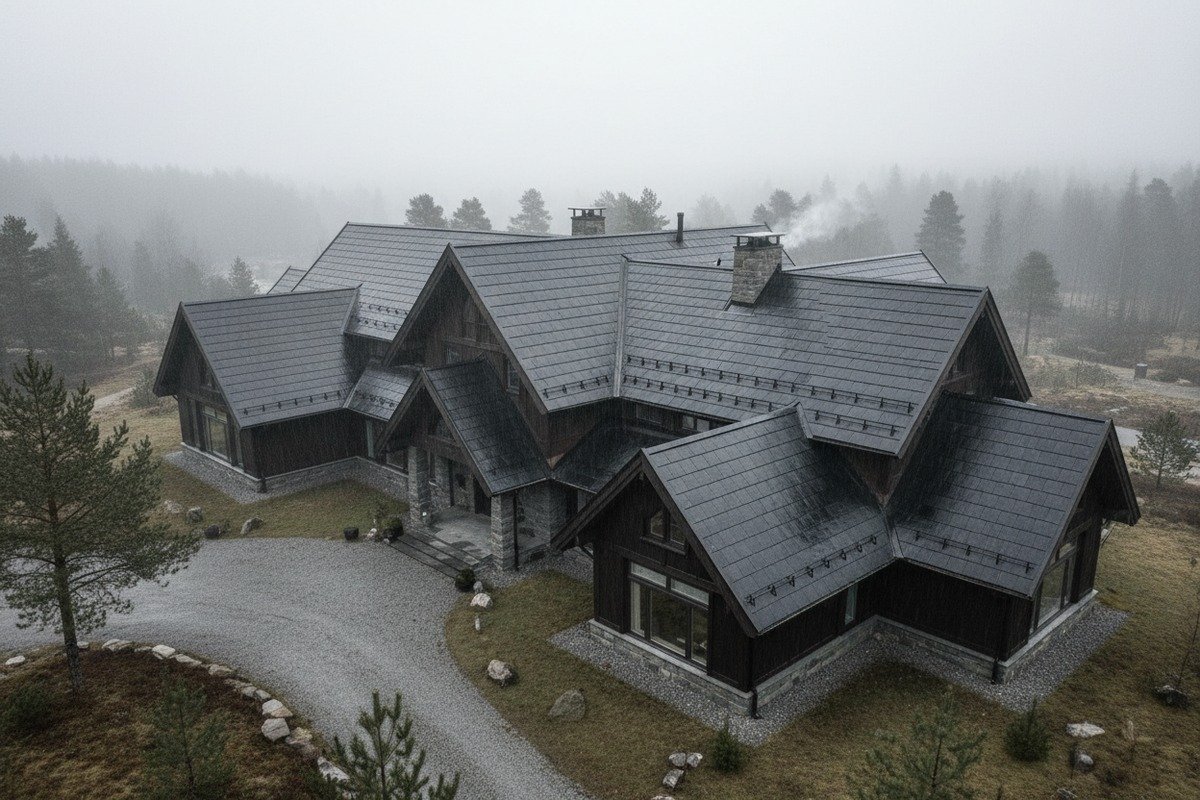
When we first entered the European market over a decade ago, we learned a painful lesson: passing electrical certification alone is not enough. Solar roof shingles sit at the intersection of two regulatory worlds — photovoltaics and building materials. Miss one, and your shipment sits in customs or your project fails inspection.
Solar shingles for Europe require dual certification: PV electrical standards (IEC 61215, IEC 61730, CE marking) and building product compliance under the Construction Products Regulation (CPR), including fire classification, wind uplift, and water penetration testing per EN standards.
The Dual Certification Challenge
This is the single biggest compliance risk for importers. A solar shingle is simultaneously an electrical device and a roofing material. It must satisfy:
- PV Standards: IEC 61215 8 (design qualification and type approval), IEC 61730 (safety qualification), and CE marking for the Machinery/Low Voltage Directive.
- Building Standards: The EU Construction Products Regulation 9 (CPR) requires a Declaration of Performance (DoP) covering fire reaction/resistance, water tightness, wind load, and mechanical resistance.
Many Chinese manufacturers hold IEC and CE for the PV side but lack CPR documentation. This creates a serious problem at the point of installation. European building inspectors do not care about your flash-test report — they want to see fire ratings and structural load data.
Key Certifications at a Glance
| Certification / Standard | What It Covers | Why It Matters for Buyers |
|---|---|---|
| IEC 61215 | PV module design qualification, including thermal cycling, damp heat, hail | Proves the module will survive environmental stress |
| IEC 61730 | PV module safety, insulation, fire risk | Required for CE marking in Europe |
| CE Marking | Compliance with EU directives (LVD, EMC) | Legal market access in EU/EEA |
| TÜV Certification | Independent third-party verification of IEC standards | Builds buyer trust; often required by installers |
| CPR / EN 14411 or EN 490 | Construction product performance: fire, wind, water | Legal requirement for building-integrated products |
| BRoof T1–T4 | External fire performance classification for roof coverings | Required in UK and many EU countries |
| VDE Testing | German testing for hail, humidity, electrical safety | Critical for German market entry |
Fire Ratings: The Hidden Deal-Breaker
Fire classification is where many sourcing deals fall apart. European countries have strict requirements for roof coverings. In Germany, a Broof(t1) rating is often the minimum. In the UK, roofing products must meet BS EN 13501-5. Our shingles carry BRoof T1 classification 10, and we provide the full test report with every shipment. If your supplier cannot show you a fire test report specific to the solar shingle — not just the underlying cell — walk away.
Hail and Humidity Testing
The IEC 61215 hail test fires a 25 mm ice ball at 23 m/s (about 83 km/h). For regions prone to severe hailstorms, look for products tested to higher thresholds — 35 mm hail or SIA 261 HW4 standard. Our products are rated to withstand 35 mm hail impact, which exceeds the IEC minimum and meets the most demanding Swiss and Austrian requirements.
Damp heat testing (1000 hours at 85°C and 85% relative humidity) is also part of IEC 61215. This test simulates years of exposure to humid conditions. Ask for the post-test power degradation data. A well-made shingle should show less than 3% power loss after this test.
How to Audit a Supplier's Certifications
Do not just accept a PDF. Verify certificates directly with the issuing body (TÜV, VDE, or the relevant Notified Body). Check certificate validity dates. Confirm the certificate covers the exact model and variant you plan to import — not a different product from the same factory. We provide full traceability from certificate number to production batch, because we know how critical this is for our European partners.
How do I evaluate the snow and wind load ratings to prevent structural failure during harsh winters?
We have seen project failures caused not by bad cells, but by bad structural engineering. A roofing contractor in northern Germany once told us his biggest fear was not low energy yield — it was a shingle cracking under two feet of wet snow and leaking into the attic below. That fear is well-founded.
Evaluate snow and wind load ratings by checking compliance with Eurocode EN 1991-1-3 (snow) and EN 1991-1-4 (wind), verifying the shingle's tested mechanical load capacity in Pascals, and confirming the mounting system's uplift resistance matches your site's specific exposure category.
Understanding Eurocode Load Requirements
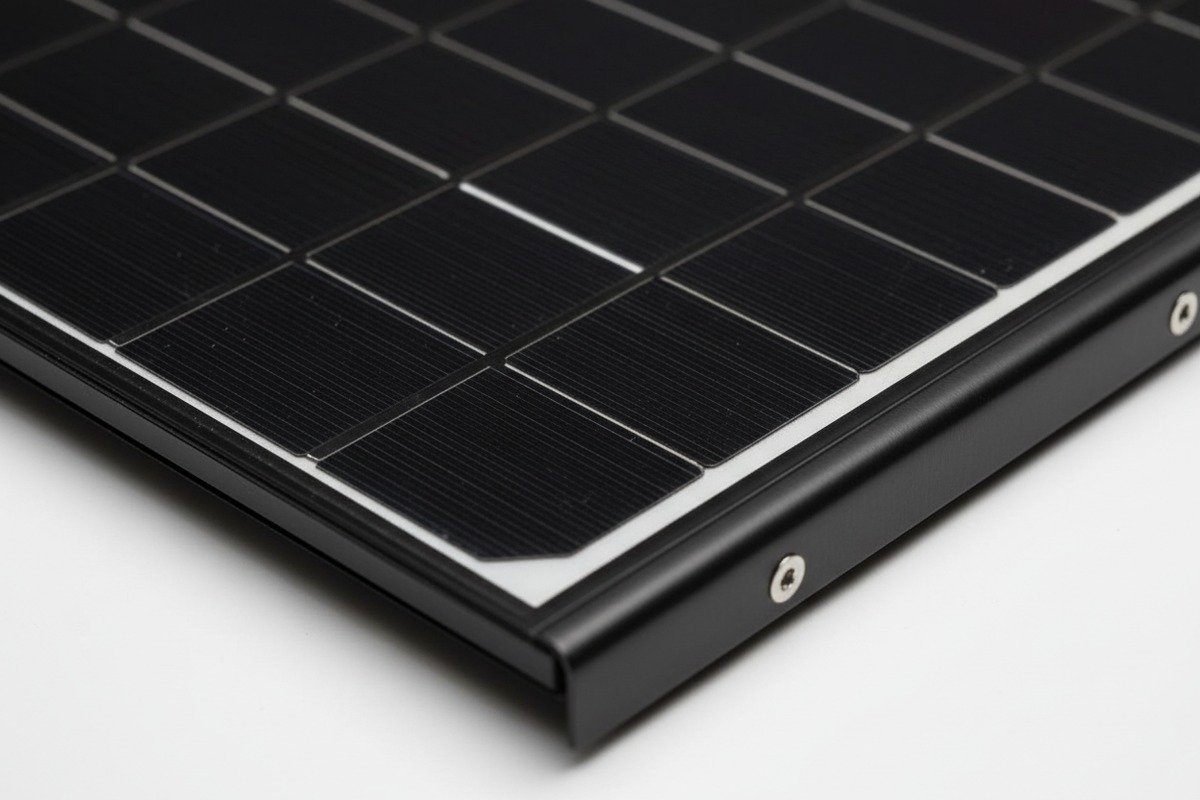
The Eurocodes define the structural loads that building components must withstand across Europe. Two are critical for solar shingles:
- EN 1991-1-3 covers snow loads. These vary dramatically — from 0.4 kN/m² in coastal UK to over 4.0 kN/m² in alpine Scandinavia and Switzerland.
- EN 1991-1-4 covers wind actions. Coastal and elevated sites face much higher wind pressures than sheltered inland locations.
Your solar shingle system must be rated to handle the specific loads for your installation site. A shingle rated for 2400 Pa front load and 2400 Pa rear load covers most of Central Europe, but alpine and coastal zones may require higher ratings.
Mechanical Load Ratings Explained
Solar shingle manufacturers express mechanical strength in Pascals (Pa). Here is a reference table for common European conditions:
| Load Type | Typical Rating Needed | What It Simulates | Our Product Rating |
|---|---|---|---|
| Front load (snow) | 2400–5400 Pa | Weight of accumulated snow and ice | 5400 Pa |
| Rear load (wind uplift) | 2400–4000 Pa | Suction force from wind flowing over the roof | 4000 Pa |
| Hail impact | 25–35 mm at 83+ km/h | Direct hail strike on the shingle surface | 35 mm hail |
| Temperature cycling | -40°C to +85°C (200 cycles) | Freeze-thaw stress over decades | Tested per IEC 61215 |
When our engineers design a new shingle model, they start with the worst-case European load scenario and work backward. This is why our products are rated to Grade 15 wind resistance and 5400 Pa front load — it covers the vast majority of European installation sites without requiring custom engineering.
Mounting System Matters as Much as the Shingle
A shingle can pass every lab test and still fail on a roof if the mounting system is wrong. Key questions to ask:
- Does the interlocking design create a continuous weatherproof surface? Water should never reach the underlayment through the shingle joints.
- Are penetrations sealed with purpose-made flashings? Never accept mastic or silicone as a primary seal. Our system uses integrated drainage channels and overlapping flashing details to eliminate leak paths.
- What is the uplift resistance of each fastening point? Each shingle should be mechanically fixed — not just clipped — in high-wind zones.
Snow Shedding and Accumulation
Smooth glass surfaces on solar shingles can cause snow to slide off in dangerous sheets. Some European building codes require snow guards on solar roofs. Our anti-glare textured glass surface slows snow shedding to a controlled rate, reducing the risk of sudden avalanche-style slides while still allowing the panels to clear naturally for power production.
Also consider that accumulated snow blocks light. In regions with persistent snow cover, sizing the array 20–30% larger compensates for winter production losses. We recommend PVGIS simulations with snow-loss factors enabled for any project above 55°N latitude.
Can I rely on the 25-year performance warranty if the tiles are installed in a region with high humidity and low sun?
One of the most honest conversations we have with European buyers happens around warranty terms. They read "25-year performance warranty" and feel reassured. But then they ask: "What happens in year 15 when my tiles are on a roof in Normandy, soaked in salt air and rain 200 days a year?" That is exactly the right question to ask.
A 25-year warranty is only reliable if it includes explicit degradation guarantees under damp-heat conditions, names a legally enforceable European entity or escrow mechanism, and covers both power output and structural waterproofing — not just cell efficiency on paper.

What Does a 25-Year Warranty Actually Cover?
Most solar shingle warranties have two components:
- Product/structural warranty (typically 10–15 years): Covers manufacturing defects, delamination, cracking, and water ingress.
- Performance/power warranty (typically 25 years): Guarantees the shingles will produce at least 80% of rated output by year 25, with a maximum annual degradation rate (usually 0.4–0.7% per year).
The devil is in the details. Some warranties exclude damage caused by "environmental conditions beyond normal parameters." If high humidity or coastal salt air is classified as abnormal, your claim gets denied. Read every exclusion clause carefully.
Humidity: The Silent Killer
High humidity accelerates several degradation mechanisms in PV modules:
- Potential Induced Degradation (PID): Moisture allows electrical leakage currents between cells and the frame, causing progressive power loss. Anti-PID cell treatment and proper grounding mitigate this.
- Encapsulant yellowing: Moisture penetrating the laminate causes the EVA or POE encapsulant to yellow, reducing light transmission.
- Corrosion of interconnects: Solder joints and busbars corrode faster in humid environments, increasing series resistance.
Our shingles use POE encapsulant instead of standard EVA. POE has dramatically lower moisture vapor transmission rates, which slows all three degradation mechanisms. After 1000 hours of damp-heat testing (85°C, 85% RH), our products show less than 2% power loss — well within the IEC threshold of 5%.
How to Evaluate Warranty Credibility
Here is a practical checklist:
- Who backs the warranty? If the manufacturer is a small company in China with no European legal presence, enforcing a warranty claim in year 15 is extremely difficult. We maintain DDP logistics and 24/7 after-sales support specifically to address this concern. Ask whether the supplier has a European subsidiary, a bonded warehouse, or a third-party warranty insurance policy.
- Is the degradation rate specified per year? A blanket "80% at 25 years" is weaker than "maximum 0.4% degradation per year after 2% first-year loss." The latter gives you enforceable annual checkpoints.
- Does the warranty cover waterproofing? Many PV warranties only cover electrical performance. If the shingle leaks, the PV warranty will not pay for interior damage. Our warranty covers both structural waterproofing and power output, because a solar roof tile that leaks is a failed product regardless of its wattage.
- What is the claims process? Ask for documentation. A strong warranty includes clear steps: submit performance data, supplier sends a technical assessor, replacement or compensation within a defined timeframe.
The "After-Sales Disappearance" Risk
This is a real fear among European importers, and rightly so. The solar industry has seen manufacturers go bankrupt, rebrand, or simply stop answering emails. With 20 years of continuous operation and a 100-person team, we have built our reputation on long-term relationships. But do not take any supplier's word alone — ask for references from projects installed 5 or 10 years ago. If they cannot provide any, that tells you everything.
Annual Degradation: What to Expect
| Year | Expected Output (Quality Monocrystalline) | Expected Output (Budget Product) |
|---|---|---|
| Year 1 | 98% (initial stabilization loss) | 95–97% |
| Year 5 | 96% | 90–93% |
| Year 10 | 94% | 85–88% |
| Year 15 | 92% | 78–83% |
| Year 25 | 88–90% | 65–75% |
The difference between a well-made shingle and a cheap one compounds over 25 years. That 15–20% gap in year-25 output represents thousands of euros in lost energy revenue — far more than the upfront price difference.
Conclusion
Evaluating solar roof shingles for low-sunlight Europe comes down to four pillars: verified low-irradiance data, dual PV and building certifications, proven structural load ratings, and enforceable long-term warranties backed by a stable supplier.
Footnotes
1. Authoritative source (OSTI.GOV, referencing NREL data) explaining low irradiance losses in PV modules. ↩︎
2. Explains the definition and importance of STC for solar panel performance comparison. ↩︎
3. Provides access to the Photovoltaic Geographical Information System for solar energy calculations. ↩︎
4. Outlines the European standard for determining snow loads for structural design of buildings. ↩︎
5. Wikipedia provides a clear and concise explanation of Potential Induced Degradation. ↩︎
6. Details the characteristics and efficiency of monocrystalline PERC cells in solar technology. ↩︎
7. Defines spectral response curves and their importance in solar cell analysis. ↩︎
8. Details the international standard for design qualification and type approval of PV modules. ↩︎
9. Explains the EU regulation setting harmonized rules for construction products in the European market. ↩︎
10. Describes the European fire classification standard for roof coverings, including BRoof(t1). ↩︎