

Choosing between monocrystalline and thin-film for solar roof shingles keeps many of our European clients up at night — and after 20 years on our production lines, we understand why the decision feels overwhelming.
To compare monocrystalline silicon vs thin-film for solar roof shingles, evaluate five core factors: energy efficiency per square foot, fire safety and building code compliance, aesthetic integration with your roof design, long-term degradation rates, and total cost of ownership over 25 years. Monocrystalline leads in efficiency and lifespan, while thin-film excels in flexibility and heat tolerance.
Below, we break down each factor so you can make a confident, data-backed decision for your next solar roofing project. Let’s start with the numbers that matter most — energy output and efficiency.
How do I compare the energy efficiency and power output of monocrystalline vs. thin-film for my solar roof project?
When we test finished shingle modules at our Hainan facility before shipment, the efficiency gap between monocrystalline and thin-film cells 1 is not just a spec-sheet number — it translates directly into how many kilowatt-hours land on your meter every year.
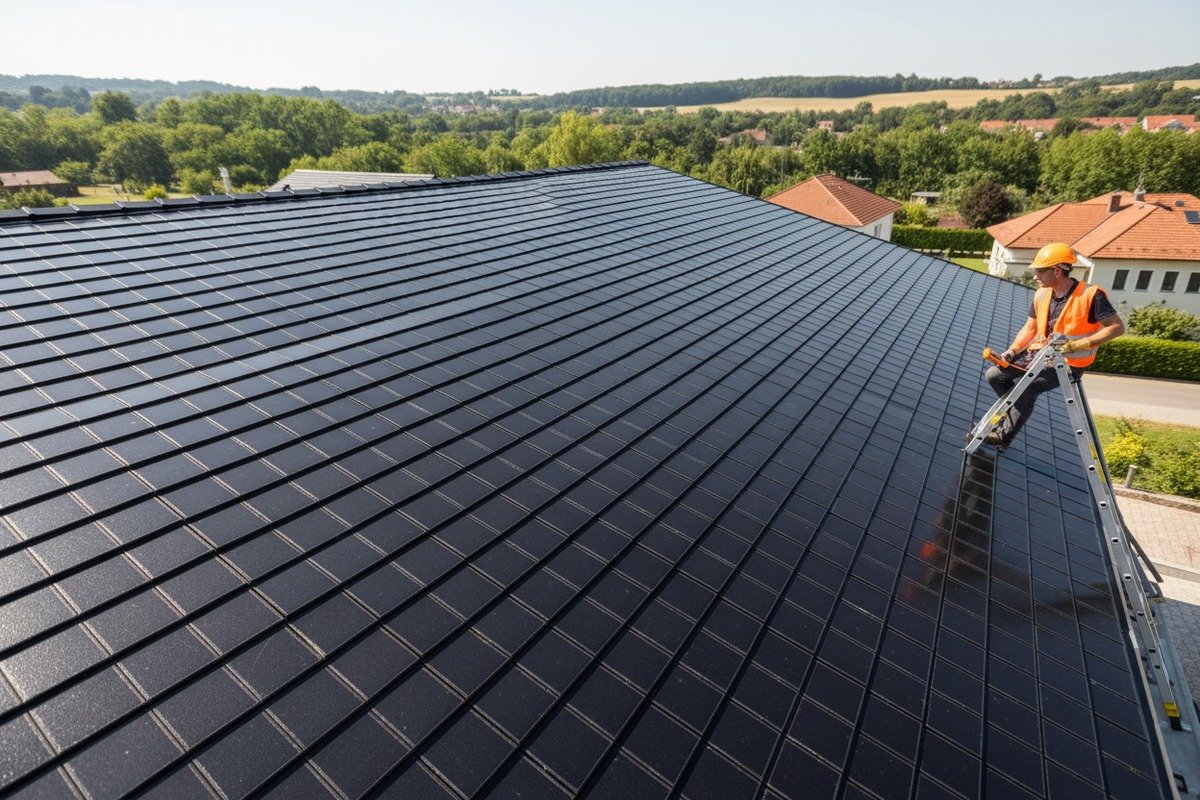
Monocrystalline solar shingles deliver 20–23% efficiency, producing significantly more power per square foot than thin-film shingles at 7–15% efficiency. For space-constrained European roofs, monocrystalline typically generates 20–35% more annual energy from the same area, making it the stronger choice for maximum output.
Understanding the Efficiency Numbers
Efficiency tells you how much sunlight a cell converts into usable electricity. A 22% monocrystalline cell turns roughly one-fifth of the light hitting it into power. A 12% thin-film cell needs almost twice the roof area to match the same output.
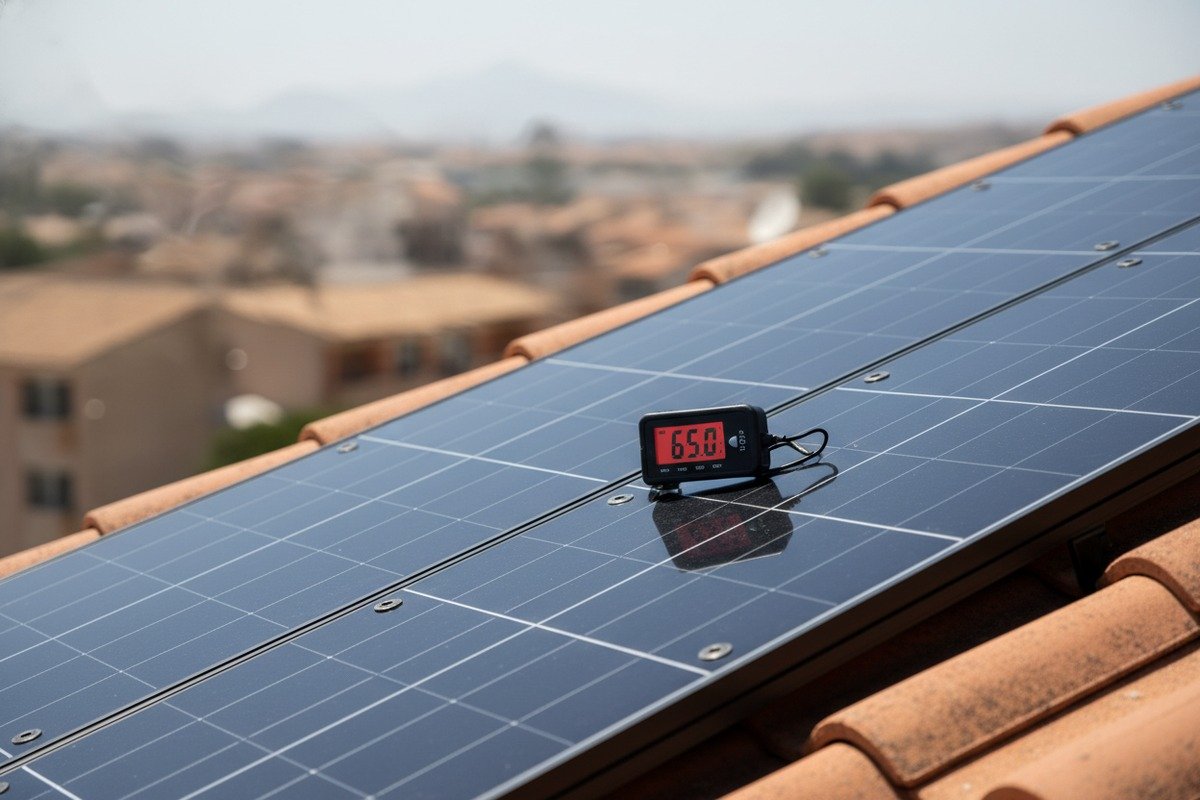
But lab efficiency and real-world performance are different things. On a hot August day in southern France, your roof surface can exceed 65°C. This is where temperature coefficient 2s matter. Monocrystalline cells lose about 0.3–0.4% of output for every degree above 25°C. Thin-film cells, especially CIGS types, lose less — often around 0.2% per degree. So in very hot climates, thin-film narrows the gap slightly.
Power Output Comparison Table
| Parameter | Monocrystalline Shingles | Thin-Film Shingles (CIGS) |
|---|---|---|
| Cell Efficiency | 20–23% (up to 24% with PERC) | 7–15% (CIGS reaching 15.6%+) |
| Typical Shingle Wattage | 60–80 W per shingle | 25–45 W per shingle |
| Roof Area for 5 kW System | ~25–30 m² | ~40–55 m² |
| Annual Yield (Central Europe) | ~4,800–5,200 kWh / 5 kW | ~3,600–4,200 kWh / 5 kW |
| Temperature Coefficient | -0.3% to -0.4% per °C | -0.2% to -0.25% per °C |
| Low-Light Performance | Good | Better (edges out in overcast/haze) |
Real-World Scenario: A Rooftop in Lyon
Imagine a 35 m² south-facing roof at 30° pitch in Lyon. With monocrystalline shingles, our engineering team typically calculates around 5.5 kW installed capacity. The same area with CIGS thin-film shingles would yield roughly 3.2 kW. Over a year, that difference means approximately 1,200–1,400 fewer kWh from thin-film — enough to notice on your electricity bill and your ROI timeline.
However, if the roof has partial shading from dormers or chimneys, thin-film handles it more gracefully. Monocrystalline cells in series can suffer disproportionate output drops when even one cell is shaded. Thin-film's distributed current generation makes it more forgiving in these situations.
Cost Per Watt vs. Cost Per kWh
Here is where buyers often get confused. Thin-film costs less per watt — around $0.50–$0.80/W versus $1.00–$1.50/W for monocrystalline. But cost per kilowatt-hour over 25 years tells the real story. Monocrystalline's higher output and slower degradation (0.3–0.5% per year vs. higher initial degradation for some thin-film types) often result in a lower levelized cost of energy 3.
For our B2B clients who are distributors or roofing companies, the advice we give is simple: if roof space is limited and the customer wants maximum payback, monocrystalline wins. If the roof is large, partially shaded, or in a very hot region, thin-film deserves serious consideration.
Which technology should I choose to ensure my solar shingles meet European fire safety and building regulations?
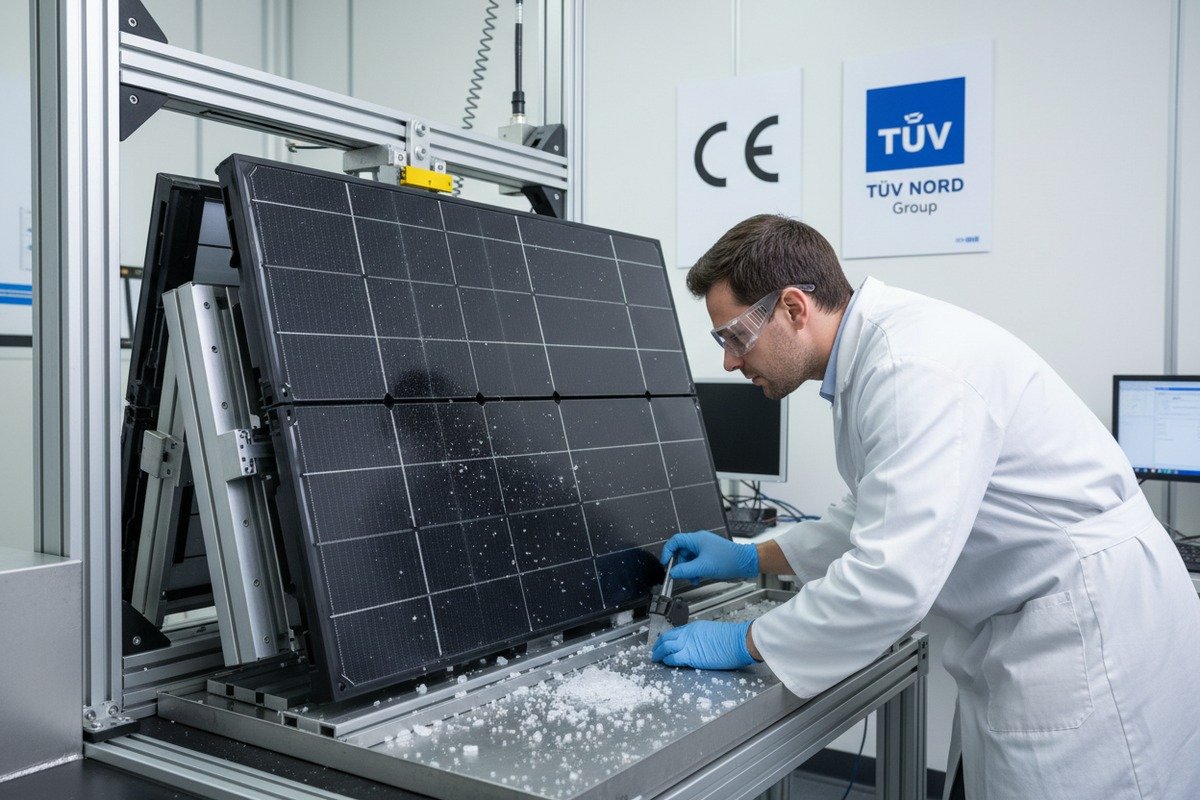
Our CE and TUV certification process taught us something important — a solar shingle that passes electrical standards can still fail as a building product, and that dual-compliance gap costs European importers dearly.
To meet European fire safety and building regulations, choose solar shingles with both IEC 61215/61730 electrical certification and CPR (Construction Products Regulation) compliance, including fire classification per EN 13501-1. Monocrystalline shingles with tempered glass typically achieve Class A fire ratings more easily, while thin-film shingles require careful substrate and encapsulant selection to meet the same standard.
The Dual Certification Challenge
European regulators treat solar roof shingles as both electrical devices and building materials. This means your product must satisfy two separate regulatory frameworks:
- Photovoltaic standards — IEC 61215 4 (design qualification) and IEC 61730 (safety qualification), verified by TUV or equivalent bodies.
- Construction Products Regulation (CPR) — covering fire reaction class, wind uplift resistance, water penetration, and mechanical load capacity.
Many importers discover too late that their supplier only holds PV certifications. When local building inspectors or insurance assessors check the CPR documentation, missing fire classifications can halt a project entirely.
Fire Safety Classification
European fire ratings under EN 13501-1 5 range from A1 (non-combustible) to F (no performance determined). For roof-mounted products, most countries require at least Class B or Class C depending on building type and height.
Monocrystalline shingles use tempered glass fronts and aluminum or steel backing. These materials are inherently non-combustible, making Class A or B ratings achievable with standard construction. Thin-film shingles, especially flexible types on polymer substrates, face a harder path. The organic layers and plastic encapsulants can lower fire resistance unless the manufacturer specifies fire-retardant materials.
Regulatory Compliance Comparison
| Regulation Area | Monocrystalline Shingles | Thin-Film Shingles |
|---|---|---|
| IEC 61215 / 61730 | Standard certification path | Standard certification path |
| CPR Fire Class (EN 13501-1) | Typically Class A or B (glass + metal) | Class B–D depending on substrate |
| Wind Uplift (EN 1991-1-4) | Rigid frame handles Grade 15 winds | Flexible but needs reinforced mounting |
| Hail Resistance (IEC 61215) | Withstands 35 mm hail at 27 m/s | Varies; polymer substrates less rigid |
| Water Penetration | Excellent with proper interlock design | Good but depends on seam engineering |
What We Recommend to Our European Partners
When our team works with roofing companies in France, Germany, or the Netherlands, we always provide the full documentation package — CE declaration of performance, TUV test reports, and CPR fire classification sheets. We engineered our shingle interlock system specifically to pass EN water penetration testing, because a single leak in a BIPV roof leads to interior damage and massive liability.
For thin-film products entering the European market, we advise buyers to request substrate fire test reports separately from the PV certifications. Do not assume that a CE mark for electrical safety covers building fire requirements. They are different documents from different test standards.
Insurance is another factor. Some European insurers offer lower premiums for Class A-rated roof materials. If your thin-film shingle only reaches Class C, the annual insurance cost difference can erode your project margins over 20 years.
How can I evaluate the aesthetic differences between these two options to maintain a premium look for my architectural designs?
Every year at our facility, architects send us renderings and ask: "Can you make a solar shingle that disappears into the roofline?" That question drives our anti-glare coating R&D, and the answer depends heavily on which cell technology sits underneath.
Monocrystalline shingles offer a uniform deep black appearance with subtle cell grid lines, ideal for modern and minimalist designs. Thin-film shingles provide a smoother, more homogeneous surface that can closely mimic traditional slate or asphalt, making them better for heritage-style homes. Your choice should match the architectural language of the building.
The Visual Signature of Each Technology
Monocrystalline cells have a distinctive look. Each cell is cut from a single silicon crystal, producing a uniform dark black or very dark blue surface. Up close, you can see the thin silver or black grid lines (busbars and fingers) that collect current. From the street, a well-designed monocrystalline shingle roof reads as a sleek, high-tech surface — think of the deep obsidian panels with semi-reflective glass finishes that architects increasingly specify for contemporary builds.
Thin-film cells look different. Because the semiconductor layer is deposited as a continuous coating, there are no visible cell boundaries or grid lines. The surface appears as a smooth, matte-to-semi-gloss sheet. CIGS thin-film can range from dark brown to black. CdTe thin-film tends toward a dark greenish-black. This seamless appearance makes thin-film shingles excellent at mimicking non-solar roofing materials.
Aesthetic Factors to Evaluate
When our design team works with architectural firms, we use a simple scoring framework:
-
Color consistency across batches. This is a major pain point. Monocrystalline cells from the same silicon ingot are highly uniform. But across production batches, slight color shifts can occur. Our quality control process includes color-matching within ΔE ≤ 1.5 to prevent the patchy look that European property owners reject immediately. Thin-film generally shows better batch-to-batch color uniformity because the deposition process is more controllable.
-
Glare and reflectivity. Standard tempered glass creates glare that disturbs neighbors and detracts from premium aesthetics. We developed anti-glare coatings that reduce reflectivity below 2%, making our monocrystalline shingles appear matte from most viewing angles. Thin-film on textured substrates naturally produces less glare.
-
Profile and integration. Both technologies can be manufactured in low-profile shingle form factors. Our monocrystalline shingles are designed with thin angular frames and overlap patterns that mimic high-quality slate. Thin-film shingles, being thinner and lighter, can achieve an even flatter profile.
Matching Technology to Architectural Style
| Architectural Style | Recommended Technology | Reason |
|---|---|---|
| Modern / Minimalist | Monocrystalline | Uniform deep black, clean grid lines, high-tech look |
| Traditional European / Heritage | Thin-Film (CIGS) | Smoother surface mimics slate or clay tiles |
| Contemporary Urban BIPV | Either / Hybrid | Thin-film for facades, mono for maximum roof output |
| Rural / Cottage Style | Thin-Film | Matte finish blends with natural surroundings |
The Hybrid Trend in 2026
A growing trend we see in our OEM orders is hybrid solar shingles. These use thin-film aesthetic coatings over high-efficiency monocrystalline cells, achieving up to 20% efficiency while looking like traditional asphalt shingles. This approach satisfies both the architect's eye and the engineer's spreadsheet. Several of our European distributors now stock both pure monocrystalline and hybrid options to cover the full range of customer preferences.
The bottom line: walk the job site. Look at the neighborhood. Consider the building's design language. Then choose the technology that serves both beauty and performance.
What are the long-term durability and maintenance risks I need to consider for my solar shingle investment?
Our 25-year product warranty is not just a marketing number — it reflects accelerated aging tests we run in-house, and after two decades of manufacturing, we have seen how both technologies age in the real world across different European climates.
Monocrystalline solar shingles typically last 25–30+ years with annual degradation of 0.3–0.5%, while thin-film shingles last 15–20 years with higher initial degradation. Key durability risks include light-induced degradation (LID) for monocrystalline, moisture ingress for thin-film, and mechanical stress from wind and hail for both. Proper waterproof interlock design and certified installation reduce the largest risks significantly.
Degradation: The Silent Profit Killer
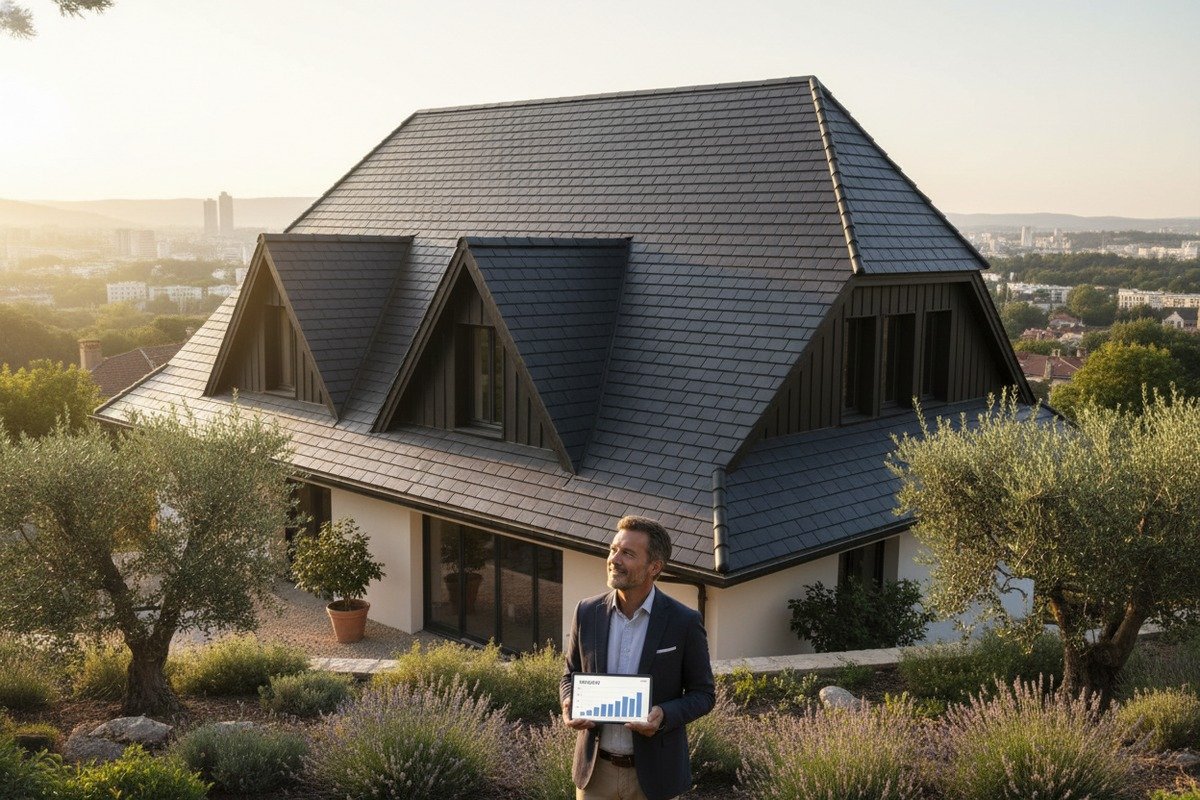
Every solar cell loses a small percentage of its output each year. This is called degradation. For monocrystalline, the rate is well-documented at 0.3–0.5% annually. After 25 years, your system still produces roughly 85–90% of its original output. That predictability is why banks and investors trust monocrystalline for long-term financing.
Thin-film degrades differently. Many CIGS and CdTe modules show a faster initial drop in the first 1–2 years (sometimes called the Staebler-Wronski effect 7 in amorphous silicon types), followed by a more stable decline. After 15 years, total output may be 75–80% of the original rating. This faster decline, combined with a shorter overall lifespan, means the total energy harvested over the product's life is significantly less than monocrystalline.
Light-Induced Degradation (LID)
LID occurs in the first hours of sun exposure for crystalline silicon cells. Oxygen impurities in the silicon 8 react with boron dopants, causing a 1–3% permanent efficiency loss. Modern PERC monocrystalline cells address this with improved silicon purity and anti-LID treatments during manufacturing. At our facility, we use n-type monocrystalline wafers 9 in our premium lines, which are inherently LID-resistant.
Thin-film cells are generally immune to traditional LID, but some types (especially amorphous silicon) suffer from a related light-soaking degradation that can reach 10–15% in the first year before stabilizing.
Mechanical and Environmental Risks
| Risk Factor | Monocrystalline Shingles | Thin-Film Shingles |
|---|---|---|
| Hail Resistance | Tempered glass withstands 35 mm hail | Polymer substrates may dent or crack |
| Wind Uplift | Rigid interlock holds at Grade 15 | Flexible but mounting must be reinforced |
| Moisture Ingress | Low risk with glass-glass construction | Higher risk at polymer-edge seals |
| Thermal Cycling Stress | Glass expands/contracts predictably | Mixed-material layers can delaminate |
| Snow Load | Handles standard European loads | Lighter weight, but check frame ratings |
| Salt Spray (Coastal) | Good with anodized frames | Check encapsulant salt resistance |
Waterproofing: The Make-or-Break Factor
Unlike traditional solar panels mounted on racks above a separate roof, solar shingles ARE the roof. If water gets past them, it goes straight into the building. This is the number one concern we hear from European roofing companies.
Our engineering team designed a triple-overlap drainage channel with silicone gasket compression seals. Each shingle interlocks with its neighbors on all four sides, creating a redundant waterproof barrier. We test every design iteration to EN standards for water penetration under wind-driven rain conditions.
For thin-film shingles, waterproofing demands special attention because the thinner, more flexible substrate can shift under thermal expansion. If the sealant between shingles is not rated for the same 25-year lifespan as the cells, you could have a functioning solar roof that leaks after year 10. Always ask your supplier for the sealant specification and its independent aging test data.
Maintenance Expectations
Both technologies require minimal maintenance — occasional cleaning and annual electrical inspections. However, thin-film shingles may need earlier replacement of edge seals, and their lower efficiency means replacing even a few failed shingles has a proportionally larger impact on total system output. Monocrystalline shingles, being rigid and individually robust, are easier to replace one-by-one without affecting neighbors in the array.
For our partners who offer installation services, we provide detailed maintenance guides and a 24/7 after-sales technical line. A well-maintained monocrystalline shingle roof should still be producing strong returns well past the 25-year warranty window.
Conclusion
Choosing between monocrystalline and thin-film solar shingles comes down to your roof size, climate, aesthetic goals, and long-term ROI expectations — and we are always here to help you find the right fit.
Footnotes
1. Explains the technology, materials, and applications of thin-film solar cells. ↩︎
2. Defines and explains the importance of temperature coefficient in solar panel performance. ↩︎
3. Details the Levelized Cost of Energy (LCOE) as a metric for comparing energy generation costs. ↩︎
4. Replaced with the official standard document from the International Electrotechnical Commission (IEC), the most authoritative source. ↩︎
5. Outlines the European standard for fire classification of construction products and building elements. ↩︎
6. Replaced with an official page from the European Commission, providing authoritative information on the Construction Products Regulation. ↩︎
7. Replaced with an academic source from Syracuse University, offering an in-depth explanation of the Staebler-Wronski effect. ↩︎
8. Discusses the impact of oxygen impurities on the performance of silicon solar cells. ↩︎
9. Highlights the advantages and characteristics of n-type monocrystalline silicon wafers in solar technology. ↩︎
10. Provides a comprehensive overview of monocrystalline silicon, its properties, and use in photovoltaics. ↩︎