

Every year, our production team fields hundreds of inquiries from European buyers who share the same frustration: they want solar roofing, but they refuse to sacrifice the beauty of their buildings.
To source solar roof shingles that match European architectural aesthetics, buyers should identify BIPV manufacturers offering OEM color and texture customization, verify CE and TUV certifications for dual compliance with electrical and building standards, request batch-matched samples, and confirm waterproofing and wind resistance ratings before placing bulk orders.
This guide walks you through the exact steps, from verifying color consistency to navigating EU certifications 1, so you can confidently source solar shingles that look right and perform right on European rooftops. Let’s break it down section by section.
How can I ensure the color and texture of my solar roof shingles remain consistent across different production batches?
When we first started shipping solar roof tiles 2 to distributors in France and the Netherlands, batch color variation was the single biggest complaint that kept coming back to our quality team.
To ensure color and texture consistency across batches, buyers should request Delta E ≤ 1.5 color deviation standards, obtain physical samples from each production run before shipment, and work with manufacturers who use automated coating lines with spectrophotometer-based quality control at every stage.
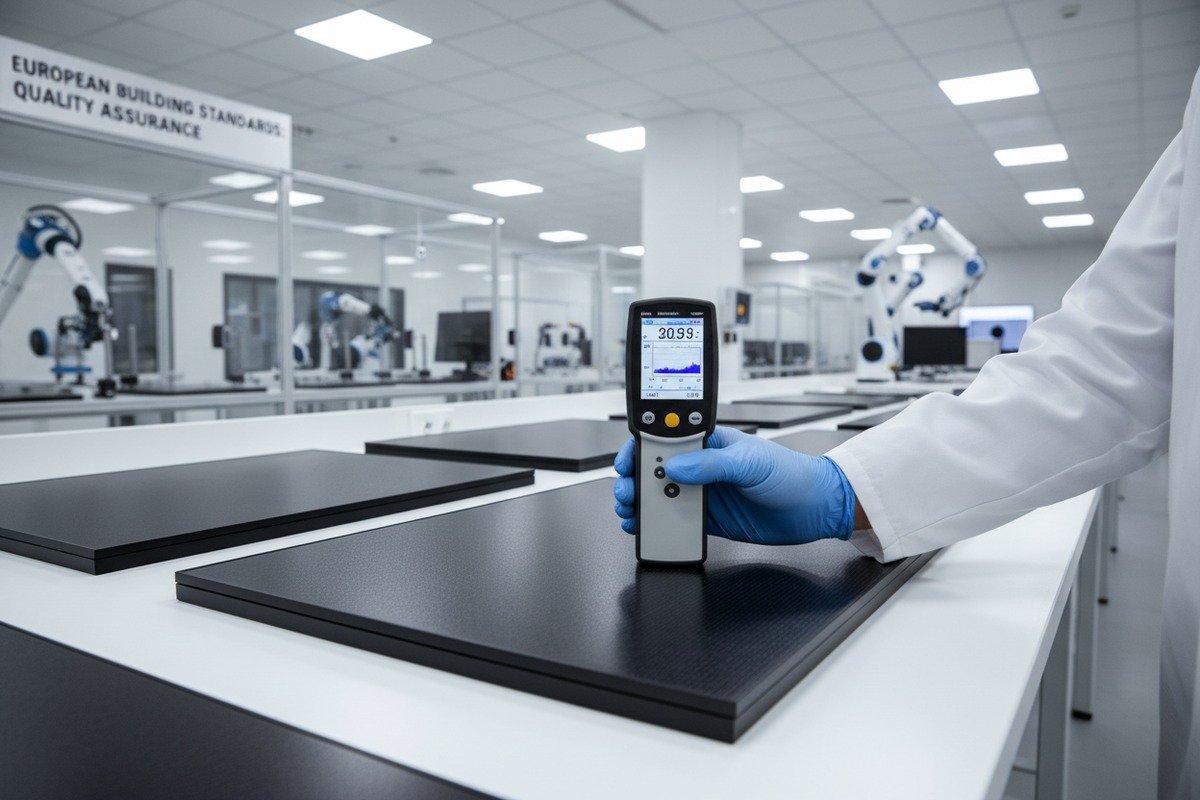
Color inconsistency on a roof is not a minor cosmetic flaw ceramic frits 3. It is a deal-breaker. European homeowners and architects treat the roof as part of the building's identity. A patchy roof gets rejected, and the distributor eats the cost. So let's talk about how to prevent this from ever happening.
Why Does Batch Variation Happen?
Solar shingles get their color from coatings applied to tempered glass surfaces 4. These coatings involve ceramic frits, metallic oxides, or specialized PVD (Physical Vapor Deposition) layers 5. Small shifts in furnace temperature, coating thickness, or raw material composition can cause visible color drift. Unlike standard roofing tiles, solar shingles also have photovoltaic cells underneath. The cell color itself — which depends on the silicon wafer and anti-reflective coating — adds another variable.
In our R&D lab, we discovered that even a 5°C shift in the tempering furnace can move the color noticeably on a matte black finish. That is why we invested in inline spectrophotometers that measure Delta E 6 values in real time during production.
What Is Delta E and Why Does It Matter?
Delta E is the international standard for measuring color difference. A Delta E of 0 means two colors are identical. A Delta E above 2.0 is visible to the naked eye. For roofing applications, you want Delta E ≤ 1.5 between any two tiles on the same roof.
| Delta E Value | Perception | Acceptable for Roofing? |
|---|---|---|
| 0 – 1.0 | Nearly imperceptible | Yes — ideal |
| 1.0 – 1.5 | Slight, only visible side-by-side | Yes — acceptable |
| 1.5 – 2.0 | Noticeable under direct comparison | Borderline |
| 2.0 – 3.5 | Clearly visible | No |
| > 3.5 | Obvious mismatch | No |
Steps Buyers Should Take
- Request a master sample set. Before production begins, get a signed-off master sample in the exact color and finish (matte, semi-gloss, textured). Both sides keep one.
- Require per-batch samples. For every production run, the factory should ship 2–3 tiles for your approval before the full order ships.
- Specify Delta E in your purchase contract. Write "Delta E ≤ 1.5 measured against master sample" into the agreement.
- Ask about the coating process. Automated roller or spray coating lines with closed-loop feedback produce far more consistent results than manual or semi-manual lines.
- Confirm cell sorting. The factory should sort solar cells by color bin before lamination. Mixing cell bins creates a visible checkerboard effect under the glass.
Our factory uses a five-stage color QC process — raw glass inspection, post-coating spectrophotometer scan, post-tempering visual check, cell-bin matching, and final assembled-tile comparison against the master. This is what consistent color requires.
Texture Consistency Is Equally Important
Texture affects how light interacts with the surface. A flat glass tile and a lightly frosted tile will look like completely different colors, even if the coating is identical. European buyers often request anti-glare matte finishes or subtle textures that mimic natural slate. Make sure the texture specification is documented alongside the color spec, and that the factory uses the same etching or embossing tooling across batches.
What certifications do I need to verify to ensure my imported solar tiles meet European building and electrical standards?
One lesson we learned early in our export journey to Europe is that passing electrical certification alone is not enough — solar roof tiles must also satisfy strict building material regulations, or they get stopped at the project approval stage.
Imported solar tiles for Europe require dual compliance: electrical certifications like IEC 61215, IEC 61730, and CE marking for photovoltaic safety, plus building certifications under the Construction Products Regulation (CPR) covering fire classification, wind load, water penetration, and mechanical resistance per EN standards.

This is the area where many first-time buyers get caught off guard. A solar panel only needs electrical certifications. A solar roof tile needs both electrical and construction certifications because it replaces a building material. If you miss either side, your product cannot legally be installed in the EU.
The Dual Certification Framework
Think of it as two separate gates. Gate one is the photovoltaic gate. Gate two is the building material gate. Your solar shingles must pass through both.
| Certification Category | Standard / Regulation | What It Covers |
|---|---|---|
| PV Performance | IEC 61215 7 | Module design qualification and type approval |
| PV Safety | IEC 61730 8 | Electrical safety and insulation testing |
| CE Marking (PV) | EU Low Voltage Directive | Market access for electrical products in EU |
| Fire Rating | EN 13501-1 (under CPR) | Reaction to fire classification (A1 to F) |
| Wind Resistance | EN 14437 or country-specific | Uplift resistance at various wind speeds |
| Water Tightness | EN 539-1 or product-specific | Water penetration under simulated rain |
| Hail Resistance | EN 12049 or IEC 61215 clause | Impact resistance from ice balls |
| TUV Certification | TUV Rheinland or TUV SÜD | Independent third-party verification of all above |
Why CPR Compliance Is Often Overlooked
The Construction Products Regulation 9 (EU No. 305/2011) requires that any product permanently incorporated into a building meets declared performance characteristics. Solar tiles are part of the roof envelope. They must carry a Declaration of Performance 10 (DoP) and a CE marking under CPR — separate from the CE marking for electrical safety.
Many Chinese manufacturers focus only on IEC and electrical CE because that is what standard solar panels need. But a solar roof tile is not a standard panel. Our engineering team spent over two years working with TUV to achieve full dual certification. This included fire testing, freeze-thaw cycling, salt spray corrosion tests, and mechanical load tests that go far beyond what a rack-mounted panel requires.
Country-Specific Add-Ons
France requires Avis Technique (ATec) or Document Technique d'Application (DTA) for novel building products. Germany has its own DiBt approvals. The Netherlands requires BRL certifications for certain roofing products. Always ask your target market's building authority what local approvals are needed on top of EU-wide standards.
What to Ask Your Supplier
- "Can you provide your IEC 61215 and IEC 61730 test reports?"
- "Do you have a Declaration of Performance under CPR?"
- "What is the fire classification of your product per EN 13501-1?"
- "Is your product TUV-certified, and can I verify the certificate number online?"
- "Have you obtained any country-specific building approvals (ATec, DiBt, BRL)?"
If a supplier cannot answer these questions clearly, that is a red flag. Our certificates are publicly verifiable through TUV's online database, and we provide full DoP documentation with every shipment.
How do I evaluate the waterproofing and wind resistance of solar shingles to avoid long-term structural risks?
During a project review with a roofing company in Hamburg, their chief engineer told us bluntly: "If your solar tile leaks, I lose my reputation. A cracked panel is an inconvenience. A leaking roof is a lawsuit."
Evaluate waterproofing by verifying interlocking drainage channel design, water penetration test results per EN standards, and real-world installation slope compatibility. For wind resistance, confirm uplift testing to at least Grade 12 winds (≥ 118 km/h) and check mechanical fastening methods rated for your specific regional wind zone.
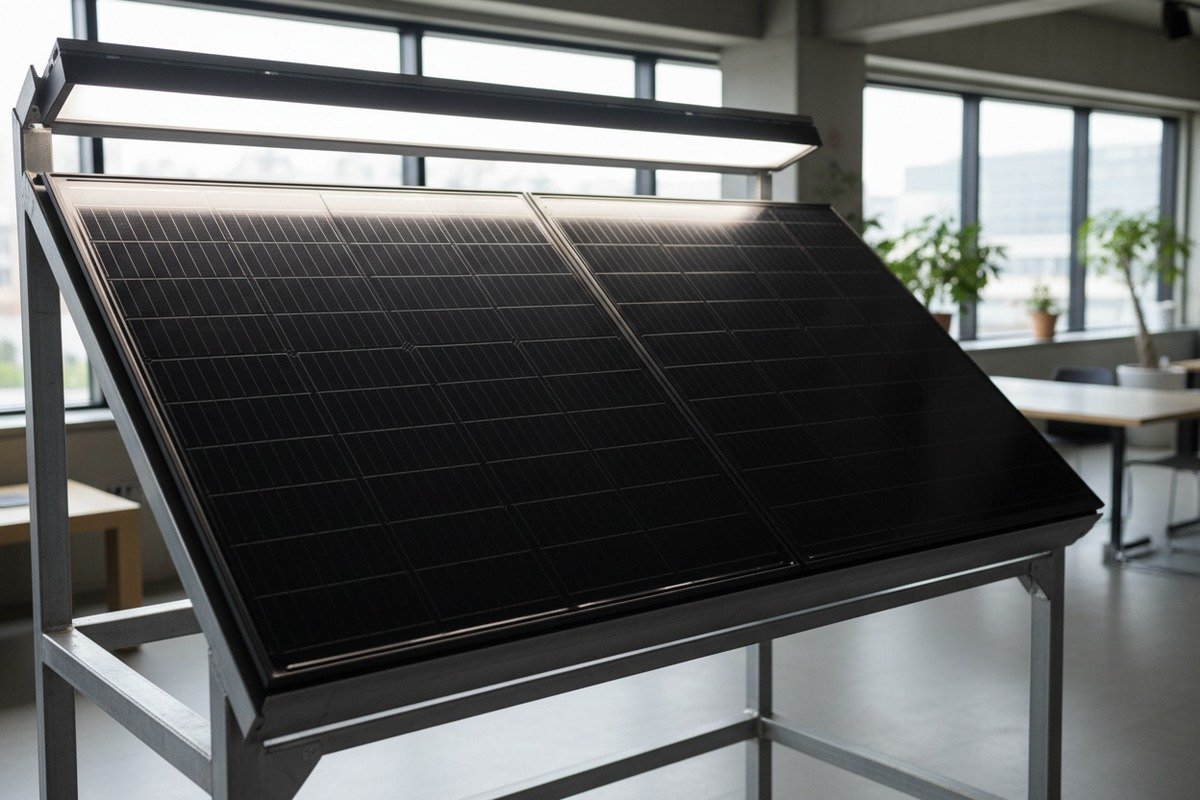
Water and wind are the two forces that destroy roofs. Traditional roofing materials have centuries of proven performance. Solar shingles are newer, so you must scrutinize their structural design more carefully. Here is how to do it right.
Waterproofing: Design Matters More Than Sealant
A good solar shingle does not rely on sealant or caulk for waterproofing. It uses a physical drainage system — interlocking channels, overlapping profiles, and gravity-fed water paths that guide rainwater away from joints and electrical connections.
Our tiles use a patented double-channel drainage design. Each tile overlaps the one below it, and a raised lip on the underside creates a secondary water barrier. Even if wind drives rain upward into the first channel, the second channel catches it. We test this by simulating 150 mm/hour rainfall at a 15-degree angle of attack. Zero leakage.
Key Waterproofing Tests to Request
Ask your supplier for test reports covering:
- Water penetration test — simulated driving rain at various pressures.
- Freeze-thaw cycling — 200+ cycles to check if thermal expansion cracks the seals.
- Capillary water rise test — ensures water does not wick upward through joints.
Wind Resistance: Beyond the Spec Sheet
Wind does not just push — it lifts. Negative pressure on the leeward side of a roof can rip tiles off from underneath. This is especially dangerous at roof edges and ridges. Our shingles are tested to withstand Grade 15 winds (above 180 km/h) and resist 35mm hailstones at terminal velocity.
| Wind Resistance Parameter | Minimum Recommended | Lonsontech Rating |
|---|---|---|
| Wind uplift resistance | Grade 12 (≥ 118 km/h) | Grade 15 (> 180 km/h) |
| Hail impact resistance | 25mm ice ball | 35mm ice ball |
| Mechanical load (snow) | 2400 Pa | 5400 Pa |
| Fastening method | Hook or clip | Stainless steel screw + interlocking clip |
| Tested roof pitch range | 15° – 45° | 10° – 60° |
Installation Design and Structural Attachment
The best tile in the world fails if the installation system is weak. Look for:
- Mechanical fasteners — screws into battens, not adhesive alone.
- Interlocking tongue-and-groove edges — these prevent lateral movement.
- Underlayment compatibility — the system should work with standard European breathable membranes.
- Cable management — wiring must be routed through weatherproof channels, not exposed to pooling water.
We provide detailed installation guides specific to European roof structures, including timber rafter spacing, batten dimensions, and recommended underlayment products. Our technical team also offers remote installation support via video call during the first project.
The Real-World Test
Lab tests are essential, but ask for case studies too. How has the product performed after 3, 5, or 10 years on actual roofs in northern Europe? We have installations in Germany and the Netherlands that have been monitored for multiple winters with zero water ingress reports. That real-world track record matters more than any number on a data sheet.
Can I find a reliable manufacturer that offers OEM customization for specific architectural aesthetics and anti-glare finishes?
When a Dutch distributor first approached our team requesting a dark slate grey tile with a matte anti-glare finish to match 18th-century canal house renovations in Amsterdam, we realized that off-the-shelf solutions would never be enough for the European market.
Yes, reliable OEM manufacturers exist that offer full customization of solar shingle colors, textures, and anti-glare finishes. The key is selecting a supplier with in-house coating technology, 20+ years of R&D experience, a proven sample-to-production workflow, and the flexibility to produce Pantone-matched or RAL-coded colors for specific architectural projects.
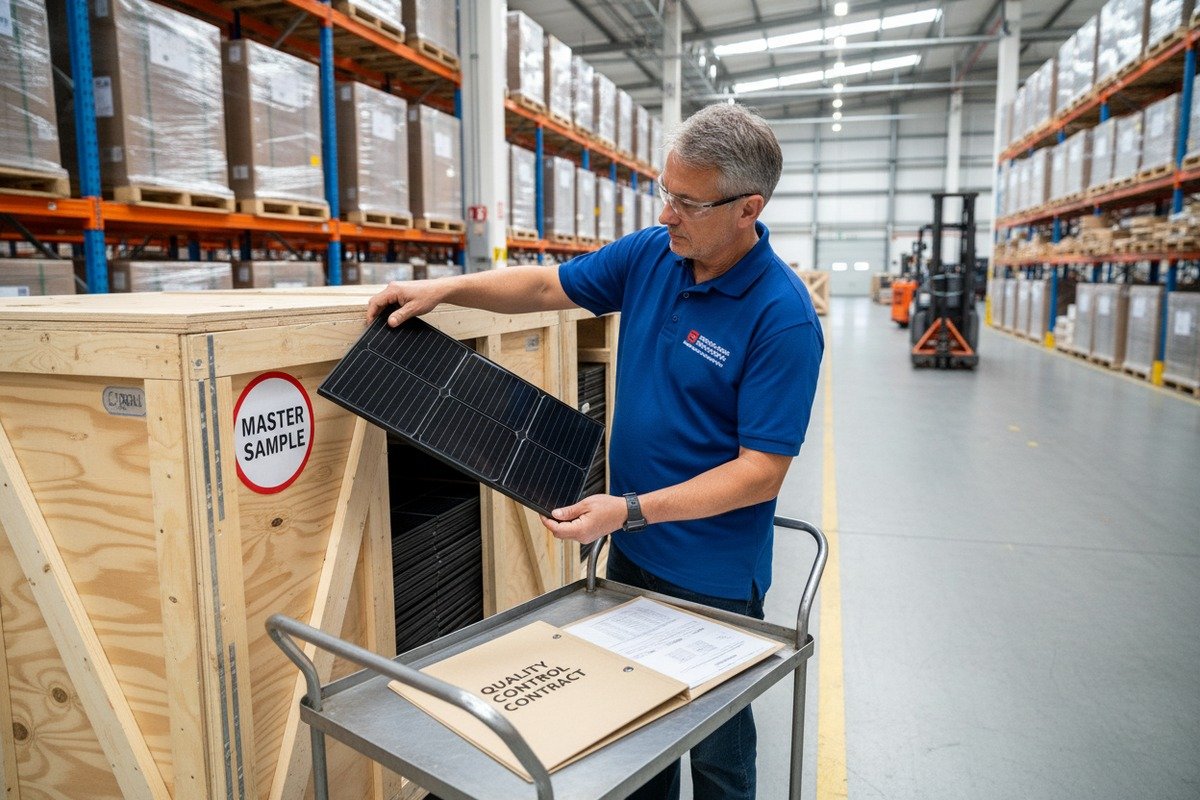
European architecture is not one style. It is dozens of styles, each with distinct material palettes. Scandinavian minimalism calls for obsidian black with clean lines. Swiss alpine buildings need dragon-scale slate textures. Mediterranean villas demand warm terracotta tones. Dutch heritage buildings require subdued dark grey flats. A single product line cannot serve all of these. That is where OEM customization becomes essential.
What Can Be Customized?
Our OEM program covers the following parameters:
- Color — Pantone, RAL, or NCS color matching. We can produce matte black, charcoal, slate grey, dark brown, brick red, and custom tones.
- Texture — Smooth glass, lightly frosted, sandblasted matte, or embossed patterns mimicking natural slate grain.
- Anti-glare finish — A critical requirement near airports, highways, and residential areas. We apply micro-textured anti-reflective coatings that reduce glare by over 70% while maintaining energy output above 95% of a standard glass surface.
- Tile dimensions — We can adjust length, width, and profile to match existing roofing grids.
- Frame and edge design — Thin-frame, frameless, or concealed-frame options.
- Branding — Private label packaging with your company name, logo, and documentation.
How the OEM Process Works
The typical workflow from inquiry to delivery takes 8–14 weeks, depending on complexity.
- Consultation — Share your target aesthetic, roof type, and project photos. Our design team proposes options.
- Sample production — We produce 5–10 physical samples in the requested color, texture, and finish.
- Sample approval — You review, test on a mock-up section, and sign off.
- Pilot batch — A small production run (50–100 tiles) for field testing and client presentation.
- Full production — Mass production with per-batch QC against the approved master sample.
- Logistics — DDP delivery to your European warehouse, with custom packaging to prevent transit damage.
Anti-Glare: Why It Matters for Europe
Many European municipalities have regulations against reflective building surfaces. Standard glass solar panels can produce significant glare, especially at low sun angles common in northern Europe. Our anti-glare coating uses a nano-scale surface texture that scatters reflected light diffusely, eliminating the mirror effect. The visual result is a soft, matte surface that looks like natural slate — not like a solar panel.
This is particularly important for heritage zones and listed buildings, where planning authorities may reject any product that looks overtly "technological." Our anti-glare tiles have been approved for installation in multiple architecturally protected districts in Germany and the Netherlands.
Minimum Order Quantities and Lead Times
For standard colors (black, dark grey, slate), our MOQ is as low as 200 m². For custom Pantone-matched colors, the MOQ increases to 500 m² to justify the coating line setup. Lead times are typically 6–10 weeks for standard and 10–14 weeks for custom. We hold safety stock of our most popular European finishes to reduce lead times for repeat orders.
Choosing the Right OEM Partner
Not every factory that claims OEM capability can actually deliver consistent custom finishes at scale. Here is what to look for:
- In-house coating facility — not outsourced. This gives them direct control over color.
- Spectrophotometer QC — automated, not visual inspection only.
- Reference projects — ask for photos of completed European installations.
- Dual certification — confirm they hold both PV and building material certifications for the customized product, not just for a standard version.
- After-sales commitment — a 25-year warranty means nothing if the company has no track record of honoring claims.
We have been manufacturing and exporting solar roofing products for 20 years. Our team of 100 includes dedicated R&D engineers, color scientists, and a European market support desk that operates across time zones. We understand that your brand reputation depends on what we deliver — and we take that seriously.
Conclusion
Sourcing solar roof shingles for European aesthetics demands attention to color consistency, dual certification, waterproofing integrity, and OEM customization — partner with an experienced BIPV manufacturer to get it right.
Footnotes
1. Explains EU building standards for construction products. ↩︎
2. Wikipedia provides an authoritative and comprehensive overview of solar shingles, also known as solar roof tiles. ↩︎
3. Explains what ceramic frit is and its application in coatings. ↩︎
4. Wikipedia offers an authoritative explanation of tempered glass, its properties, and manufacturing process, relevant to its use in solar applications. ↩︎
5. Details the Physical Vapor Deposition process and its applications. ↩︎
6. Wikipedia provides an authoritative and detailed explanation of Delta E as a metric for color difference in color science. ↩︎
7. Details the IEC 61215 standard for PV module design qualification. ↩︎
8. Explains the IEC 61730 standard for PV module safety. ↩︎
9. Provides official information on the EU Construction Products Regulation. ↩︎
10. Explains the Declaration of Performance under CPR. ↩︎