
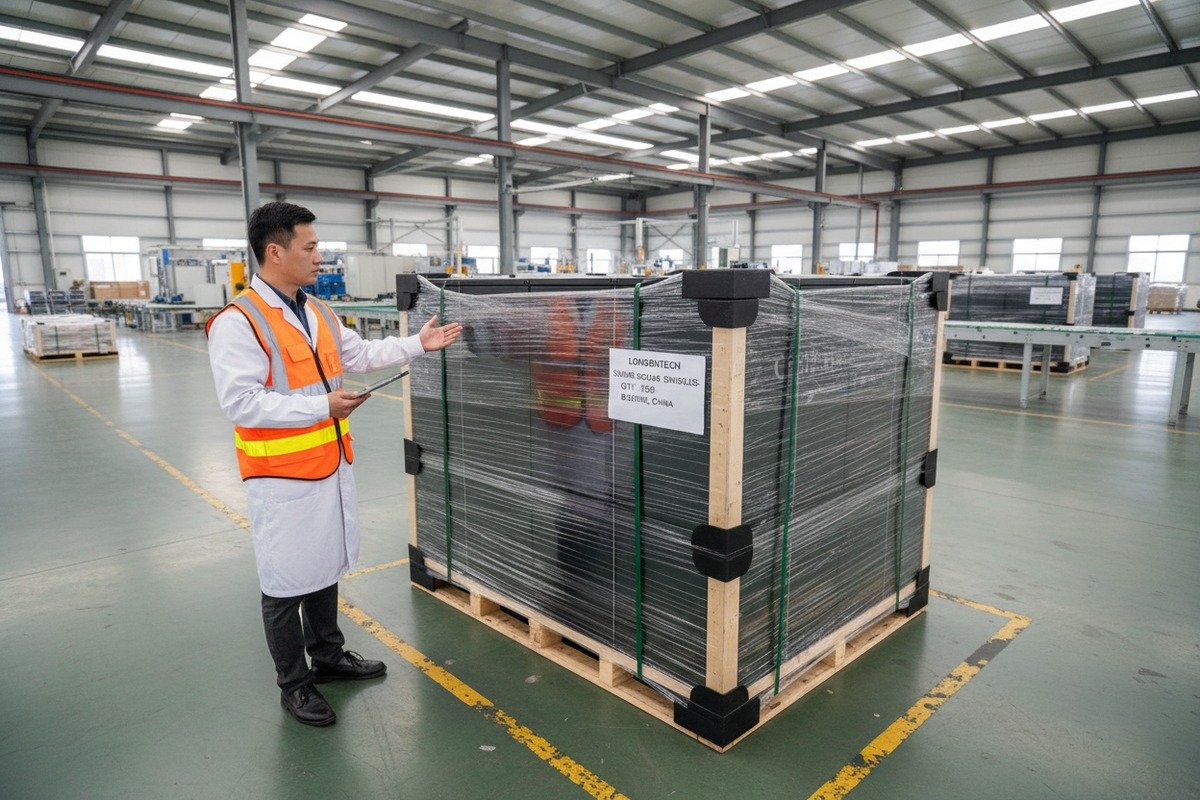
Every year, our production lines ship thousands of solar roof shingles 1 overseas, and we have seen firsthand what happens when a container arrives with cracked glass and no insurance in place. The financial loss is devastating. The emotional toll on buyers who trusted the process is even worse photovoltaic cells 2. This is a preventable problem, but only if you take the right steps before your cargo leaves the port.
To buy shipping insurance for solar roof shingles from China, request an all-risk marine cargo insurance policy from an independent insurer or your freight forwarder. Insure at 110–130% of CIF value. Clarify Incoterms to confirm who bears the risk. Always document cargo condition before loading with a pre-shipment inspection.
Below, we break down every detail you need — from choosing the right coverage type to filing a successful claim. Whether you are a roofing company importing your first container or a distributor scaling up orders, this guide will help you protect your investment at every stage of the journey.
What specific coverage should I look for to protect my fragile solar roof shingle shipment?
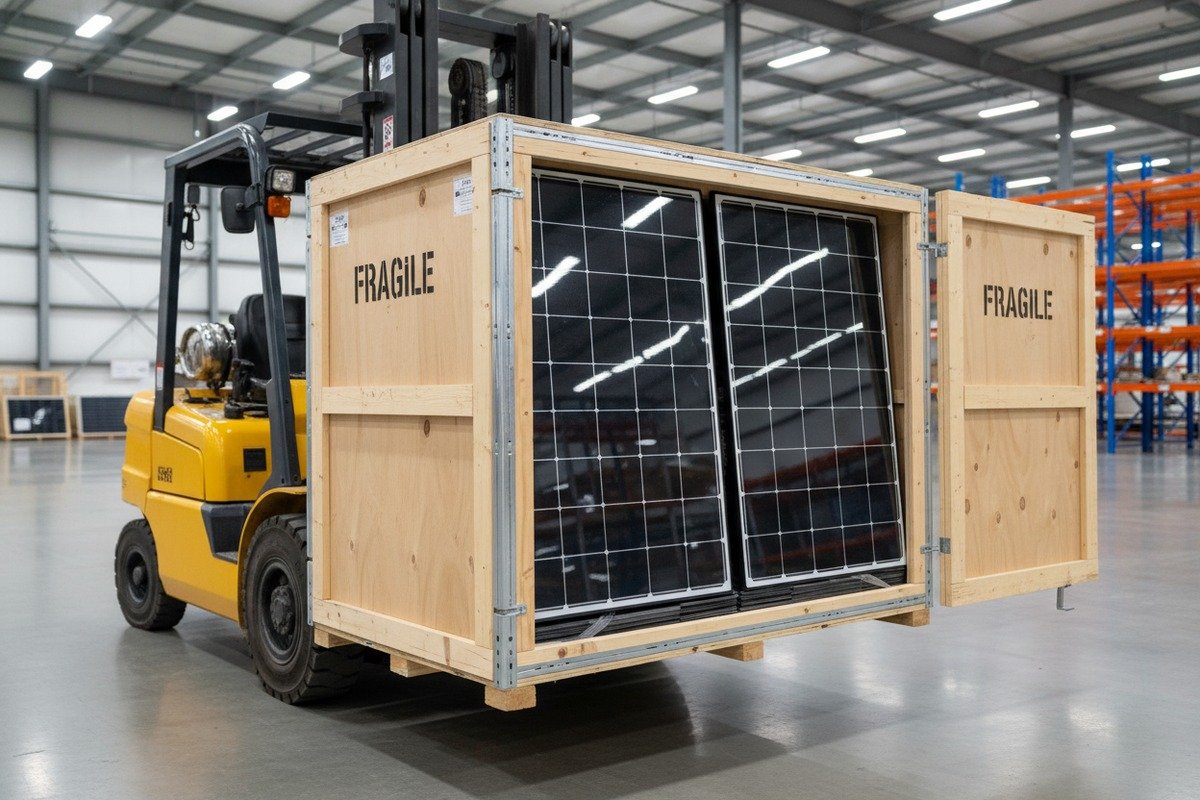
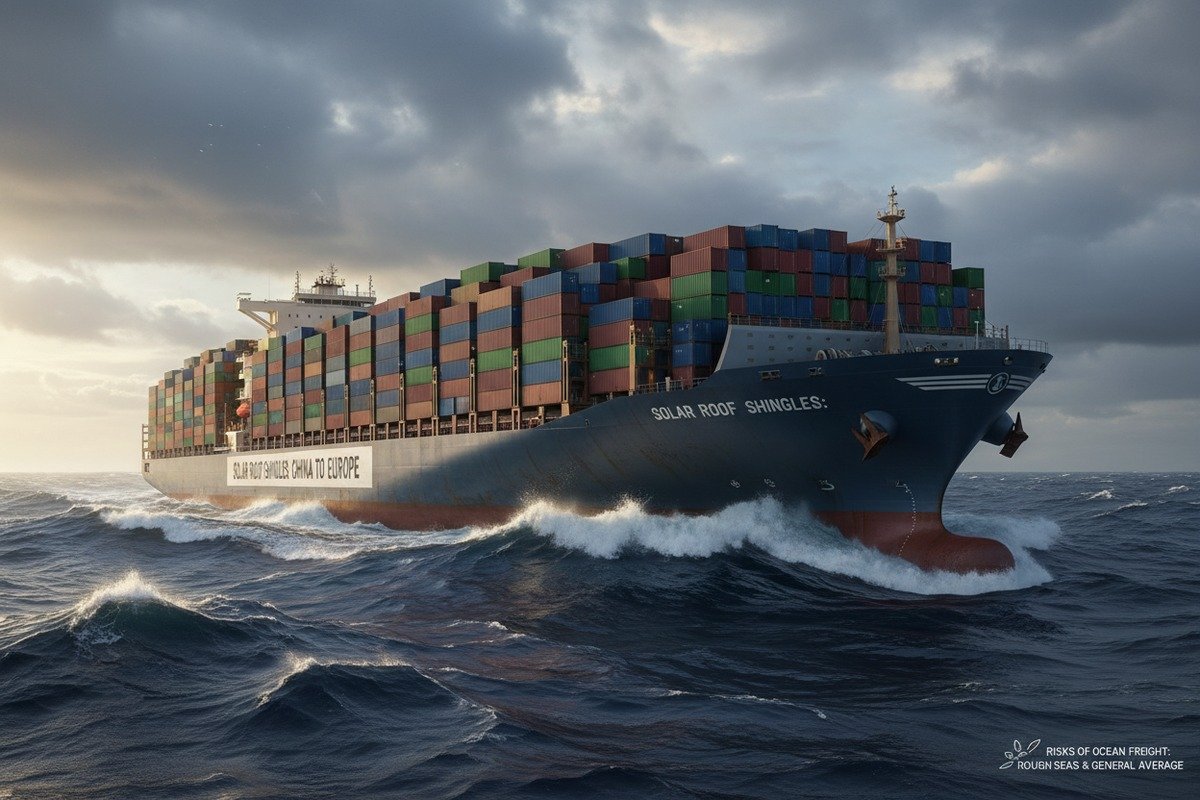
When we pack solar roof shingles at our facility, we engineer each crate for impact resistance, but ocean freight introduces forces no packaging can fully eliminate. Rough seas, forklift drops, and port stacking accidents are real threats to glass-surface BIPV products.
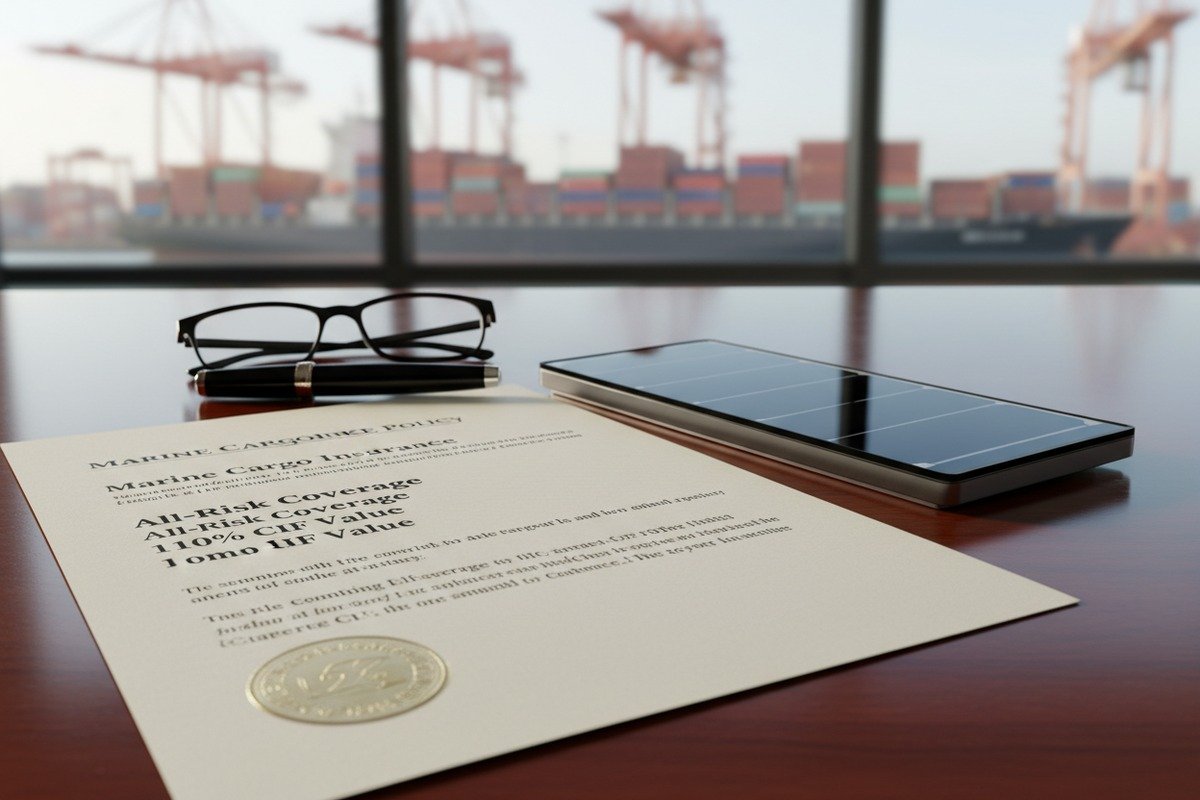
Look for "All-Risk" marine cargo insurance that explicitly covers breakage of fragile goods, water damage, theft, vessel sinking, and general average contributions. Confirm the policy has no hidden exclusions for glass products, and insure at 110–130% of your CIF invoice value to protect profit margins.
Why "All-Risk" Beats "Named Perils" for Solar Shingles
Solar roof shingles are not like standard building materials. Each tile contains tempered glass 3, photovoltaic cells, junction boxes, and precision wiring. A single impact can crack the glass surface and destroy the cell beneath it. "Named Perils" insurance only pays out for events listed in the policy — things like fire, vessel sinking, or collision. If your shingles crack from rough handling at port, and "handling damage" is not listed, you get nothing.
"All-Risk" coverage works the other way around. It covers all physical loss or damage from external causes unless specifically excluded. This is a critical distinction for fragile cargo.
Key Coverage Elements to Confirm
Before you sign any policy, ask your insurer about these specific items:
| Coverage Element | Why It Matters for Solar Shingles |
|---|---|
| Breakage of fragile goods | Solar shingles have glass surfaces that crack under impact |
| Water / moisture damage | Saltwater intrusion corrodes PV cells and connectors |
| Theft and pilferage | High-value cargo attracts theft at ports |
| General average 4 contribution | If the vessel sacrifices cargo to save the ship, all cargo owners share the loss proportionally |
| Warehouse-to-warehouse | Covers goods from the moment they leave the factory to final delivery at your warehouse |
| Concealed damage | Damage not visible externally but found upon unpacking |
What About Standard Carrier Liability?
Many importers assume the shipping line will cover damage. This is a dangerous assumption. Standard carrier liability under the Hague-Visby Rules 5 pays roughly $500 per shipping unit or $2 per kilogram — whichever is higher. A single pallet of our solar roof shingles can be worth $3,000 to $8,000. Carrier liability would cover a tiny fraction of that loss.
General Average — The Hidden Risk
General average is a maritime law principle most importers have never heard of until it hits them. If a vessel encounters an emergency and the captain orders cargo thrown overboard to save the ship, every cargo owner on that vessel must pay a share of the total loss. Without insurance, you could owe tens of thousands of dollars even if your own cargo is untouched. Make sure your policy explicitly covers general average contributions.
Political Risk and Customs Seizure
Given the current trade environment between China and the US and Europe, consider whether your policy covers political risk 6 — losses from government actions, trade embargoes, or sudden tariff changes that result in cargo being held or seized. Some specialized policies offer limited protection for customs disputes, especially relevant for BIPV products that sometimes fall into gray areas between building material and photovoltaic HS codes.
How do I calculate the insurance premium for a bulk order of BIPV products from China?
Our team helps buyers estimate landed costs 8 every week, and insurance is one of the most frequently miscalculated line items. Getting this number wrong can throw off your entire project budget.
Calculate your insurance premium by multiplying your CIF cargo value (plus 10–30% markup) by the insurer's rate, typically 0.3% to 0.8%. For example, a $50,000 CIF shipment insured at 110% equals $55,000 insured value. At a 0.5% rate, your premium would be $275 — a small cost relative to the risk.
The Basic Formula
The math is straightforward:
Insurance Premium = Insured Value × Insurance Rate
Where:
- Insured Value = CIF Value × (1 + Markup Percentage)
- Insurance Rate = Determined by the insurer based on cargo type, route, and risk factors
Step-by-Step Calculation Example
Let us walk through a real scenario. Say you order a 40GP full container load of solar roof shingles from our factory.
| Item | Value |
|---|---|
| FOB price of goods | $42,000 |
| Ocean freight cost | $6,000 |
| Insurance estimate (to calculate CIF) | $250 |
| CIF value | $48,250 |
| Markup for insurance (10%) | $4,825 |
| Total insured value | $53,075 |
| Insurance rate (All-Risk, fragile cargo) | 0.55% |
| Final premium | $291.91 |
That is less than $300 to protect a $48,000+ shipment. In our experience, the premium for solar shingles typically runs between $200 and $500 per container, depending on the route and insurer.
Factors That Affect Your Rate
Not all shipments are priced the same. Insurers look at several variables:
- Cargo type: Glass-surface solar products are classified as fragile, which raises the rate slightly.
- Shipping route: Routes through piracy zones or rough weather corridors cost more.
- Packaging quality: Insurers may offer better rates if you can demonstrate robust packaging standards. We use reinforced wooden crates with foam inserts and corner protectors, which helps.
- Claims history: If you have a clean record, you may negotiate lower rates over time.
- Shipment volume: High-volume importers with open (permanent) policies often get discounted rates.
Open Policy vs. Single Voyage Policy
If you import regularly, an open insurance policy saves time and money. Instead of negotiating a new policy for every shipment, you declare each shipment under a standing agreement. Rates are typically lower because the insurer benefits from consistent premium income. For one-off orders, a single voyage policy works fine but may cost slightly more per dollar of coverage.
Do Not Insure at Invoice Cost Alone
A common mistake is insuring only the factory invoice value. If your container is lost at sea, you lose not just the product cost but also the freight charges, import duties, and your profit margin. That is why the industry standard is to insure at 110% of CIF value. Some experienced importers go up to 130% to cover anticipated profits and re-ordering costs. Talk to your insurer about what your policy ceiling allows.
What steps must I take to ensure a successful claim if my solar tiles arrive with glass breakage?
We have guided dozens of buyers through the claims process over the years. The ones who succeed always have one thing in common: they documented everything before, during, and after shipment. The ones who fail almost always skipped a step they thought was optional.
To ensure a successful insurance claim for broken solar tiles, conduct a pre-shipment inspection, photograph all cargo before loading, note damage on the delivery receipt immediately upon arrival, file a written claim with your insurer within the policy's time limit, and provide the commercial invoice, packing list, bill of lading, and photographic evidence of damage.
Step 1: Pre-Shipment Inspection
Before cargo leaves our warehouse, we recommend every buyer arrange a third-party inspection. This creates a baseline record proving the goods were in perfect condition when they left the factory. Inspectors check glass surfaces for micro-cracks, verify packing methods, and photograph every crate. This step alone can make or break your claim later.
Step 2: Document Packaging and Loading
Take time-stamped photos and videos of the loading process. Capture the interior of the container before loading, the arrangement of crates, the use of dunnage and bracing, and the container seal number. If the insurer suspects poor packaging caused the damage, your loading documentation proves otherwise.
Step 3: Note Damage on the Delivery Receipt
This is the step most people miss. When your container arrives and you see damaged crates or broken tiles, you must write the damage directly on the delivery receipt or the Bill of Lading 9 before signing. If you sign a clean receipt, you are acknowledging the goods arrived in good condition. Getting the damage on record at the moment of delivery is critical.
Step 4: Preserve the Evidence
Do not move or discard broken tiles. Photograph everything in place — the container interior, the damaged crates, and each broken tile. Keep the original packaging. Insurers may send a surveyor to inspect the damage, and they need to see it exactly as it arrived.
Step 5: File Your Claim Promptly
Most marine cargo insurance policies require you to file a written notice of claim within a specific window — often 3 to 7 days of delivery for visible damage, and up to 30 days for concealed damage. Do not wait. Send your written claim to the insurer with the following documents:
| Required Document | Purpose |
|---|---|
| Commercial invoice | Proves the value of the goods |
| Packing list | Details the contents and quantities |
| Bill of lading | Proves the shipment and carrier details |
| Insurance policy or certificate | Confirms your coverage |
| Delivery receipt with damage noted | Shows damage was present at arrival |
| Photographs and videos | Visual evidence of the damage |
| Survey report (if applicable) | Independent assessment of cause and extent |
Step 6: Cooperate with the Surveyor
The insurer may appoint a loss adjuster or surveyor to inspect the damage. Be transparent and cooperative. Provide access to the cargo, all documentation, and any communication with the shipping line. The surveyor's report heavily influences whether your claim is approved.
Common Reasons Claims Get Denied
Avoid these mistakes:
- Signing a clean delivery receipt when damage exists.
- Failing to file within the policy's time limit.
- Insuring at a value lower than the actual cargo worth.
- Lack of pre-shipment inspection 10 records.
- Poor or missing photographic evidence.
At our end, we always provide detailed packing lists, loading photos, and container seal records to every buyer. This documentation package is specifically designed to support insurance claims if the worst happens.
Is it better for me to buy my own insurance or let my Chinese manufacturer handle it under CIF terms?
When we quote CIF terms to our European buyers, the insurance is already baked into the price. It sounds convenient. But over the years, we have learned to be very transparent about what CIF insurance actually covers — and what it does not. The truth is, the answer depends on your business size, your risk tolerance, and how much control you want.
Under CIF terms, the Chinese manufacturer arranges minimum insurance — typically ICC(C) or "Free from Particular Average" — which covers only major events like vessel sinking or fire, not breakage or handling damage. For fragile solar shingles, buying your own All-Risk policy gives you broader coverage, higher insured values, and direct control over the claims process.

What CIF Insurance Actually Covers
Under CIF Incoterms, the seller (the Chinese manufacturer) is only obligated to provide minimum coverage. The ICC (Institute Cargo Clauses) have three tiers:
- ICC(A) — All-Risk (broadest)
- ICC(B) — Named perils including fire, collision, earthquake, water entry
- ICC(C) — Minimum named perils: fire, explosion, vessel sinking, collision, general average
Most CIF contracts default to ICC(C). This means if your solar shingles crack from rough handling at port, if moisture seeps into the container, or if a forklift drops a crate — none of that is covered under minimum CIF insurance.
Head-to-Head Comparison
| Factor | CIF Insurance (Manufacturer Arranges) | Buyer-Arranged Insurance |
|---|---|---|
| Coverage level | Usually ICC(C) minimum | You choose — typically ICC(A) All-Risk |
| Insured value | 110% of CIF invoice | You set it: 110–130% or higher |
| Policy control | Manufacturer holds the policy | You hold the policy directly |
| Claims process | You must go through the manufacturer's insurer (often in China) | You deal directly with your own insurer |
| Breakage coverage | Usually excluded | Included under All-Risk |
| Cost transparency | Hidden in the CIF price | You see the exact premium |
| Insurer choice | Manufacturer chooses (often Ping'an or China Pacific) | You choose a local or international insurer |
The Claims Problem with CIF
Even if the CIF insurance is adequate, filing a claim through a Chinese insurer from Europe or the US can be frustrating. Language barriers, time zone differences, and unfamiliarity with the insurer's processes slow everything down. When you buy your own policy from a local insurer or an international broker, the claims process is faster, communication is clearer, and you have legal recourse in your own jurisdiction.
When CIF Insurance Makes Sense
For small trial orders or sample shipments, CIF insurance may be acceptable. The value at risk is low, and the convenience of an all-inclusive price outweighs the coverage limitations. If you are testing a new supplier and ordering just one or two pallets, the cost of arranging your own insurance may not be justified.
When You Should Buy Your Own
If you are importing full container loads of solar roof shingles — and especially if your project timeline depends on that cargo arriving intact — buy your own All-Risk policy. The premium is small relative to the cargo value. You get broader coverage, higher insured values, and a direct relationship with your insurer.
Our recommendation to buyers is straightforward: ask us for an FOB quote, then arrange your own insurance. This way, you control the coverage, the insured value, and the claims process. We provide all the documentation you need — commercial invoices, packing lists, loading photos, and container seal records — to make your insurance application and any future claims as smooth as possible.
Choosing an Insurer
For European importers, consider insurers like Allianz, Zurich, or Lloyd's syndicates that specialize in marine cargo. For US-based importers, companies like Chubb, AIG, or specialized marine brokers offer competitive rates. If you prefer to use a Chinese insurer, Ping'an and China Pacific Insurance are among the largest and most reputable, but be prepared for a more complex claims experience from overseas.
Conclusion
Shipping insurance for solar roof shingles is affordable, essential, and entirely within your control. Choose All-Risk coverage, insure above CIF value, document everything, and take ownership of the policy yourself for the strongest protection.
Footnotes
1. Provides a general definition and overview of solar roof shingles. ↩︎
2. Reference 4. ↩︎
3. Defines tempered glass and its properties as a safety glass. ↩︎
4. Defines the maritime law principle of general average and its application. ↩︎
5. Provides an overview of the international rules governing carrier liability in maritime transport. ↩︎
6. Defines political risk insurance and the types of government actions it covers. ↩︎
7. Explains the comprehensive nature and benefits of All-Risk marine cargo insurance. ↩︎
8. Explains the definition and components of landed costs in international shipping. ↩︎
9. Describes the Bill of Lading as a crucial legal document in shipping. ↩︎
10. Highlights the importance and process of pre-shipment inspection for quality control. ↩︎