
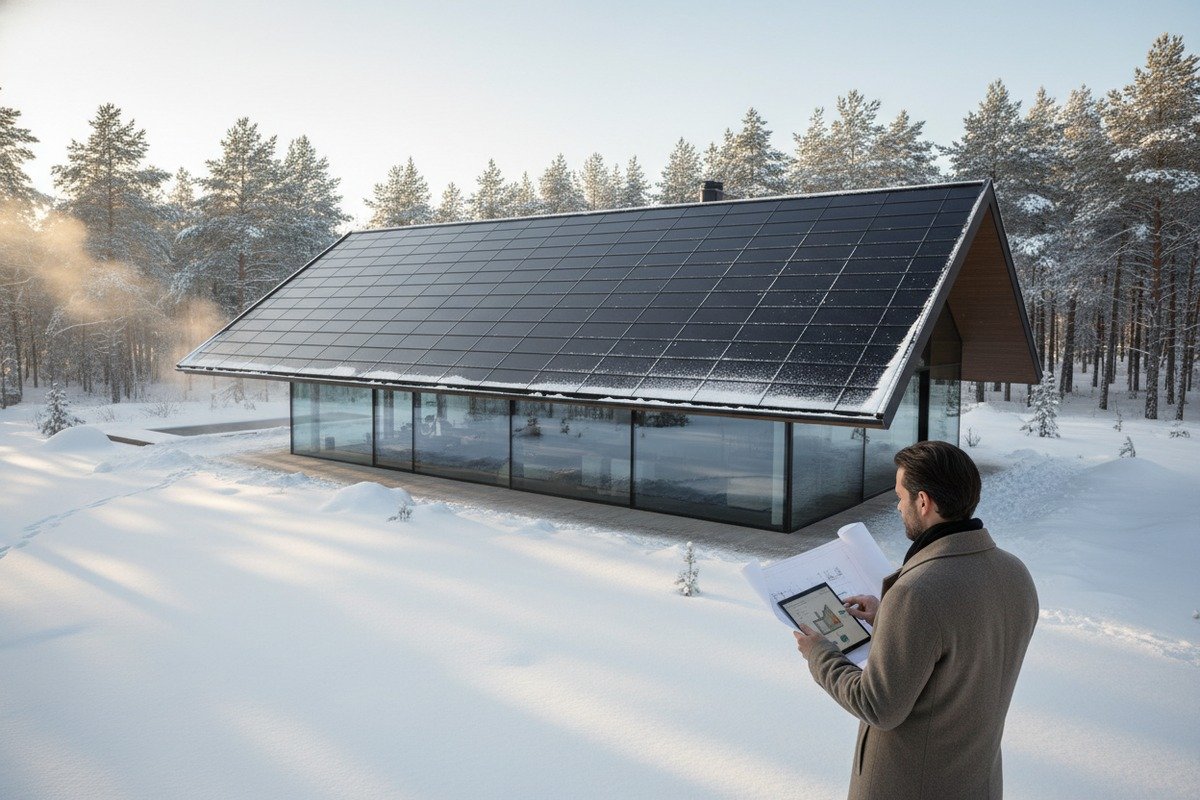
Every winter, we receive calls from European distributors whose previous shingle suppliers never tested products below -10°C — and their roofs paid the price.
To compare solar roof shingle performance across suppliers for cold European climates, request certified snow load ratings, hail impact test data, low-light power output curves, waterproofing integration details, and enforceable long-term warranty terms that specifically address freeze-thaw degradation and sub-zero temperature operation.
This guide breaks down exactly what to check, what to demand, and what red flags to watch for low-light performance data 1. We will walk through structural testing, certification reports, waterproofing design, and warranty language — step by step.
How can I verify if the solar shingles will withstand heavy snow loads and 35mm hail in my region?
When our engineering team first designed shingles for Scandinavian projects, we quickly learned that lab data and real Nordic winters are two very different things PID (Potential Induced Degradation) resistance 2.
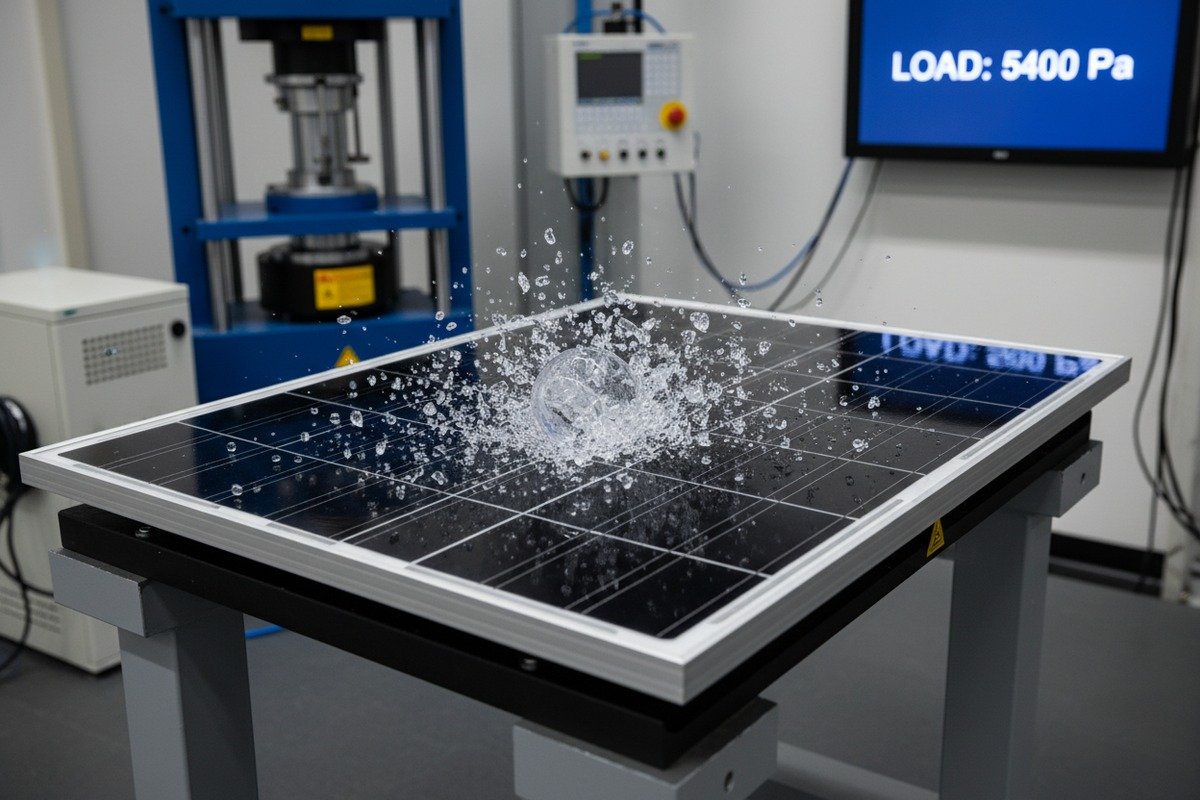
Request IEC 61215 and IEC 61730 certified test reports showing mechanical load ratings of at least 5400 Pa for snow and hail impact resistance verified at 35mm ice ball diameter and 30 m/s velocity, ideally tested at sub-zero temperatures to simulate real European winter conditions.
Why Standard Ratings Are Not Enough
Most solar shingle suppliers will show you a basic IEC 61215 3 certificate. That covers general durability. But cold European climates demand more. You need to know how the product performs under sustained heavy snow, not just a momentary pressure test Salt mist corrosion test 4.
Snow loads in Northern Europe range widely. In southern Finland, typical ground snow loads reach 2.0–2.5 kN/m². In the Norwegian mountains, they can exceed 4.5 kN/m². Your shingles must handle not just the weight, but the slow creep of packed ice over weeks.
Ask every supplier for the specific mechanical load test value in Pascals. Our shingles are tested to 5400 Pa, which covers most European snow zones. But some suppliers only test to 2400 Pa. That is a recipe for cracked cells and voided warranties.
Hail: The 35mm Threshold
In Central Europe — particularly the Alps, southern Germany, and parts of France — hailstones regularly reach 25–35mm. The IEC 61215 standard tests with 25mm ice balls at 23 m/s. That is not enough for alpine regions.
We test our shingles with 35mm ice balls at 30 m/s impact velocity. This matches the real-world hail risk in zones like Bavaria and the Swiss Plateau. Ask your supplier if they test beyond the minimum standard.
Key Questions to Ask Every Supplier
| Question | Why It Matters | Red Flag Answer |
|---|---|---|
| What is your mechanical load rating in Pa? | Determines snow load capacity | Below 3600 Pa for Northern Europe |
| What hail ball diameter and velocity do you test? | Determines hail survival | Only 25mm at 23 m/s (bare minimum) |
| Is testing done at sub-zero temperatures? | Cold glass is more brittle | "We test at room temperature only" |
| Do you have field data from Nordic installations? | Proves real-world survival | No installations above 55°N latitude |
| Can you provide CPR (Construction Products Regulation 5) compliance? | Required for EU building materials | Only electrical certifications provided |
Temperature and Brittleness
Here is something many buyers miss. Glass and encapsulant materials behave differently at -20°C than at +25°C. Tempered glass becomes more brittle. EVA encapsulant stiffens. A shingle that passes hail tests at room temperature may crack at -15°C.
We run additional cold-chamber impact tests at -20°C. Not every supplier does this. Ask for the test temperature on the report. If it only says "ambient" or "23°C ± 5°C," push back.
Snow Load Zones in Europe — Quick Reference
| European Region | Typical Ground Snow Load (kN/m²) | Recommended Shingle Rating (Pa) |
|---|---|---|
| Southern France, coastal | 0.5–1.0 | 2400+ |
| Northern Germany, Poland | 1.0–2.0 | 3600+ |
| Scandinavia (lowlands) | 2.0–3.5 | 5400+ |
| Alpine regions (>1000m) | 3.5–6.0+ | 5400+ (reinforced mounting) |
Always cross-reference with your local Eurocode EN 1991-1-3 snow load 6 map. Do not rely on the supplier's general claim of "snow resistant."
What should I look for in the TUV or CE test reports to ensure my shingles perform well in low-light winter conditions?
Our R&D lab spends three months every year testing cell output under simulated Nordic winter light — because the difference between a good and bad shingle shows up most when the sun barely rises.
In TUV or CE reports, look for low-light performance data at 200 W/m² irradiance, the temperature coefficient of power (Pmax), spectral response curves, and confirmed compliance with IEC 61215 low-irradiance testing protocols to ensure consistent winter energy yield.
Understanding Low-Light Performance
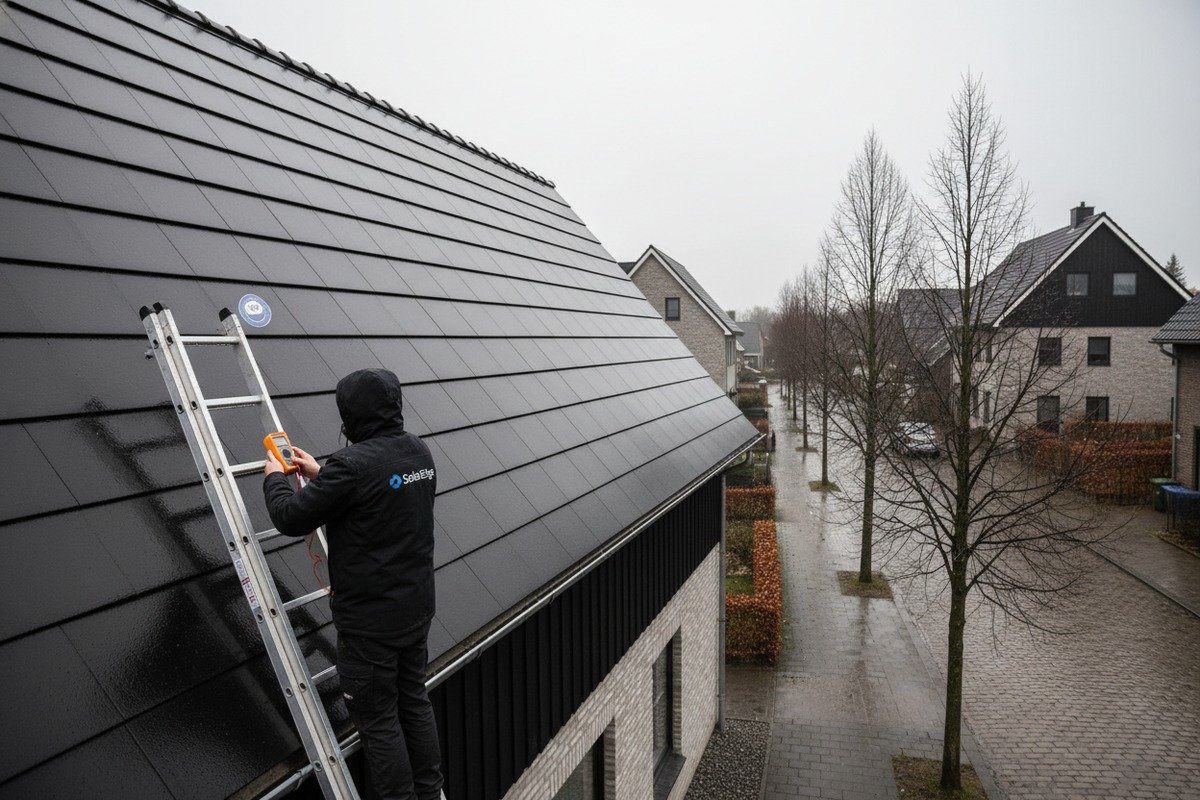
In Northern Europe during December and January, solar irradiance drops to 50–200 W/m² for most of the day. Standard Test Conditions (STC) rate panels at 1000 W/m². That number is almost meaningless for a Finnish winter.
What you need is the low-irradiance performance ratio. IEC 61215 includes a test at 200 W/m², but not all suppliers report it clearly. Look in the test report appendix for "low irradiance behavior" or "performance at 200 W/m²." If it is missing, ask the supplier directly.
A good solar shingle should retain at least 90% of its STC efficiency ratio when measured at 200 W/m². Poor-quality cells can drop below 80%, which means significantly less power during the months when every watt counts.
Temperature Coefficient — Your Best Friend in Cold
Here is the good news about cold climates. Photovoltaic cells actually produce more voltage when temperatures drop. The key metric is the temperature coefficient of Pmax 7, expressed as a percentage per degree Celsius.
Most monocrystalline PERC cells have a coefficient around -0.34%/°C to -0.40%/°C. This means for every degree below 25°C (the STC reference), power output increases. At -10°C, that is a 35°C difference — translating to roughly 12–14% more power than the nameplate rating, assuming adequate light.
When comparing suppliers, a lower absolute value (e.g., -0.30%/°C) is slightly better. But the real gains come from cell quality and low-light response, not just the coefficient.
What to Check on the Certificate
Look for these specific items in the TUV or CE documentation:
- IEC 61215:2021 — full qualification, not just partial modules
- IEC 61730 — safety certification for building integration
- Low-irradiance test data — power output at 200 W/m²
- Temperature coefficient of Pmax — should be listed on the datasheet
- PID (Potential Induced Degradation) resistance — critical for damp, cold climates
- Salt mist corrosion test — relevant for coastal Northern Europe
Spectral Response and Diffuse Light
Winter sunlight in Northern Europe is heavily diffuse. Cloud cover scatters the light spectrum. Shingles with cells optimized for a broader spectral response will capture more energy from overcast skies.
Ask if the supplier uses half-cut or shingled cell technology. These designs reduce internal resistance and improve output under partial shading and diffuse light — both common in winter.
Our shingles use monocrystalline cells specifically selected for strong low-light and diffuse-light response. We include this data in our TUV-certified test reports and share it openly with buyers.
Quick Certification Comparison Checklist
| Certification Item | What to Look For | Why It Matters for Cold Climates |
|---|---|---|
| IEC 61215 full qualification | Complete, not partial | Confirms all-round durability |
| Low-irradiance test (200 W/m²) | ≥90% efficiency retention | Winter output assurance |
| Temperature coefficient (Pmax) | -0.30% to -0.40%/°C | Cold boosts output; lower is better |
| PID resistance | Passed at 85°C/85% RH | Prevents power loss in damp climates |
| IEC 61730 8 safety | Class A or C rating | Required for building integration |
| Salt mist (IEC 61701) | Passed severity level 6 | Coastal Nordic durability |
How do I compare the structural waterproofing designs to ensure my roof won't leak during the spring thaw?
We have seen the aftermath of poorly sealed solar shingle roofs in Germany — water pooling under tiles after the first spring thaw, staining ceilings, and triggering six-figure damage claims.
Compare waterproofing by examining the interlocking flashing design, overlap depth (minimum 30mm), drainage channel geometry, underlayment compatibility, and whether the supplier provides freeze-thaw cycle test data showing zero water ingress after at least 200 thermal cycles between -20°C and +80°C.
Why Solar Shingle Waterproofing Is Different
A traditional solar panel sits on a rack above the roof. If rain gets under the panel, it hits the existing roof membrane and drains away. No problem.
Solar shingles replace the roof surface. They are the waterproof barrier. If the design fails, water enters the building directly. In Europe, where labor costs for repair and interior damage claims are extremely high, this is the single biggest financial risk for importers and installers.
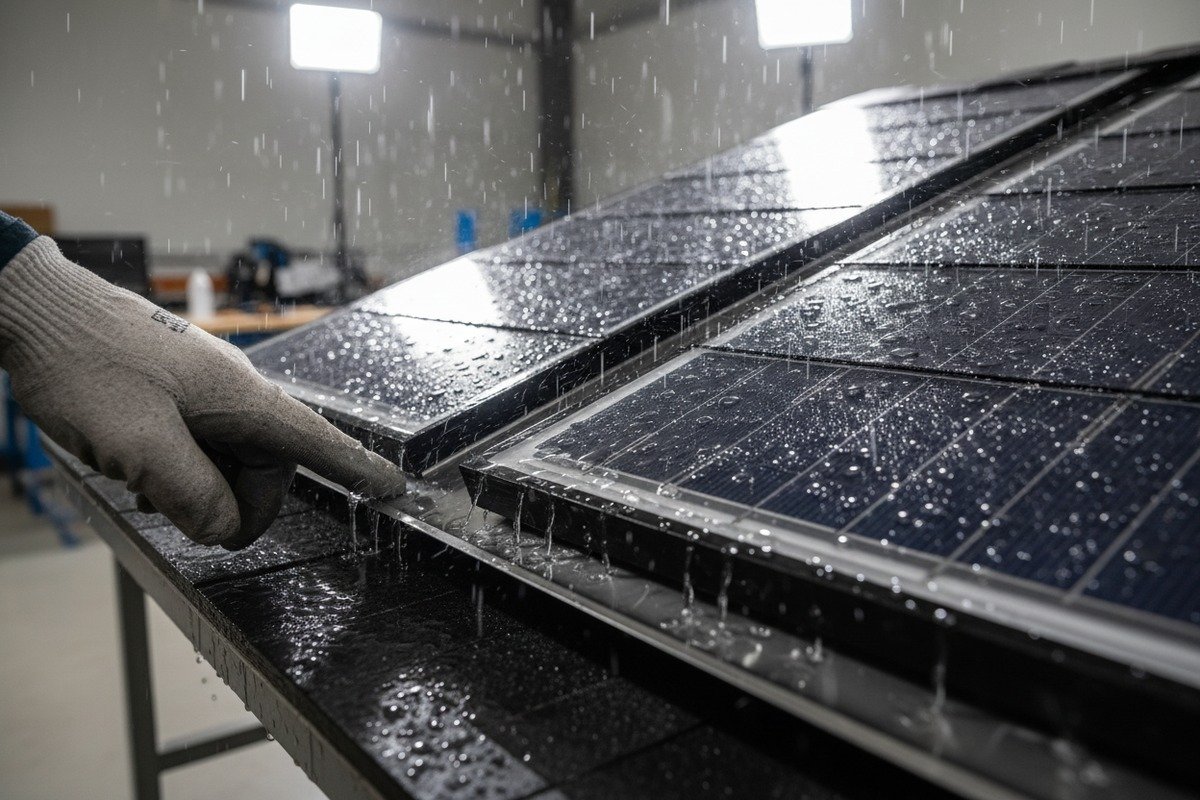
Spring thaw is the most dangerous period. Snow melts during the day, water seeps into every gap, then refreezes at night. This freeze-thaw cycle 9 expands water in micro-gaps and can break seals that held fine during summer rain testing.
Key Design Features to Compare
Interlocking Overlap
Every shingle must overlap the one below it. The overlap depth determines how far water must travel uphill to breach the seal. We design our shingles with a minimum 30mm overlap and a stepped channel that forces water outward.
Ask each supplier for their overlap dimension and whether it includes a secondary drainage lip. Some budget designs use a flat overlap of only 15mm — that is asking for trouble in a freeze-thaw zone.
Drainage Channel Geometry
Look at the underside of the shingle. Are there molded drainage channels? These channels guide water that does get under the edge back out to the surface. Without them, water pools and freezes.
Our shingles include three parallel drainage channels on each tile edge. This is visible in cross-section drawings we provide to every distributor.
Underlayment Compatibility
In cold European climates, a secondary waterproof underlayment (such as ice and water shield membrane) is essential. Not all shingle systems are designed to work with European-standard underlayments. Ask the supplier which specific underlayment products they have tested with.
Installation Complexity and Labor Cost
European labor rates range from €40 to €80 per hour for skilled roofers. If a shingle system takes 30% longer to install because of complex wiring or fiddly clips, that directly cuts into your margin.
We designed our interlocking system for one-tool installation with pre-attached MC4-compatible connectors 10. Each shingle clicks into place and locks. Average installation speed is 15–20 shingles per hour per worker, compared to 8–12 for some competitor designs with separate wiring harnesses.
Freeze-Thaw Test Data
This is the critical piece most buyers forget to request. Ask for freeze-thaw cycling test results — specifically, how many cycles the shingle was tested through and at what temperature range.
A minimum of 200 cycles between -20°C and +80°C with zero water ingress is our internal standard. Some suppliers only test to 50 cycles or do not test freeze-thaw at all. That is not acceptable for Scandinavia, the Baltics, or alpine regions.
Red Flags in Waterproofing Claims
- "Waterproof when installed correctly" — with no installation tolerance data
- No cross-section drawings available
- Overlap less than 25mm
- No freeze-thaw test report
- Shingles tested only with Chinese-market underlayments, not European equivalents
What specific warranty terms should I demand from a Chinese supplier to protect my investment against long-term cold climate wear?
Over our 20 years producing solar roofing products, we have watched dozens of suppliers enter the European market with bold warranty promises — and then quietly disappear when claims started coming in.
Demand a minimum 25-year linear power output warranty with annual degradation below 0.5%, a 10-year structural and waterproofing warranty, an escrow or insurance-backed guarantee mechanism, clearly defined cold-climate failure coverage including freeze-thaw damage, and a named European service entity for claim processing.
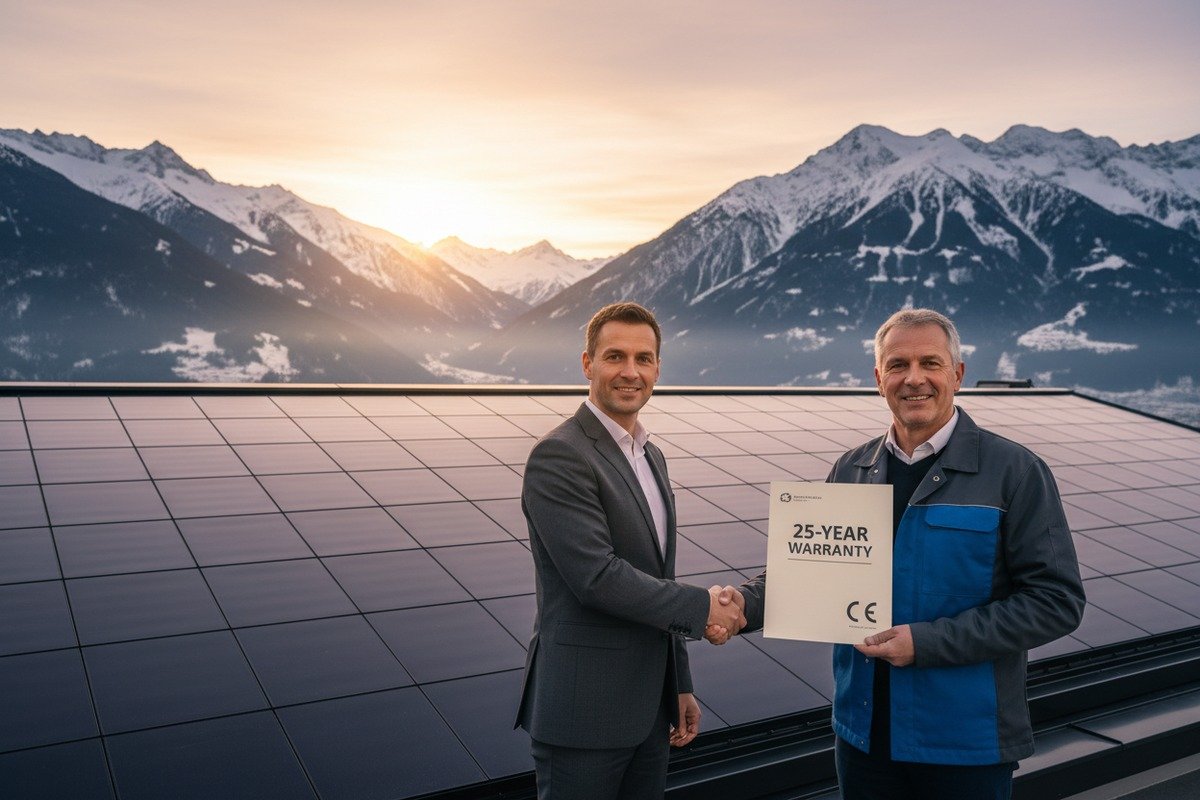
The "Warranty on Paper" Problem
A warranty is only as good as the company behind it. Many Chinese BIPV suppliers offer 25-year or even 30-year warranties on paper. But if the company restructures, rebrands, or simply stops responding to emails in year 8, that paper is worthless.
This is the number one fear among European distributors we work with. And it is a legitimate concern.
What a Strong Warranty Must Include
Power Output Guarantee
The industry standard is a 25-year linear warranty. Year 1 output should be at least 97% of nameplate. By year 25, at least 80%. That means maximum annual degradation of about 0.68%.
Better suppliers — including us — guarantee annual degradation below 0.5%, which means over 84% output at year 25. Ask for the degradation curve in writing, not just the endpoint number.
Structural and Waterproofing Warranty
This is separate from the power warranty. It covers the physical integrity of the shingle — cracking, delamination, seal failure, and water ingress. Demand a minimum 10-year structural warranty with explicit coverage for freeze-thaw damage.
Some suppliers exclude "extreme weather" or "acts of nature" in fine print. In Northern Europe, heavy snow and freeze-thaw are not extreme — they are normal. Make sure the warranty language reflects this.
Enforcement Mechanisms
Here is where you protect yourself. Demand one or more of these:
- European-registered warranty entity — a subsidiary or legal partner in the EU that can be held accountable under EU consumer law
- Escrow deposit or insurance-backed warranty — funds held by a third party to cover claims
- Material bank — the supplier maintains stock of replacement shingles in a European warehouse for fast replacement
We maintain a warranty service partnership in Europe and keep replacement stock in bonded warehouses to ensure claims are handled within weeks, not months.
Warranty Comparison Framework
| Warranty Element | Minimum Acceptable | Best Practice (What We Offer) |
|---|---|---|
| Power output duration | 25 years | 25 years linear |
| Year-25 output guarantee | ≥80% | ≥84% |
| Annual degradation cap | ≤0.7% | ≤0.5% |
| Structural warranty | 10 years | 10 years, freeze-thaw included |
| Waterproofing warranty | 10 years | 10 years, spring thaw coverage |
| EU-based claim entity | Named contact | Registered EU partner entity |
| Replacement stock in Europe | Recommended | Yes, bonded warehouse |
| Response time for claims | 30 days | 14 business days |
Hidden Warranty Exclusions to Watch For
Read the fine print carefully. Common exclusions that should concern you:
- "Damage from snow or ice accumulation" — unacceptable in Northern Europe
- "Installation must be performed by supplier-certified installer" — if no certified installers exist in your country, the warranty is void
- "Claims must be filed within 30 days of discovery" — leaks can go unnoticed for months
- "Warranty void if product is modified" — cutting or trimming shingles to fit roof edges is standard practice; this clause could void your coverage
Push back on each of these. A supplier confident in their product will negotiate.
The Trust Factor
Finally, evaluate the supplier's track record. How long have they been in business? Do they have verifiable European installations older than 5 years? Can they provide references from distributors in your climate zone?
We have been manufacturing solar roofing products for 20 years. We provide reference contacts from European partners and welcome factory audits. Transparency is the foundation of a long-term supply relationship — especially when you are making a 25-year bet on a roof.
Conclusion
Comparing solar shingle suppliers for cold European climates comes down to verified test data, honest certification reports, smart waterproofing engineering, and enforceable warranty terms — not marketing brochures.
Footnotes
1. Provides a comprehensive guide to solar panel performance in low-light conditions. ↩︎
2. Explains potential-induced performance degradation in crystalline photovoltaic modules caused by stray currents. ↩︎
3. Provides a comprehensive overview of the IEC 61215 standard, its tests, and importance. ↩︎
4. Provides a detailed overview of the IEC 61701 salt mist corrosion test for PV modules. ↩︎
5. Offers a current and comprehensive guide to the updated EU Construction Products Regulation. ↩︎
6. Explains the Eurocode EN 1991-1-3 standard for snow loads and its national variations. ↩︎
7. Explains how a solar panel’s efficiency is reduced for each degree increase in temperature. ↩︎
8. Defines construction requirements for PV modules concerning safety and electrical operation. ↩︎
9. Describes the process of weathering by repeated freezing and thawing of water in cracks. ↩︎
10. Provides a comprehensive and authoritative overview of MC4 connectors for solar panels. ↩︎