

Every week, our engineering team fields calls from European roofing companies asking the same question: what happens to solar shingles when they reach end-of-life?
Roofing companies evaluate solar shingle recycling for European circular economy compliance by auditing material composition, verifying WEEE Directive registration, assessing manufacturer take-back programs, confirming material recovery rates, and requiring documentation such as Digital Product Passports that trace each component from production through end-of-life disposal.
This guide breaks down exactly how roofing professionals can navigate these evaluations step by step ISO 14001 environmental management certification 1. We will cover EU compliance frameworks, real recovery rates, manufacturer audits, and take-back logistics so you can make informed sourcing decisions.
How do I ensure the solar shingles I import comply with the EU WEEE directive for electronic waste recycling?
When we first started exporting our BIPV tiles 2 to European markets, compliance with the WEEE Directive 3 was the single biggest regulatory hurdle our distribution partners raised.
To ensure compliance, importers must register as producers under the WEEE Directive in each EU member state, join an approved compliance scheme, label products with the crossed-out wheelie bin symbol, and guarantee financing for collection and recycling of end-of-life solar shingles through an authorized waste management partner.
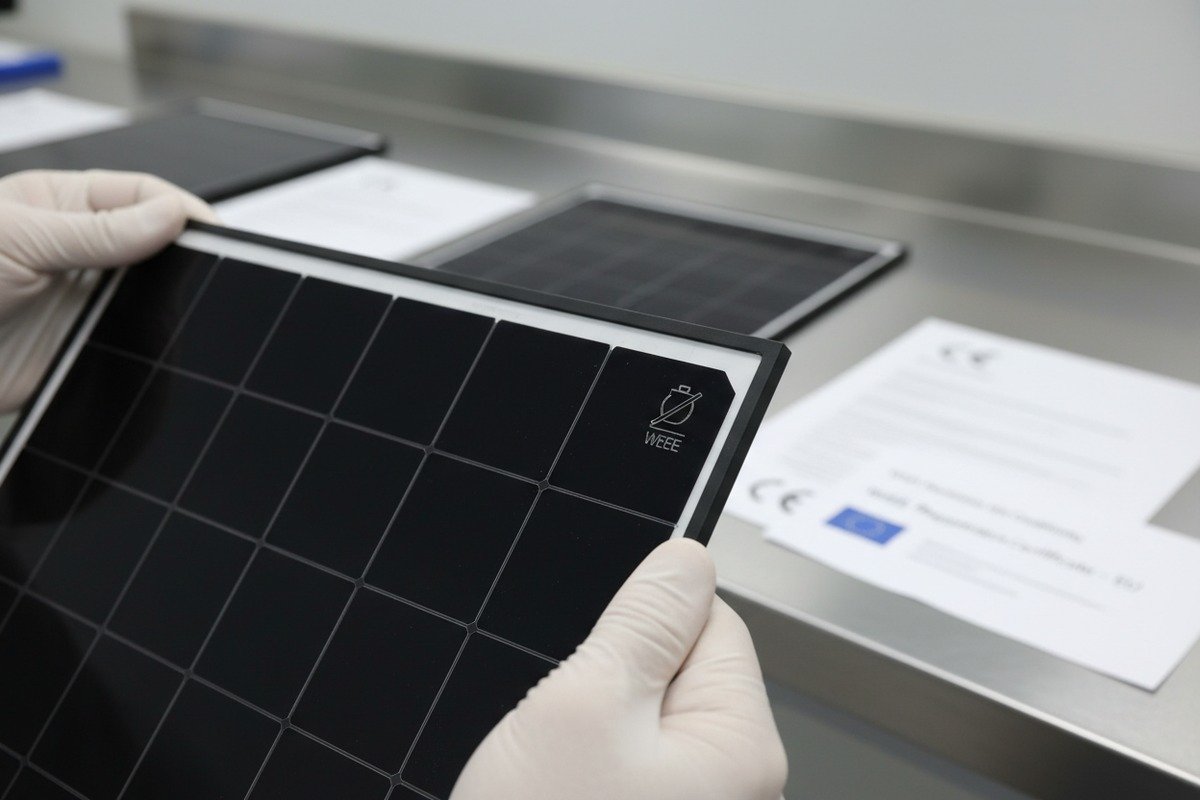
Understanding Your Legal Status Under WEEE
The WEEE Directive (2012/19/EU) classifies solar panels and solar shingles as electronic equipment Roof-as-a-Service (RaaS) model 4. This means any company that places these products on the EU market — whether as manufacturer, importer, or distributor — becomes a "producer" in legal terms. That status carries real obligations.
If you are a roofing company importing solar shingles from China or any non-EU country, you are the producer crossed-out wheelie bin symbol 5. You bear financial and operational responsibility for the entire end-of-life chain. This includes collection, transport, treatment, and environmentally sound disposal.
Step-by-Step Registration Process
Each EU member state has its own national WEEE register. France uses the ADEME registry. Germany uses the Stiftung EAR. You must register before you place your first unit on the market.
Here is a simplified compliance roadmap:
| Step | Action | Timeline |
|---|---|---|
| 1 | Identify all EU countries where you sell | Before first shipment |
| 2 | Register as a WEEE producer in each country | 4–12 weeks per country |
| 3 | Join an approved Producer Responsibility Organization (PRO) 6 | Concurrent with registration |
| 4 | Apply crossed-out wheelie bin marking to all products | Before market entry |
| 5 | Report annual sales volumes to national registry | Annually |
| 6 | Finance collection and recycling via PRO fees | Ongoing |
Common Pitfalls We Have Seen
One mistake we frequently see is roofing companies assuming their Chinese supplier handles WEEE compliance. It does not work that way. Unless the manufacturer has a legal entity in the EU and registers itself, the importer holds all liability.
Another issue is HS Code classification. Solar shingles sit at the intersection of building materials and photovoltaic equipment. Customs authorities may classify them differently depending on the country, which affects both tariff rates and WEEE category assignment. We always recommend working with a customs broker who has specific BIPV experience.
Hazardous Material Declarations
The WEEE Directive also connects to RoHS (Restriction of Hazardous Substances) 7. Solar shingles must not exceed maximum concentration values for lead, cadmium, mercury, and other restricted substances. Our production line tests every batch against these limits before shipment, and we provide full material safety data sheets 8 with each order. This documentation is critical if an EU authority audits your supply chain.
The financial penalties for non-compliance are severe. In Germany alone, fines can reach €100,000 per violation. More importantly, non-compliant products can be pulled from the market entirely, leaving your roofing projects in limbo.
What material recovery rates can I expect when recycling these BIPV tiles at the end of their 25-year lifespan?
Our R&D team has spent the last three years working with European recycling partners to test disassembly and recovery outcomes for our solar shingle designs. The results are promising but come with important caveats.
Current recycling processes recover approximately 85–95% of glass and aluminum from solar shingles by weight, but recovery of high-purity silicon, silver, and copper remains closer to 60–80%, depending on the separation technology used and the specific laminate construction of the BIPV product.
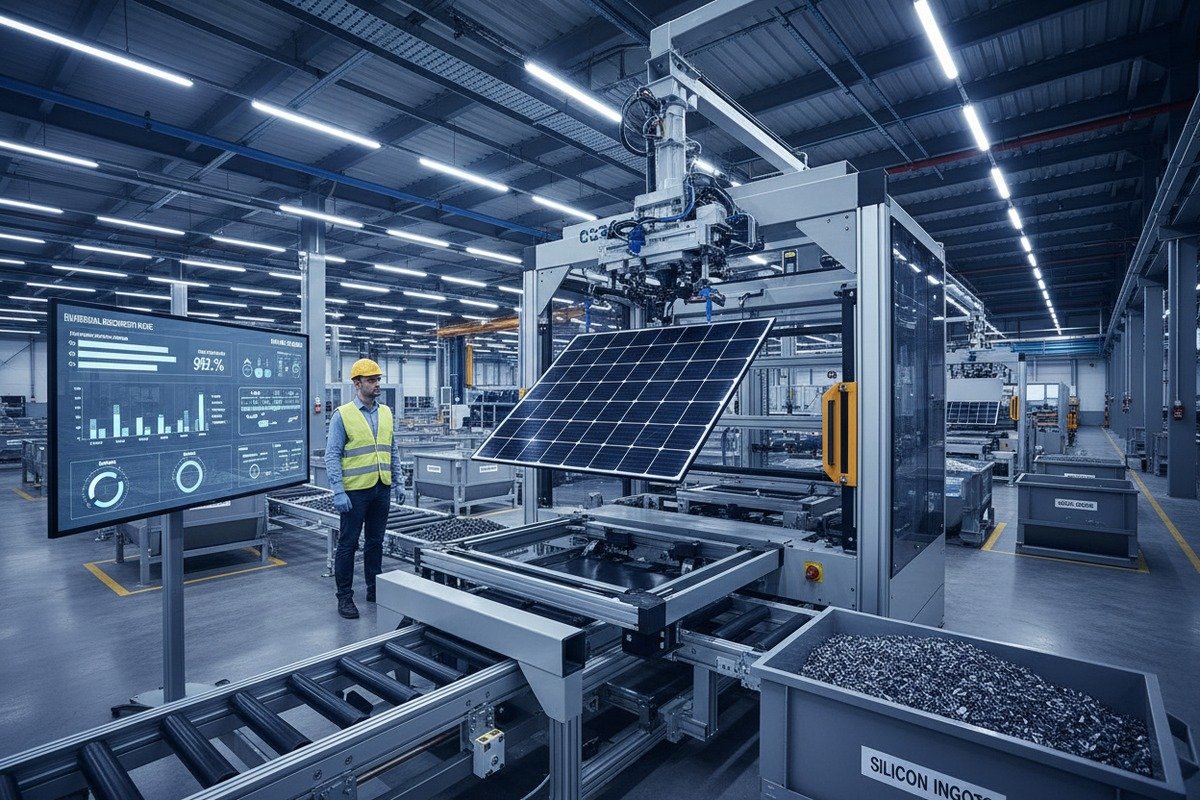
What Is Actually Inside a Solar Shingle?
To understand recovery rates, you first need to understand what you are recycling. A typical solar shingle contains tempered glass, encapsulant films (EVA or POE), monocrystalline silicon cells, silver and copper conductors, a polymer backsheet, and aluminum or steel framing. Each material has a different value and a different level of difficulty in separation.
The glass component represents roughly 70% of the total weight. It is the easiest to recover. Aluminum framing is also straightforward. The challenge lies in the laminated sandwich of encapsulant, silicon cells, and backsheet. These layers are bonded together with heat and pressure during manufacturing. Separating them cleanly requires either thermal processing (pyrolysis at 400–600°C) or chemical delamination.
Recovery Rates by Material
| Material | % of Total Weight | Current Recovery Rate | Recovery Method |
|---|---|---|---|
| Tempered Glass | ~70% | 90–95% | Mechanical crushing and sorting |
| Aluminum/Steel Frame | ~10% | 95–99% | Manual or mechanical disassembly |
| Silicon Cells | ~3–5% | 60–80% | Thermal or chemical delamination |
| Copper Wiring | ~1–2% | 70–85% | Shredding and eddy current separation |
| Silver Contacts | <0.1% | 50–70% | Chemical leaching |
| EVA/Polymer Films | ~8–10% | Limited (often incinerated) | Thermal treatment |
The Economic Reality
Here is where we need to be honest. The economic case for recycling solar shingles is still weak compared to landfilling. In many EU countries, it costs €150–300 per tonne to properly recycle PV waste, while landfill disposal (where still permitted) may cost €50–100 per tonne. The recovered materials — especially silicon and silver — have value, but not enough to offset processing costs at current volumes.
This is why the EU approach emphasizes the "societal case" over the pure business case. Amsterdam's Biosphere Solar project, developed in partnership with TU Delft and Circularise, prioritizes repair and lifetime extension as the first options. High-quality material recycling is the last resort, not the first step.
Design for Recyclability
From our production perspective, we are now designing our solar shingles with end-of-life in mind. That means minimizing the use of lead-based solder, choosing encapsulants that delaminate more easily, and standardizing frame connections so automated disassembly becomes feasible. These design choices today directly affect the recovery rates your roofing company will see in 25 years.
The projected wave of end-of-life BIPV waste is real. By 2050, Europe could face millions of tonnes of decommissioned solar products. Roofing companies that plan for this now — by choosing products designed for recyclability — will avoid costly disposal surprises later.
How can I verify that my manufacturer's production process aligns with European circular economy standards?
When our European partners visit our factory in Hainan, the production floor walkthrough is just the beginning. The real verification happens in the documentation, certifications, and lifecycle data we provide.
Verify alignment by auditing the manufacturer's ISO 14001 environmental management certification, reviewing their material sourcing policies for recycled content, inspecting production energy sources, confirming CE and TUV certifications, and requesting lifecycle assessment reports that document carbon footprint and end-of-life recyclability for every product line.

The Audit Checklist
European circular economy standards are not a single regulation. They are a framework built from multiple directives, voluntary standards, and emerging requirements. As a roofing company, you need a structured approach to evaluating your supplier.
Here is the checklist we recommend based on what our most thorough European buyers typically request:
Key Certifications and Documents to Request
| Document / Certification | What It Proves | Required or Recommended |
|---|---|---|
| ISO 14001 | Environmental management system in place | Highly recommended |
| CE Marking (IEC 61215/61730) | Electrical safety and performance standards met | Required for EU market |
| TUV Certification | Independent third-party quality verification | Required by most buyers |
| CPR (Construction Products Regulation) Compliance | Meets EU building material fire and structural standards | Required for BIPV |
| RoHS Declaration of Conformity | No restricted hazardous substances above limits | Required |
| Lifecycle Assessment (LCA) Report | Carbon footprint and environmental impact quantified | Recommended |
| Material Composition Disclosure | Full bill of materials for recyclability assessment | Increasingly required |
| Recycled Content Declaration | Percentage of recycled inputs in production | Recommended |
| Energy Source Documentation | Proof of renewable energy use in manufacturing | Recommended |
Beyond Certifications: What to Look for on the Factory Floor
Certifications tell you a factory met standards at a point in time. Ongoing compliance is a different matter. When visiting or auditing a manufacturer, look for these indicators:
Waste management systems. Does the factory sort and recycle production waste? Our facility segregates glass offcuts, metal trim, and defective cells for recycling rather than landfilling. We target zero waste to landfill across our production lines.
Energy sourcing. A manufacturer claiming circular economy alignment while running entirely on coal power has a credibility gap. We power significant portions of our production with on-site solar installations, and we document this in our sustainability reports.
Packaging practices. Circular economy thinking extends to how products are shipped. We have moved toward biodegradable and recyclable packaging materials, reducing polystyrene foam in favor of molded paper pulp inserts. For fragile BIPV tiles traveling by sea freight, this also reduces breakage — a direct concern for our roofing company partners.
The Coming Digital Product Passport
The EU is developing Digital Product Passport (DPP) requirements that will likely apply to solar products within the next few years. A DPP is a digital record attached to each product that contains material composition, manufacturing data, repair instructions, and end-of-life recycling pathways.
We are already building our data infrastructure to support DPPs. Roofing companies should ask their manufacturers today: are you preparing for DPP requirements? If the answer is vague or dismissive, that is a red flag. The companies that invest early in traceability and transparency will be the ones still standing when regulations tighten.
Comparing EU Standards with Other Markets
European circular economy mandates are the most aggressive in the world. Amsterdam targets full circularity by 2050. The EU's broader Circular Economy Action Plan 9 sets binding targets for recycled content, product durability, and waste reduction. In contrast, North American markets rely more on voluntary industry commitments. This gap means products designed for EU compliance will typically exceed requirements elsewhere — a competitive advantage for roofing companies operating in multiple markets.
What steps should my roofing company take to manage the take-back and disposal of damaged solar shingles?
During installation, our partners occasionally encounter breakage from transport or handling. After years on a roof, hailstorms or structural shifts can damage individual tiles. In both cases, the question is the same: what do you do with the waste?
Roofing companies should establish a documented take-back procedure that includes on-site segregation of damaged solar shingles from conventional construction waste, partnership with a WEEE-authorized collection facility, proper hazardous material handling, and accurate record-keeping to demonstrate compliance with EU waste regulations and producer responsibility obligations.
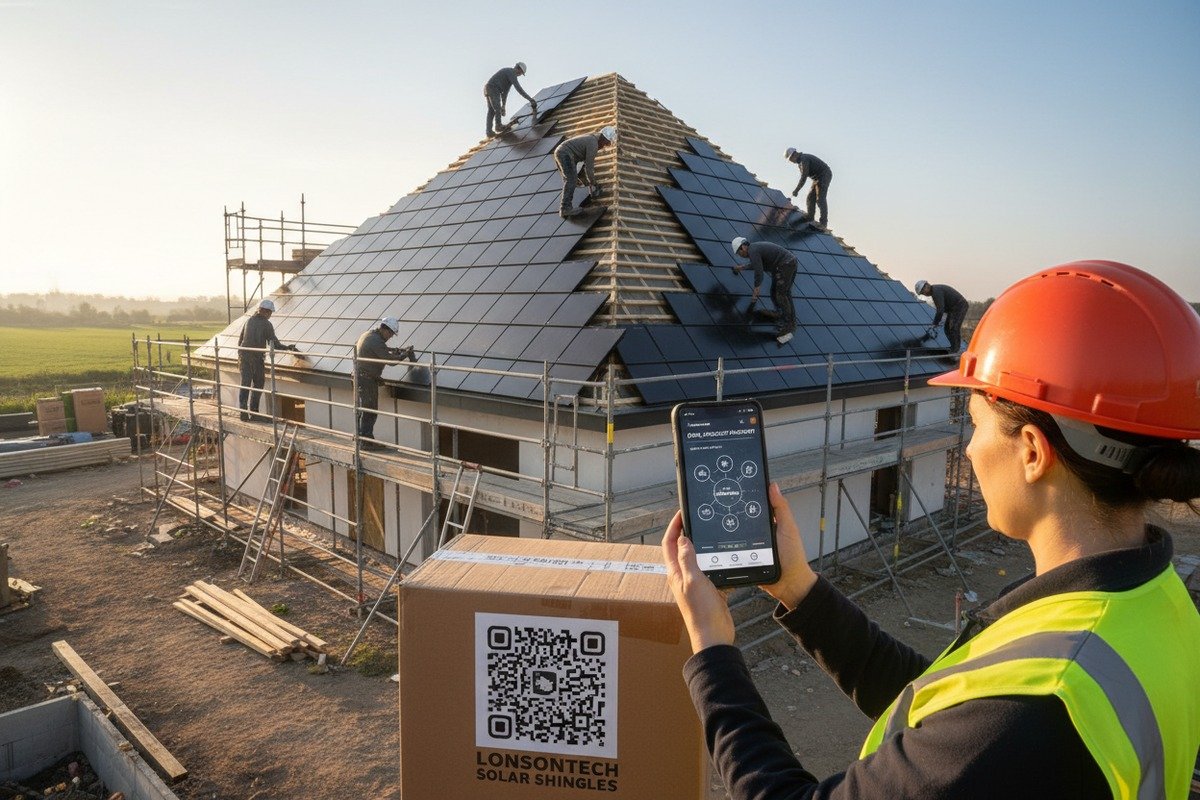
Why Damaged Solar Shingles Cannot Go in a Skip
This is a point many roofing contractors miss. Solar shingles are classified as electronic waste under European law. You cannot throw them into a standard construction waste container. Doing so violates the WEEE Directive, and in many countries, also violates hazardous waste regulations if the shingles contain lead solder or cadmium-based compounds.
The penalty exposure is real. A roofing company caught improperly disposing of BIPV waste could face fines, project shutdowns, and reputational damage that takes years to repair.
Building a Take-Back Process
A practical take-back system does not have to be complicated. Here is a framework we have developed with our European distribution partners:
Step 1: On-site segregation. Train your installation crews to separate damaged solar shingles into dedicated containers on the job site. Label containers clearly as WEEE / electronic waste.
Step 2: Temporary storage. If volumes are small, store damaged shingles at your warehouse in a designated, weather-protected area. Keep them separate from general waste. Document quantities and dates.
Step 3: Collection partnership. Establish a contract with a WEEE-authorized waste collector or recycler in your region. Many Producer Responsibility Organizations (PROs) offer collection services as part of the compliance scheme you already pay into.
Step 4: Transport and handoff. When volumes justify pickup, arrange collection through your PRO or waste partner. Ensure you receive a waste transfer note for every batch. This is your proof of compliant disposal.
Step 5: Record-keeping. Maintain a log of all damaged and end-of-life shingles — quantities, dates, destinations, and waste transfer notes. This documentation is essential during audits.
Exploring Roof-as-a-Service Models
One emerging approach that addresses take-back complexity is the "Roof-as-a-Service" (RaaS) model. Under this model, the roofing company or manufacturer retains ownership of the solar shingles. The building owner pays a monthly service fee that covers installation, maintenance, and eventual decommissioning.
This model internalizes recycling costs into the service fee from day one. It also gives the roofing company direct control over the product at end-of-life, ensuring proper recycling rather than abandonment. We are seeing early adoption of this model in the Netherlands and Scandinavia, and we expect it to grow significantly over the next decade.
Leveraging Technology for Efficiency
The future of solar shingle decommissioning will likely involve AI-assisted sorting and robotic de-installation. These technologies are still in early stages, but pilot projects in Germany and the Netherlands are showing promising results. Automated systems can identify shingle types, assess damage levels, and sort materials with higher purity than manual processes — all while reducing worker exposure to broken glass and electronic components.
For now, the most important thing is to have a system in place. Even a simple, well-documented manual process puts your roofing company ahead of most competitors. When regulations tighten — and they will — you will already be compliant.
Cost Considerations for Take-Back Programs
Many roofing companies worry about the cost of take-back programs. Here is a realistic breakdown:
| Cost Category | Estimated Range (per tonne) | Notes |
|---|---|---|
| On-site segregation labor | €20–50 | Minimal if crews are trained |
| Temporary storage | €10–30 | Covered containers, warehouse space |
| WEEE collection and transport | €80–150 | Varies by region and volume |
| Recycling processing fee | €150–300 | Depends on material composition |
| PRO membership annual fee | €500–5,000 | Based on volumes placed on market |
| Record-keeping and compliance | €20–40 per incident | Software or manual logging |
These costs should be factored into your project bids from the start. We work with our partners to provide accurate weight and material data for each order so they can calculate disposal provisions precisely.
Conclusion
European circular economy compliance is complex, but roofing companies that build structured evaluation systems today will lead the market tomorrow. Choose manufacturers who design for recyclability, document everything, and plan for end-of-life from the first tile installed.
Footnotes
1. Details the ISO 14001 standard for environmental management systems and its benefits. ↩︎
2. Replaced with an authoritative government-backed source (WBDG) providing an overview of Building Integrated Photovoltaics (BIPV). ↩︎
3. Provides comprehensive information on the WEEE Directive, its revisions, and implementation. ↩︎
4. Explains the Solar-as-a-Service model, its benefits, and how it makes solar accessible. ↩︎
5. Replaced with an official EU portal link explaining the WEEE label and its meaning. ↩︎
6. Explains the role of Producer Responsibility Organizations in fulfilling EPR obligations in Europe. ↩︎
7. Replaced with a direct link to the official EU RoHS Directive 2011/65/EU on EUR-Lex, the most authoritative source for EU law. ↩︎
8. OSHA’s guidance on Safety Data Sheets (formerly MSDS) and their required 16-section format. ↩︎
9. Replaced with the European Commission’s main page on Circular Economy, which includes information on the Action Plan. ↩︎
10. Replaced with an authoritative EU data portal link explaining the Digital Product Passport. ↩︎