

Shipping solar roof shingles 1 across the ocean sounds straightforward until your roofers stand idle because the container is stuck at port. Over the past twenty years, our production team has watched this exact scenario unfold for clients who did not plan deliveries around their build timeline supply chain management 2. The pain is real: idle crews cost money, weather windows close, and project budgets balloon. The root cause is almost always a disconnect between manufacturing lead times in China and construction milestones on site.
Planning phased logistics for solar roof shingles from China requires mapping every step—production, ocean transit, customs clearance, and inland delivery—against your construction schedule. By staggering orders to match roofing phases and using DDP shipping, you keep materials arriving just when installers need them, cutting delays and storage costs.
Below, we break down the four biggest questions contractors and distributors ask us about coordinating solar shingle deliveries with construction timelines. Each section includes practical timelines, tables, and lessons from real shipments.
How do I calculate the total lead time from China to ensure my solar shingles arrive exactly when my roof frame is ready?
One question we hear weekly from European roofing companies is: "When exactly should I place my order?" The answer depends on more variables than most buyers expect, and missing even one can push your delivery past the installation window.
Total lead time from China typically ranges from 10 to 16 weeks, covering production scheduling, manufacturing, quality inspection, ocean freight, customs clearance, and inland transport. Start your order at least 12 weeks before your roof frame completion date to build in a safe buffer.

Breaking Down Each Stage
The journey from our factory floor in China to your construction site in Europe or North America involves distinct stages. Each one carries its own timeline and risk. Let me walk you through them.
Production scheduling starts the moment your order is confirmed. If we already stock the specific solar cell type and glass coating you need, production can begin within one week. Custom OEM orders with unique colors or anti-glare finishes may need two to three weeks for material procurement alone.
Manufacturing for a standard residential batch (enough for one to three roofs) takes roughly two to three weeks. Larger project orders—say 500 or more squares for a housing development—may require four to five weeks because solar shingle lines share equipment with coating applicators and cut-to-length stations.
Quality inspection and packing adds another three to five days. Our QC team checks each tile for cell micro-cracks, coating uniformity, and waterproof interlock fitment before packing. We use reinforced crates with foam dividers because broken tiles on arrival kill schedules faster than any port delay.
Ocean freight from major Chinese ports (Shenzhen, Shanghai, Ningbo) to European destinations like Rotterdam or Le Havre averages 25 to 35 days. Routes to the US East Coast run 30 to 40 days.
Customs clearance depends heavily on documentation accuracy and HS code classification. Solar roof tiles sometimes fall in a gray area between photovoltaic modules and building materials. Clean paperwork typically clears in three to five business days. Disputes can add two weeks.
Inland transport from port to your warehouse or jobsite usually takes two to five days within Europe, or up to seven days for remote US locations.
Sample Lead Time Table
| Stage | Minimum Duration | Typical Duration | Maximum Duration |
|---|---|---|---|
| Order confirmation & material procurement | 1 week | 2 weeks | 3 weeks |
| Manufacturing | 2 weeks | 3 weeks | 5 weeks |
| QC inspection & packing | 3 days | 5 days | 7 days |
| Ocean freight 3 (to Europe) | 25 days | 30 days | 38 days |
| Customs clearance 4 | 3 days | 5 days | 14 days |
| Inland transport to site | 2 days | 4 days | 7 days |
| Total | ~8 weeks | ~11 weeks | ~16 weeks |
How to Back-Calculate Your Order Date
Start with the date your roof frame will be ready. Subtract 12 weeks. That is your latest safe order date. If your project requires custom colors or large volumes, subtract 14 to 16 weeks instead.
Here is a practical example. Suppose your roof frame finishes on September 1. Permits were approved in June. You should place your order no later than June 1 for standard products or May 1 for custom OEM runs. This gives you a one- to two-week buffer for unexpected port congestion or weather delays at sea.
Also factor in the 2-to-6-week permit approval window. We recommend initiating your order while permits are still in process, provided you are confident approval will come through. This overlap saves weeks.
Can I coordinate phased deliveries with my supplier to match the different stages of my large-scale construction project?
When our clients manage multi-building housing developments or commercial projects, a single bulk shipment rarely makes sense. Materials arrive all at once, sit in the rain, and the last batch does not get installed for months. The risk of damage and the cost of storage add up fast.
Yes, phased deliveries are not only possible but highly recommended for large-scale projects. Work with your supplier to split your total order into staged shipments aligned with each building or construction phase, reducing on-site storage, weather exposure, and cash flow pressure.

Why Phased Delivery Works Better Than Bulk Shipping
A 200-unit housing development does not roof all 200 homes on the same day. Typically, homes are roofed in batches of 10 to 30 over several months. If you ship all the solar shingles at once, you need a large secure warehouse near the site. That means lease costs, insurance, double handling, and increased breakage risk.
Phased delivery matches material flow to installation flow. Each shipment covers the next batch of homes. When one container arrives, the previous batch is already installed.
How We Structure Phased Orders
At our facility, we assign a dedicated project coordinator to large orders. Here is our typical workflow:
- The buyer shares the full project schedule, including roof-ready dates for each phase.
- We map backward from each phase to determine production start dates.
- We create a master shipping calendar with staggered container bookings.
- Each phase gets its own packing list, quality inspection 8 report, and shipping documents.
- Real-time tracking links are shared so your project manager sees exactly where each container is.
Phased Delivery Schedule Example
| Project Phase | Homes in Phase | Roof-Ready Date | Order Placed | Ship Date | Arrival Date |
|---|---|---|---|---|---|
| Phase 1 | 25 homes | March 15 | Dec 15 | Jan 20 | March 1 |
| Phase 2 | 30 homes | May 1 | Feb 1 | March 10 | April 20 |
| Phase 3 | 25 homes | July 1 | April 1 | May 10 | June 20 |
| Phase 4 | 20 homes | Sept 1 | June 1 | July 10 | Aug 20 |
Communication Is the Key
The biggest risk in phased logistics is poor communication. If your general contractor moves Phase 3 forward by two weeks and nobody tells the supplier, you have a gap. We use shared project dashboards and require monthly timeline confirmations from the buyer's project manager. Any schedule shift triggers an immediate review of production and shipping dates.
Another critical point: lock in your roof specifications early. Changing tile dimensions or color mid-project forces a new production run, which can delay an entire phase by three to four weeks. Our engineering team works with your architects before order confirmation to finalize every detail—pitch compatibility, interlock design, wiring layout—so nothing changes once production starts.
For cost-sensitive projects, phased ordering also helps with cash flow. Instead of paying for all materials upfront, you spread payments across phases. Each phase requires a deposit at order confirmation and balance before shipping. This approach keeps your working capital flexible.
What steps should I take to minimize shipping damage and avoid project delays caused by broken solar tiles?
Our quality team tracks every damage claim that comes in. The pattern is clear: most breakage happens not during the ocean voyage but during loading, unloading, and last-mile trucking. Solar shingles contain tempered glass 9 and precision photovoltaic cells. One hard drop can crack a cell invisibly, reducing power output and creating a warranty issue years later.
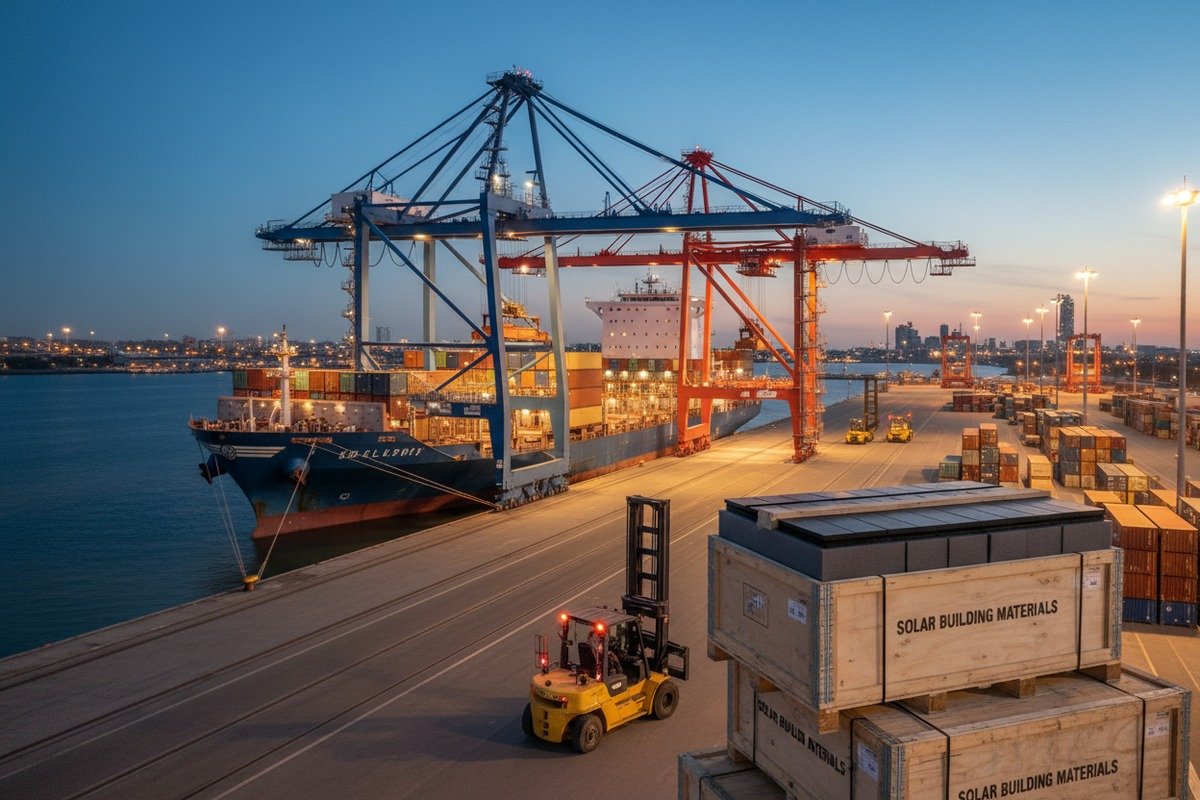
To minimize damage, insist on reinforced packaging with foam dividers and corner protectors, require pre-shipment inspection photos, use palletized loading to prevent shifting, and choose experienced freight forwarders who understand fragile solar products. Inspect every pallet on arrival before signing the delivery receipt.
Packaging Design Matters More Than You Think
Standard cardboard boxes do not protect solar shingles adequately for a 30-day ocean voyage. Containers experience vibration, humidity swings, and stacking pressure. Our packaging team developed a system specifically for our solar tiles after years of testing:
- Inner layer: Individual foam sleeves around each tile to prevent glass-to-glass contact.
- Middle layer: Rigid cardboard dividers separating rows within each crate.
- Outer layer: Reinforced wooden crates with steel banding, rated for three-high stacking.
- Moisture control: Silica gel packets inside each crate to absorb humidity during transit.
This packaging adds roughly 3–5% to the shipping volume but reduces breakage rates to below 0.5% per container. Compare that to the industry average of 2–4% breakage with standard packaging, and the math is clear.
Pre-Shipment Inspection Protocol
Before any container leaves our facility, we follow a strict inspection sequence:
- Visual inspection of every tile for surface defects, coating uniformity, and frame integrity.
- Electroluminescence (EL) testing on sample tiles to detect invisible micro-cracks in solar cells.
- Packing verification: Confirm correct quantities, SKU labeling, and foam placement.
- Container loading photos: Time-stamped images showing how crates are secured inside the container.
- Seal verification: Container seal number recorded and shared with the buyer before departure.
We share a full inspection report with photos via email within 24 hours of loading. This gives you documentation for insurance claims if anything goes wrong during transit.
What to Do on Arrival
| Step | Action | Why It Matters |
|---|---|---|
| 1 | Check container seal matches documentation | Confirms no tampering during transit |
| 2 | Photograph exterior of container before opening | Documents condition for insurance purposes |
| 3 | Open and inspect outer crates for visible damage | Catches crush or water damage immediately |
| 4 | Random sample 5–10% of tiles for surface inspection | Identifies hidden damage from rough handling |
| 5 | Sign delivery receipt only after inspection | Once signed, damage claims become much harder |
| 6 | Report any damage within 48 hours with photos | Most insurance and supplier claims require prompt notification |
Choosing the Right Freight Forwarder
Not all freight forwarders understand solar products. We recommend working with forwarders who have experience shipping fragile, high-value building materials. Ask these questions before selecting a partner:
- Do you have experience shipping solar panels or BIPV products?
- What is your average damage claim rate for glass-containing shipments?
- Can you arrange direct container loading to avoid transshipment handling?
- Do you offer real-time GPS tracking for containers?
A good forwarder will also advise on optimal container loading patterns. For example, placing heavier crates on the bottom and lighter accessories on top, using airbags to fill voids and prevent shifting, and avoiding placement near container doors where temperature swings are greatest.
If breakage does occur, having a buffer stock strategy saves your timeline. We recommend ordering 3–5% extra tiles beyond your calculated need. This small surplus costs far less than the delay caused by waiting for a replacement shipment.
How can I use DDP logistics to simplify customs clearance and keep my installation timeline predictable?
Customs clearance is where many solar shingle imports stall. The HS code classification for BIPV products sits in an awkward gray area between "photovoltaic modules" and "building materials," and different customs offices interpret the rules differently. We have seen containers held for two weeks over a code dispute that could have been avoided with proper documentation upfront.
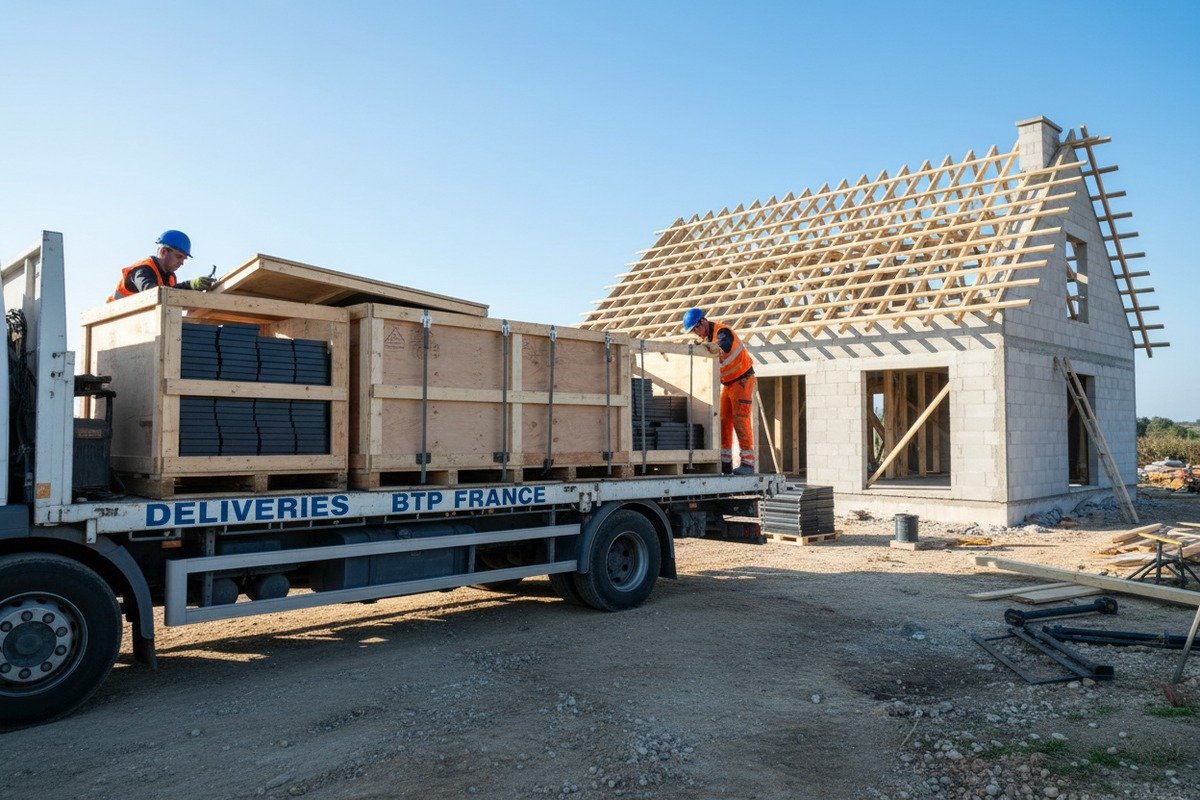
DDP (Delivered Duty Paid) logistics places the full responsibility for customs clearance, duties, and taxes on the supplier. This removes the unpredictability of customs processing from your project timeline, giving you a single guaranteed delivery date to your site or warehouse with no hidden fees or surprise delays.
What DDP Actually Means for Your Project
Under DDP terms, the supplier handles everything: export customs in China, ocean freight, import customs in the destination country, duty and tax payment, and inland delivery to your specified address. You receive the goods at your door, ready to unload and install.
This is different from other common trade terms. Here is a comparison:
| Incoterm | Who Handles Export Customs? | Who Pays Freight? | Who Handles Import Customs? | Who Pays Duties/Taxes? | Who Arranges Inland Delivery? |
|---|---|---|---|---|---|
| FOB | Supplier | Buyer | Buyer | Buyer | Buyer |
| CIF | Supplier | Supplier | Buyer | Buyer | Buyer |
| DDP | Supplier | Supplier | Supplier | Supplier | Supplier |
For construction project managers, DDP is the simplest option. You get one price, one timeline, and one point of contact. There is no need to manage freight forwarders, customs brokers, or duty calculations on your end.
How DDP Eliminates the HS Code Problem
Solar roof shingles can be classified under HS code 8541.40 (photovoltaic cells/modules) or under various building material codes depending on the country. The wrong code triggers different duty rates and sometimes different regulatory requirements. In Europe, the CPR (Construction Products Regulation) may apply if the product is classified as a building material.
When we ship DDP, our logistics team handles classification based on years of experience with specific customs offices. We know which documentation each port requires. We prepare CE certificates, TUV test reports, technical data sheets, and a detailed product description that clearly establishes the correct classification. This preparation prevents the back-and-forth queries that delay clearance.
The Timeline Advantage
Consider this scenario. Under CIF terms, your container arrives at port on March 10. You expected clearance by March 15. But your customs broker files the wrong HS code. Customs requests additional documentation. Your broker needs three days to gather it. Customs reviews for another five days. Your tiles clear on March 25—ten days late. Your roofing crew was scheduled for March 17. You lost eight days of labor scheduling and may have lost your weather window.
Under DDP, our team manages clearance proactively. We pre-file documentation before the vessel arrives. We have established relationships with customs agents at major European ports. If a query arises, our logistics coordinator resolves it directly. The delivery date we quote is the date your goods arrive at your door, not the date the ship reaches port.
Cost Transparency
Some buyers worry that DDP is more expensive. It is true that the per-unit price is higher than FOB because it includes freight, duties, and taxes. But the total cost of ownership is often lower because you eliminate:
- Customs broker fees
- Freight forwarder management time
- Duty calculation errors and penalty risks
- Storage charges from clearance delays
- Project delay costs from unpredictable timelines
For our European clients, we provide a fully itemized DDP quote that breaks down material cost, freight, insurance, duties, and delivery charges. There are no surprises. You know the exact landed cost before you place the order, which makes project budgeting straightforward.
When DDP Makes the Most Sense
DDP is ideal for buyers who value schedule predictability over maximum cost control. If you are managing a construction project with fixed crew schedules and contractual deadlines, the premium for DDP service pays for itself many times over by eliminating delay risk. For price-sensitive projects with flexible timelines, FOB or CIF may save a few percentage points—but you accept the clearance risk yourself.
Our 24/7 after-sales support team also monitors each DDP shipment from departure to delivery. If any issue arises—vessel delay, port congestion, documentation query—we notify you immediately with an updated estimated arrival and a mitigation plan.
Conclusion
Phased logistics turns unpredictable solar shingle imports into a reliable, schedule-aligned supply chain. Plan early, communicate often with your supplier, protect your tiles in transit, and consider DDP to remove customs uncertainty from your project timeline.
Footnotes
1. Replaced with a Wikipedia article providing a comprehensive overview of solar shingles. ↩︎
2. Provides an authoritative definition of supply chain management and its components. ↩︎
3. Explains ocean freight, its process, and factors affecting shipping. ↩︎
4. Explains the compulsory process of customs clearance for international goods. ↩︎
5. Defines total lead time in supply chain management and its components. ↩︎
6. Explains the process and importance of production scheduling in manufacturing. ↩︎
7. Defines inland transport and its crucial role in connecting ports to final destinations. ↩︎
8. Defines quality inspection in manufacturing and its various stages. ↩︎
9. Explains what tempered glass is, its properties, and common uses. ↩︎
10. Explains Delivered Duty Paid (DDP) Incoterms and seller/buyer responsibilities. ↩︎