

Every year, we see European buyers delay projects by weeks simply because a single mounting bracket or specialized connector was not available locally solar installation tools 1. After two decades of producing solar roof shingles 2 and shipping them across the EU, our team has learned that the installation tool question can make or break a project timeline — and a distributor’s margin.
To check local installation tool availability, contact your solar shingle supplier for a complete tool and hardware list, cross-reference each item with local roofing and electrical distributors, verify installer certifications in your country, and use manufacturer configurators or online directories to confirm regional stock before placing your order.
This guide walks you through each step of that process MC4 or push-fit connectors 3. We will cover standard roofing tool compatibility, specialized connectors, mounting hardware sourcing, and how to prevent surprise labor costs. Let’s get into it.
Can my local roofing crew use their standard European tools to install these solar shingles?
This is the first question almost every roofing company asks when they call our sales team Bill of Materials 4. Standard tools cover part of the job, but not all of it. The gap between "part" and "all" is where costly mistakes happen.
In most cases, your local crew can use about 70% of their existing European roofing tools — such as drills, tape measures, and safety gear — but they will need product-specific items like hanger bolts, flashing kits, and push-fit electrical connectors that standard roofing suppliers typically do not stock.
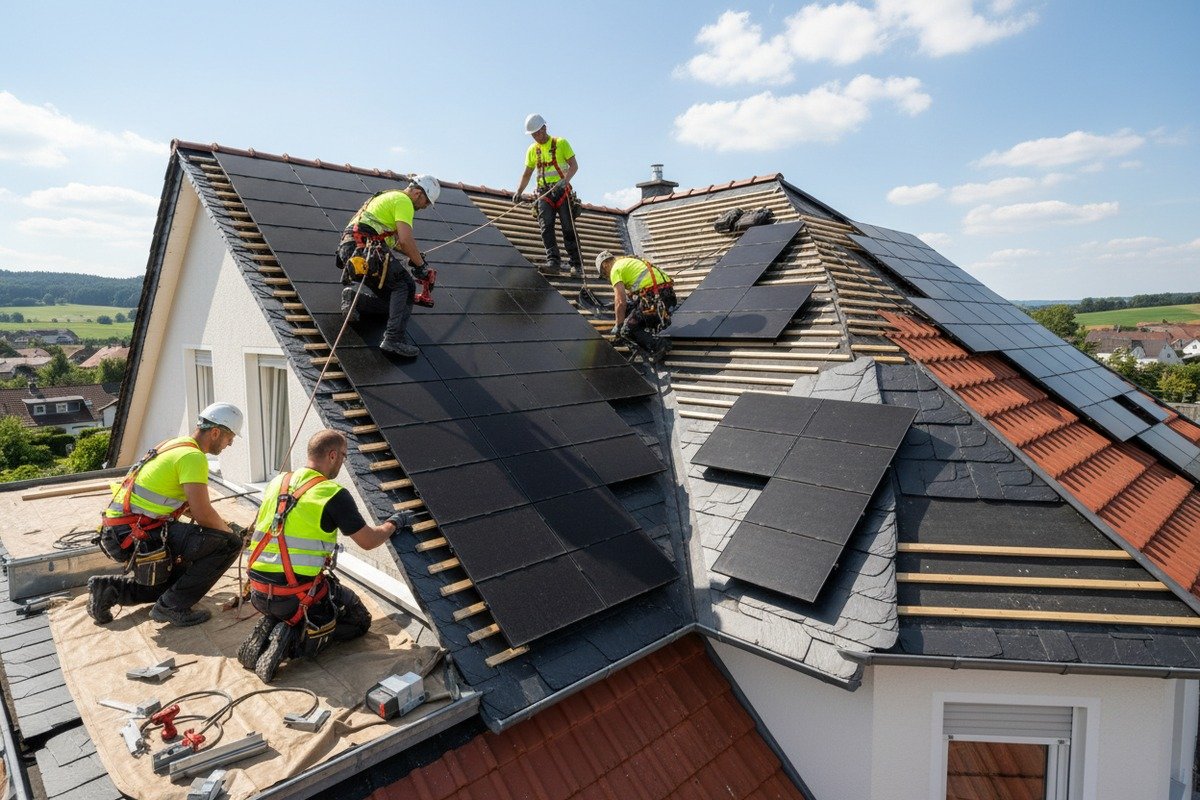
What Standard Tools Still Work?
Good news first. A competent European roofing crew already owns many of the tools needed. These include cordless drills, spirit levels, chalk lines, roofing hammers, laser distance meters, and personal fall-arrest systems 5. Batten installation, underlayment work, and basic tile handling all use familiar equipment.
When we ship our BIPV shingles 6 to France, Germany, or the Netherlands, the mechanical installation of the tile body onto battens follows a logic very similar to traditional slate or flat-tile roofing. Our interlocking design was engineered with exactly this in mind — we want a local crew to feel at home with the product within the first hour on site.
Where the Gap Appears
The gap shows up in three areas: electrical connections, weatherproofing flashings, and structural fasteners. Solar shingles are not passive tiles. Each unit carries wiring, and the system must connect to an inverter. That means your crew needs:
- MC4 or push-fit connectors rated for outdoor PV use.
- Torque wrenches calibrated to the fastener spec (over-tightening cracks glass laminates).
- Insulation resistance testers and IV curve tracers for commissioning.
- Product-specific flashing sets that match the shingle profile.
Quick Compatibility Checklist
| Tool / Hardware | Standard Roofing Kit? | Solar Shingle Specific? | Typical Source |
|---|---|---|---|
| Cordless drill / impact driver | ✔ Yes | — | Local hardware store |
| Batten screws & timber | ✔ Yes | — | Local timber yard |
| Hanger bolts with metal plates | — | ✔ Yes | Shingle manufacturer |
| Color-coded flashing kit | — | ✔ Yes | Shingle manufacturer |
| MC4 / push-fit PV connectors | — | ✔ Yes | PV distributor or manufacturer |
| Insulation resistance tester | — | ✔ Yes | Electrical tool supplier |
| Fall-arrest harness | ✔ Yes | — | Safety equipment supplier |
| Torque wrench (low-range) | Sometimes | ✔ Recommended | Industrial tool supplier |
Crew Training Matters
Even with the right tools, a crew that has only laid concrete tiles may struggle with cable routing. We provide installation manuals, video walkthroughs, and — for larger orders — on-site training in the buyer's country. A half-day session typically bridges the knowledge gap. This is not a sales pitch; it is a lesson we learned after a batch of warranty claims in 2019 traced back to pinched cables, not product defects.
So the short answer: your crew can start with what they have, but plan for the specialized items early. Do not assume they can improvise on installation day.
Will my supplier provide the specialized electrical connectors and tools I need for my project?
When we first entered the European market, we assumed every distributor would source connectors independently. We were wrong. Connector mismatches caused field failures, and our brand took the blame. That experience reshaped our entire supply approach.
A reliable solar shingle supplier should provide or specify every specialized electrical connector — including MC4 plugs, junction boxes, string cables, and grounding clips — as part of the product package, because mismatched third-party connectors void warranties and create serious fire-safety risks on European roofs.
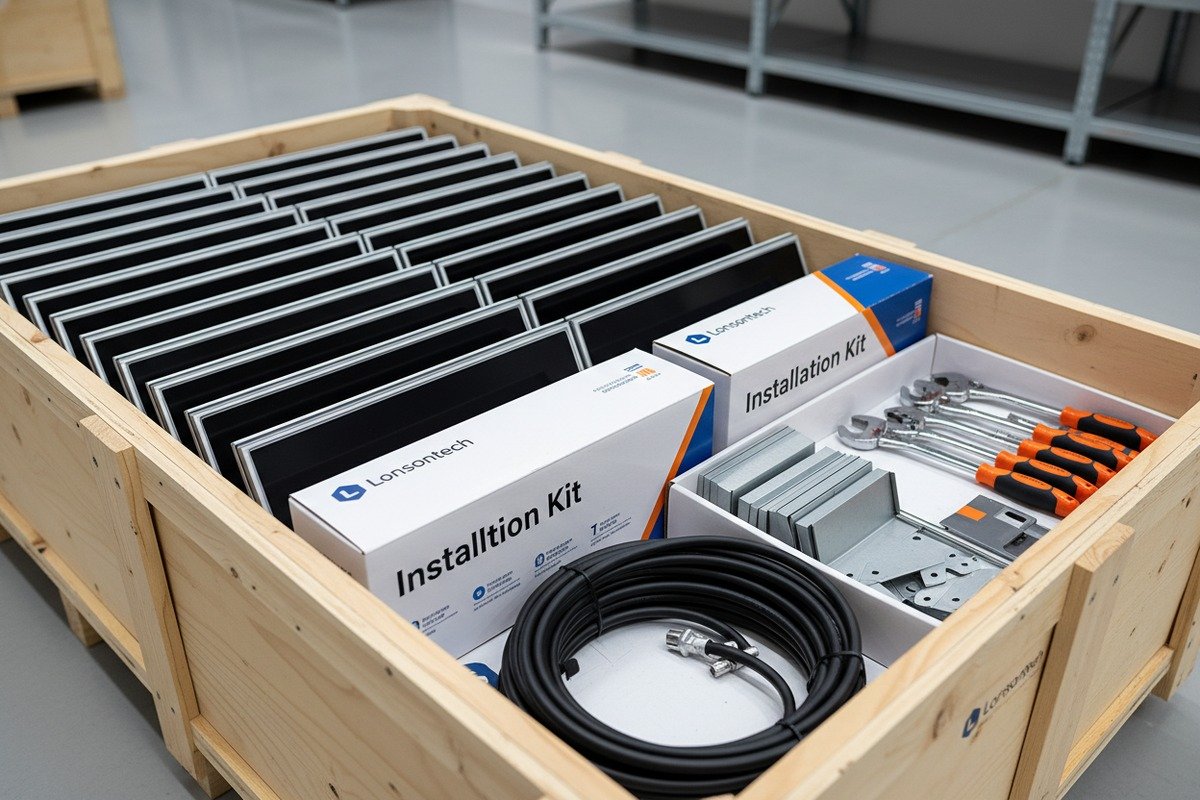
Why Connector Compatibility Is Non-Negotiable
Not all MC4 connectors are truly interchangeable. Cross-brand mating — plugging one manufacturer's male connector into another's female — can pass a pull test but fail under thermal cycling. The TÜV Rheinland 2-PFGXXXX certification 9 on a connector only guarantees performance within its own family. In our production line, we pre-attach tested junction boxes and supply matched cable sets so the installer never faces this dilemma.
What to Ask Your Supplier Before Ordering
Here is a practical list of questions to send to any potential supplier:
- Do you supply pre-wired junction boxes on each shingle, or must we source them?
- Are string cables and extension leads included in the pallet?
- What connector brand and model do you use, and is it TÜV-certified?
- Do you provide grounding clips or bonding lugs compatible with EU earthing standards?
- Is a wiring diagram included for each roof layout, or do we design our own?
- Can you supply spare connectors for field repairs?
Supplier Response Comparison
| Supplier Response | Risk Level | Action Needed |
|---|---|---|
| "All connectors included, matched, and TÜV-certified" | Low | Verify certificate, proceed |
| "We supply shingles only; source connectors locally" | High | Get exact spec, confirm cross-compatibility, budget extra |
| "We recommend Brand X connectors but don't supply them" | Medium | Order Brand X directly, confirm lead time |
| "We offer a full mounting and wiring kit as an add-on" | Low–Medium | Price the kit, compare to local sourcing |
At Lonsontech, we take the low-risk path. Our shingles ship with pre-attached junction boxes, matched MC4 connectors, and a per-project wiring layout. We also pack spare connectors — typically 5% extra — because a single damaged plug should not halt a full day of rooftop labor at €40–60 per hour European rates.
Grounding and Safety Hardware
European installations must comply with IEC 61730 10 for PV module safety and local wiring rules (e.g., NF C 15-100 in France, VDE 0100 in Germany). Grounding clips, equipotential bonding conductors, and surge protection devices are part of the electrical tool set. Ask your supplier if these are included or if you need to source them. We include bonding lugs with every shipment and specify compatible SPD models in our technical data sheet.
A Word on Lead Times
Specialized PV connectors from top brands like Stäubli or Amphenol can have 4–8 week lead times during peak season. If your supplier does not bundle them, start sourcing the moment you confirm your order. We keep a rolling inventory and ship connectors with the shingles, so our customers avoid this bottleneck entirely.
How do I verify if the required mounting hardware is readily available in my local market?
Before we designed our current interlocking rail system, our engineering team spent three months visiting roofing supply warehouses in Lyon, Munich, and Rotterdam. We wanted to understand what hardware sits on European shelves — and what does not. That research still guides our product design today.
Start by requesting the full Bill of Materials from your supplier, then check each mounting item — hanger bolts, rail clips, batten brackets, and ridge flashings — against catalogs of local distributors such as Rexel, Sonepar, or SIG Roofing. Items not found locally must be ordered from the manufacturer with adequate lead time.
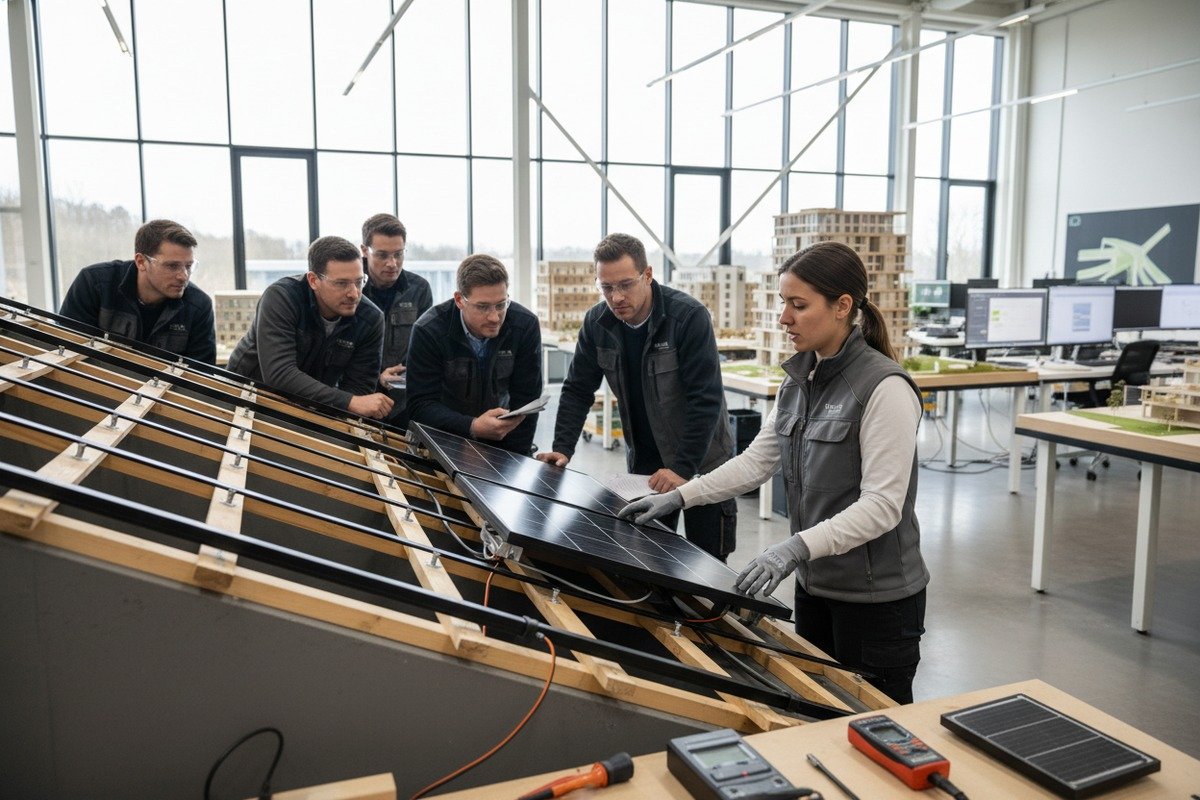
Step-by-Step Verification Process
Here is the process we recommend to every new distributor we onboard:
Step 1: Get the Full Hardware List. Your supplier should provide a detailed BOM that lists every fastener, bracket, flashing, and sealant required. If the list is vague — "standard screws" with no spec — push back. You need torque values, material grades (A2 vs. A4 stainless), and exact dimensions.
Step 2: Categorize Items. Split the list into two groups — generic items available at any building supplies store, and proprietary items unique to the product.
Step 3: Contact Local Distributors. Call or email two or three local roofing or electrical wholesalers. Share the spec sheet. Ask for stock confirmation and pricing. In our experience, generic stainless steel hanger bolts (M10 × 200, A2-70) are widely available. But product-specific flashings and interlocking clips almost never are.
Step 4: Confirm Delivery Windows. For proprietary items, ask the shingle manufacturer about lead times, minimum order quantities, and shipping costs. Our standard lead time for mounting kits is 10–15 business days ex-works, shipped alongside the shingles.
Step 5: Order Spares. Budget 5–10% extra hardware. Rooftops are unforgiving environments. A dropped clip or a stripped bolt should not stop the crew.
Regional Availability Snapshot
| Hardware Item | UK Availability | Germany / Austria | France / Benelux | Nordics / Baltics |
|---|---|---|---|---|
| Stainless hanger bolts (M10) | High — SIG, Travis Perkins | High — Würth, Hilti | High — Rexel, Point P | Medium — local yards |
| Batten screws (5 × 70 SS) | High | High | High | High |
| Product-specific flashing set | Low — order from manufacturer | Low | Low | Low |
| Push-fit PV connectors | Medium — PV wholesalers | Medium | Medium | Low–Medium |
| Ridge and hip kits | Low — product-specific | Low | Low | Low |
| Mounting rail clips | Low — product-specific | Low | Low | Low |
The pattern is clear. Generic fasteners are easy. Anything shaped to match a particular shingle profile must come from the manufacturer. This is why we bundle our mounting kits into the shipment — it saves our buyers a separate procurement cycle and removes the risk of ordering the wrong part.
Why "Close Enough" Hardware Is Dangerous
We once had a distributor in Belgium substitute a generic Z-bracket for our proprietary clip. The bracket held during calm weather but failed under a 110 km/h winter storm because its hook depth was 2 mm too shallow. The repair cost €14,000. The clip costs €0.80. Always use the specified hardware.
Use Manufacturer Configurators
Several BIPV brands now offer online configurators. You enter roof dimensions, pitch, and region. The tool outputs a hardware list and sometimes a 3D layout. We provide a similar service through our technical team — send us your roof plan, and we return a full BOM within 48 hours. Tools like Polysun and PVsyst can also simulate layouts, but they focus on electrical yield rather than hardware lists. Use both.
How can I ensure that the tool requirements won't lead to unexpected labor costs for my business?
One of the most painful calls we receive is from a distributor whose installer just quoted double the expected labor hours because the crew lacked the right tools on day one. In Europe, where skilled roofing labor runs €40–80 per hour depending on the country, every wasted hour compounds fast.
To prevent unexpected labor costs, request a detailed installation time estimate per square meter from your supplier, confirm all specialized tools are on-site before the crew arrives, factor in a half-day training session for first-time installers, and negotiate a bundled tool-and-shingle package that locks in your total project cost.
Break Down the Labor Cost Drivers
Labor cost surprises come from five main sources. Understanding each one lets you budget accurately.
1. Missing Tools on Install Day. If the crew discovers they need a specific torque wrench or connector crimper mid-job, someone drives to a supplier — or worse, the crew sits idle. One lost hour for a four-person crew at €50/hour each is €200 gone.
2. Unfamiliar Product Design. A crew that has never handled BIPV shingles will be slower. Our install data shows that a trained crew completes 1 kWp in under one hour, while a first-time crew may need 2–3 hours for the same area. Training eliminates this gap by the second day.
3. Rework from Wrong Hardware. Using incorrect fasteners or flashing pieces leads to leaks, inspection failures, and callbacks. Rework costs are typically 3× the original install cost for that section.
4. Electrical Work Delays. If the roofing crew cannot perform basic PV wiring and a separate electrician must be scheduled, coordination gaps add idle time. Some of our distributors now hire dual-qualified roofer-electricians to avoid this.
5. Permit and Inspection Surprises. If local inspectors require documentation or testing that the crew did not prepare for, the job stalls. We provide CE and TÜV test reports, IEC 61215/61730 certificates, and fire rating documentation in every shipment to prevent this.
Cost Impact Estimation Table
| Scenario | Extra Hours | Cost at €50/hr (4-Person Crew) | Preventable? |
|---|---|---|---|
| Missing torque wrench — 1 hour delay | 1 | €200 | Yes — pre-ship tool kit |
| First-time crew — 2× slower on Day 1 | 8 | €1,600 | Yes — half-day training |
| Wrong flashing — partial rework | 4 | €800 | Yes — use manufacturer kit |
| Separate electrician scheduling gap | 3 | €600 | Yes — dual-qualified crew |
| Missing compliance docs at inspection | 2 | €400 | Yes — supplier provides docs |
| Total potential waste | 18 | €3,600 | All preventable |
That €3,600 is pure margin erosion on a single residential roof. Scale it across ten projects, and you are looking at €36,000 in avoidable losses.
How We Help Our Buyers Avoid These Costs
Our approach is straightforward. When a distributor places an order, we deliver:
- A complete mounting and wiring kit matched to the order quantity.
- A printed installation manual in the buyer's language (English, French, German, or Dutch).
- A QR-coded video guide accessible on any smartphone.
- A per-project wiring diagram if the buyer shares roof dimensions.
- A 24/7 technical hotline for real-time support during installation.
For first orders, we offer a free remote training session via video call. For orders above 500 m², we can arrange an on-site trainer to spend two days with the crew. The cost of training is a fraction of the cost of rework.
Negotiate the Right Package
When comparing suppliers, do not just compare shingle price per watt. Compare the total landed cost including tools, hardware, training, and documentation. A shingle that costs €0.05/Wp less but ships without connectors or flashings will cost you far more once your crew is on the roof and missing parts.
Ask every potential supplier: "What is included in my pallet, and what do I need to source separately?" The answer reveals whether they understand the European installation reality — or whether they are simply shipping boxes.
Conclusion
Checking tool availability before you order solar roof shingles for Europe is not optional — it is the difference between a profitable project and an expensive lesson. Plan early, demand complete hardware lists, verify local stock, and always train your crew.
Footnotes
1. Updated anchor text for clarity and replaced with a relevant article listing essential tools for solar panel installation. ↩︎
2. Replaced with a Wikipedia page providing a general overview of solar shingles and building-integrated photovoltaics (BIPV). ↩︎
3. Explains the common electrical connectors used for solar panels. ↩︎
4. Replaced with a Wikipedia page offering a comprehensive and authoritative definition of a Bill of Materials. ↩︎
5. Describes components and importance of personal fall arrest systems for safety. ↩︎
6. Defines Building Integrated Photovoltaics (BIPV) and their applications. ↩︎
7. Describes the purpose and application of insulation resistance testers in PV systems. ↩︎
8. Details the international standard for testing, documenting, and maintaining grid-connected PV systems. ↩︎
9. Explains a specific TÜV Rheinland certification relevant to PV connector performance. ↩︎
10. Replaced with an authoritative page from IECEE, which provides information on the IEC 61730-2 standard for photovoltaic module safety qualification. ↩︎