

Every year, we see European distributors return shipments because the installed roof looks patchy, uneven, or simply wrong for the neighborhood Delta E (ΔE) color deviation reports 1. The problem is rarely about power output. It is about color, texture, and visual harmony. When your end customer is a French homeowner in a conservation zone or a German architect restoring a heritage building, appearance is not a bonus — it is the entire sale.
To evaluate solar roof shingle appearance and color for European customers, you must assess batch-to-batch color consistency, anti-glare performance, texture compatibility with local building materials, and supplier quality control processes — testing physical samples under real European lighting conditions before committing to volume orders.
This guide breaks down the four critical areas you need to master European building regulations 2. Whether you are a purchasing manager, a roofing company owner, or an architect sourcing BIPV products 3, these steps will help you avoid costly mistakes and deliver roofs that look as good as they perform.
How can I ensure color consistency across different production batches to avoid a patchy roof appearance?
We learned this lesson the hard way on our production line. A distributor in the Netherlands ordered 800 solar shingles across two batches. Under warehouse lighting, both batches looked identical. On the roof, under overcast Dutch skies, the difference was obvious. That single project cost us months of trust-building to repair.
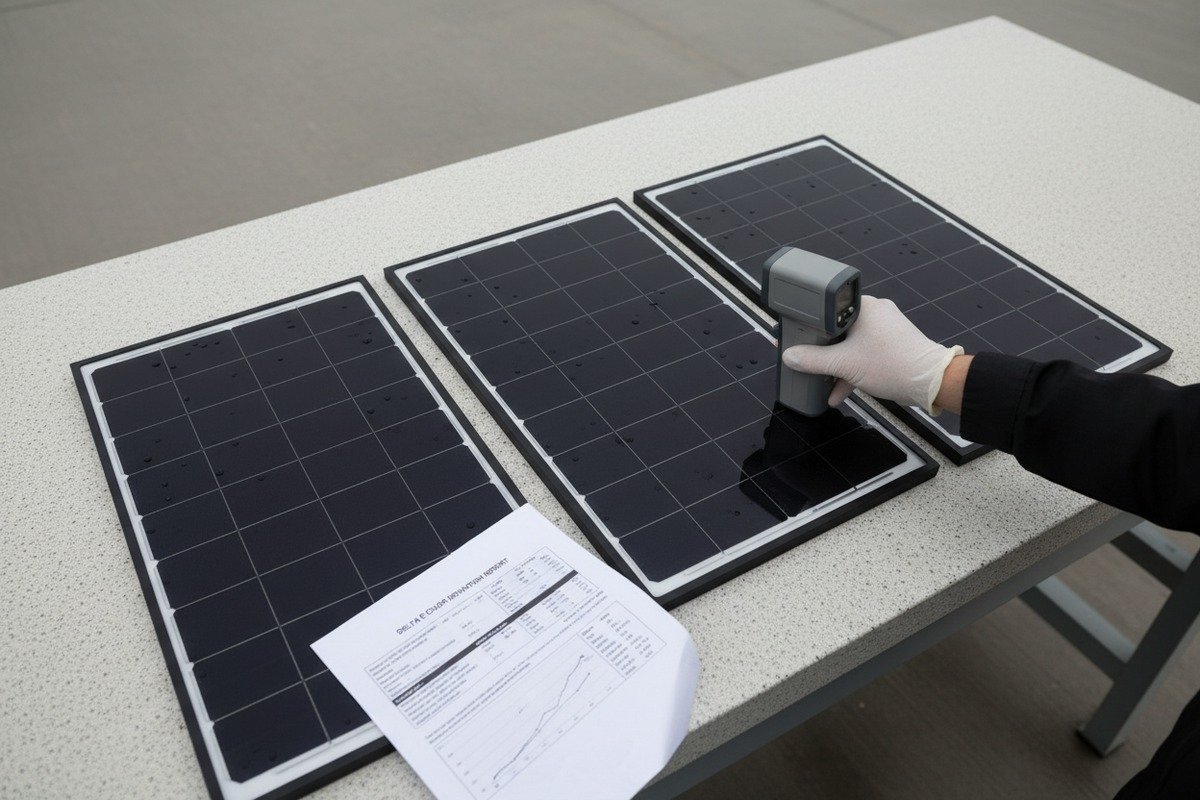
To ensure color consistency across batches, demand Delta E (ΔE) color deviation reports from your supplier, request physical samples from multiple production runs, and compare them under both direct sunlight and overcast conditions — a ΔE value below 1.5 is the benchmark for imperceptible variation on installed roofs.
Why Batch Variation Happens
Solar shingle color comes from coatings applied to tempered glass surfaces 4. These coatings — whether ceramic ink, PVDF film, or colored EVA encapsulant — are sensitive to temperature, humidity, and curing time during production. Even a 2°C shift in the lamination oven can nudge the color slightly. Over hundreds of tiles, that nudge becomes visible.
Traditional roofing materials like clay tiles also have batch variation. But they are installed wet, they weather quickly, and small differences blend over time. Solar shingles do not weather the same way. The glass surface stays crisp. So any initial mismatch stays visible for decades.
How to Test Before You Buy
Here is a practical process our quality team recommends:
- Request samples from at least three different production dates.
- Place them side by side outdoors for 30 minutes under natural light.
- Photograph them at 45° angles in both sunny and cloudy conditions.
- Use a portable spectrophotometer 5 to measure ΔE values.
ΔE Color Deviation Reference Table
| ΔE Value | Visual Perception | Acceptability for Roofing |
|---|---|---|
| 0 – 0.5 | Imperceptible difference | Excellent — ideal for premium projects |
| 0.5 – 1.5 | Barely noticeable to trained eye | Acceptable — standard for quality BIPV |
| 1.5 – 3.0 | Noticeable under direct comparison | Risky — may cause complaints on large roofs |
| 3.0 – 5.0 | Obvious color difference | Unacceptable — will create patchy appearance |
| 5.0+ | Completely different shade | Reject — different color entirely |
What to Write Into Your Supply Contract
Specify the acceptable ΔE range in your purchase agreement. At our factory, we guarantee ΔE ≤ 1.5 across all batches within the same order. We also retain a master color sample panel 6 for each SKU so every new production run is calibrated against the same reference. Ask your supplier if they do the same. If they cannot show you a retained master sample, that is a red flag.
For large European projects — anything above 200 tiles — we recommend ordering all tiles from a single production run whenever possible. Our production planning team can consolidate runs to minimize batch splits. This is standard practice for mid-to-high-end BIPV, and any serious manufacturer should accommodate it.
Why is anti-glare technology critical for meeting the aesthetic standards of my European architectural clients?
When our R&D team first developed anti-glare coatings for solar shingles, the motivation was not efficiency — it was a complaint from a Belgian architect. anti-glare technology 7 His client's neighbors filed a formal objection because the roof reflected afternoon sunlight directly into their living room windows. The project was nearly forced to remove the panels entirely.
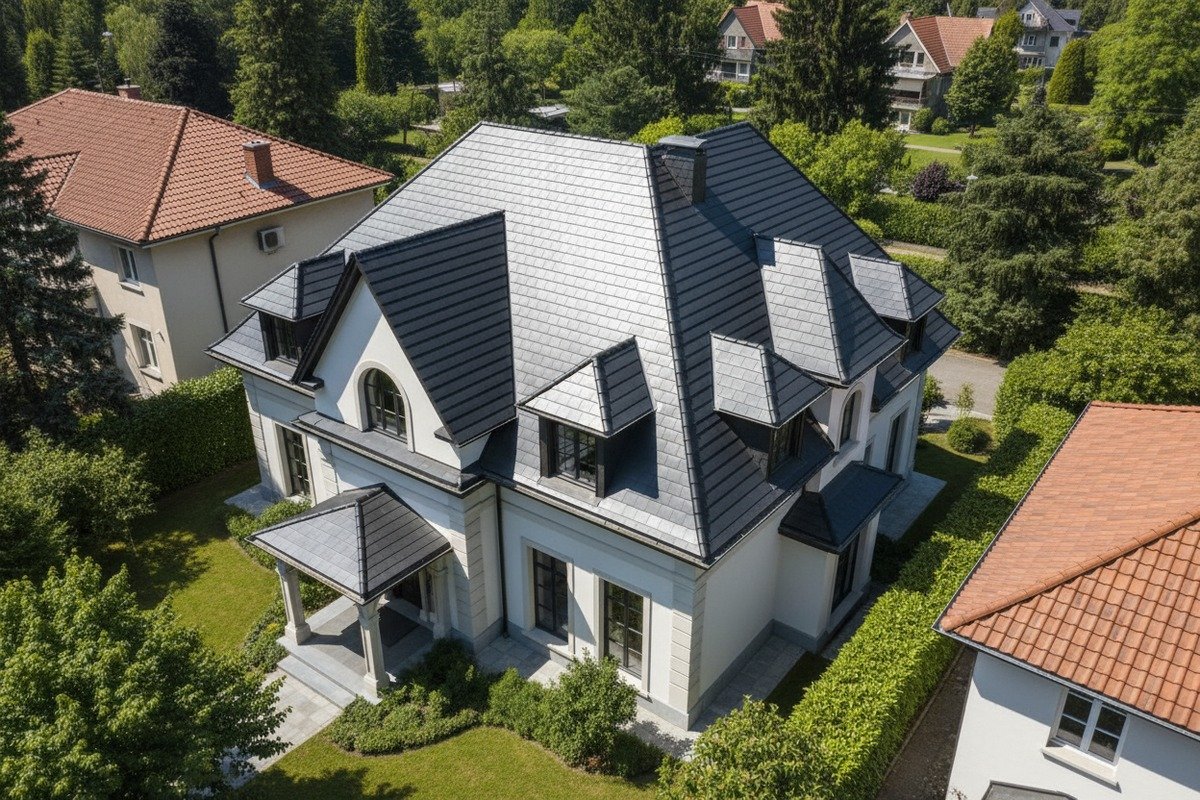
Anti-glare technology is critical because European building regulations and neighborhood complaint mechanisms can block or reverse solar installations that produce excessive reflectance — textured glass coatings reduce surface reflection from approximately 8% to under 2%, eliminating glare while preserving a natural, matte roofing appearance that satisfies both architects and planning authorities.
The Glare Problem in Dense European Settings
European cities are dense. Buildings sit close together. A reflective roof in suburban Houston might bother nobody. A reflective roof in Amsterdam, Lyon, or Munich can affect dozens of neighbors. Many European municipalities have explicit glare regulations. Others rely on neighbor complaint systems that can trigger retroactive removal orders.
Standard solar glass reflects about 6–8% of incoming light. That is enough to produce visible glare, especially at low sun angles common in Northern Europe during winter months. Anti-glare treatments — either etched textures on the glass surface or multi-layer anti-reflective coatings — bring this below 2%.
Types of Anti-Glare Solutions
| Technology | Reflectance Reduction | Visual Effect | Durability | Cost Impact |
|---|---|---|---|---|
| Acid-etched textured glass 8 | Reduces to ~2% | Matte, natural stone look | 25+ years, self-cleaning | Moderate increase |
| Multi-layer AR coating | Reduces to ~1.5% | Slight blue-purple tint possible | 15–20 years before recoating | Higher increase |
| Micro-pyramid surface texture | Reduces to ~2.5% | Subtle shimmer, modern look | 25+ years | Moderate increase |
| No treatment (standard glass) | 6–8% reflectance | Glossy, mirror-like | N/A | Baseline |
What Our Engineers Recommend
For most European projects, acid-etched textured glass offers the best balance. It creates a surface that looks like natural slate 9 or matte tile rather than a shiny panel. Our deep obsidian black shingles use this technique. The result is a roof that absorbs light rather than bouncing it into neighbors' windows.
When evaluating a supplier, ask specifically: what is the measured total reflectance of the finished shingle at 60° incidence angle? This angle simulates the low winter sun in cities like Paris (48°N) or Berlin (52°N). If the supplier cannot provide this number, they have not tested for real European conditions.
Also consider the aesthetic side. Anti-glare treatment changes how the shingle looks. The semi-reflective glass finish we use on our charcoal black tiles gives a subtle depth — you can see the photovoltaic cell texture up close, but from street level, it reads as a premium slate roof. This is exactly what European architects want: solar that does not announce itself.
Compliance With European Glare Regulations
Several countries have specific standards. Germany's BImSchG 10 (Federal Immission Control Act) can be invoked for light pollution from reflective surfaces. France has local PLU (Plan Local d'Urbanisme) provisions. The UK planning system considers glare under "amenity impact." Your shingles need to pass these tests before they even get to the energy conversation.
How do I evaluate if the solar shingle texture will seamlessly integrate with existing local building materials?
During a trade show in Munich last year, a French roofing contractor showed us photos of a competitor's solar shingles installed next to traditional Burgundy clay tiles. The mismatch was jarring — the solar tiles looked like plastic toys glued onto a 19th-century farmhouse. He said that single installation cost his company three referral projects.
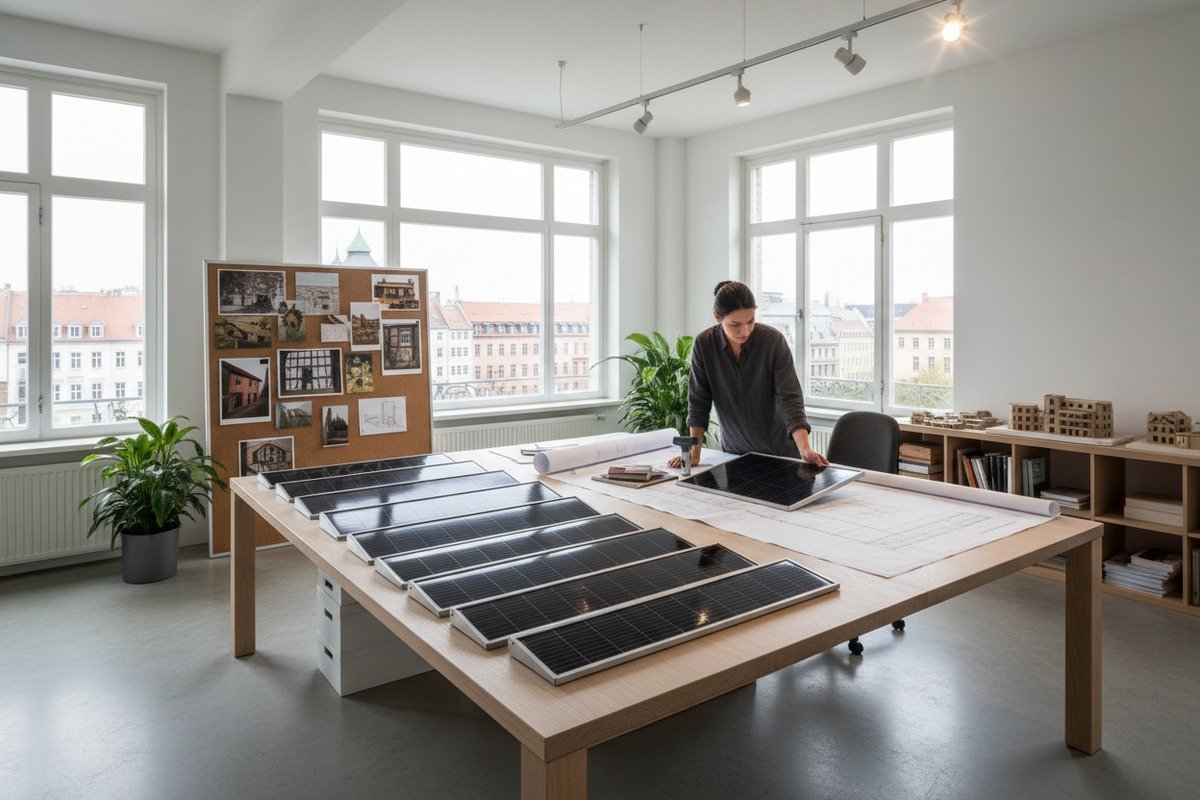
Evaluate texture integration by comparing solar shingle surface profiles against local roofing materials in person — assess edge thickness, shadow lines, surface granularity, and color undertones under regional lighting conditions, and verify that the shingle's overlapping pattern matches the coursing rhythm of surrounding conventional tiles.
Understanding Regional Material Expectations
Europe is not one market. It is dozens of micro-markets with distinct roofing traditions. What works on a modern Scandinavian home fails on a Tuscan villa. Before you source a single shingle, map the specific material language of your target region.
| European Region | Dominant Traditional Material | Key Texture Characteristics | Recommended Solar Shingle Approach |
|---|---|---|---|
| Southern Europe (Italy, Spain, Portugal) | Terracotta barrel/flat tiles | Warm earth tones, slightly rough, rounded profiles | Earth-tone coatings (terracotta, copper brown), curved edge profiles |
| Central Europe (Germany, Austria, Czech Republic) | Clay interlocking tiles, natural slate | Medium grey to red-brown, sharp edges, uniform lay | Flat profile with precise edge lines, iron grey or dark red options |
| Northern Europe (Scandinavia, Netherlands) | Concrete tiles, dark slate, metal roofing | Dark grey to black, smooth or brushed surface | Deep charcoal/obsidian black, matte finish, low-profile frame |
| Western Europe (France, Belgium, UK) | Natural slate, clay plain tiles | Dark blue-grey, fine grain texture, thin edge | Slate-mimicking surface texture, thin profile, weathered grey tones |
| Heritage/Conservation zones (all regions) | Region-specific historic materials | Weathered patina, irregular color, aged appearance | Custom color matching, aged-look surface treatment |
The Four-Point Texture Test
When we send samples to European partners, we recommend they perform this evaluation:
1. Shadow Line Test. Place the solar shingle next to a conventional tile on a flat surface. Look at the edge profiles from the side. Do they cast similar shadow lines? Shadow lines define the visual rhythm of a roof. If the solar shingle is noticeably thicker or thinner, the coursing pattern will look wrong from street level.
2. Surface Grain Comparison. Run your fingers across both surfaces. Natural slate has a fine, directional grain. Clay tile has a slightly rough, porous feel. Our tempered glass shingles use etched surfaces that approximate these textures. But not all manufacturers bother. If the solar shingle feels like a smartphone screen, it will look like one on the roof.
3. Color Undertone Check. Hold both materials against a white background in natural light. Most roofing materials have warm undertones — slight reds, yellows, or browns in the base color. Many solar shingles default to cool blue-grey undertones because of the silicon cells beneath the glass. Our charcoal black shingles are calibrated with a neutral-to-warm undertone specifically for this reason.
4. Wet Appearance Test. Spray both materials with water. European roofs spend significant time wet. The color shift between dry and wet states should be similar for both materials. Some solar coatings shift dramatically when wet, creating a temporary but noticeable mismatch during rain.
Full-Roof Mockup Simulation
For projects over 500 tiles, we provide digital rendering services. Our team can take a photo of the target building and overlay our shingle products to simulate the finished appearance. This step catches integration problems before production begins. Ask if your supplier offers this — it saves everyone time and money.
The dragon-scale overlapping pattern used by some European BIPV brands like SunStyle works beautifully on modern builds. But it clashes with traditional rectangular coursing found in most French or German residential roofs. Our modular rectangular shingles with traditional overlapping installation patterns are designed to match the visual cadence of standard roofing. The flat, low-profile design with thin angular frames keeps the mounting hardware invisible from ground level.
What should I look for in a supplier's quality control process to guarantee a premium, uniform finish?
On our production floor, we station two dedicated visual inspectors at the end of every lamination line. They check every single tile under standardized D65 daylight-simulation lamps before it goes to packaging. We started this practice after a 2019 incident where a micro-scratch pattern in the anti-glare coating went undetected through automated inspection but was visible on the installed roof at certain sun angles. That experience shaped our entire QC philosophy.
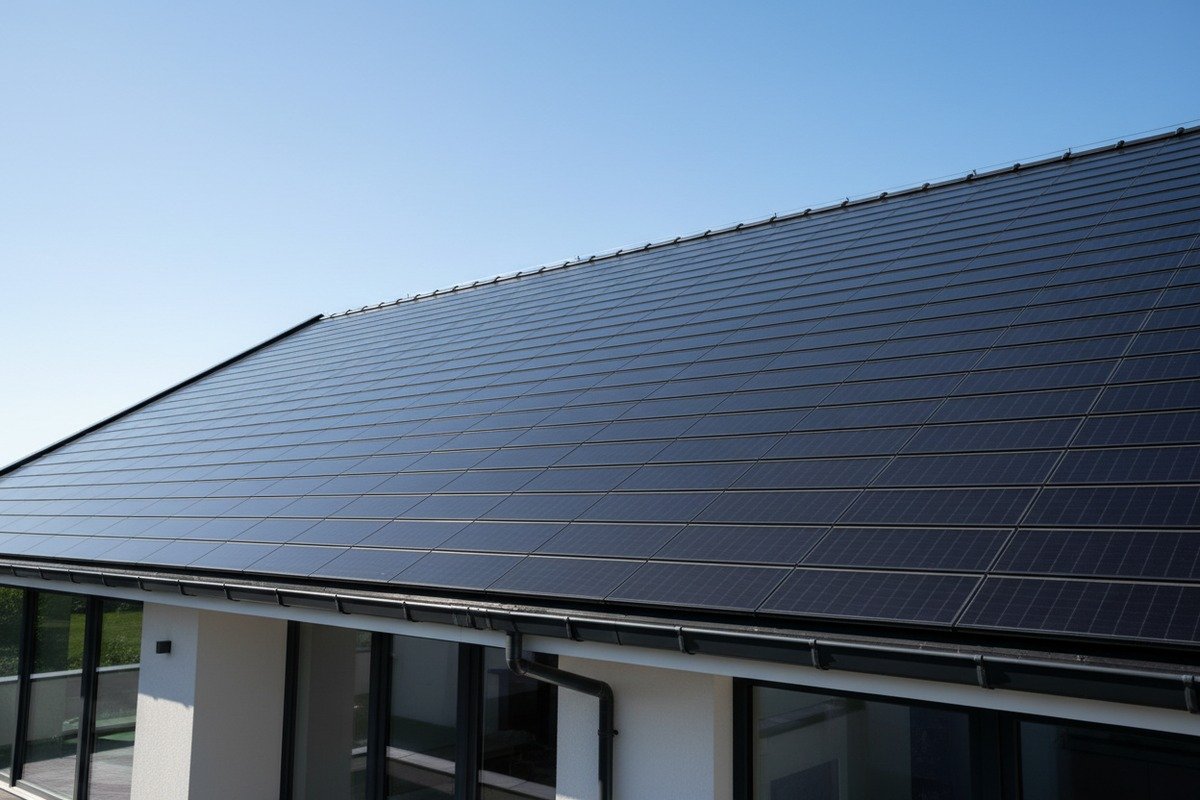
Look for suppliers who demonstrate inline spectrophotometric color measurement, standardized lighting inspection booths (D65 illuminant), retained master samples for every color SKU, documented defect classification systems, and third-party certification audits — these five elements together ensure every shingle leaving the factory meets the uniform aesthetic standard European projects demand.
The Five Pillars of Visual QC
Not all quality control is created equal. Some suppliers check electrical output and call it done. For European aesthetic markets, you need a supplier whose QC process treats appearance with the same rigor as performance. Here is what to ask for — and what to verify during a factory audit.
Pillar 1: Inline Color Measurement
Every tile should pass through a spectrophotometer station that measures Lab* color values and calculates ΔE against the master reference. This should happen automatically, not by random sampling. On our line, tiles with ΔE > 1.0 are flagged and segregated for secondary review.
Pillar 2: Visual Inspection Under Controlled Lighting
Human eyes catch what machines miss — subtle surface irregularities, coating bubbles, micro-scratches, edge chips. But human inspection is only reliable under consistent lighting. The industry standard is D65 illuminant (6500K daylight simulation) at 1000 lux, viewed at 500mm distance and 45° angle. Ask your supplier what lighting conditions they use. If they say "natural factory light," walk away.
Pillar 3: Defect Classification System
A good supplier has a documented system that classifies defects by severity and location.
| Defect Type | Classification | Acceptance Criteria |
|---|---|---|
| Color deviation (ΔE > 1.5) | Critical | Reject — cannot ship |
| Surface scratch > 5mm visible | Major | Reject — cannot ship |
| Surface scratch < 3mm, edge only | Minor | Accept with notation — max 2 per 100 tiles |
| Coating bubble < 1mm | Minor | Accept — max 3 per tile, non-central area |
| Edge chip < 2mm | Minor | Accept — hidden by overlap in installation |
| Frame discoloration or oxidation | Major | Reject — indicates material or storage issue |
| Cell misalignment visible through glass | Major | Reject — aesthetic and performance concern |
Pillar 4: Retained Master Samples
For each color option — whether it is our deep charcoal black, iron grey, or custom-matched terracotta — we keep a sealed master sample panel in a climate-controlled room. Every new batch is physically compared against this master before shipment. This is low-tech but essential. Digital color files drift. Physical references do not.
Pillar 5: Third-Party Certification and Audits
CE and TÜV certifications confirm that the product meets electrical and safety standards. But for aesthetic quality, look for ISO 9001 process certification and ask if the supplier undergoes regular third-party factory audits. Our facility maintains CE and TÜV certifications, and we welcome customer-arranged audits at any time. We also carry a 25-year product warranty — that warranty is meaningless if the factory does not have the quality systems to back it up.
Red Flags During a Factory Visit
When you visit a potential supplier, watch for these signs:
- No dedicated visual inspection station at end of line
- Tiles stacked in packaging without individual protective separators
- No climate-controlled storage for finished goods (humidity damages coatings)
- Inability to show ΔE measurement records for previous orders
- Reluctance to provide samples from old production runs for comparison
A supplier confident in their quality will be transparent. They will show you the data. They will hand you tiles from three different months and dare you to find the difference. That is the level of confidence you need from a partner serving the European market, where a single aesthetic complaint can cascade into lost contracts and damaged reputation.
Conclusion
Sourcing solar shingles for Europe demands rigorous evaluation of color consistency, anti-glare performance, texture integration, and supplier quality control — get these four elements right, and you deliver roofs that win architects, satisfy homeowners, and build lasting partnerships.
Footnotes
1. Explains Delta E as a metric for color difference perception. ↩︎
2. Provides an overview of the EU Construction Products Regulation. ↩︎
3. Provides a comprehensive overview of Building-Integrated Photovoltaics. ↩︎
4. Describes the manufacturing process and properties of tempered glass. ↩︎
5. Explains how a spectrophotometer measures light intensity and color. ↩︎
6. Explains principles of color management for consistency in production. ↩︎
7. Explains the principles and applications of anti-reflective coatings. ↩︎
8. Describes the process and benefits of acid-etched glass for diffusing light. ↩︎
9. Highlights the durability and aesthetic qualities of natural slate roofing. ↩︎
10. Explains Germany’s Federal Immission Control Act and its purpose. ↩︎