
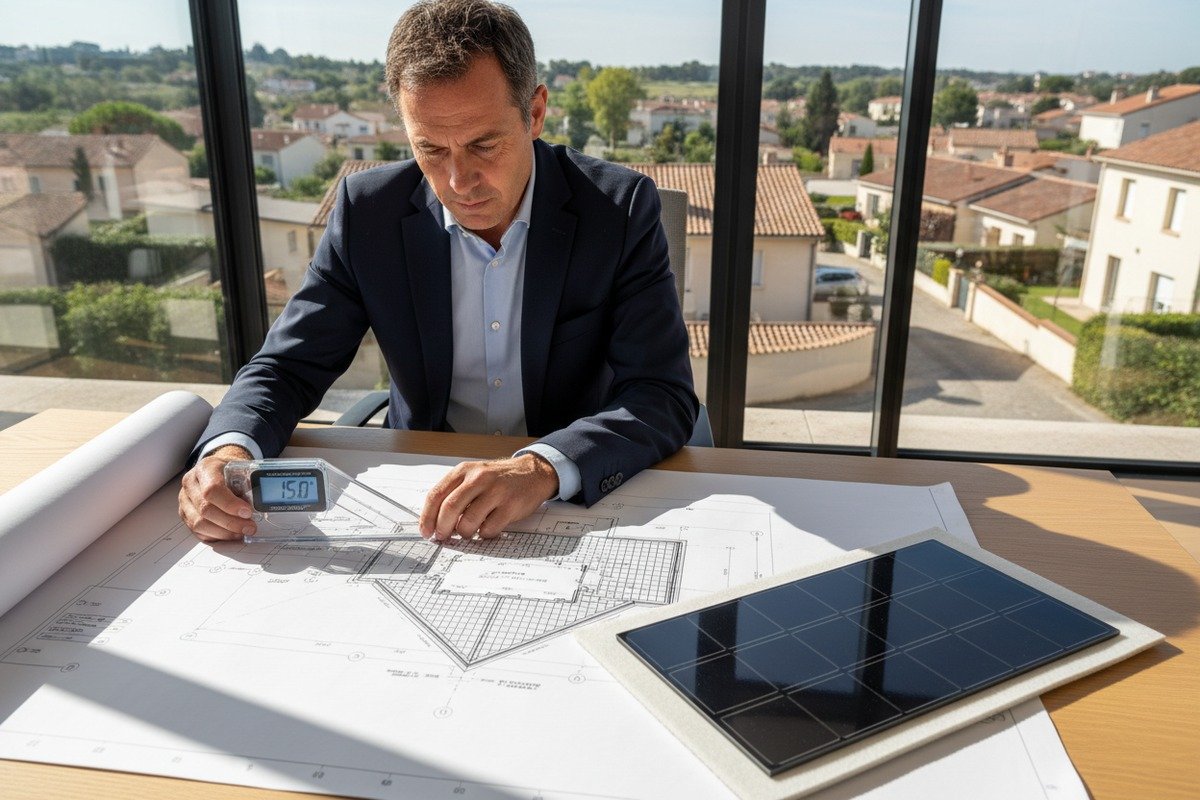
Choosing the wrong pitch for solar roof shingles can turn a promising European project into a costly nightmare of leaks, wind damage, and wasted energy potential.
To evaluate solar roof shingle pitch compatibility for European roof designs, you must match the manufacturer’s minimum pitch specification—typically 15 to 18 degrees—with the target roof angle, then verify waterproofing, wind load, and snow load ratings against local building codes and climate conditions before committing to any order.
Over 20 years of producing solar roof tiles and shingles at our facility, we have shipped BIPV products to nearly every European climate zone 1. This article breaks down the exact steps you need to evaluate pitch compatibility, so you can source with confidence and avoid expensive mistakes on site.
How do I determine the minimum pitch requirements for the solar shingles I'm sourcing?
Many buyers assume any solar shingle works on any pitched roof OEM/ODM customization 2. That assumption has led to failed installations and costly warranty claims across Europe.
The minimum pitch requirement for most solar roof shingles ranges from 15 to 18 degrees. You should always request the manufacturer's certified test data for water penetration and wind uplift at the stated minimum pitch, then cross-reference it with your local European building code requirements before placing an order.
Why Minimum Pitch Matters More Than You Think
Water drainage is the core issue. At lower pitches, rainwater moves slowly across the shingle surface. If the interlocking joints are not engineered for that speed, water creeps underneath. In northern Europe, freeze-thaw cycles make this even worse. Ice dams form at the eaves and push meltwater back up under the shingles.
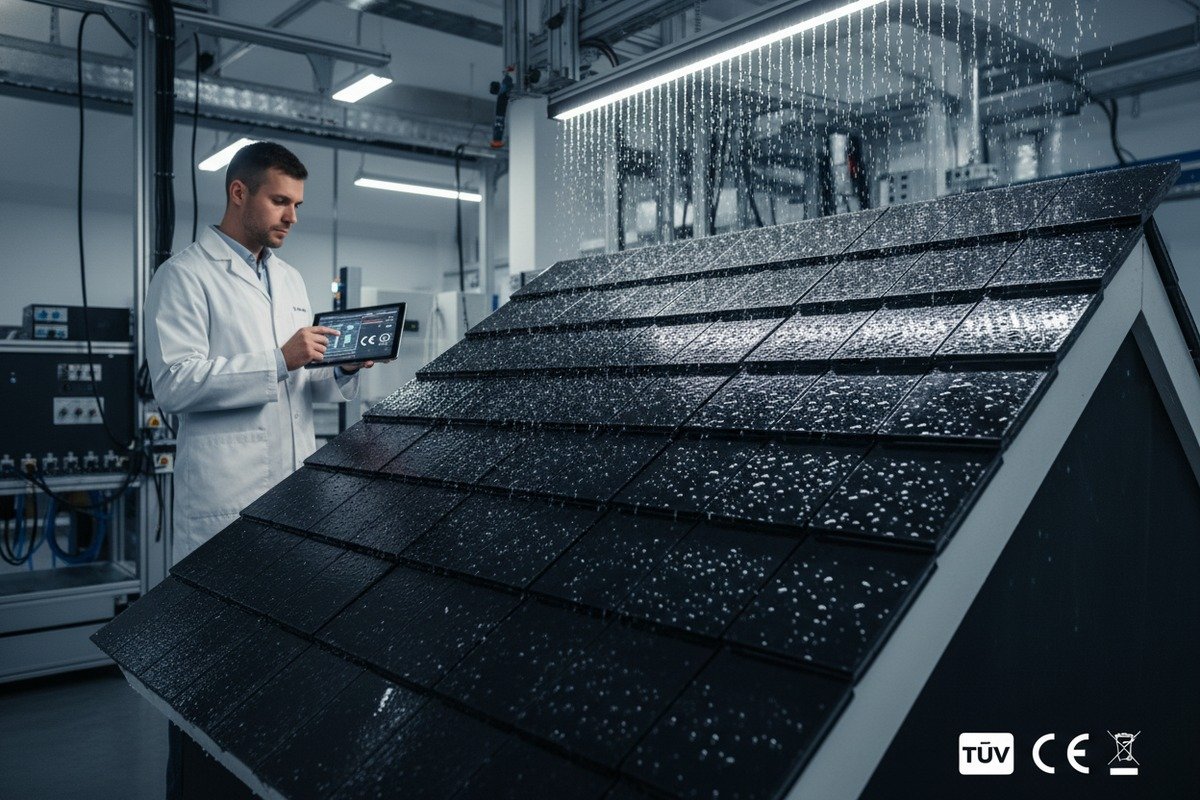
Our engineering team tests every solar shingle design at multiple pitch angles in a simulated rain chamber. We measure water ingress at 15, 18, 25, 30, and 45 degrees. The results are not linear. A shingle that performs perfectly at 25 degrees can fail at 17 degrees if the overlap geometry is even slightly off.
How to Read a Manufacturer's Pitch Specification
Not all pitch specs are created equal. Some manufacturers state a minimum pitch based on ideal lab conditions. Others test under realistic wind-driven rain. Ask for the test standard used. In Europe, EN 14437 3 is a key reference. Also check if the spec assumes underlayment or not.
Here is a comparison of common pitch specifications from different solar shingle system types:
| System Type | Minimum Pitch | Underlayment Required | Test Standard |
|---|---|---|---|
| Flat solar shingle (overlay) | 18° | Yes (up to 120°C rated) | EN 14437 |
| Interlocking solar tile (groove rail) | 15° | No | Manufacturer internal |
| Standing-seam integrated PV | 10° | No (metal substrate) | UL / EN tested |
| Traditional tile with PV insert | 20° | Yes | EN 14437 + CPR |
Regional Code Variations Across Europe
France, Germany, and the Nordic countries each have different building code requirements for roof coverings. In France, DTU standards 4 dictate minimum pitch based on geographic wind and rain exposure zones. A coastal site in Brittany may require a steeper minimum pitch than an inland site near Lyon. Germany's DIN standards 5 similarly adjust requirements by region.
When we prepare shipments for European distributors, we always ask for the installation region. This lets us recommend the correct shingle profile and overlap depth. It also helps us prepare the right certification documentation for customs and local building inspectors.
Ask the Right Questions Before You Order
Before finalizing any sourcing decision, request the following from your supplier: certified water penetration test results at the stated minimum pitch, wind uplift test data, fire classification rating 6, and a clear statement on whether underlayment is required. If a supplier cannot provide these documents, that is a red flag.
Can I trust the waterproof interlocking system to prevent leaks on my low-slope roof designs?
Waterproofing is the number one concern we hear from European distributors. A leaking solar tile does not just damage the panel—it damages the interior of the building, and that means massive compensation claims.
A well-engineered interlocking system can reliably prevent leaks on low-slope roofs, but only if the system is tested and certified for your specific pitch angle, includes proper drainage channels, and is installed with the correct underlayment where required. Never rely on marketing claims alone—demand third-party test certificates.
How Interlocking Systems Actually Work
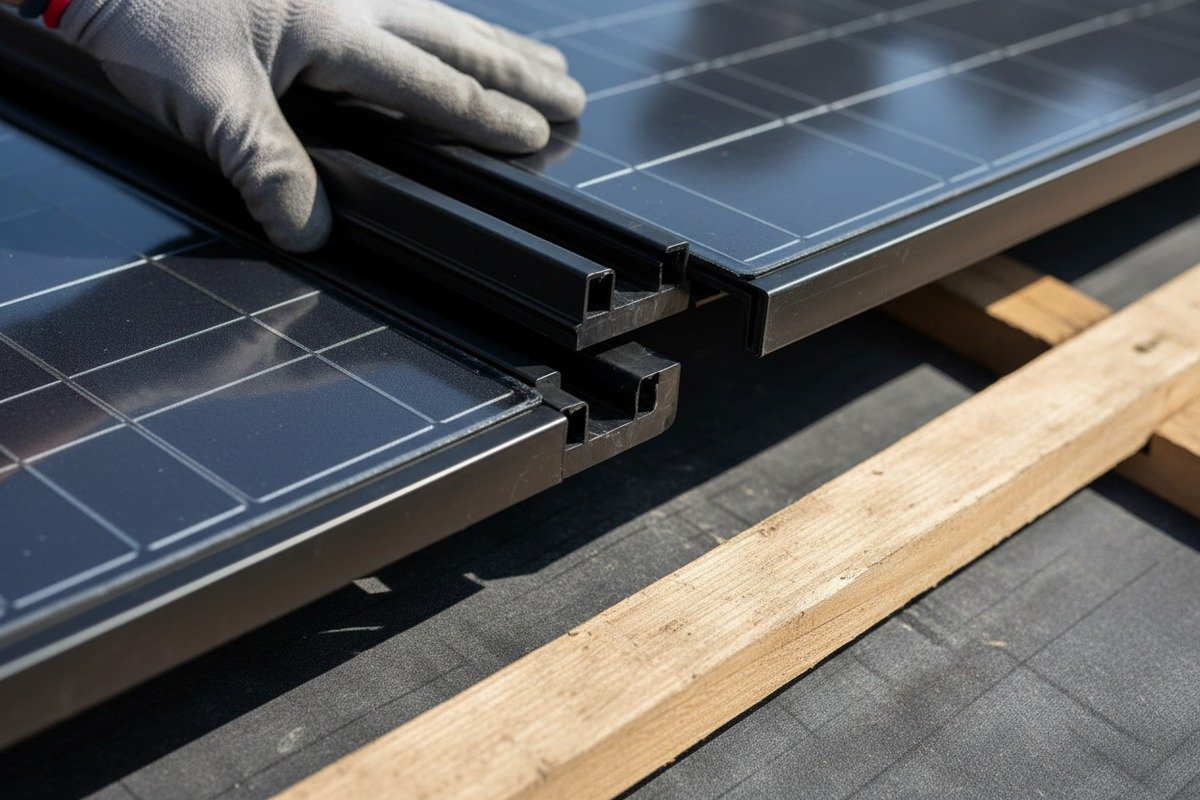
Modern solar shingle interlocking systems use a combination of overlapping edges, tongue-and-groove channels, and internal drainage paths. When rain hits the surface, most water runs down the face of the shingle. The critical test is what happens at the joints.
In our production line, we design each shingle with a raised rib along the upper edge and a recessed channel along the lower edge. When two shingles overlap, the rib seats into the channel. This creates a physical barrier that redirects any water that enters the joint back onto the face of the shingle below.
The Role of Underlayment
On roofs pitched between 15° and 22°, we strongly recommend a high-temperature-rated underlayment beneath the solar shingles. This acts as a secondary water barrier. Even the best interlocking system can be compromised by extreme wind-driven rain, ice buildup, or installation errors.
Our recommended underlayment can withstand temperatures up to 120°C. This is important because solar shingles generate heat during operation. Standard roofing felt can degrade under prolonged heat exposure, which creates gaps in the secondary barrier over time.
Common Failure Points on Low-Slope Installations
Most leaks on low-slope solar roofs happen at three locations: the ridge line, valley intersections, and around penetrations such as vents or chimneys. These are not failures of the shingle itself but failures in detailing.
| Leak Location | Common Cause | Prevention Method |
|---|---|---|
| Ridge line | Insufficient overlap or missing ridge cap | Use manufacturer's ridge cap system with sealant |
| Valley intersection | Water pooling at tile convergence | Install metal valley flashing beneath shingles |
| Penetrations (vents, chimneys) | Improper flashing around irregular shapes | Custom flashing kits with EPDM gaskets |
| Eaves / gutters | Ice dam formation pushing water upward | Ice and water shield membrane at eaves |
What to Look for in Test Certificates
Ask your supplier for test results that specifically simulate wind-driven rain at your target pitch angle. A static water test is not enough. The test should include a wind component, because low-slope roofs are particularly vulnerable to rain being pushed horizontally under the shingle edges.
Our products carry CE and TUV certifications 7. We also perform internal testing that exceeds these standards, including a 24-hour continuous rain simulation at 15° pitch with 90 km/h wind. We share these results openly with our distribution partners because transparency builds long-term trust.
Real-World Performance Monitoring
We encourage our European partners to document installations with photos and moisture sensors during the first two years. This data helps us continuously improve our interlocking designs. It also gives the distributor hard evidence of performance for their own customers.
How will the roof pitch affect the wind and snow load performance of my imported solar tiles?
A solar shingle that survives a German winter may struggle in a Norwegian mountain village. Pitch changes the physics of how wind and snow interact with every tile on the roof.
Roof pitch directly affects both wind uplift forces and snow accumulation on solar tiles. Steeper pitches increase wind uplift exposure but shed snow more effectively, while shallower pitches reduce wind forces but trap snow loads. You must match the tile's certified wind resistance rating and snow load capacity to the specific pitch and climate zone of each installation site.
How Wind Interacts with Pitch
Wind does not push evenly on a roof. It creates zones of high suction, particularly at edges, corners, and the ridge. On steeper pitches, the windward side experiences direct pressure while the leeward side faces strong uplift suction. On shallower pitches, the entire surface tends to experience uplift.
Our solar shingles are tested to resist Grade 15 winds. But that rating applies at a specific pitch range. At 25°, the uplift forces on the leading edge of each shingle are measurably different from the forces at 40°. We provide our partners with a wind load table broken down by pitch angle and roof zone.
| Roof Pitch | Windward Pressure Zone | Leeward Suction Zone | Edge/Corner Uplift Risk |
|---|---|---|---|
| 15°–20° | Low | Moderate | High |
| 20°–30° | Moderate | Moderate | Moderate |
| 30°–40° | High | High | Moderate |
| 40°–50° | Very High | Very High | Low |
Snow Load Considerations
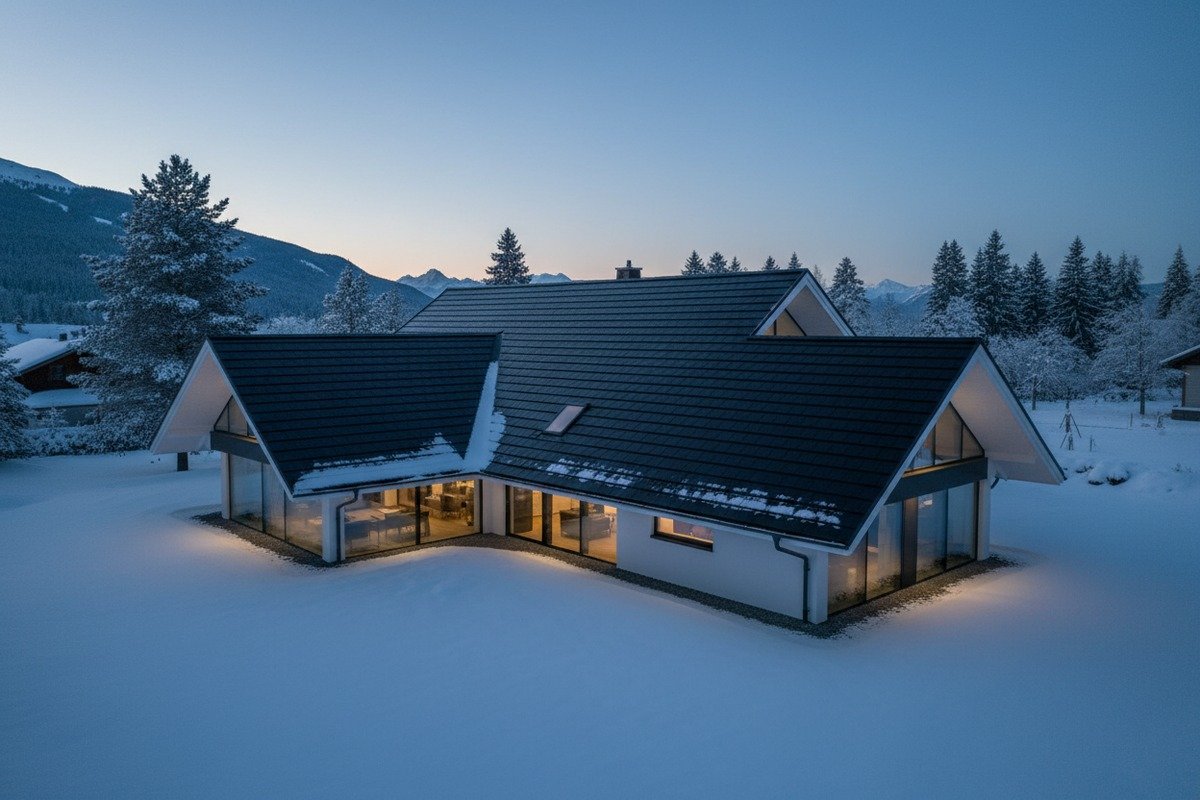
In Alpine and Nordic regions, snow load 8 is a critical design factor. Fresh snow weighs roughly 100–200 kg per cubic meter. Wet, compacted snow can exceed 500 kg per cubic meter. On a low-pitch roof, that load sits in place. On a steeper pitch, snow slides off—but that sliding action creates dynamic forces on the shingle surface.
Our shingles are designed with surface texturing that manages snow retention. We do not want all the snow to avalanche off the roof at once, because that creates a safety hazard below and a sudden asymmetric load on the roof structure. Instead, our surface finish allows gradual release.
Combining Wind and Snow: The Real Challenge
The most dangerous scenario is wind-driven snow on a moderate pitch roof. Wind packs snow into dense drifts on the leeward side, creating uneven loads. At the same time, the wind applies uplift to the shingles themselves. This combined loading condition is what you must design for.
When sourcing solar shingles, request load test data that covers both static snow load (measured in Pascals or kPa 9) and dynamic wind uplift (also in Pascals). Our products are certified to 4900 Pa wind resistance, which exceeds the requirements for most European climate zones.
Why This Matters for Your Sourcing Decision
If you are distributing solar shingles across multiple European countries, you need a product flexible enough to perform in diverse conditions. A shingle designed only for Mediterranean climates will fail in Scandinavia. We design our products to handle the full range of European conditions, but we always recommend that distributors specify the installation region so we can confirm suitability.
Understanding these load dynamics also affects your logistics planning. Shingles destined for heavy snow regions may require thicker glass or reinforced frames. This changes the weight per pallet and the shipping cost. Factoring this in early prevents unpleasant surprises later.
Can I customize the shingle dimensions to ensure a perfect fit for my specific architectural pitch?
Standard dimensions rarely fit perfectly on complex European roofs. Hips, valleys, dormers, and varying rafter spacings all demand flexibility from the product.
Yes, OEM/ODM customization of solar shingle dimensions is possible and often essential for achieving a perfect fit on European architectural pitches. A capable manufacturer can adjust tile width, length, overlap depth, and mounting hole positions to match your specific roof geometry, rafter spacing, and local aesthetic requirements.

Why Standard Sizes Often Fall Short
European residential architecture is incredibly diverse. A French Mansard roof has a different pitch on its upper and lower slopes. A Dutch gable combines vertical and angled surfaces. A Scandinavian cabin may feature pitches above 45°. Each of these designs creates unique dimensional requirements that a single standard shingle size cannot meet.
When we work with European roofing companies and architectural firms, the conversation almost always starts with dimensions. They send us roof plans, and our engineering team calculates the optimal tile size to minimize cuts, reduce waste, and maintain a clean visual line from eave to ridge.
The Customization Process
Our OEM/ODM process follows a structured path. First, the client provides architectural drawings with pitch angles, rafter spacing, and overall roof dimensions. Our team then models the shingle layout in CAD software to determine the ideal tile size. We produce prototypes, test them for water penetration and structural load at the specified pitch, and ship samples for client approval.
The entire process from initial drawing to approved prototype typically takes 4 to 6 weeks. Production runs then follow standard lead times. This front-end investment saves enormous time and money during installation.
What Can Be Customized
Not everything about a solar shingle is flexible. The solar cell size is largely fixed by cell manufacturing standards. But many other parameters can be adjusted:
- Overall tile length and width
- Overlap depth (critical for low-pitch water management)
- Frame thickness and profile
- Mounting hole position and spacing
- Surface color and anti-glare coating
- Electrical connector placement and cable length
Batch Consistency for Aesthetic Integration
One of the biggest concerns our European clients raise is color consistency across batches. On a European home where aesthetics are paramount, even a slight color variation between tiles is unacceptable. Our anti-glare coating process includes spectrophotometer checks on every batch. We match color values within a delta E of 1.5, which is below the threshold of human visual perception.
This level of quality control is only possible because we handle the entire production chain in-house. We do not outsource glass coating or frame finishing. This gives us total control over the final appearance of every shingle that leaves our facility.
Structural Implications of Custom Dimensions
Changing the dimensions of a solar shingle affects its structural behavior. A longer tile creates more lever arm for wind uplift. A wider tile bears more snow load per unit. Our engineers recalculate these factors for every custom order and provide updated load ratings to the client.
This is why working with a manufacturer who has deep R&D capability matters. A supplier who simply cuts tiles to your size without re-engineering the structural performance is putting your project at risk. We provide full technical documentation for every custom product, including updated test certificates where required.
Conclusion
Evaluating solar roof shingle pitch compatibility for European designs requires careful attention to minimum pitch specs, waterproofing systems, load performance, and dimensional customization—backed by certified test data from an experienced manufacturer.
Footnotes
1. Replaced HTTP 404 with an authoritative Wikipedia page providing an overview of European climate zones. ↩︎
2. Explains the difference between Original Equipment Manufacturer (OEM) and Original Design Manufacturer (ODM). ↩︎
3. Official standard for determining uplift resistance of roofing tiles. ↩︎
4. Explains the role and importance of DTU documents in French construction. ↩︎
5. Replaced HTTP 404 with a working page from the official DIN website explaining what DIN standards are. ↩︎
6. Explains different roof fire classification ratings (A, B, C). ↩︎
7. Provides information on TÜV certification for photovoltaic modules. ↩︎
8. Defines snow load and its importance in structural design. ↩︎
9. Defines the Pascal unit of pressure and its common multiple, kilopascal. ↩︎
10. Explains wind uplift forces on roofs and their impact. ↩︎