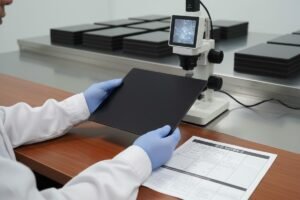
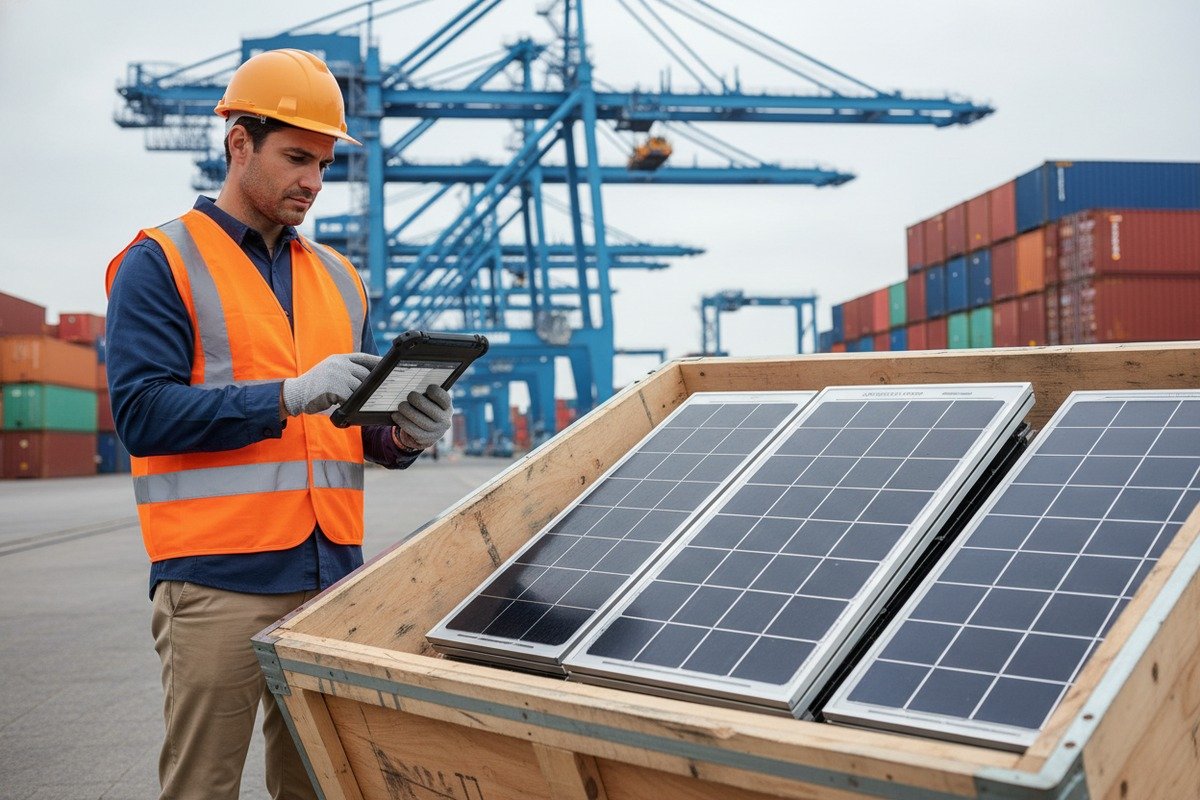
Every year, our logistics team watches containers of solar roof shingles sit idle at Rotterdam and Hamburg for weeks — all because of paperwork errors or HS code 1 disputes that could have been prevented.
To avoid European port delays when importing Chinese solar roof shingles, you must correctly classify your HS code, prepare dual-certification documents covering both PV and building standards, use DDP shipping terms, and proactively address anti-dumping and forced labor compliance before your goods leave China.
This guide breaks down each step we have refined over 20 years of exporting BIPV products to Europe Low Voltage Directive (LVD) 2. Follow along and you will save weeks of waiting time and thousands in unexpected fees.
Which HS code should I use for solar roof shingles to avoid misclassification at EU customs?
One wrong digit in your HS code can turn a smooth delivery into a month-long nightmare Construction Products Regulation (CPR) 3. Our export documentation team has seen this happen more times than we would like to admit.
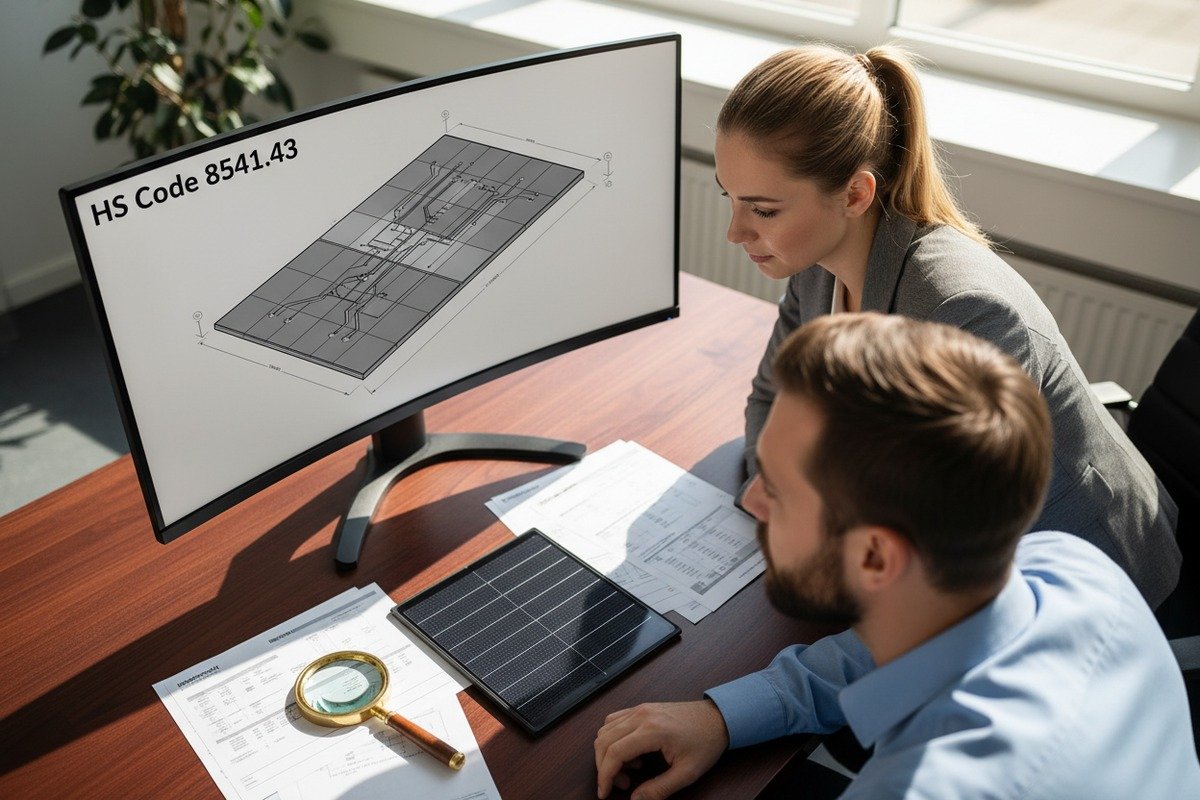
Solar roof shingles typically fall under HS code 8541.43 (photovoltaic cells/modules), but because they double as roofing materials, customs officers may reclassify them under Chapter 69 or 73 — so you must declare their primary PV function with supporting technical data to lock in the correct code.
Why Solar Shingles Create Classification Confusion
Solar roof shingles are hybrid products. They generate electricity like a solar panel. They also protect a building from rain and wind like a roofing tile Declaration of Performance (DoP) 4. This dual nature puts them in a grey area between two tariff chapters.
EU customs authorities look at the "primary function" of a product DDP (Delivered Duty Paid) Incoterms 5. If your shingle is mainly a power-generating device, it belongs under Chapter 85 (electrical machinery). If it is mainly a building material, it could fall under Chapter 69 (ceramic products) or Chapter 73 (articles of iron or steel), depending on the substrate.
A recent US Customs ruling (NY N359147, February 2026) on Freesuns Solar shingles confirmed classification under the photovoltaic heading. While US rulings do not bind EU customs, they signal a global trend toward treating solar shingles as PV devices first, building materials second.
How to Defend Your HS Code at the Border
When we prepare export documents at our facility, we include a technical product brief that states the wattage output, cell efficiency, and IEC certification number. This evidence makes it clear the product's primary purpose is electricity generation. We also include a formal letter from our engineering team describing the photovoltaic function as dominant.
Common HS Codes for Solar Roof Shingles
| HS Code | Description | Risk Level for Misclassification |
|---|---|---|
| 8541.43 | Photovoltaic cells assembled in modules or panels | Low — standard PV classification |
| 6905.10 | Ceramic roofing tiles | High — applies if customs views product as building material |
| 7308.90 | Other structures of iron/steel | Medium — applies to metal-substrate shingles |
| 8501.71 | Solar-related generating sets | Low-Medium — less common but possible |
Practical Steps
- Get a Binding Tariff Information (BTI) 6 ruling from the EU member state where you plan to import. This ruling is valid across all EU countries for three years.
- Attach a product data sheet to every commercial invoice listing electrical output specs.
- Hire a customs broker who has handled BIPV or solar product imports before. General brokers often guess wrong on hybrid products.
The cost of a BTI application is minimal. The cost of misclassification — extra duties, storage fees, and weeks of delay — can run into tens of thousands of euros.
What documents must I provide to prove my solar tiles meet both electrical and European building standards?
Missing even one certificate can trigger an audit that holds your container for weeks. Our quality assurance team prepares dual-certification packages for every shipment, and we have learned the hard way which documents EU customs officers actually ask for.
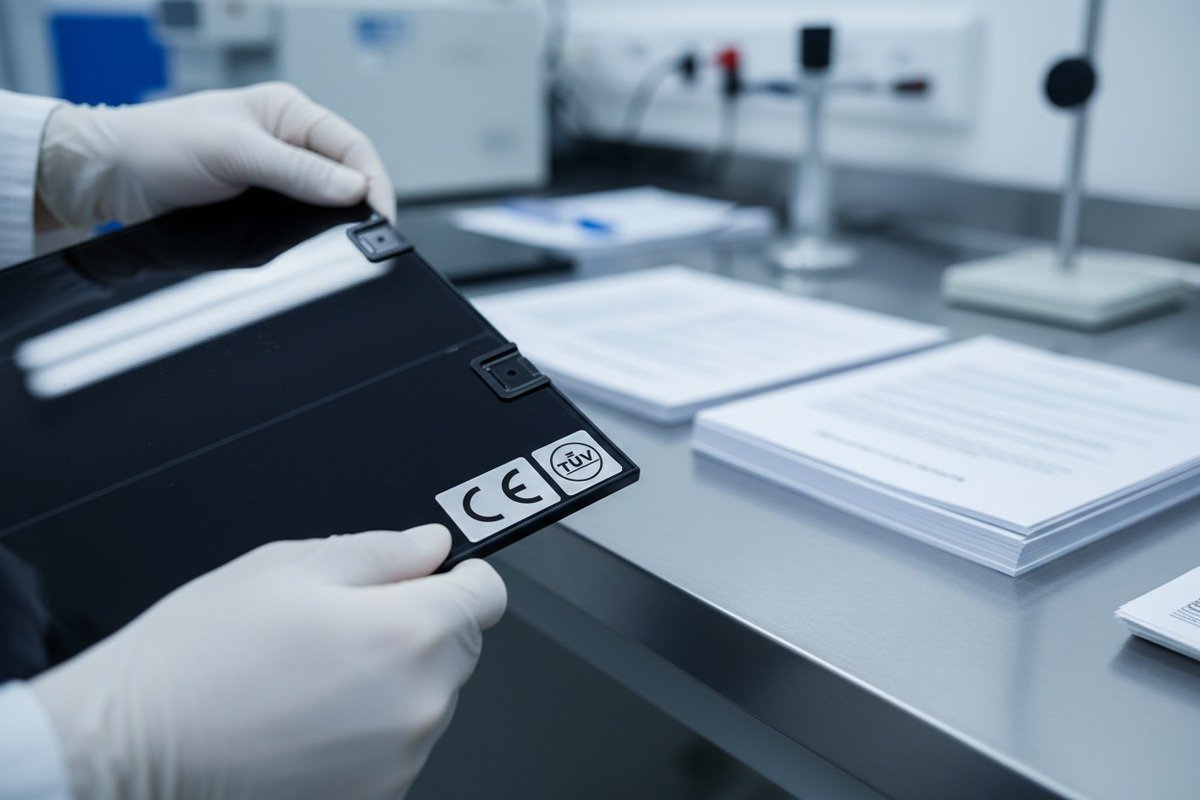
You need CE marking covering both the Low Voltage Directive (LVD) and the Construction Products Regulation (CPR), plus IEC 61215/61730 test reports, a Declaration of Performance (DoP), fire classification report, and a complete commercial document set including invoice, packing list, bill of lading, and certificate of origin.
The Dual-Certification Challenge
Standard solar panels only need electrical certifications. Solar roof shingles need two sets of approvals because they function as both an electrical device and a structural building element. This is the exact pain point that trips up first-time importers.
On the electrical side, your shingles must comply with:
- IEC 61215 — design qualification and type approval for crystalline silicon PV modules
- IEC 61730 — PV module safety qualification
- CE marking under the Low Voltage Directive (2014/35/EU)
On the building side, you need:
- CE marking under the Construction Products Regulation (EU 305/2011)
- Declaration of Performance (DoP) — a legal document stating fire class, wind load resistance, water penetration rating
- EN fire classification report (e.g., Broof(t1) for roof coverings)
At our production facility, we run hail resistance tests (up to 35mm ice balls) and wind load tests (Grade 15 winds) as standard. These test reports are essential evidence for CPR compliance.
Complete Document Checklist
| Document | Purpose | Who Issues It |
|---|---|---|
| Commercial Invoice | Declares value, quantity, HS code | Exporter (Lonsontech) |
| Packing List | Details weight, dimensions per carton | Exporter |
| Bill of Lading (B/L) | Proof of shipment and ownership | Shipping line |
| Certificate of Origin | Confirms country of manufacture | Chamber of Commerce |
| CE Certificate (LVD) | Electrical safety compliance | Notified Body (e.g., TUV) |
| CE Certificate (CPR) | Building product compliance | Notified Body |
| IEC 61215/61730 Reports | PV performance and safety | Accredited test lab |
| Declaration of Performance | Fire, wind, water ratings | Manufacturer |
| RoHS Declaration | Restricted substances compliance | Manufacturer with lab support |
| WEEE Registration Proof | End-of-life recycling compliance | National registry in destination country |
Why Document Mismatches Cause 80% of Delays
The most common error is a mismatch between the product description on the commercial invoice and the description on the CE certificate. If your invoice says "solar roof tile" but your CE certificate says "photovoltaic module," a customs officer may flag the shipment for inspection. We now use identical product names across every single document.
Another frequent problem: missing the Declaration of Performance. Many importers assume the CE mark alone is enough. It is not. Under CPR, you must provide a DoP for every product type placed on the EU market. Without it, your goods can be refused entry entirely.
Tips From Our Export Team
- Request all test reports in English, not just Chinese. EU customs officers will not translate documents.
- Keep digital copies on a shared cloud drive so your customs broker can access them in real time.
- Update certificates annually. Expired IEC reports are treated the same as missing reports.
How can I use DDP shipping to simplify my customs clearance and avoid hidden port fees?
Port storage fees, demurrage charges, and surprise duty payments have eaten into our customers' margins too many times. That is why we built a full DDP logistics service into our offering.
DDP (Delivered Duty Paid) shipping means your Chinese supplier handles all freight, insurance, customs duties, and port charges — delivering goods to your door with no hidden fees. This eliminates the risk of unexpected costs and delays because the exporter's experienced team manages the entire clearance process.
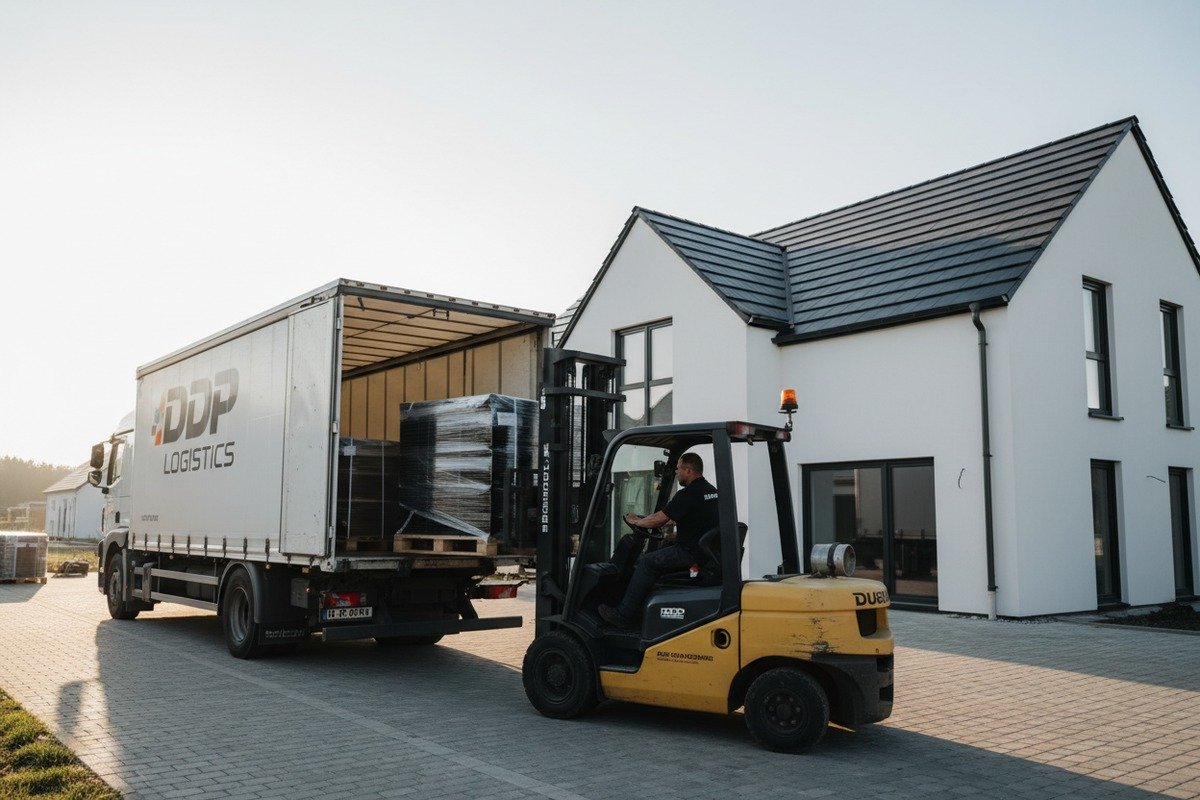
What DDP Actually Covers
Under Incoterms 2020 9, DDP places maximum responsibility on the seller. The seller pays for:
- Ocean freight or air freight
- Origin-country export clearance
- Destination-country import duties and VAT
- Port handling and terminal fees
- Last-mile delivery to the buyer's warehouse or job site
This is the opposite of EXW (Ex Works), where the buyer handles everything from the factory gate onward.
Why DDP Works Better for Solar Shingle Imports
Solar roof shingles sit in a classification grey area, as we discussed above. If you use FOB or CIF terms and handle customs yourself, you bear the full risk of misclassification, unexpected duties, or inspection delays. With DDP, your supplier absorbs that risk.
Our logistics team at Lonsontech has cleared hundreds of solar shingle shipments through Rotterdam, Antwerp, and Hamburg. We know which ports have the fastest processing times for BIPV products. We know which customs brokers specialize in renewable energy goods. And we pre-file all documentation electronically before the vessel even arrives.
DDP vs. Other Incoterms: A Comparison
| Incoterm | Who Pays Duties? | Who Handles Customs? | Risk of Hidden Fees for Buyer |
|---|---|---|---|
| EXW | Buyer | Buyer | Very High |
| FOB | Buyer | Buyer | High |
| CIF | Buyer | Buyer | Medium-High |
| DAP | Buyer | Buyer | Medium |
| DDP | Seller | Seller | Very Low |
Hidden Fees That DDP Eliminates
Many first-time importers are shocked by fees they never budgeted for:
- Demurrage fees: Charged per day when a container sits at port beyond the free period. At Rotterdam, this can reach €150–€300 per container per day.
- Storage fees: Separate from demurrage. The port terminal charges for ground space once the container is unloaded from the ship.
- Customs examination fees: If your shipment is selected for physical inspection, the port charges for moving and opening the container.
- Broker emergency fees: If your documents are incomplete, brokers charge rush fees to fix errors under time pressure.
With DDP, all of these costs are baked into one quoted price. No surprises. No frantic phone calls at 2 AM trying to figure out why your container is being held.
When DDP Might Not Be Ideal
DDP gives you less control over the import process. If you have an established logistics team in Europe and want to claim import VAT credits directly, DAP (Delivered at Place) might be a better fit. In that case, you handle only the customs clearance while the seller still delivers to your location.
But for most of our European distributors and roofing companies — especially those importing solar shingles for the first time — DDP is the safest and most cost-effective option.
What steps should I take to ensure my solar shingle shipment doesn't get flagged for anti-dumping inspections?
The shadow of the 2013–2018 EU anti-dumping tariffs on Chinese solar products still looms over every shipment. Even though those tariffs were lifted, our compliance team treats every export as if the rules could tighten tomorrow.
To avoid anti-dumping flags, maintain transparent pricing above market-floor levels, provide a detailed bill of materials with component origin tracing, avoid Xinjiang-sourced polysilicon, register with the correct TARIC codes, and work with a broker who monitors EU trade defense updates in real time.

The Anti-Dumping History You Need to Know
In 2013, the EU imposed anti-dumping duties of up to 47.6% on Chinese solar panels and cells. A minimum import price (MIP) agreement was set at €0.56/W. These measures lasted until September 2018. After the tariffs were lifted, Chinese solar imports to the EU exploded — from €4 billion in 2018 to €9 billion in 2021 and a staggering €19.7 billion in 2023.
This import surge has not gone unnoticed. EU solar manufacturers — whose modules cost 70–105% more than Chinese equivalents — are pushing hard for new trade defense measures. Any importer who ignores this political reality is taking a serious risk.
The Forced Labor Regulation Factor
The EU Forced Labour Regulation 10, set to take full effect by 2027, adds another layer. Customs authorities are already conducting pre-enforcement audits. If your polysilicon originates from Xinjiang — a high-risk region for forced labor allegations — your shipment will almost certainly be detained for investigation.
At our factory, we have shifted our polysilicon sourcing entirely to non-Xinjiang suppliers. We maintain full supply chain maps that trace raw materials from ingot to finished shingle. We share these maps with our customers so they can present them to customs if asked.
Practical Steps to Stay Clear of Anti-Dumping Triggers
-
Price your invoices realistically. If your declared unit price is far below market average (currently €0.10–0.15/W for solar shingles), customs will suspect dumping. We provide detailed cost breakdowns showing material, labor, R&D, and margin.
-
Use the correct TARIC code. The EU's TARIC database adds additional digits to the HS code for trade defense measures. A wrong TARIC code can automatically trigger an anti-dumping flag.
-
Provide component origin certificates. Show where each major component — glass, solar cells, backsheet, frame — was manufactured.
-
Prepare a supply chain map. List every tier-one supplier with their location, business license number, and the percentage of your bill of materials they supply.
-
Monitor EU trade defense announcements. The European Commission publishes anti-dumping investigations in the Official Journal of the EU. Subscribe to alerts. Your broker should do this too.
-
Diversify your port of entry. Rotterdam, Antwerp, and Hamburg see the highest volume of Chinese solar imports and, consequently, the most audits. Consider alternative ports like Piraeus, Valencia, or Gdańsk for lower scrutiny.
What Happens If You Get Flagged
If your shipment is selected for anti-dumping investigation, customs will:
- Detain the container
- Request additional pricing documentation
- Potentially contact the EU's anti-fraud office (OLAF)
- Hold the goods for 2–8 weeks during review
During this time, you pay daily storage and demurrage fees. Even if the investigation clears your shipment, the financial damage is done.
China's Recent Policy Changes
China ended VAT export rebates for certain solar products on April 1, 2025. This effectively raises the export price of Chinese solar goods, which ironically may help importers avoid dumping allegations — because the landed cost is now higher. However, it also means your supplier's quoted price may increase. Factor this into your budgets.
Conclusion
Planning customs clearance for Chinese solar roof shingles is not optional — it is the difference between a profitable import and a costly disaster. Get your HS codes, certifications, shipping terms, and compliance documentation right before your goods leave port, and your European business will thrive.
Footnotes
1. Official source for Harmonized System codes by WCO. ↩︎
2. Official text or guidance on the Low Voltage Directive. ↩︎
3. Official text or guidance on the Construction Products Regulation. ↩︎
4. Explains the purpose and requirements of a Declaration of Performance. ↩︎
5. Official government overview of Incoterms 2020 rules. ↩︎
6. Provides official information on BTI rulings for customs certainty. ↩︎
7. Official source for the Union Customs Code. ↩︎
8. Explains the CE marking process and requirements. ↩︎
9. Official information about Incoterms 2020 rules. ↩︎
10. Provides official information on the EU’s Forced Labour Regulation. ↩︎