

Every year, we see more European buyers walk away from traditional bolt-on panels IP68-rated junction boxes 1. They want something that looks like it belongs on the roof. But finding a supplier who can deliver custom solar shingles that meet both strict EU building codes 2 and local aesthetic tastes? That is where most buyers hit a wall.
To request custom solar roof shingles for European markets, specify your aesthetic requirements (color, texture, profile), demand dual CE and TUV certification for PV and building standards, require tested waterproof interlocking designs, and negotiate DDP delivery with a 25-year warranty backed by contractual guarantees from your Chinese OEM partner.
Below, we break down every step of the customization process. From matching RAL colors to verifying leak-proof designs, this guide covers what you need to ask, what to watch out for, and how to protect your margins on every shipment.
How can I ensure my custom solar shingles match the specific aesthetic and color requirements of European architecture?
Over the past 20 years on our production lines, we have learned one truth the hard way: European buyers reject solar tiles faster for a bad color match than for a dip in wattage. A patchy roof means a failed project, angry homeowners, and costly replacements.
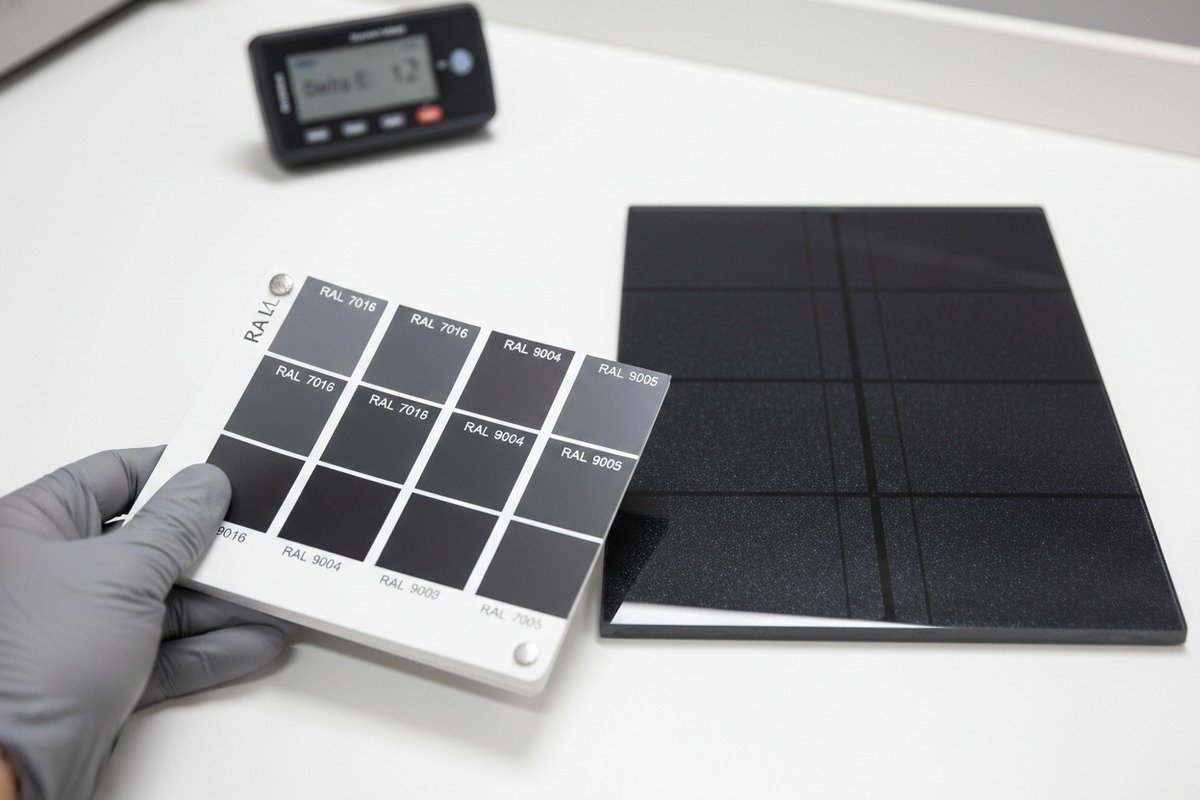
To ensure aesthetic consistency, specify exact RAL color codes, request pre-production samples from each batch, demand Delta E color deviation limits below 1.5 in your contract, and choose anti-glare glass coatings that replicate the look of natural slate, clay, or dark shingle finishes.
Why Aesthetics Matter More Than You Think in Europe
European homeowners choose solar roof shingles over standard panels for one main reason: they want their roof to look like a roof, not a power plant. Historic towns in France, Germany, and Switzerland often have strict municipal codes about roof appearance. If your solar tile clashes with the neighborhood, the building permit gets denied.
Our engineering team works with buyers to replicate textures like natural slate, terracotta, and even wood-grain finishes. The key is in the glass coating. A smooth, semi-reflective obsidian black finish can mimic high-end slate. A matte charcoal surface with fine-lined grid patterns blends with modern architecture. Each option requires a different coating process.
The RAL Color System and Batch Control
The RAL color system 3 is the European standard for color matching. When you place your OEM order, include the exact RAL code. But do not stop there. Batch-to-batch variation is the silent killer of solar tile projects. Glass coatings shift slightly with each production run due to temperature and raw material differences.
Here is what we recommend you include in your specification sheet:
| Specification Item | Recommended Requirement | Why It Matters |
|---|---|---|
| RAL Color Code | Exact code (e.g., RAL 7021 Black Grey) | Ensures consistent color across orders |
| Delta E Tolerance | ≤ 1.5 | Human eye detects differences above 2.0 |
| Surface Finish | Matte, semi-reflective, or textured | Matches architectural style |
| Anti-Glare Coating | Required for residential areas | Prevents complaints from neighbors |
| Sample Approval | Pre-production sample per batch | Catches deviations before full production |
Texture and Profile Customization
Beyond color, the physical profile of each shingle matters. A flat, low-profile tile suits modern builds. A slightly curved or overlapping design fits traditional European rooflines. When we develop custom molds, we consider the tile thickness, edge beveling, and shadow line. These small details determine whether the finished roof looks integrated or obviously "solar."
We always suggest buyers send photos of the target building or the traditional tile they want to replicate. Our R&D team then creates a 3D rendering and a physical prototype before mass production begins. This step adds a week to the timeline, but it prevents expensive mistakes once tiles arrive on-site.
Acoustic performance is another emerging concern. Buyers in urban areas of the Netherlands and Belgium increasingly ask about rain noise reduction. Thicker glass laminates and rubber-backed mounting clips help dampen sound, and this should be part of your initial specification if your end market values quieter roofs.
What certifications should I ask for to make sure my private-label solar tiles meet both PV and building standards in Europe?
When we first began exporting to France and Germany in the early 2010s, our tiles passed every electrical test with flying colors. But a distributor in Lyon still could not sell them. The reason? We had not obtained the Construction Products Regulation (CPR) 4 documentation. That lesson cost us six months and a key client.
For European market entry, demand both PV certifications (IEC 61215, IEC 61730, CE marking, TUV) and building material certifications (CPR compliance, EN fire ratings, wind/snow load testing per Eurocode), plus country-specific approvals like France's ATEC or Germany's DIBt for full legal coverage.

The Dual Certification Problem
Solar roof shingles sit at the intersection of two industries: photovoltaics and construction. Most Chinese suppliers hold PV certifications. Far fewer hold building certifications. But in Europe, a solar tile is legally a building product first and a PV product second. If it fails as a building material, it cannot go on a roof — no matter how efficient it is.
Here is a breakdown of the certifications you should request:
| Certification | Scope | Required For |
|---|---|---|
| IEC 61215 | PV module performance and reliability | All EU markets |
| IEC 61730 | PV module safety (electrical) | All EU markets |
| CE Marking | Conformity with EU health, safety, environment | Market entry across EU |
| TUV Rheinland / TUV SÜD | Third-party verification of PV performance | Buyer confidence, some tenders |
| CPR (EU 305/2011) | Construction product performance declaration | Legal requirement for building products |
| EN 13501-1 | Fire classification for building products | Fire safety compliance |
| Eurocode EN 1991 | Wind and snow load resistance | Structural approval per country |
| ATEC (France) | French technical approval for new building products | French market specifically |
| DIBt (Germany) | German Institute for Building Technology approval | German market specifically |
Why CPR Compliance Is Non-Negotiable
The Construction Products Regulation requires a Declaration of Performance (DoP) 5 for any product permanently installed in a building. Your solar shingle must have documented test results for fire reaction, water penetration, mechanical resistance, and thermal performance. Without the DoP, a European distributor cannot legally place the product on the market.
We include CPR-compliant documentation with every shipment destined for Europe. Our tiles are tested for resistance to 35mm hail and Grade 15 winds, which exceeds the baseline requirements in most EU countries.
Country-Specific Nuances
France requires an ATEC (Avis Technique) for novel building products. Germany may require a DIBt approval or an abZ (allgemeine bauaufsichtliche Zulassung). Switzerland has its own pilot programs and feed-in premium structures that sometimes require additional local testing. Do not assume a CE mark alone opens every door. Ask your supplier which country-specific approvals they hold or can support you in obtaining.
The EU Solar Roof Initiative is accelerating this urgency. New buildings over 300m² must have solar installations from 2024. Public and commercial buildings over 250m² follow by 2027. New residential buildings join by 2029. If your tiles lack dual certification, your buyers cannot participate in this massive wave of mandated installations.
How do I verify that the custom interlocking design will prevent leaks and reduce installation time for my contractors?
One of the most common calls we get from European roofing companies starts the same way: "The last solar tile we tried leaked within the first winter." Waterproofing is not just a feature for solar shingles. It is the single biggest liability concern for every contractor and distributor in the chain.
Verify leak prevention by requesting IP68-rated junction boxes, third-party water penetration test reports (EN 539-1), a physical interlocking sample for mock-up testing, and a documented average installation time per square meter — ideally under 15 minutes per tile for a two-person crew.
Understanding the Waterproofing Risk
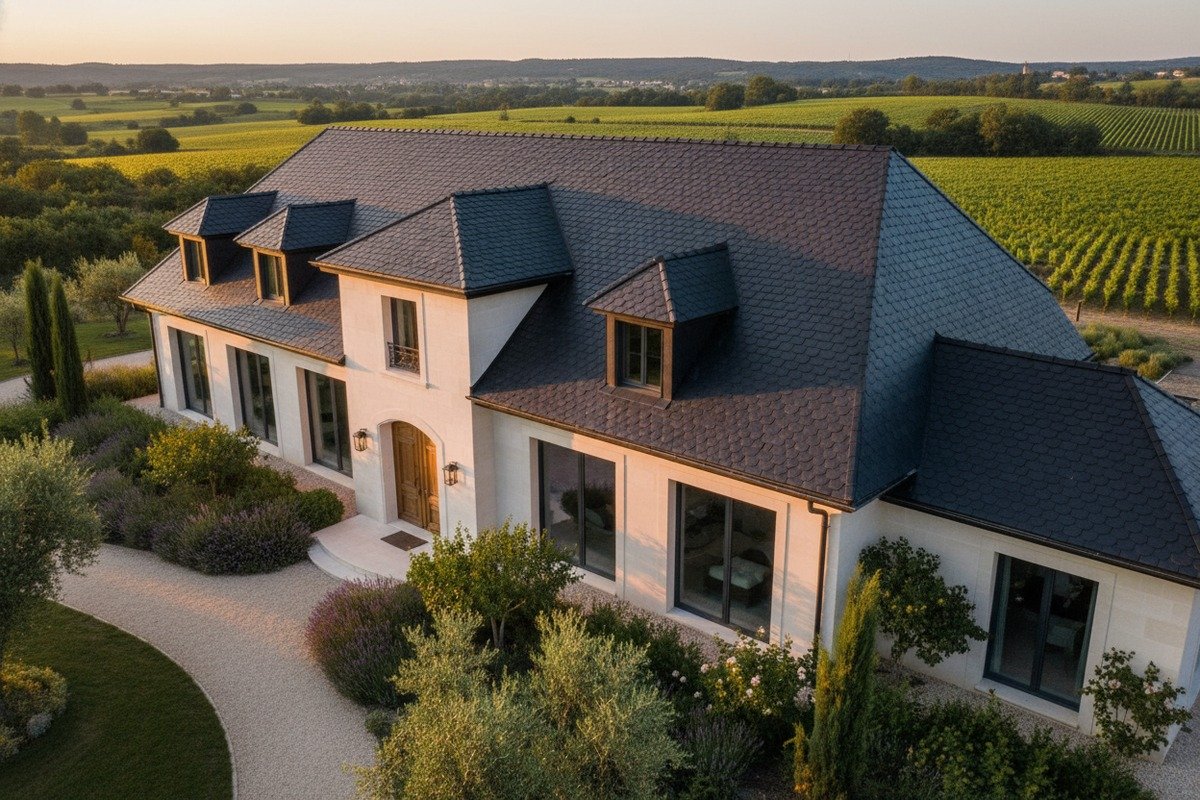
Traditional PV panels sit on top of a roof. If water gets under them, it hits the existing roofing membrane. Solar shingles replace that membrane. They are the roof. A leak in a solar shingle does not drip onto a mounting rail. It drips into someone's living room. In Europe, where a single water damage claim can reach tens of thousands of euros, this risk kills deals.
Our drainage design uses a multi-channel interlocking system. Each tile overlaps the one below it, with hidden water channels that redirect rain and snowmelt away from electrical connections. We test every design iteration under simulated heavy rainfall conditions exceeding 200mm per hour.
What to Ask Your Supplier
Before committing to a custom interlocking design, request the following from your manufacturer:
- Water penetration test report — EN 539-1 is the European standard. Ask for the full lab report, not just a pass/fail certificate.
- IP rating for junction boxes — IP68 is the gold standard. It means the electrical connections survive continuous submersion.
- Physical sample set — Order 6 to 10 tiles and have your contractors do a mock installation on a test frame. Check for gaps, alignment issues, and drainage flow.
- Installation time data — Ask for documented average install times from previous European projects. Good designs allow a two-person crew to install one tile in under 15 minutes, including wiring.
- Wind uplift test data — Interlocking tiles must resist wind loads per Eurocode. Ask for third-party test results showing performance under Grade 15 wind conditions.
Installation Efficiency and Labor Cost Impact
European labor costs for roofing are among the highest in the world. In Germany, a skilled roofer costs €45–€65 per hour. In France and the Netherlands, rates are similar. Every extra minute per tile adds up fast on a 200m² roof. A well-designed interlocking system with plug-and-play MC4-compatible connectors 6 can cut total installation time by 30% compared to older bolt-down solar tile designs.
| Design Feature | Impact on Installation | Impact on Waterproofing |
|---|---|---|
| Overlapping interlock rails | Reduces alignment time | Creates primary water barrier |
| Hidden drainage channels | No effect on speed | Redirects water away from connections |
| Pre-wired MC4 connectors | Cuts wiring time by 50% | Sealed connectors prevent moisture entry |
| Snap-fit mounting clips | Faster than screw-based systems | Maintains consistent compression seal |
| IP68 junction boxes | No effect on speed | Survives submersion and condensation |
When we design a new interlocking profile, our engineers run computational fluid dynamics (CFD) simulations to model water flow across the tile array at different roof pitches. A tile that works perfectly at 30° may fail at 15°. Always confirm the minimum and maximum roof pitch your custom design supports.
What should I include in my OEM request to guarantee safe DDP delivery and long-term warranty support from a Chinese supplier?
We shipped our first container of solar tiles to Rotterdam in 2015. Twelve tiles arrived cracked. The packaging looked fine from the outside. Inside, the tiles had shifted during a rough sea crossing. That experience rewired how our logistics team thinks about every shipment. Now breakage on our European deliveries sits below 0.3%.
Your OEM request should specify DDP Incoterms with itemized duties and VAT, require reinforced corner-and-edge packaging with shock indicators, define the correct HS Code upfront to avoid customs disputes, and include a contractual 25-year performance warranty with annual degradation limits and a named EU-based warranty agent.
Getting the DDP Terms Right
DDP (Delivered Duty Paid) means your Chinese supplier handles everything: freight, insurance, customs clearance, duties, and VAT. This sounds convenient. But if the details are not nailed down in writing, disputes arise fast. BIPV products sit in a gray area between HS Code 7 Chapter 73 (building materials) and Chapter 85 (photovoltaic modules). The wrong classification can trigger unexpected tariff rates or customs holds.
In your OEM contract, specify:
- The agreed HS Code and tariff rate for the destination country.
- Who bears the cost if customs reclassifies the product.
- Itemized breakdown of duties, VAT, and freight within the DDP price.
- A clause requiring the supplier to use a named, experienced customs broker in the destination country.
Packaging That Survives 30 Days at Sea
Solar shingles contain tempered glass 8 and precision interlocking edges. Standard cardboard boxes are not enough. We use reinforced wooden crates with internal foam dividers, corner protectors, and shock/tilt indicators on every pallet. If a shock indicator triggers during transit, the receiving party has documented evidence for an insurance claim.
Ask your supplier for:
- Photos and specifications of their export packaging.
- Drop test and vibration test reports for the packaging design.
- Confirmation of marine insurance coverage (All Risk, not just WA).
- A maximum breakage tolerance written into the contract (we guarantee under 0.5%).
Long-Term Warranty: The 25-Year Question
European buildings last generations. A 25-year performance warranty 9 is the market expectation for solar roof products. But a warranty is only as good as the company behind it. Buyers rightly worry about supplier stability over two decades.
Here is what to include in your warranty clause:
| Warranty Element | Recommended Term | Purpose |
|---|---|---|
| Product (structural) warranty | 10–15 years | Covers material defects, delamination, frame corrosion |
| Performance warranty | 25 years | Guarantees minimum power output (e.g., 80% at year 25) |
| Annual degradation limit | ≤ 0.5% per year | Prevents excessive efficiency loss |
| EU-based warranty agent | Named entity in contract | Provides local support if supplier is unreachable |
| Warranty reserve fund or escrow | Negotiable | Financial guarantee for long-term claims |
| Response time for claims | 48–72 hours | Prevents "after-sales disappearance" |
We provide 24/7 after-sales support and maintain relationships with service partners in key European markets. But we also encourage buyers to negotiate a warranty escrow or performance bond for orders above a certain value. This protects both sides.
Avoiding the "After-Sales Disappearance" Trap
The biggest fear among European BIPV importers is that their Chinese supplier vanishes after three years. To mitigate this risk, look for suppliers with:
- A verifiable 10+ year export track record.
- Physical factory audits 10 (request a third-party audit through SGS or Bureau Veritas).
- Named contacts for after-sales, not just a sales email.
- Willingness to sign a service-level agreement (SLA) with penalty clauses for slow response.
Our team of 100 employees has been in this industry for 20 years. We share factory audit reports, invite buyer visits, and assign dedicated account managers to every European client. Transparency is not a marketing line for us. It is how we keep clients for the long term.
Conclusion
Custom solar roof shingles for Europe demand precision across aesthetics, certification, waterproofing, and logistics. Get the specifications right in your OEM request, and you protect your margins, your reputation, and your clients for decades.
Footnotes
1. Defines the IP68 rating for dust and water ingress protection. ↩︎
2. Official EU source for construction product regulations and standards. ↩︎
3. Official website for the RAL color matching system standard. ↩︎
4. Official EU source for the Construction Products Regulation. ↩︎
5. Explains the mandatory Declaration of Performance for EU construction products. ↩︎
6. Wikipedia provides an overview of MC4 connectors used in solar PV systems. ↩︎
7. Official source defining the Harmonized System (HS) Code for international trade. ↩︎
8. Wikipedia describes tempered glass, its properties, and safety benefits. ↩︎
9. Explains the standard 25-year performance warranty for solar panels. ↩︎
10. SGS describes the process and benefits of third-party factory audits. ↩︎