
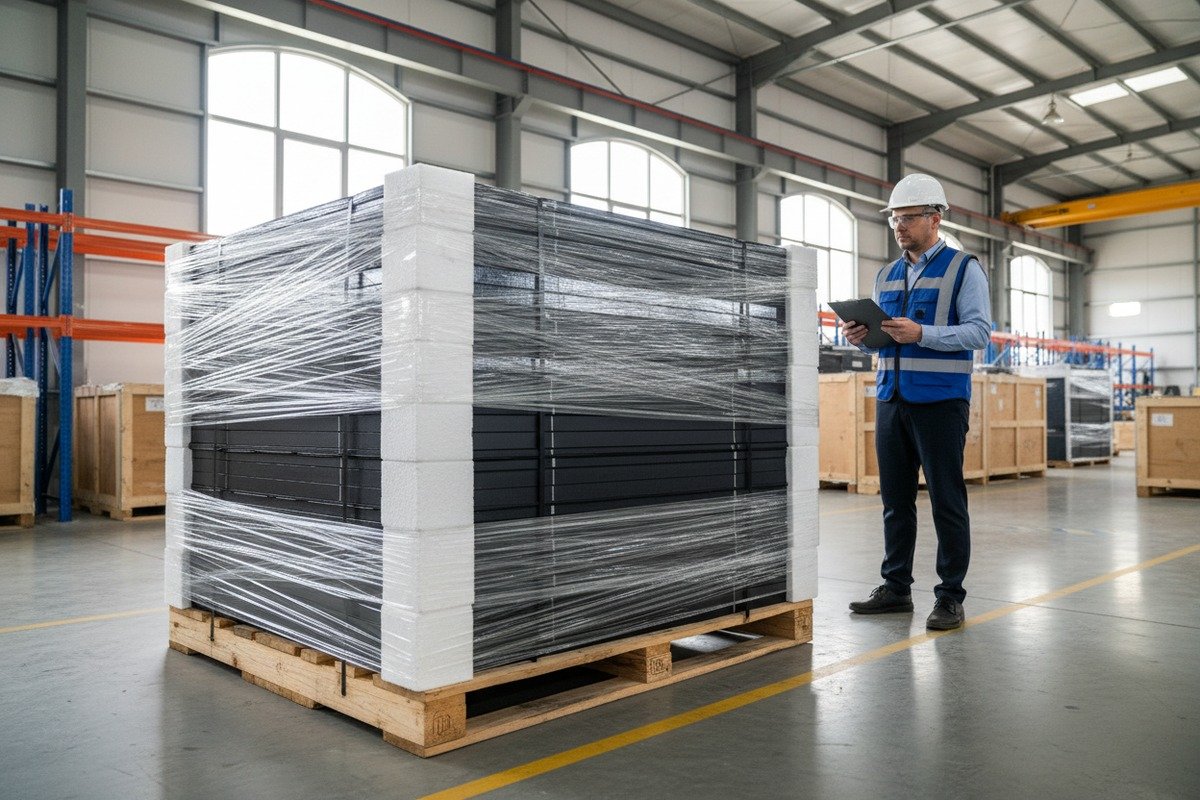
Every year, we see containers arrive at European ports with thousands of dollars in shattered solar shingles inside IPPC-certified wood materials 1. The damage is preventable, but only if you ask the right questions before your order ships. sea freight packaging 2
To request professional sea freight packaging for solar roof shingles, specify reinforced pallets, foam corner protectors, anti-vibration inserts, moisture barriers, and desiccants in your purchase order. Include detailed packaging clauses in your RFQ, demand IPPC-certified wood materials, and require photographic proof of container loading and bracing before shipment departure.
This guide walks you through exactly what to request from your supplier, what to write in your RFQ, and how to verify everything before your solar shingles leave the factory gate. Let’s break it down section by section.
What specific packaging standards should I demand to prevent glass breakage during long-distance sea freight?
Over two decades of shipping solar roof tiles from our production facility, we have learned that glass breakage is the single most expensive problem buyers face. One poorly packed pallet can ruin an entire project timeline.
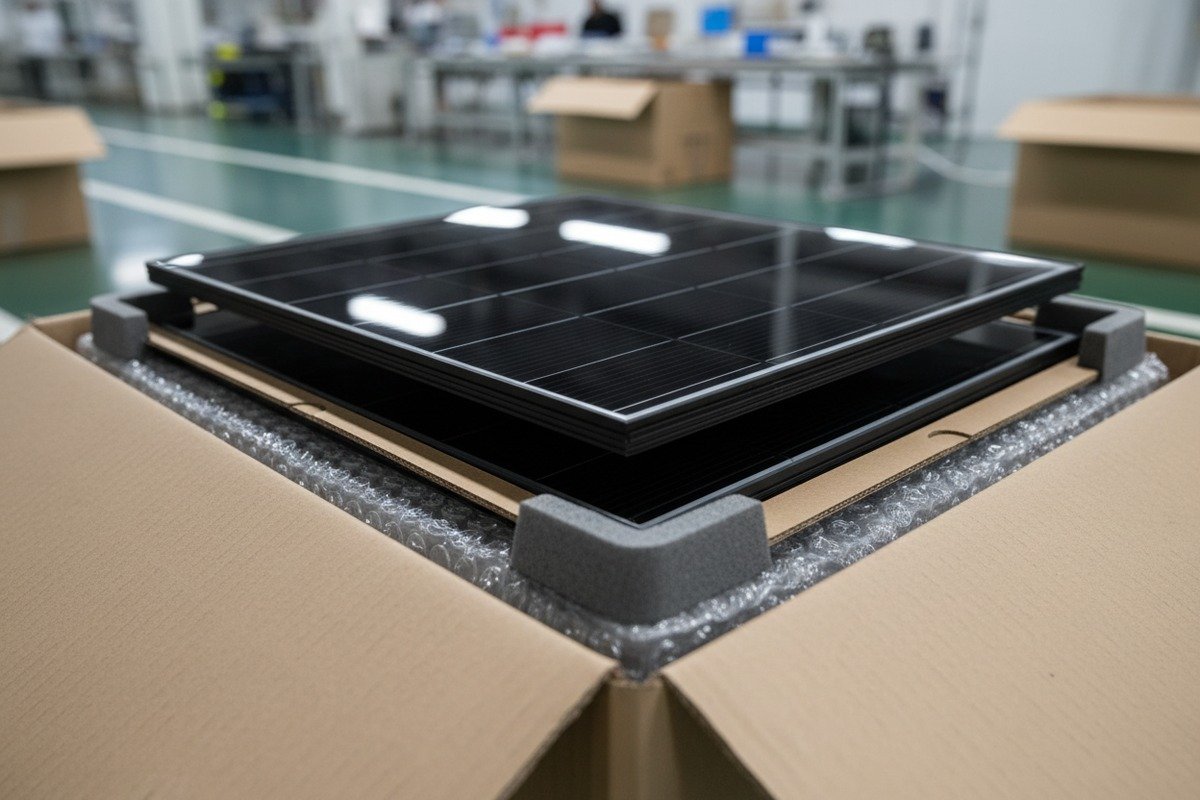
Demand multi-layer packaging that includes foam corner protectors, cardboard separators between each shingle, anti-static bubble wrap, snug-fit cartons, and rigid outer crating. Each layer serves a distinct purpose: absorbing shock, preventing surface scratching, and distributing pressure evenly across the glass surface.
Why Standard Packaging Fails for Solar Shingles
Solar roof shingles 3 are not ordinary building materials. They combine the fragility of photovoltaic glass 4 — often just 3.2mm thick — with the weight and bulk of roofing products. Standard cardboard boxes used for regular shingles cannot handle the vibration and G-forces of a 30-day ocean voyage. The glass surface is vulnerable to pressure points, micro-cracks, and scratching. A micro-crack invisible at the port can expand over months and cause cell degradation, leading to warranty claims years later.
The Five-Layer Protection System
Our engineering team developed a five-layer system after years of trial and feedback from European distributors. Here is how it works:
| Layer | Material | Function |
|---|---|---|
| Layer 1 (Inner) | Anti-static bubble wrap or EPE foam sheet | Prevents surface scratching and static discharge |
| Layer 2 | Cardboard separator between each shingle | Stops glass-to-glass contact under vibration |
| Layer 3 | Foam corner protectors (EVA or EPE) | Absorbs edge impact during handling |
| Layer 4 | Snug-fit corrugated carton | Eliminates movement inside the box |
| Layer 5 (Outer) | Rigid wooden crate or reinforced pallet wrap | Provides structural integrity for stacking |
Critical Dimensions and Fit
A common mistake is using oversized boxes. When shingles shift inside a carton, they collide and crack. Always specify that the inner carton dimensions must match the product dimensions within a 5mm tolerance. Void-fill materials like expanding foam or corrugated inserts should fill any remaining gap.
Handling Labels and Indicators
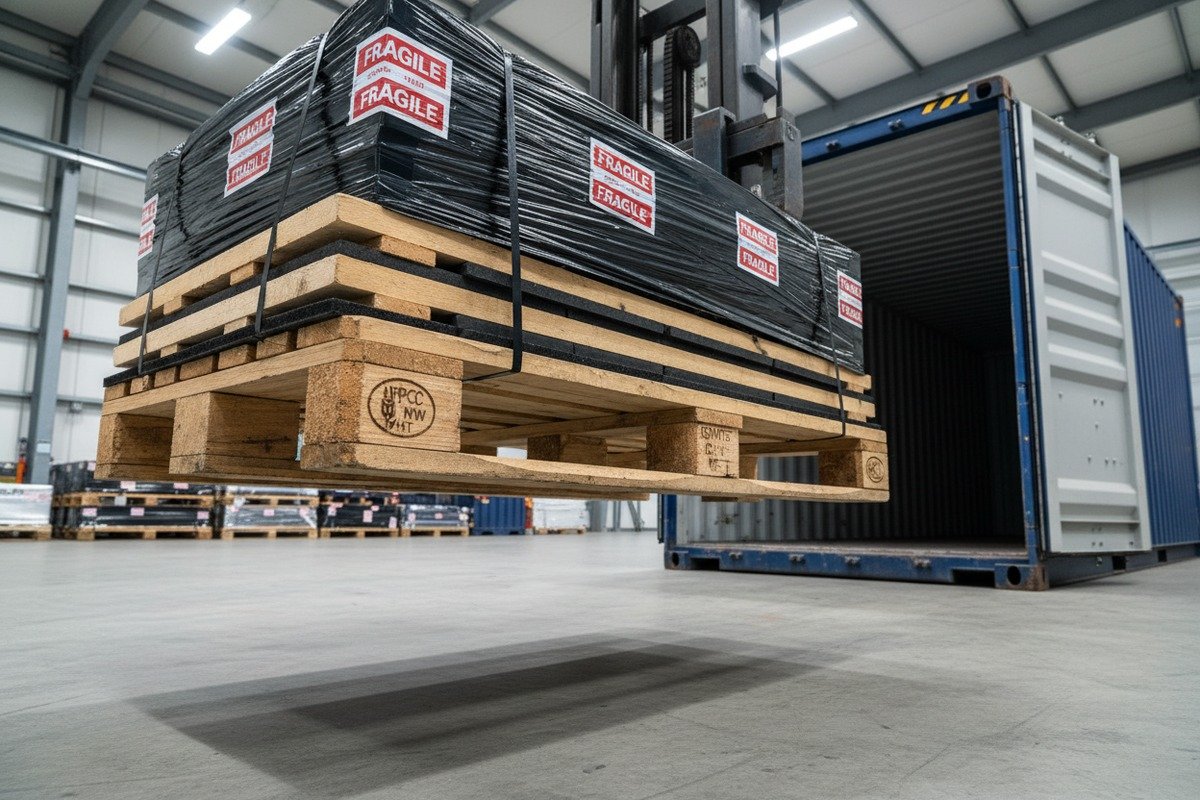
Require your supplier to attach "Fragile," "This Side Up," and "Do Not Stack Beyond X Layers" labels in English and the destination language. Go further by requesting ShockWatch or tilt indicators on each pallet. These small devices change color if the pallet experiences excessive impact or tilting. They cost very little but create accountability at every handling point — factory, port, vessel, and destination warehouse.
Testing Before Shipping
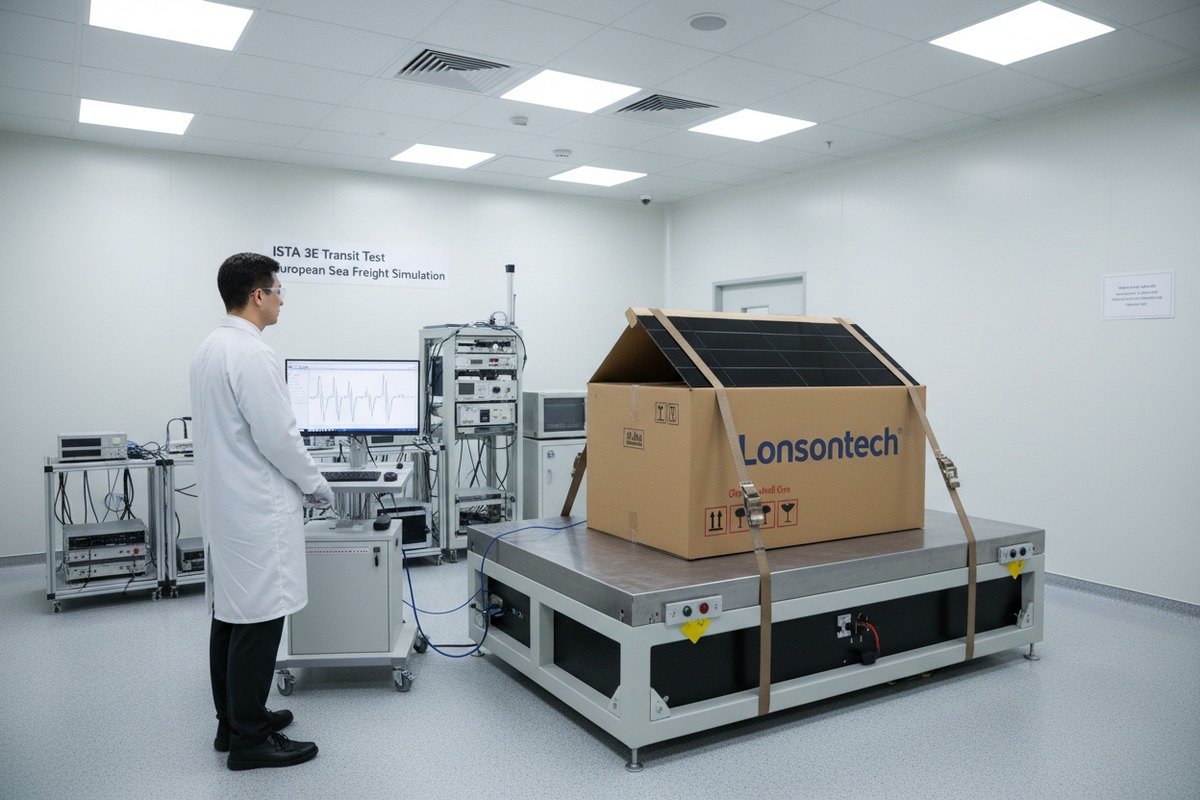
Ask your supplier if they perform drop tests, vibration simulation, or compression tests on their packaging. At our facility, we run ISTA 3E transit simulation tests 5 for ocean freight, which replicate the vibration profile of a container ship over a 30-day voyage. If your supplier cannot show test reports, that is a red flag.
How can I ensure my supplier uses reinforced pallets and anti-vibration materials for my solar shingle order?
When we first started exporting to France and Germany, we quickly discovered that a beautiful product means nothing if it arrives on a broken pallet. The pallet is the foundation of your entire shipment's safety.
Ensure reinforced pallets by specifying IPPC/ISPM15-certified hardwood pallets rated for your shipment's gross weight, requiring anti-vibration pads between pallet layers, and including a packaging approval clause in your purchase contract that grants you the right to inspect or reject non-compliant packaging before loading.
Pallet Specifications You Must Write Into Your Contract
Do not assume your supplier knows what "good packaging" means. Write it out. Here are the key specifications:
- Wood type: Hardwood (pine or plywood), not recycled softwood that splinters under load.
- Treatment: ISPM15 heat-treated 6 and stamped with the IPPC logo. This is mandatory for export to the EU and most countries.
- Load rating: The pallet must support at least 1.5 times the gross weight of the loaded shingles. If your pallet weighs 800 kg loaded, the pallet rating should be 1,200 kg minimum.
- Dimensions: Pallets should not allow product overhang. Overhanging edges are the first thing to get hit by forklifts.
- Runner style: Four-way entry for easy handling at ports.
Anti-Vibration Materials Explained
Ocean containers experience constant low-frequency vibration from the ship's engine and wave action. Over 25–40 days, this vibration is relentless. Standard packaging ignores it. Here is what to request:
| Anti-Vibration Material | Best Use Case | Approximate Cost Impact |
|---|---|---|
| EVA foam pads (under pallet) | Isolates pallet from container floor vibration | Low — adds $2–5 per pallet |
| Rubber anti-vibration mats | Heavy pallets over 500 kg | Moderate — adds $5–10 per pallet |
| Air suspension cushions | High-value or ultra-fragile orders | Higher — adds $10–20 per pallet |
| Corrugated cardboard interlayers | Between stacked rows of shingles | Very low — under $1 per layer |
How to Verify Compliance Before Loading
Trust but verify. Include these steps in your process:
- Pre-shipment inspection (PSI): Hire a third-party inspection company 7 like SGS, Bureau Veritas, or TUV to check packaging at the factory before the container is loaded. They will verify pallet quality, material compliance, and labeling.
- Photo and video documentation: Require your supplier to send timestamped photos of every pallet before and during container loading. At our factory, we send a complete photo set to every customer as standard practice.
- Packaging approval sample: For first orders, ask the supplier to ship one sample pallet before the full production run. Inspect it. If it does not meet your standard, reject it and request changes before mass production begins.
- Contractual penalty clause: Include a clause that states the supplier bears full financial responsibility for damage caused by non-compliant packaging. This motivates compliance far more than verbal agreements.
Specialized Pallet Options for Solar Products
Some suppliers now offer pallets designed specifically for solar modules, such as the Solster pallet system. These feature integrated edge protectors, stackable frames, and modular sizing. They cost more upfront but reduce damage rates significantly. Ask your supplier if they use or can source these. If not, the reinforced hardwood pallet with EVA foam remains the most cost-effective reliable option.
What details should I include in my RFQ to guarantee my solar tiles are protected against moisture and salt spray?
Moisture is the silent killer in sea freight. During our early export years, we received complaints about foggy glass surfaces and corroded junction boxes — all caused by condensation inside containers that nobody anticipated.
Your RFQ should explicitly require vapor barrier bags or aluminum foil wrapping around each pallet, silica gel desiccant packs rated for the container volume and transit duration, sealed polyethylene sheeting over all cartons, and a moisture indicator card inside each pallet to verify conditions upon arrival.
Understanding the Moisture Threat
A standard 40-foot shipping container can accumulate up to 8–10 liters of condensation during a voyage from China to Northern Europe. Temperature swings between day and night cause "container rain" — water droplets that form on the container ceiling and drip onto your cargo. Salt spray from ocean air accelerates corrosion of metal connectors, junction boxes, and frame edges. For solar roof shingles with integrated electrical components, moisture and salt create real performance risks.
What to Specify in Your RFQ Document
Here is a checklist of moisture protection items to include in your RFQ:
| RFQ Line Item | Specification Detail | Why It Matters |
|---|---|---|
| Vapor barrier bags | Aluminum-laminated polyethylene, sealed with heat press | Blocks moisture penetration at the pallet level |
| Desiccant packs | Calcium chloride type, minimum 1 kg per cubic meter of container space | Absorbs airborne moisture inside the container |
| Polyethylene sheeting | 150-micron thickness minimum, draped over all cartons before strapping | Extra rain barrier against container condensation drip |
| Moisture indicator cards | Placed inside at least 2 pallets per container, visible upon opening | Provides proof of moisture exposure for insurance claims |
| Anti-corrosion VCI paper | Wrapped around metal junction boxes and connectors | Prevents salt spray corrosion on electrical components |
| Container condition requirement | Dry, clean, no holes, no previous chemical cargo residue | Eliminates contamination and pre-existing moisture sources |
Writing Clear RFQ Language
Vague RFQ language leads to vague results. Instead of writing "Please ensure moisture protection," write this:
"All pallets shall be wrapped in aluminum-laminated vapor barrier bags, heat-sealed on all edges. Each container shall include a minimum of 10 strips of calcium chloride desiccant (1 kg each) hung from container walls. A humidity indicator card (range 10%–60%) shall be placed inside pallets #1 and #10 for verification at destination."
This level of detail leaves no room for interpretation. It also gives you legal standing if the supplier fails to comply.
Salt Spray and Coastal Storage
If your destination port involves extended dwell time in a coastal warehouse, the salt spray risk continues after the container is opened. Discuss with your freight forwarder whether your containers will be stored outdoors at the port. If so, request that the container doors face away from prevailing ocean winds, or arrange for immediate transfer to an indoor facility. Our logistics team coordinates DDP deliveries specifically to minimize port dwell time for this reason.
Desiccant Calculation Tips
Many suppliers throw in a few small desiccant sachets and call it done. This is not enough. The rule of thumb for calcium chloride desiccants 8 is 1 kg per cubic meter of container volume for transit durations over 20 days. A 40-foot container has roughly 67 cubic meters of internal volume. Even half-loaded, you need at least 15–20 kg of desiccant strips distributed evenly along the container walls. Specify this in your RFQ.
How do I verify that the container loading and bracing methods will minimize my risk of damage during transit?
In our experience shipping thousands of containers to Europe, we have found that even perfectly packaged pallets get destroyed by poor loading. A loose container is a wrecking ball in slow motion — pallets shift, collide, and topple over 30 days of ocean swells.
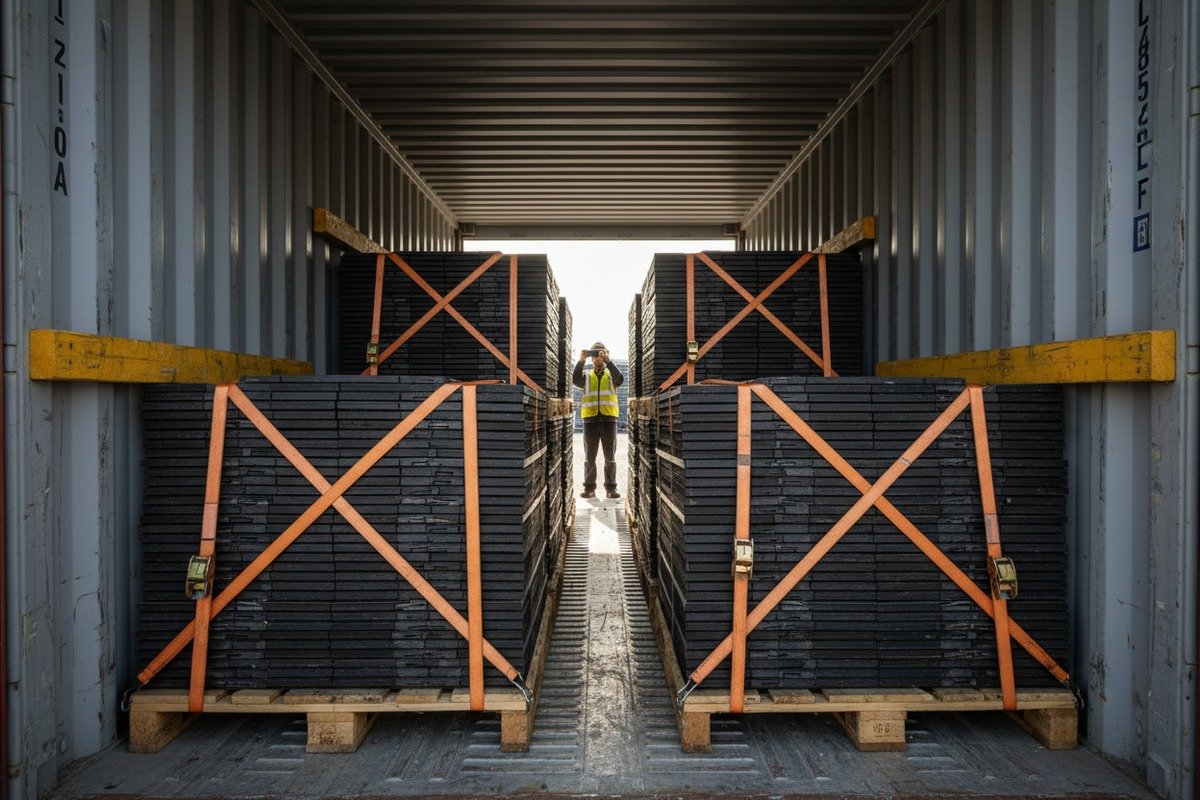
Verify container loading by requiring a detailed loading plan before shipment, mandating airbag dunnage and cross-bracing between pallets, insisting on timestamped loading photos from multiple angles, and including a clause that holds the supplier responsible for any damage traceable to improper container loading or bracing.
The Loading Plan: Your First Line of Defense
Before a single pallet enters the container, your supplier should provide a loading plan. This is a diagram showing exactly where each pallet will sit, how they will be oriented, and where bracing materials will be placed. A good loading plan addresses:
- Weight distribution: Heavier pallets go on the bottom and near the container doors to lower the center of gravity.
- Gap elimination: Every void space between pallets and container walls must be filled with airbags, foam blocks 9, or wooden bracing.
- Stacking limits: Solar shingle pallets should not exceed the compression rating of the bottom cartons. Two-high stacking is common, but three-high requires reinforced crating.
Bracing Materials and Methods
| Bracing Method | Description | Best For |
|---|---|---|
| Inflatable dunnage airbags | Placed between pallets and walls, inflated after loading | Filling large voids (30 cm+) between pallets and container walls |
| Wooden cross-bracing | Timber bars nailed or screwed across pallet rows | Preventing forward-backward shifting during sudden braking |
| Ratchet straps with anchor points | Heavy-duty straps attached to container lashing rings | Securing tall or top-heavy pallets against tipping |
| Foam edge fillers | Dense foam blocks cut to fill small gaps | Eliminating minor voids (5–15 cm) between pallet rows |
| Anti-slip mats | Rubber or textured paper placed under pallets | Preventing pallets from sliding on the container floor |
Vertical vs. Horizontal Packing
Recent industry research shows that packing solar modules vertically — standing up rather than lying flat — increases container space utilization by approximately 5% and loading power by 10%. This can save around US$0.003 per watt on maritime freight costs. For solar roof shingles, vertical packing also reduces the risk of compression damage from stacking. However, vertical packing requires stronger bracing because the center of gravity is higher. Discuss this option with your supplier and freight forwarder. Our production team can configure pallets for either orientation based on the buyer's preference.
Photo and Video Verification Protocol
Require your supplier to document the loading process with timestamped photos at these stages:
- Empty container inspection (interior condition, floor, ceiling, doors)
- First row of pallets loaded
- Bracing installed between first and second rows
- Container half-loaded
- All pallets loaded, before final bracing
- Final bracing and airbags installed
- Container doors closed and sealed (seal number visible)
At our facility, we also offer live video calls during loading for high-value orders. This gives buyers real-time oversight without needing to send an inspector to China.
Smart Monitoring Devices
Consider requesting IoT-enabled monitoring devices placed inside the container. These battery-powered sensors record temperature, humidity, shock events, and tilt angles throughout the voyage. The data downloads via Bluetooth or cellular connection at the destination. This is not a luxury — it is a powerful tool for insurance claims and supplier accountability. If a damage event occurred at a specific GPS coordinate on Day 14, you know exactly who was responsible. The cost is typically $50–100 per device, which is negligible compared to a $10,000+ claim.
Insurance Alignment
Your packaging and loading specifications should mirror the requirements of your marine cargo insurance policy 10. Many insurers require specific packaging standards as a condition of coverage. If your pallets are not ISPM15-certified, or if bracing is absent, the insurer can deny your claim. Before finalizing your RFQ, share your packaging specifications with your insurance broker and confirm they meet policy requirements. Specialized solar equipment coverage can reach up to $1,000,000 per shipment — but only if the packaging complies.
Conclusion
Protecting solar roof shingles during sea freight requires specific, written packaging demands — not vague requests. Define every layer, material, and method in your RFQ. Verify compliance before loading. Your shipment's safety starts with your specifications.
Footnotes
1. Explains the international standard for regulating wood packaging materials. ↩︎
2. Provides official guidelines for cargo securing and packing in maritime transport. ↩︎
3. Provides a comprehensive definition and overview of solar shingles. ↩︎
4. Explains the properties and applications of glass in solar technology. ↩︎
5. Describes the purpose and procedures of the ISTA 3E packaging test. ↩︎
6. Details the specific requirements for heat treatment under ISPM15. ↩︎
7. Explains the role and benefits of third-party inspection services. ↩︎
8. Explains the properties and applications of calcium chloride as a desiccant. ↩︎
9. Describes how inflatable dunnage bags secure cargo during transit. ↩︎
10. Provides a comprehensive overview of marine cargo insurance. ↩︎