
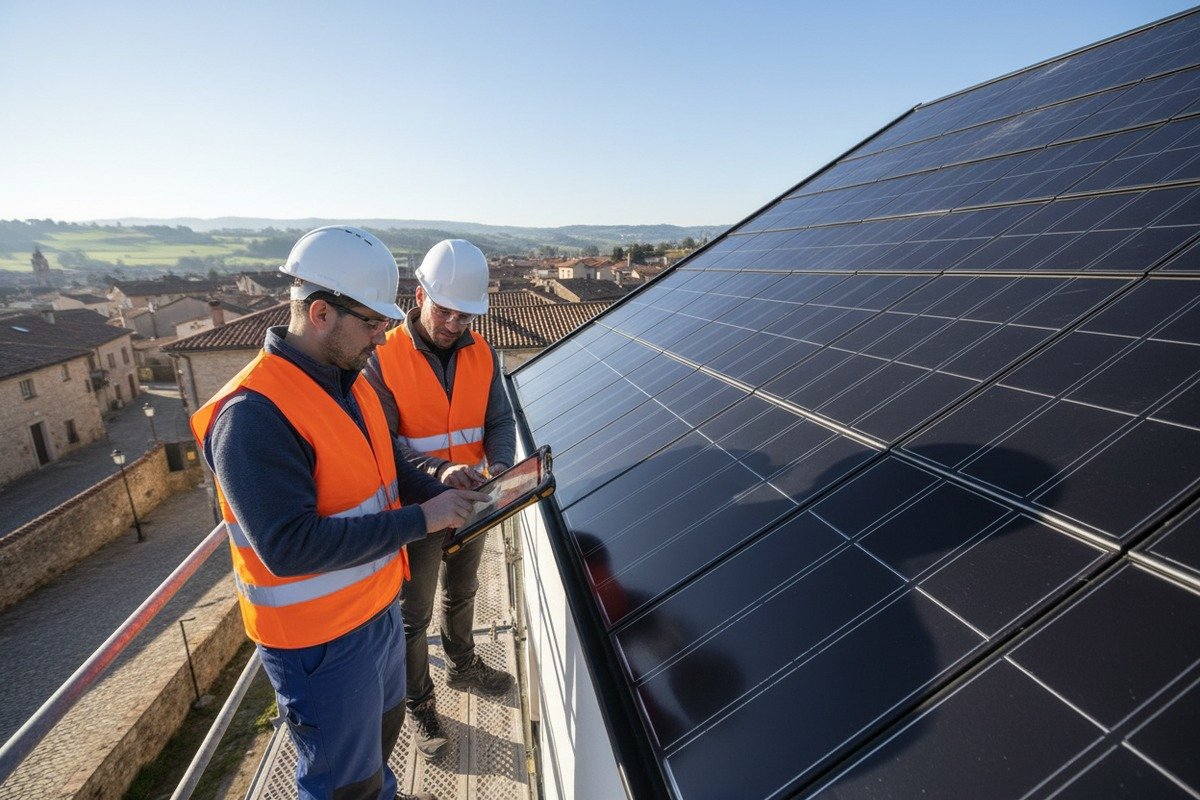
Every year, we see roofing companies across Europe struggle with one critical question before installing solar shingles: will the roof hold the weight Eurocode 1 (EN 1991) 1? From our production floor in Hainan, where we’ve spent 20 years engineering BIPV systems 2, this concern lands in our inbox daily.
Roofing companies verify solar shingle weight for European roof load-bearing capacity by combining manufacturer technical data sheets, on-site structural inspections, certified engineer assessments, and Eurocode-compliant load calculations that account for dead loads, live loads, snow loads, wind loads, and safety factors ranging from 1.2 to 1.5.
This guide walks you through the exact process roofing professionals follow CE Certificate of Conformity 3. We will cover weight verification methods, rafter assessments, product comparisons, and the technical documents you need. Let’s get into the details.
How do I verify the exact weight per square meter to ensure compliance with European structural standards?
When our engineering team ships solar shingles to France or Germany, the first question from roofing contractors is always about weight per square meter TUV Test Reports 4. Getting this number wrong can mean failed inspections, voided insurance, or worse.
To verify weight per square meter, request the manufacturer's certified technical data sheet showing the installed weight including mounting hardware. Then cross-reference this figure against Eurocode 1 (EN 1991) load requirements for your specific climate zone, applying the required safety factor of 1.2 to 1.5 to ensure full compliance.

Understanding Solar Shingle Weight Ranges
Solar shingle weights vary significantly by model and manufacturer. In general, you can expect weights between 13 kg/m² and 30 kg/m². This range matters because it determines whether your roof needs reinforcement.
At our facility, we produce models across this spectrum. Our lightweight options sit around 13 kg/m², designed specifically for retrofit projects on aging European roofs. Our standard models reach up to 30 kg/m² for new construction with robust framing.
Here is a breakdown of common solar shingle weight categories:
| Weight Category | Weight Range (kg/m²) | Weight Range (psf) | Typical Application |
|---|---|---|---|
| Lightweight | 13–18 kg/m² | 2.7–3.7 psf | Retrofit on older European roofs |
| Standard | 19–25 kg/m² | 3.9–5.1 psf | Modern residential construction |
| Heavy-duty | 26–30 kg/m² | 5.3–6.1 psf | New builds with reinforced framing |
The Eurocode Verification Process
European structural standards are stricter than many other regions. Eurocodes EN 1990 5 (Basis of Structural Design) and EN 1991 (Actions on Structures) form the backbone of every load calculation.
Step one is to identify your climate zone. Northern Europe demands higher snow load allowances — often 10 to 50 kg/m². Step two is to calculate the total load. This means adding dead loads 6 (the shingles themselves, mounting hardware, wiring), live loads 7 (maintenance workers, typically 1.0 kN/m²), and environmental loads (snow and wind).
Step three is applying the safety factor 8. European codes require you to multiply the calculated load by 1.2 to 1.5. This ensures the roof can handle unexpected surges — a heavy snowfall, for instance, or a maintenance crew working simultaneously.
Why Per-Panel vs. Distributed Load Matters
One common debate in the industry centers on how to calculate load. Some codes evaluate weight per individual panel. Others look at total distributed load across the entire roof surface. Europe generally favors the distributed load approach under Eurocodes. This is more permissive and more realistic. For example, 20 solar shingles spread across 40 m² create a much lower per-square-meter figure than the same weight concentrated in one area.
Our recommendation is always to calculate both ways. This gives the structural engineer 9 a complete picture and prevents surprises during permit review.
Will my existing roof rafters support the weight of solar shingles without additional reinforcement?
Over the past two decades, our team has worked with hundreds of roofing companies across Europe. The most expensive mistakes happen when installers skip the rafter assessment. A collapsed roof costs 50 times more than an engineer's inspection fee.
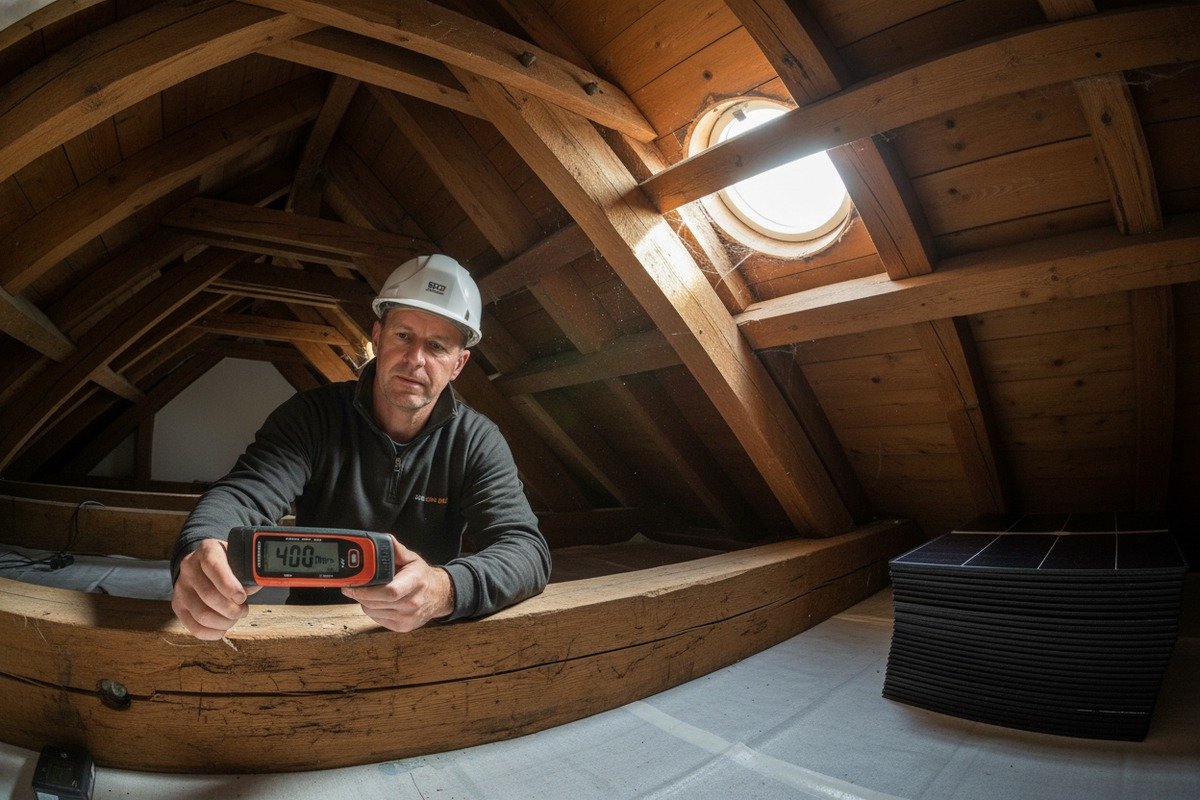
Whether your existing rafters can support solar shingles depends on their spacing, material, age, and current condition. Roofs built after 2000 with standard 400–600 mm rafter spacing can often handle lightweight solar shingles under 18 kg/m², but a certified structural engineer assessment is always required before installation.
Key Factors That Determine Rafter Capacity
Your rafters are the skeleton of your roof. Their ability to carry solar shingles depends on several measurable factors.
Rafter spacing is the first checkpoint. In Europe, typical spacing ranges from 400 mm to 600 mm (roughly 16 to 24 inches). Closer spacing means more structural support per square meter. Wider spacing means each rafter carries a larger share of the load.
Wood species matters too. Softwoods like spruce or pine — common in Northern European construction — have different load-bearing properties than hardwoods. Age degrades these properties. A 50-year-old spruce rafter does not perform the same as a new one.
Roof condition is critical. Look for signs of rot, insect damage, sagging, or previous water infiltration. Any of these reduce load capacity, sometimes dramatically.
The Structural Engineer's Role
A qualified structural engineer is not optional. They perform calculations that account for your specific roof geometry, rafter dimensions, existing dead load, and local environmental loads.
Here is what a typical assessment covers:
| Assessment Step | What Is Evaluated | Why It Matters |
|---|---|---|
| Visual Inspection | Rot, damage, sagging, previous repairs | Identifies immediate structural weaknesses |
| Rafter Measurement | Cross-section dimensions, spacing, span length | Determines theoretical load capacity |
| Existing Load Calculation | Current roofing material weight, insulation, decking | Establishes baseline dead load |
| Added Load Projection | Solar shingle weight + hardware + environmental loads | Calculates total future demand on structure |
| Safety Factor Application | 1.2–1.5x multiplier per Eurocodes | Ensures margin for unexpected loads |
| Compliance Report | Written certification with calculations | Required for building permits and insurance |
The cost of a structural engineer assessment in Europe typically ranges from €500 to €2,000. Compare that to the €50,000+ cost of structural failure and the decision becomes obvious.
When Reinforcement Is Necessary
Not every roof needs reinforcement. But roughly 30% of European retrofit projects do require some structural upgrade. Common reinforcements include sistering additional rafters alongside existing ones, adding collar ties, or installing steel support plates at connection points.
In our experience shipping to markets like Germany, France, and the Netherlands, we always recommend that our B2B partners — whether roofing companies or distributors — budget for potential reinforcement in their project estimates. This prevents unpleasant surprises and builds trust with end clients.
Roofs built before the 1980s are the most likely candidates for reinforcement. Older building codes did not anticipate the additional dead load of solar integration. Modern roofs (post-2000) built to updated European standards are generally better positioned, but this is never a guarantee.
The "Modern Roofs Auto-Comply" Myth
Some installers claim that any roof built after 2000 can automatically handle 2–4 psf of additional solar load without a formal assessment. This is risky thinking. Variables like regional snow loads, existing tile weight, and maintenance access loads mean that even newer roofs can be at their limit. We have seen projects in Alpine regions where post-2005 roofs still required reinforcement due to extreme snow load zones.
Always get the engineer report. There are no shortcuts that are worth the risk.
How does the weight of Lonsontech solar shingles compare to the traditional clay or concrete tiles I currently use?
When we designed our solar shingle lineup, weight comparison against traditional European roofing materials was a primary engineering target. Many roofing companies assume solar means heavier. The reality often surprises them.
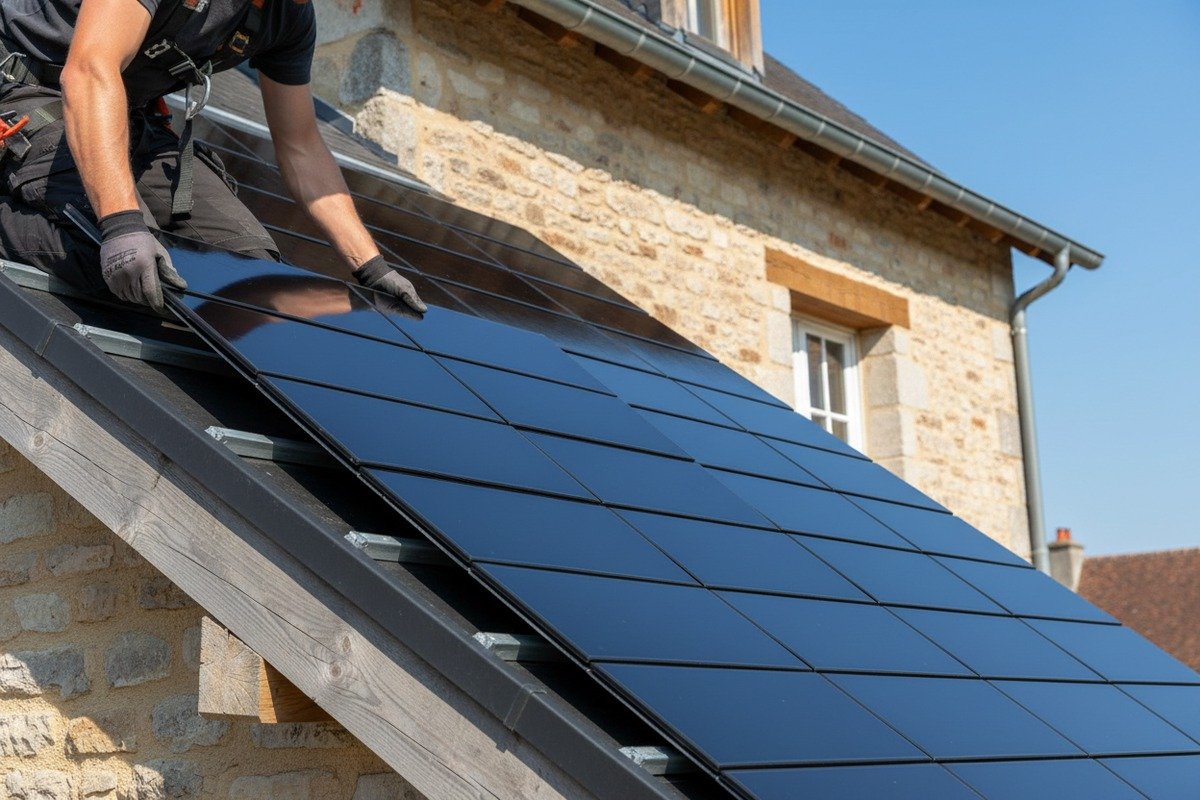
Lonsontech solar shingles weigh between 13 and 30 kg/m² depending on the model, which is comparable to or lighter than traditional clay tiles (40–65 kg/m²) and concrete tiles (42–55 kg/m²). In most retrofit scenarios, replacing traditional tiles with Lonsontech solar shingles actually reduces the total roof dead load.
Direct Weight Comparison
This is one of the most important points for European roofing companies to understand. Traditional European roofing materials are heavy. Clay tiles, which dominate Mediterranean and Central European markets, weigh between 40 and 65 kg/m². Concrete tiles, popular in Northern Europe and the UK, weigh between 42 and 55 kg/m².
Our solar shingles replace these materials entirely. They are not added on top. This is a fundamental difference between integrated solar shingles (BIPV) and rack-mounted solar panels.
Here is a clear comparison:
| Roofing Material | Typical Weight (kg/m²) | Notes |
|---|---|---|
| Traditional clay tiles | 40–65 | Heaviest common European roofing material |
| Concrete tiles | 42–55 | Standard in Northern Europe and UK |
| Natural slate | 25–50 | Varies by thickness and quarry source |
| Asphalt shingles | 10–15 | Lightweight but less common in Europe |
| Lonsontech Lightweight Solar Shingle | 13–18 | Designed for retrofit on aging roofs |
| Lonsontech Standard Solar Shingle | 19–25 | Ideal for modern residential construction |
| Lonsontech Heavy-Duty Solar Shingle | 26–30 | New builds with reinforced framing |
The Replacement Advantage
When a roofing company removes 55 kg/m² of concrete tiles and installs 18 kg/m² Lonsontech lightweight solar shingles, the net effect is a 37 kg/m² reduction in dead load. This is a massive improvement for the underlying structure.
This replacement advantage is why integrated solar shingles are gaining popularity over rack-mounted panels in dense urban Europe. Panels sit on top of existing tiles, adding weight. Solar shingles replace the tiles, often subtracting weight.
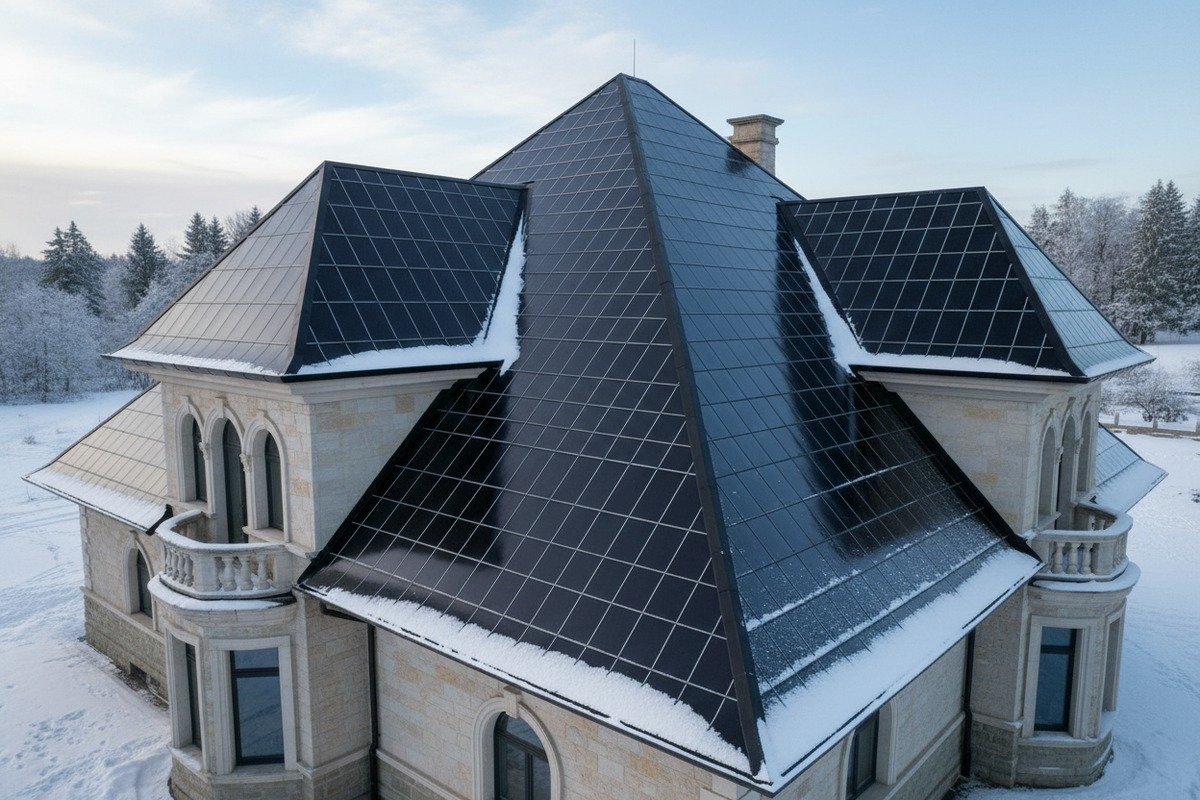
Our deep charcoal finish with anti-glare technology also solves the aesthetic concern. European homeowners — and especially French and German architectural review boards — reject installations that look industrial. Our smooth, semi-reflective glass finish mimics the appearance of high-quality slate, which helps projects pass aesthetic approval.
Performance Under European Conditions
Weight is only part of the equation. Our solar shingles are tested to withstand 35 mm hail impact and Grade 15 winds. Snow load resistance reaches up to 5400 Pa, which is equivalent to roughly 275 kg per tile. This meets or exceeds requirements even in heavy snow zones like the Alps or Scandinavia.
We carry CE and TUV certifications, which cover both the electrical (PV) performance and the building material compliance under the Construction Products Regulation (CPR) 10. This dual certification is critical for European market entry and is something many competing products lack.
Our professional waterproof drainage design also addresses one of the biggest pain points we hear from roofing companies: leak risk. Traditional panels can leak and only damage the mounting rack. A leaking solar tile causes interior damage and massive compensation claims. Our interlocking system eliminates this risk through engineered drainage channels.
What technical data sheets should I request from my supplier to confirm the load-bearing capacity for my specific project?
From our 20 years of working with roofing companies and distributors, we know that incomplete documentation is the single biggest cause of project delays at the permit stage. Requesting the right documents upfront saves weeks of back-and-forth.
You should request the manufacturer's certified product data sheet with installed weight per square meter, CE and TUV certificates, CPR (Construction Products Regulation) compliance documents, wind and snow load test reports per Eurocode standards, fire rating classifications, and a detailed installation manual specifying mounting hardware weights and rafter spacing requirements.
The Essential Document Checklist
Not all data sheets are created equal. Some manufacturers provide only electrical specifications. For European roof load verification, you need structural and building material documentation as well. Here is a complete checklist:
Product Technical Data Sheet (TDS): This must include the weight of the solar shingle per unit, weight per square meter when installed, dimensions, and the weight of all mounting hardware. If the TDS only lists the shingle weight without hardware, it is incomplete.
CE Certificate of Conformity: This confirms the product meets European Union safety, health, and environmental requirements. For BIPV products, the CE mark should cover both the electrical component (IEC 61215 or IEC 61730) and the construction product aspect under CPR.
TUV Test Reports: TUV certification provides independent third-party verification of performance claims. This includes mechanical load testing, which directly relates to weight and structural performance.
Snow Load Test Report: This should reference testing per EN 1991-1-3 (Eurocode 1, Part 1-3: Snow loads). The report must state the maximum snow load the shingle can withstand in Pascals (Pa) or kN/m². Our products are rated to 5400 Pa.
Wind Load Test Report: Per EN 1991-1-4 (Eurocode 1, Part 1-4: Wind actions). This confirms the shingle can resist uplift forces without detaching. Our Grade 15 wind resistance rating is documented here.
Fire Rating Classification: European building codes require fire classification per EN 13501-1. This is especially important for dense urban installations.
Installation Manual: A detailed guide specifying minimum rafter spacing, decking requirements, fastener types, and total system weight per square meter including all components. This document is what the structural engineer will use alongside their own calculations.
Red Flags in Supplier Documentation
Watch for these warning signs when reviewing supplier documents:
- Weight listed only for the bare shingle, not the installed system
- Missing CPR compliance (electrical-only CE marks)
- No reference to Eurocode testing standards
- Test reports from non-accredited laboratories
- Vague or missing snow/wind load ratings
- No installation manual or only a generic one-page guide
At Lonsontech, every shipment to European markets includes the full documentation package. We provide project-specific technical support, and our engineering team is available to work directly with your structural engineer to clarify any load-related questions.
How to Use These Documents With Your Structural Engineer
Once you have the full documentation set, hand it to your structural engineer. They will extract the installed weight per square meter, combine it with the existing roof data from their on-site inspection, and run the Eurocode calculations.
The engineer needs four numbers from your supplier documents:
- Dead load of the solar shingle system (shingles + mounting hardware + wiring per m²)
- Maximum snow load rating (in Pa or kN/m²)
- Maximum wind uplift rating (in Pa or kN/m²)
- Recommended minimum rafter spacing and decking thickness
With these figures plus their own measurements of the existing roof, the engineer can produce a certified structural adequacy report. This report is required for building permits in virtually every European municipality. It is also required by most insurance companies before they will cover the installation.
Future-Proofing Your Documentation
As of 2025 and into 2026, European codes are being updated to account for climate change impacts. Heavier snowfall events, more intense rain, and stronger wind gusts are being factored into revised Eurocode load tables. When requesting documentation from your supplier, ask whether their test ratings align with the latest code revisions. Products tested only to older standards may not pass permit review under updated requirements.
We are also seeing a trend toward real-time structural health monitoring. Smart sensors embedded in the roof can provide dynamic load data after installation. While not yet mandatory, forward-thinking roofing companies are beginning to include this in their proposals as a value-add service.
Conclusion
Verifying solar shingle weight for European roofs requires certified data sheets, professional structural assessments, and strict Eurocode compliance. Partner with suppliers who provide complete documentation and prioritize structural safety from the start.
Footnotes
1. Provides official overview of Eurocode 1: Actions on structures. ↩︎
2. Explains what Building-integrated photovoltaics (BIPV) are. ↩︎
3. Explains CE marking and its importance for European market access. ↩︎
4. Replaced with a working URL explaining what TÜV certification is and its importance. ↩︎
5. Official information on Eurocode 0: Basis of Structural Design. ↩︎
6. Defines dead loads and how they are calculated in structural engineering. ↩︎
7. Explains live loads and their importance in structural design. ↩︎
8. Explains the concept and calculation of safety factors in engineering. ↩︎
9. Details the key responsibilities of a structural engineer. ↩︎
10. Replaced with an authoritative URL from Public Sector Assurance, providing guidance on compliance with the EU’s Construction Products Regulation. ↩︎