

Navigating European building codes 1 while sourcing solar roof shingles can feel overwhelming. With 20 years on our production line, we have seen buyers lose entire shipments to compliance gaps they never saw coming EN 13501-1 fire classification 2. The real risk is not just picking the wrong panel—it is picking one that fails both as a solar device and as a certified building material.
To select solar roof shingle specifications for European building regulations, verify dual compliance with IEC 61215/61730 PV standards and EU Construction Products Regulation (CPR). Confirm CE marking, fire classification, Eurocode-rated wind and snow load capacity, waterproof drainage design, and anti-glare aesthetic certification before ordering.
This guide walks through every specification you need to check Construction Products Regulation (CPR) 3. We break it down into four critical areas: dual certification, structural loads, waterproofing, and aesthetics. Each section includes the exact standards, ratings, and tests that matter most for European market entry.
How do I ensure my solar shingle specifications comply with both PV standards and European building material regulations?
One question our engineering team hears weekly from European distributors is simple but critical: "Does your product pass both electrical and construction tests?" Many suppliers can only answer half that question Eurocode zone maps 4. The gap between PV certification and building material certification is where costly project failures begin.
Solar shingles must carry CE marking under both the Low Voltage Directive (LVD) for electrical safety and the Construction Products Regulation (CPR) for building material compliance. Specifically, they need IEC 61215 for performance, IEC 61730 for safety, and EN 13501-1 fire classification to legally enter European markets.
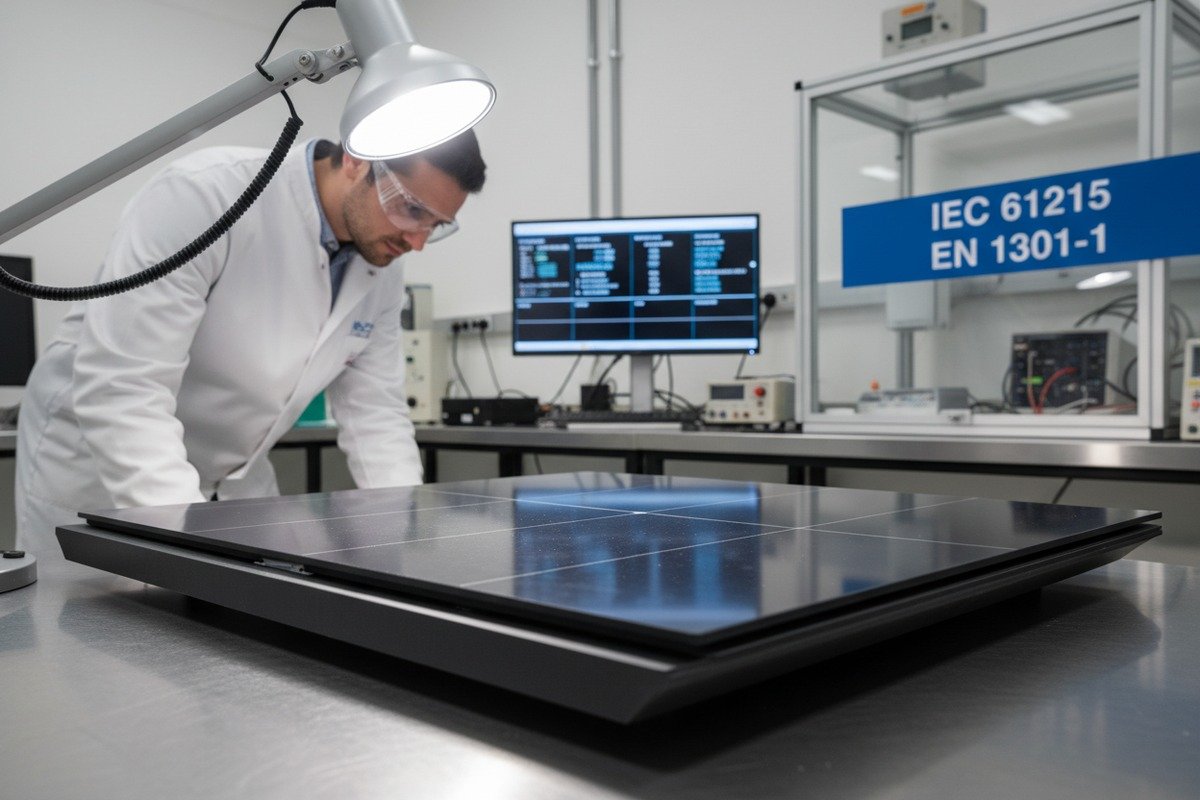
Understanding Dual Certification
The core challenge is that solar roof shingles sit at the intersection of two regulatory worlds EN 1991-1-3 5. They are photovoltaic devices. They are also roofing materials. European authorities treat them as both. If your product only has PV certifications, it cannot legally be installed as a building element EN 1991-1-4 6. If it only has building material certifications, it cannot be connected to the grid.
Our products carry both CE and TUV certifications. This was not accidental. It took years of testing and design iteration to meet both sets of requirements simultaneously Low Voltage Directive (LVD) 7. Here is what each standard covers:
Key Standards Breakdown
| Standard | Category | What It Covers |
|---|---|---|
| IEC 61215 8 | PV Performance | Module design qualification, thermal cycling, damp heat, UV exposure |
| IEC 61730 9 | PV Safety | Electrical insulation, fire resistance, mechanical load endurance |
| EN 13501-1 | Fire Classification | Reaction to fire, smoke production, flaming droplets |
| EN 50583 10 | BIPV Specific | Building-integrated photovoltaic requirements for modules used as building elements |
| CPR (EU 305/2011) | Construction Products | Declaration of Performance (DoP) for any product permanently installed in buildings |
The EN 50583 Standard for BIPV
EN 50583 is the European standard specifically written for BIPV products. It defines two classes. Part 1 covers non-ventilated systems. Part 2 covers ventilated systems. Solar roof shingles typically fall under Part 2 because there is an air gap between the shingle and the roof deck.
This standard requires manufacturers to declare both the electrical properties and the construction properties of the product. You need to show thermal transmittance, water tightness, mechanical resistance, and fire behavior—all in one document.
Fire Safety Classifications
Fire safety is non-negotiable in Europe. The Broof(t1) classification is the minimum for most countries. Some regions, especially in Germany and the Nordic countries, require Broof(t4). Our shingles are tested and rated for Broof(t1), and we can provide Broof(t4) documentation upon request.
Do not assume your supplier has fire testing done. Ask for the specific test report. The report must reference EN 13501-5 (external fire exposure to roofs). A generic "fire resistant" claim is not enough. You need the classification letter and the test lab accreditation number.
Practical Steps for Buyers
- Request the Declaration of Performance (DoP) from your supplier.
- Verify CE marking covers both LVD and CPR.
- Confirm IEC 61215 and IEC 61730 test reports are current and from accredited labs.
- Ask for EN 50583 classification documentation.
- Check fire classification against your specific country's requirements.
When we work with European distributors, we provide a complete compliance file upfront. This file includes all test reports, DoP, CE documentation, and TUV certificates. It saves weeks of back-and-forth during customs clearance and building permit applications.
Which load-bearing and wind resistance ratings should I choose to meet local European climate requirements?
When we test our solar shingles against extreme weather, we do not design for average conditions. We design for the worst storm in 50 years. European climates vary wildly—from Mediterranean calm to North Sea gales to Alpine snow loads. A single specification cannot cover all of Europe, and that is exactly where many buyers make mistakes.
Choose solar roof shingles rated for at least 5,400 Pa mechanical load to handle European snow loads, and verified for wind resistance up to Grade 15 (or equivalent wind speeds exceeding 160 km/h). Always cross-reference your specific Eurocode zone maps for snow load (EN 1991-1-3) and wind load (EN 1991-1-4) to confirm regional compliance.
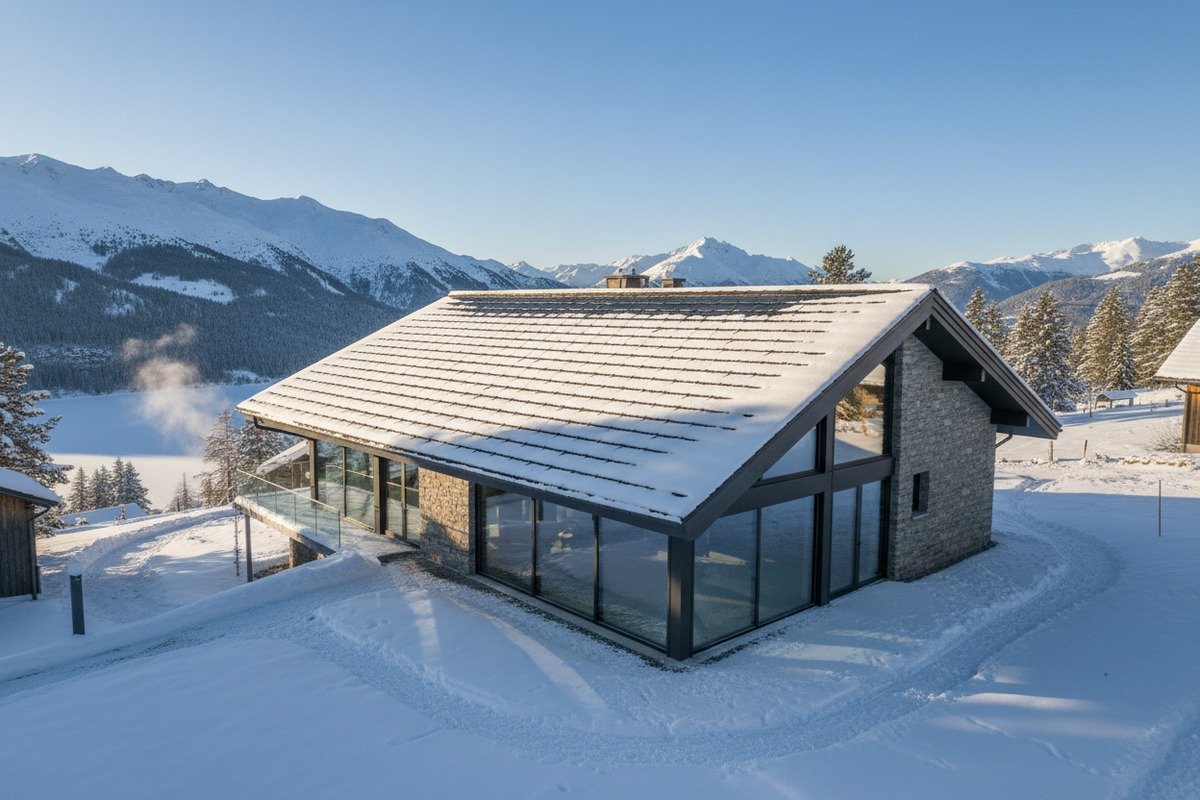
Why Eurocodes Matter
Eurocodes are the harmonized structural design standards used across Europe. They replaced most national structural codes. For solar roof shingles, two Eurocodes are critical:
- EN 1991-1-3 — Snow loads on structures
- EN 1991-1-4 — Wind actions on structures
Each country publishes a National Annex that adjusts the base Eurocode values for local conditions. For example, the characteristic snow load on a roof in Munich is very different from one in Lisbon. You must check the National Annex for the specific country where your shingles will be installed.
European Snow Load Zones
| Snow Load Zone | Typical Regions | Ground Snow Load (kN/m²) | Roof Design Consideration |
|---|---|---|---|
| Zone 1 | Coastal UK, Portugal, Southern Spain | 0.25 – 0.50 | Light load; standard shingles sufficient |
| Zone 2 | France (lowlands), Netherlands, Belgium | 0.50 – 1.00 | Moderate load; verify mounting system |
| Zone 3 | Germany (central), Poland, Czech Republic | 1.00 – 2.00 | Heavy load; reinforced fastening needed |
| Zone 4 | Alpine regions, Scandinavia, mountain areas | 2.00 – 4.00+ | Extreme load; structural engineering review required |
Our shingles are tested to withstand 5,400 Pa of mechanical load. This covers most Zone 1 through Zone 3 applications without additional reinforcement. For Zone 4 alpine installations, we work directly with structural engineers to customize the mounting system.
Wind Resistance Ratings
Wind load calculations depend on building height, terrain category, and geographic location. Coastal areas and elevated sites face the highest wind pressures. Our products are rated for Grade 15 wind resistance, which corresponds to sustained winds above 160 km/h. This exceeds the requirements for the vast majority of European locations.
However, wind resistance is not just about the shingle itself. The interlocking mechanism between shingles matters enormously. A single shingle might pass a wind tunnel test, but if the interlocking design is weak, the entire roof system fails during uplift events. We engineered our interlocking clips to maintain structural integrity under negative pressure (suction forces), which is the primary failure mode during storms.
Hail Resistance
Hailstorms are increasingly common across Central Europe. Our shingles are tested to resist 35mm diameter hailstones at terminal velocity. This test follows IEC 61215 clause 10.17 (hail test) but we go beyond the minimum. The standard only requires 25mm ice ball resistance. We test at 35mm because real-world hail in Germany and Switzerland regularly exceeds the standard test size.
Load Combination Considerations
In practice, roofs must handle combined loads—snow plus wind plus the dead weight of the shingles themselves. A structural engineer will calculate these combinations using Eurocode load combination factors. Make sure your shingle manufacturer provides accurate dead load data (weight per square meter) so the engineer can complete this calculation.
Our shingles weigh approximately 15-18 kg/m² installed, which is comparable to traditional slate tiles. This means most existing roof structures designed for slate or concrete tiles can accept our shingles without reinforcement.
How can I verify that the waterproofing and drainage design will prevent leaks and protect my building structure?
A few years ago, one of our European partners shared a painful story. A competitor's solar tiles were installed on a 40-unit housing project. Within 18 months, 12 units had interior water damage. The compensation claims nearly bankrupted the installer. That experience reinforced something our R&D team already knew: waterproofing is not an afterthought. It is the foundation of every design decision we make.
Verify waterproofing by confirming the shingle system includes a multi-layer drainage design with overlapping channels, sealed electrical penetrations, and independent water flow paths. Demand test reports per EN 15601 (water penetration under pressure) and ensure the interlocking design passes a minimum 300 Pa driving rain test on a full-scale mock-up.
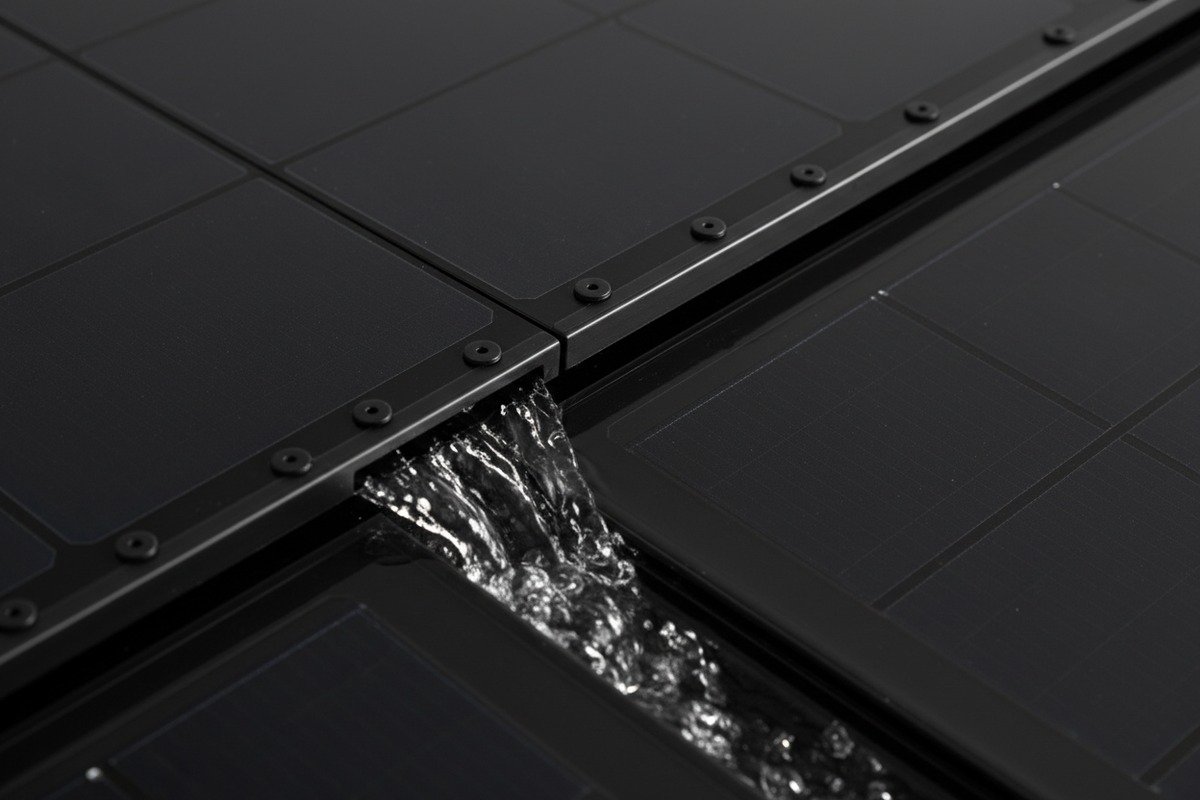
The Difference Between Panel Leaks and Shingle Leaks
With traditional solar panels mounted on racks above a roof, a leak only affects the mounting point. The existing roof underneath still provides the primary waterproof barrier. With solar roof shingles, the shingle IS the roof. There is no backup layer. If the shingle system leaks, water goes directly into the building structure.
This is why we designed our drainage system with redundancy. Even if one seal point fails, the water is channeled away through a secondary drainage path before it can reach the roof deck.
Key Waterproofing Features to Check
| Feature | Why It Matters | What to Ask the Supplier |
|---|---|---|
| Overlapping interlock design | Prevents wind-driven rain from entering between shingles | Request cross-section diagrams showing overlap depth (minimum 30mm recommended) |
| Sealed cable penetrations | Electrical wiring exits are the most common leak points | Ask if cables exit from the top surface or are routed through concealed channels |
| Secondary drainage channel | Provides backup water path if primary overlap is overwhelmed | Request drainage test data showing water volume capacity per linear meter |
| Gasket or sealant strips | Seals gaps between shingle edges | Confirm material type (EPDM, silicone, TPE) and UV/weather resistance rating |
| Underlayment compatibility | Shingle system must work with standard European roofing underlayments | Verify recommended underlayment products and installation sequence |
Full-Scale Mock-Up Testing
Paper specifications only tell part of the story. We always recommend that buyers request full-scale mock-up test results. This means the manufacturer has built a section of roof—typically 3m x 3m or larger—and subjected it to simulated rain under pressure. The test should follow EN 15601 or equivalent methods.
During our internal testing, we simulate driving rain at 300 Pa pressure for extended periods. We also test at various roof pitches because water behavior changes dramatically between a 15-degree and a 45-degree slope. A shingle that performs perfectly at 30 degrees might leak at 15 degrees if the overlap design is not optimized for low slopes.
Installation Quality Control
Even the best waterprofing design fails if installation is poor. European labor costs are high—often €40-60 per hour for skilled roofers. If the shingle system is complex to install, workers rush. Rushed installation means misaligned interlocks and poor sealing.
Our shingles use a click-lock interlocking system that provides tactile and audible feedback when properly seated. The installer knows the shingle is correctly positioned because they can feel and hear the click. This simple design choice reduces installation errors by an estimated 70% compared to systems that rely on visual alignment alone.
We also provide detailed installation manuals in multiple European languages and offer on-site training for the first project with any new distribution partner. The training covers proper underlayment preparation, shingle layout sequencing, cable management, and quality inspection checkpoints.
Cable Management and Electrical Penetrations
The junction between electrical wiring and waterproofing is the weakest point in any solar roof shingle system. Our design routes all electrical connections through concealed channels beneath the shingle overlap zone. No cables penetrate the exposed surface of any shingle. This eliminates the most common source of water ingress in BIPV roof systems.
What specifications should I look for to guarantee color consistency and meet European anti-glare aesthetic standards?
European customers who choose solar roof shingles over standard panels are making an aesthetic decision first and an energy decision second. Our sales data confirms this. Over 80% of inquiries from European architects and roofing companies mention appearance as the primary selection criterion. If the roof looks patchy or throws blinding glare at neighbors, the project is a failure—no matter how many watts it produces.
Look for solar shingles with Delta E color deviation below 1.5 between production batches, anti-reflective coated glass with less than 2% surface reflectance, and compliance with local anti-glare ordinances. Request sample tiles from at least three different production batches to visually confirm color uniformity before placing a bulk order.
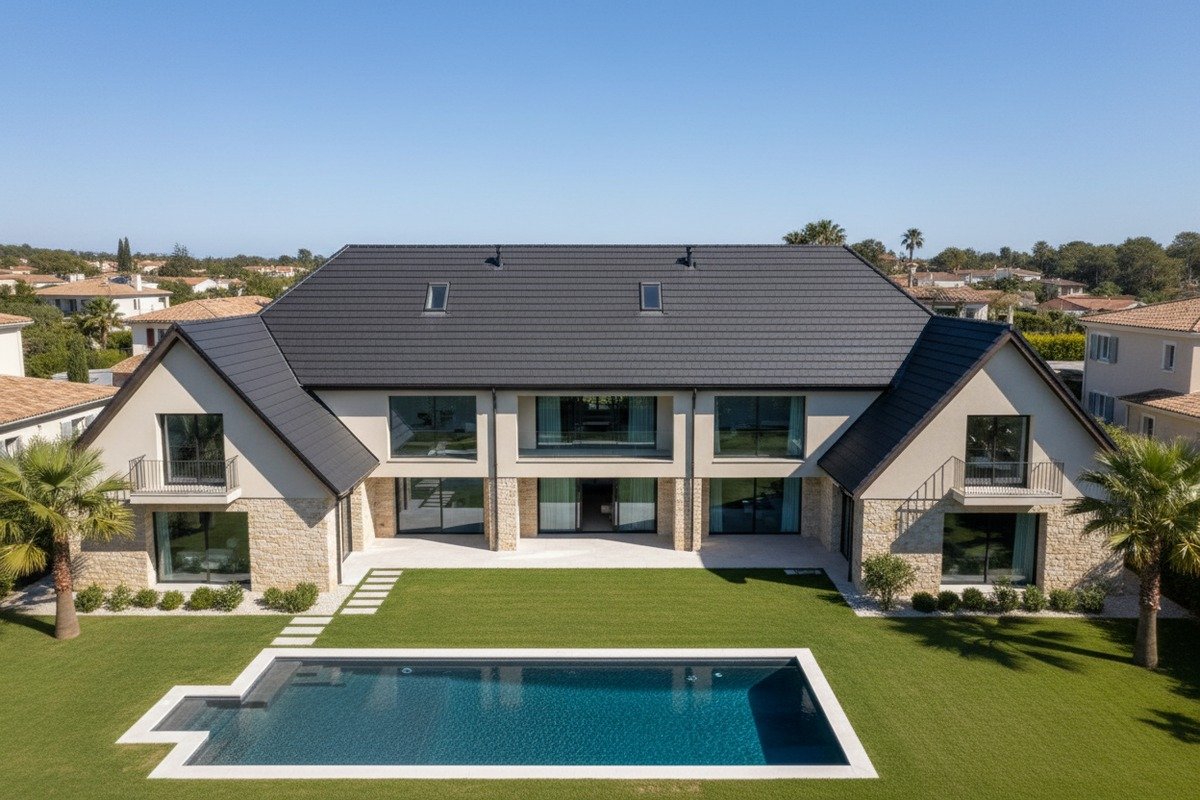
Understanding Color Consistency in Solar Shingles
Color variation in solar shingles comes from two sources: the photovoltaic cell color and the glass coating color. Even small differences in silicon wafer processing or anti-reflective coating thickness create visible color shifts. On a roof, these shifts appear as a patchwork effect that is immediately noticeable from the street.
We control color consistency through a rigorous sorting process at our production facility. Every shingle is optically scanned and sorted into color bins. Only shingles within the same color bin are packed together for a single project. Our target Delta E value (the standard measure of color difference) is below 1.5, which is imperceptible to the human eye under normal viewing conditions.
Anti-Glare Requirements
Several European countries have adopted anti-glare regulations, particularly for residential areas. Germany's building codes include provisions against light pollution from reflective building surfaces. Switzerland and Austria have similar requirements. France has guidelines for solar installations visible from public roads.
Standard solar panels use textured glass with anti-reflective coatings to maximize light absorption. But "anti-reflective for energy" and "anti-glare for neighbors" are not the same thing. Energy-optimized coatings reduce reflection at perpendicular angles. Glare problems occur at oblique angles—when the sun is low and reflections travel horizontally toward neighboring buildings or roads.
Our anti-glare technology addresses this specifically. We use a multi-layer coating that reduces surface reflectance to below 2% across all viewing angles, not just the perpendicular. The result is a deep, uniform matte-black appearance that absorbs light rather than bouncing it toward neighbors.
Aesthetic Specification Comparison
| Specification | Standard Solar Panel | Basic Solar Shingle | Premium Solar Shingle (Our Standard) |
|---|---|---|---|
| Surface reflectance | 4-8% | 2-4% | < 2% |
| Color consistency (Delta E) | 3-5 (visible variation) | 2-3 (slight variation) | < 1.5 (imperceptible) |
| Profile height above roof | 40-80mm (rack mounted) | 15-25mm | 8-12mm |
| Visible frame | Aluminum frame visible | Thin frame visible | Frameless or concealed frame |
| Grid line visibility | Clearly visible | Partially visible | Minimal or hidden |
| Available colors | Silver/blue/black | Black/dark grey | Multiple options including custom |
Heritage Building Considerations
Many European cities have strict architectural preservation rules. Solar installations on buildings within historic districts must be virtually invisible. Our deep charcoal shingles with concealed frames and minimal grid line visibility are specifically designed for these sensitive applications. From street level, they are indistinguishable from high-quality natural slate.
We have supplied projects in French and German heritage zones where the local architectural review board approved our shingles after seeing physical samples installed on a mock-up section. We always recommend this approach for heritage-sensitive projects. Send samples early. Get architectural approval before ordering the full quantity.
Batch Sampling Protocol
Before placing a production order, request the following from your supplier:
- Three sample tiles from three different production batches.
- Place them side by side in natural daylight.
- View from 5 meters distance at a 30-degree angle (simulating street-level viewing).
- If you can see color differences, the supplier's quality control is inadequate.
We welcome this test. In fact, we encourage it. Confidence in color consistency is the single fastest way to close a deal with European architects and premium roofing companies.
Long-Term Color Stability
Color consistency at installation is only half the battle. UV exposure, temperature cycling, and pollution all affect long-term color stability. Our glass coatings are tested for 25 years of UV exposure using accelerated aging chambers. The color shift after simulated 25-year aging remains below Delta E 2.0, ensuring the roof looks uniform for its entire service life.
Conclusion
Selecting solar roof shingles for European regulations requires verifying dual PV and building certifications, climate-appropriate structural ratings, proven waterproof drainage design, and strict aesthetic standards. Get these four areas right, and your projects will succeed.
Footnotes
1. Official EU site for construction product regulations. ↩︎
2. European standard for fire classification of construction products. ↩︎
3. Official EU regulation for construction products. ↩︎
4. Official resource for Eurocode National Annex maps. ↩︎
5. Replaced with the official CEN (European Committee for Standardization) page for EN 1991-1-3. ↩︎
6. Replaced with the official CEN (European Committee for Standardization) page for EN 1991-1-4. ↩︎
7. Official EU site for the Low Voltage Directive. ↩︎
8. Replaced with the official IECEE (part of IEC) page providing the abstract and scope of IEC 61215-1-1:2016. ↩︎
9. Replaced with the official IECEE (part of IEC) page providing the abstract and scope of IEC 61730-1:2016. ↩︎
10. European standard for photovoltaics in buildings (BIPV modules). ↩︎