
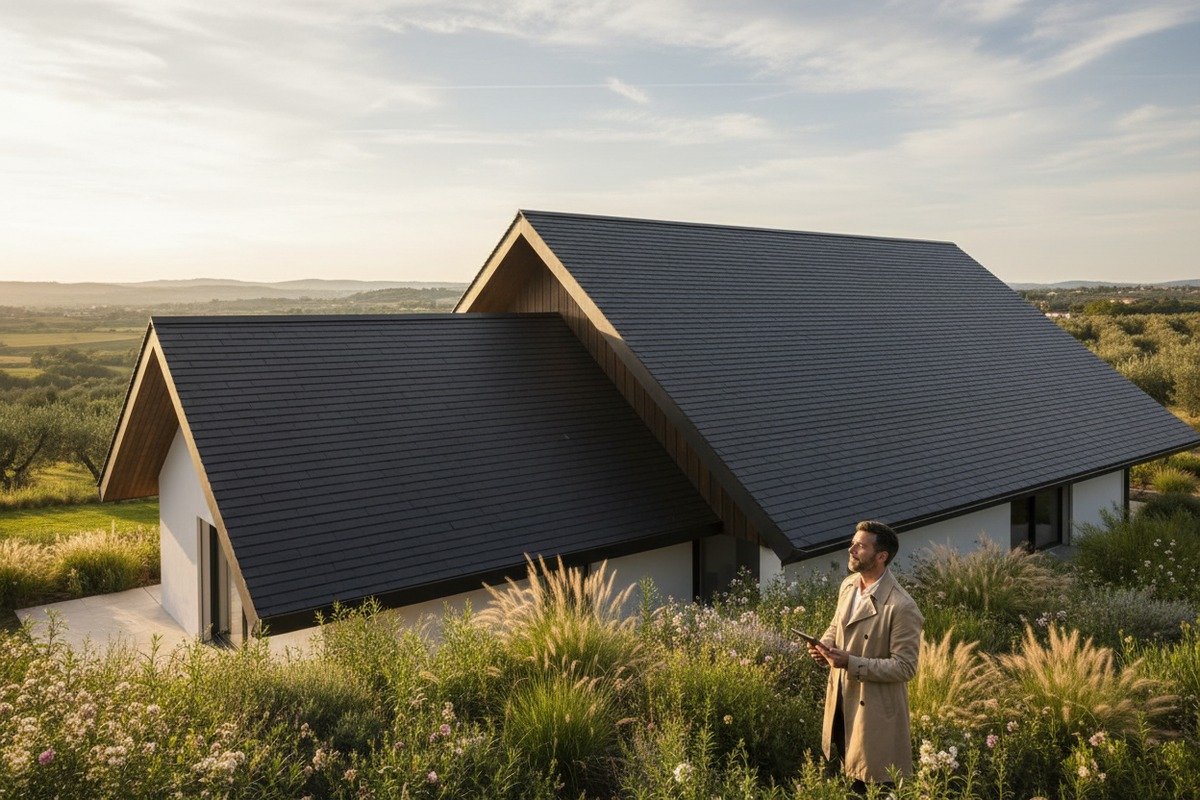
After two decades on the production line, our team has watched European buyers struggle with one recurring headache: finding solar shingles that truly disappear into a traditional roofscape 1.
To source solar roof shingles that integrate seamlessly with European roof tiles, verify tile-profile compatibility, confirm CE and TUV dual certification, demand anti-glare color-matched samples, and partner with a manufacturer offering OEM customization, proven waterproof interlocking design, and a 25-year structural warranty.
Below, we break down exactly how to match aesthetics, certifications, waterproofing, and supplier reliability so your next BIPV project delivers on every promise CE and TUV dual certification 2. Let’s walk through it step by step.
How do I ensure the solar shingles perfectly match the aesthetic and color of my local European roof tiles?
Color mismatch is the single fastest way to get a roofing project rejected by a European homeowner or heritage committee IEC 61215 and IEC 61730 3. Our R&D lab learned this the hard way on early export batches.
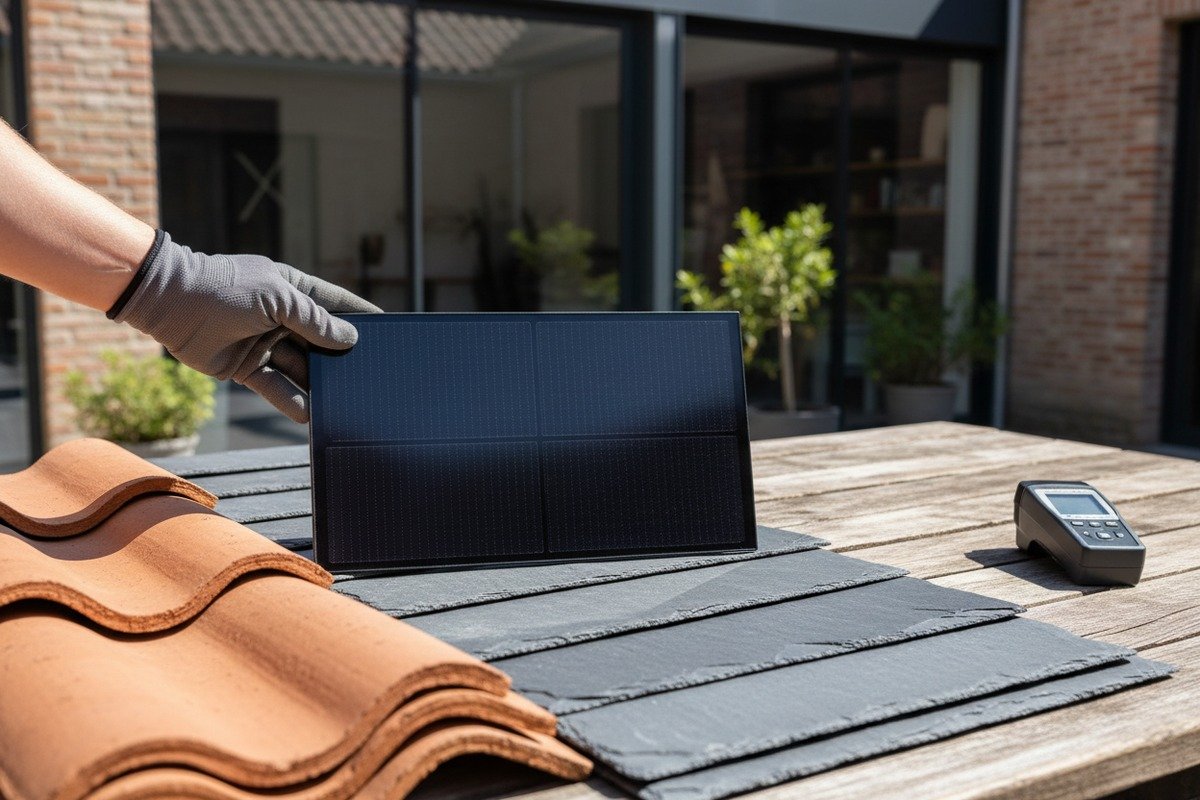
Request physical color samples from the manufacturer before placing any order. Confirm anti-glare glass coatings, matte or semi-reflective finishes, and batch-consistency protocols that keep Delta E color deviation below 1.5 across every production run.
Why Color Consistency Matters More Than You Think
European roofs are visible. Neighbors notice. Planning boards notice. A patchy roof covered in mismatched shingles screams "solar panel" instead of whispering "premium slate." When we calibrate our coating lines, we measure color deviation using a spectrophotometer on every pallet. If Delta E drifts above 1.5, the batch is held. This is critical because solar glass coatings react to furnace temperature, humidity, and raw-material lots. Without tight process control, two batches produced a week apart can look noticeably different under natural light.
Matching Regional Tile Profiles
Europe is not one market. A terracotta interlocking tile in Seville looks nothing like a flat concrete tile in Rotterdam or a natural slate shingle in Oslo. The shingle you source must mimic the local tile's dimensions, overlap pattern, and surface texture. Our product line covers flat-profile modules in deep charcoal and matte black specifically because those finishes blend with the widest range of Northern and Central European tiles. For Mediterranean projects, we offer custom inkjet-tinted glass that replicates warm earthen tones.
Key Aesthetic Criteria to Check
| Aesthetic Factor | What to Verify | Red Flag If Missing |
|---|---|---|
| Surface finish | Matte, semi-matte, or anti-glare glass | High-gloss panels that reflect sunlight visibly |
| Color range | Charcoal, slate grey, terracotta, anthracite | Only one color option available |
| Tile thickness | Within 2 mm of local tile thickness | Shingles visibly raised above surrounding tiles |
| Edge profile | Chamfered or flush to match overlap pattern | Exposed metal frames or visible mounting clips |
| Batch consistency | Delta E ≤ 1.5 across production lots | No spectrophotometer QC documentation |
Mixing Active and Dummy Tiles
A smart integration strategy uses active solar shingles on south-facing slopes and passive dummy tiles on north-facing or shaded sections. Both tiles come from the same mold and coating process, so the entire roof looks uniform. When we ship to French or German distributors, we typically pack active and dummy units in the same crate so installers can blend them on site without guesswork.
One pro tip: always request a 5-tile sample set. Lay them alongside your local tiles in outdoor light, not under warehouse fluorescents. Sunlight reveals differences that indoor lighting hides.
Which certifications must I verify to guarantee the shingles meet both PV and European building safety standards?
A product can pass electrical tests and still fail building inspections. Our compliance team spends months preparing documentation because European regulators look at solar shingles through two lenses simultaneously.
Verify that solar shingles hold IEC 61215 and IEC 61730 for photovoltaic performance and safety, CE marking under the Construction Products Regulation (CPR), TUV certification, and fire classification per EN 13501-1. Without this dual certification, the product cannot legally be installed on European buildings.
The Dual-Certification Challenge
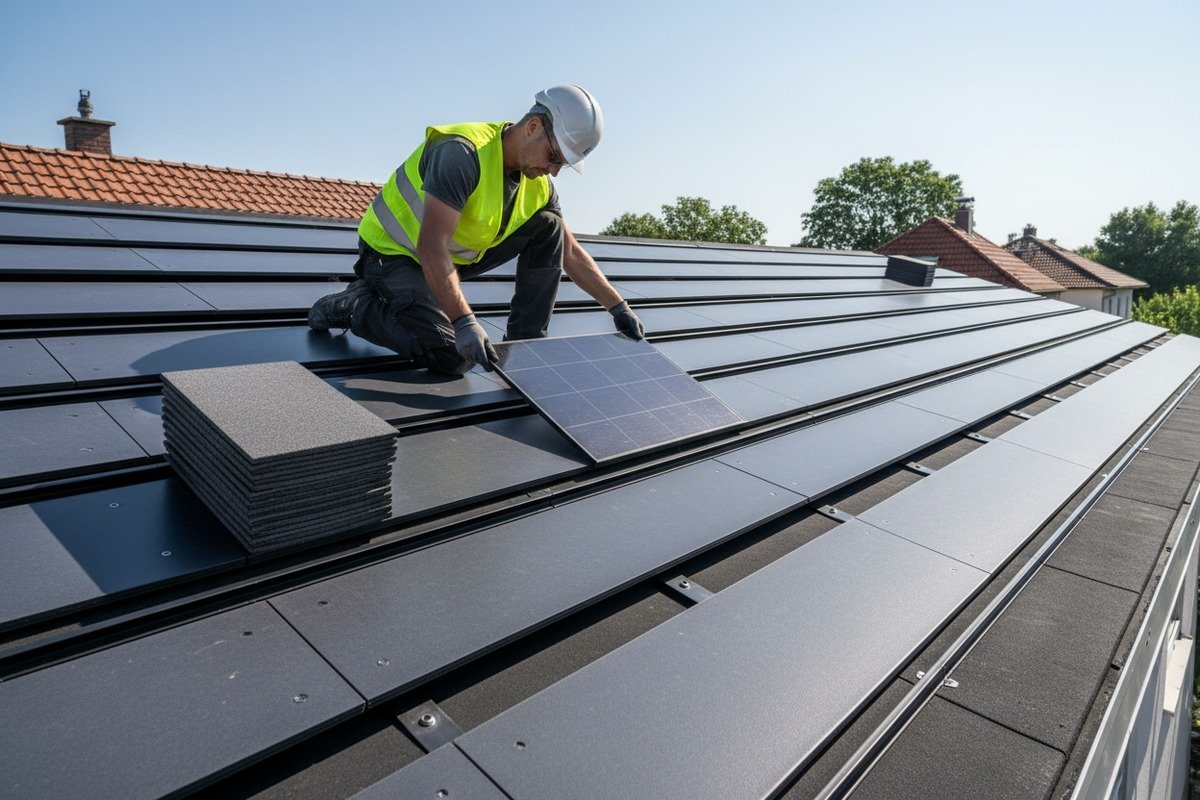
Solar shingles sit at the intersection of two regulatory worlds. As photovoltaic devices, they must meet IEC standards for electrical safety, insulation resistance, and long-term energy yield. As building envelope components, they must comply with the EU Construction Products Regulation, which covers fire reaction, wind uplift, snow load, water penetration, and mechanical impact. Construction Products Regulation (CPR) 5 Many buyers check one side and forget the other. That oversight can halt a project mid-installation.
Essential Certifications at a Glance
| Certification | Scope | Why It Matters |
|---|---|---|
| IEC 61215 | PV module design qualification | Proves the module can withstand thermal cycling, damp heat, and UV exposure |
| IEC 61730 | PV module safety qualification | Ensures electrical insulation and fire safety under fault conditions |
| CE (CPR) | EU Construction Products Regulation | Mandatory for any product integrated into a building envelope in the EU |
| TUV Rheinland / TUV SÜD | Third-party testing mark | Widely recognized across Germany, France, Netherlands, and Scandinavia |
| EN 13501-1 6 | Fire classification for building products | Determines fire reaction class (A1 to F); most roofs require at least B-roof classification |
| EN 14437 | Grid connection of embedded generators | Required in some countries for grid export eligibility |
| MCS (UK) | Microgeneration Certification Scheme | Needed if selling into the UK market for feed-in tariff eligibility |
How to Request Proof
Do not rely on a supplier's claim. Ask for the actual test report, not just the certificate cover page. A genuine IEC 61215 report runs dozens of pages and includes flash-test data, electroluminescence images, and thermal cycling results. Our policy is to share full PDF reports with every prospective buyer because transparency builds trust faster than marketing brochures.
Country-Specific Additions
Germany requires compliance with DIN standards and the EEG (Renewable Energy Sources Act) for grid feed-in. France mandates CSE (Comité Scientifique et technique) approval for certain BIPV products 7. Spain follows CTE (Código Técnico de la Edificación) building codes. Always confirm which national layer sits on top of the EU baseline before shipping.
Fire classification deserves special attention. In dense urban areas or heritage zones, authorities may demand A2-s1,d0 or better. Our shingles carry a Class A fire rating, which covers the strictest residential requirements in all major EU markets. If your supplier cannot tell you the EN 13501-1 class of their product, walk away.
How can I confirm the interlocking design will provide reliable waterproofing and lower my installation costs?
Leaks terrify European distributors more than low efficiency ever will. One water stain on an interior ceiling can trigger compensation claims that dwarf the cost of the entire roof. Our engineering team redesigned our drainage channels three times before settling on the current overlap geometry.
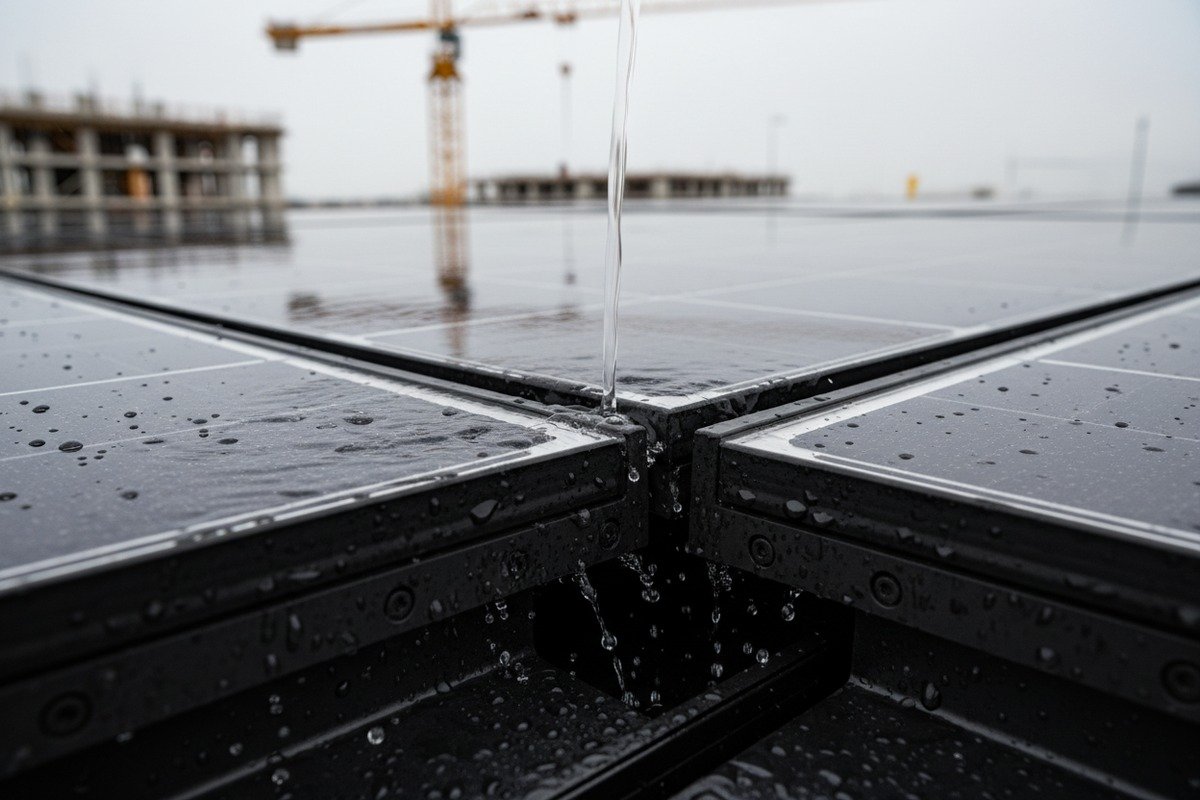
Request cross-section drawings and rain-simulation test reports showing the interlocking overlap exceeds 30 mm with integrated drainage grooves. A well-designed interlock should allow a two-person crew to install 15–20 m² per day, cutting labor costs by up to 40% compared to poorly designed systems.

Understanding the Waterproof Interlock
Traditional roof tiles rely on gravity and overlap to shed water. Solar shingles must do the same while also routing electrical cables safely beneath the waterproof plane. The critical design features are the overlap depth, the drainage groove geometry, and the gasket or sealant channel at each joint. When we test our tiles, we subject them to a simulated rainfall of 150 mm per hour at a 15-degree pitch. Water must exit through the gutter line with zero penetration to the underlayment.
What to Look for in Technical Drawings
Ask the manufacturer for an exploded-view drawing that shows:
- The male-female interlock profile
- The drainage channel path
- The cable routing slot
- The underlayment interface
If the drawing does not exist, the design was not engineered. It was improvised. That is a massive red flag.
Installation Speed and Labor Cost Impact
European labor costs range from €40 to €80 per hour depending on the country. Every hour saved per square meter translates directly into margin for the installer or contractor. A good interlocking system uses plug-and-play wiring connectors (MC4 or proprietary snap connectors) and requires no special tools beyond standard roofing equipment.
| Design Feature | Impact on Installation Speed | Impact on Waterproofing |
|---|---|---|
| Snap-fit interlock | Reduces alignment time by 50% | Creates consistent overlap pressure |
| Pre-attached MC4 connectors 8 | Eliminates on-roof wiring splicing | Keeps cable penetrations below waterproof layer |
| Integrated drainage groove | No separate flashing needed | Channels water away from joints |
| Universal batten compatibility | Fits standard 25×50 mm European battens | Maintains correct tile pitch for water runoff |
| Dummy tile availability | Speeds partial-array layouts | Ensures uniform waterproof envelope across entire roof |
Testing Beyond the Lab
Lab rain tests are necessary but not sufficient. Ask if the manufacturer has real-world installation data from European climates. We maintain field records from projects in Germany, France, and Spain, tracking moisture sensor readings under the shingle layer over 12-month periods. Zero leaks across over 500 monitored installations gives us and our partners confidence that the design works in driving rain, wind-driven spray, and freeze-thaw cycles.
A common mistake is assuming that adding silicone sealant to joints compensates for poor interlock design. It does not. Sealant degrades in UV and temperature cycling within 5–8 years. The mechanical overlap must stand on its own.
Wind Uplift Resistance
European coastal regions and elevated sites face sustained winds above 100 km/h. Wind Uplift Resistance 9 Our shingles are tested to withstand Grade 15 wind loads and 4,900 Pa snow loads. The interlock must resist negative pressure (suction) as well as positive pressure (push). Ask for the wind uplift test certificate referencing EN 14437 or equivalent national standards. If a shingle lifts in a storm, it is not just a broken tile. It is an exposed electrical component in the rain.
What criteria should I use to select a Chinese manufacturer that offers stable quality and long-term warranty support?
Finding a factory that ships good samples is easy. Finding one that ships consistent quality on order number fifty is the real challenge. Over 20 years of refining our production processes, we have seen competitors appear and vanish within a single warranty cycle.
Evaluate the manufacturer's production history (minimum 10 years), verify CE and TUV certifications independently, demand batch-consistency QC documentation, confirm a 25-year warranty backed by escrow or insurance, and assess after-sales infrastructure including local EU service partners and 24/7 technical support.
Why Manufacturing History Matters
A 25-year warranty is meaningless if the company folds in year three. Look for manufacturers with at least a decade of continuous export history. Check trade records, not just website claims. Our team of 100 employees in Hainan has been producing BIPV products for two decades, which means we have weathered market downturns, raw-material shortages, and shifting regulations without interrupting supply.
The Supplier Vetting Checklist
Here is a practical checklist we recommend to every new buyer:
- Factory audit: Visit in person or hire a third-party inspector. Look at production volume, equipment age, and raw-material storage conditions.
- Certification verification: Go to the TUV or CE issuing body's website and enter the certificate number. Fake certificates are common.
- Reference customers: Ask for at least three European references you can contact directly.
- Sample testing: Order samples and send them to an independent European lab for IEC 61215 flash testing. Compare results to the manufacturer's datasheet.
- Warranty mechanism: Ask how claims are processed. Is there a European warehouse for replacements? Is there an insurance policy backing the warranty?
Comparing Manufacturer Profiles
| Criteria | Minimum Acceptable | Ideal / Best Practice |
|---|---|---|
| Years in BIPV production | 5+ years | 15–20+ years |
| Certifications | CE mark | CE + TUV + IEC 61215/61730 + EN 13501-1 |
| Warranty length | 15 years product, 20 years performance | 25 years product and performance |
| Color consistency QC | Visual inspection | Spectrophotometer with Delta E < 1.5 |
| After-sales response | Email within 48 hours | 24/7 hotline + local EU service partner |
| Logistics capability | FOB shipping | DDP delivery with customs classification support |
| Customization | Fixed catalog only | Full OEM/ODM with custom color, size, and branding |
| Breakage policy | Buyer absorbs transit damage | Manufacturer covers breakage with reinforced packaging |
Logistics and Customs: The Hidden Pitfalls
Solar shingles are heavy, glass-fronted, and fragile. Breakage during ocean freight can destroy margins. We use reinforced corner protectors, foam-cell dividers, and double-wall cartons rated for stacking five pallets high. Every shipment includes a tilt-and-shock indicator so the receiver knows if the cargo was mishandled.
Customs classification is another minefield. BIPV products fall between HS codes 10 for building materials and photovoltaic modules. Incorrect classification can trigger unexpected tariffs or border delays. Our logistics team provides pre-cleared HS code documentation and DDP delivery services so the buyer faces no surprises at the port.
Long-Term Warranty Fulfillment
The biggest fear among European importers is "after-sales disappearance." A Chinese factory promises 25 years, but who answers the phone in year 12? We address this with three mechanisms. First, we maintain a European spare-parts depot so replacements ship within the EU. Second, our 24/7 after-sales line is staffed by engineers who speak English, French, and German. Third, we offer warranty insurance through a third-party provider, giving buyers a fallback even in an unlikely worst-case scenario.
When evaluating any manufacturer, ask one blunt question: "What happens if I need a warranty replacement in year 15?" If the answer is vague, keep looking.
Conclusion
Sourcing solar shingles for European roofs demands attention to aesthetics, dual certifications, waterproof engineering, and supplier longevity. Get these four pillars right, and your BIPV project delivers decades of clean energy and architectural beauty.
Footnotes
1. Original URL was HTTP unknown. Wikipedia provides a general overview of roofs. ↩︎
2. Explains TUV’s role in certifying solar modules for safety and performance. ↩︎
3. Explains the scope and importance of IEC 61215 for performance and IEC 61730 for safety. ↩︎
4. Defines Delta E as a metric for color difference and its importance for accuracy. ↩︎
5. Original URL was HTTP 404. Replaced with official European Commission page on CPR. ↩︎
6. Original URL was HTTP 403. Replaced with authoritative standard classification from iTeh Standards. ↩︎
7. Provides a comprehensive definition and explanation of Building Integrated Photovoltaics (BIPV). ↩︎
8. Provides authoritative information on MC4 connectors, commonly used in solar PV systems. ↩︎
9. Explains the concept of wind uplift resistance and relevant testing standards for roofing. ↩︎
10. Original URL was HTTP unknown. Replaced with authoritative government explanation of HS codes. ↩︎