
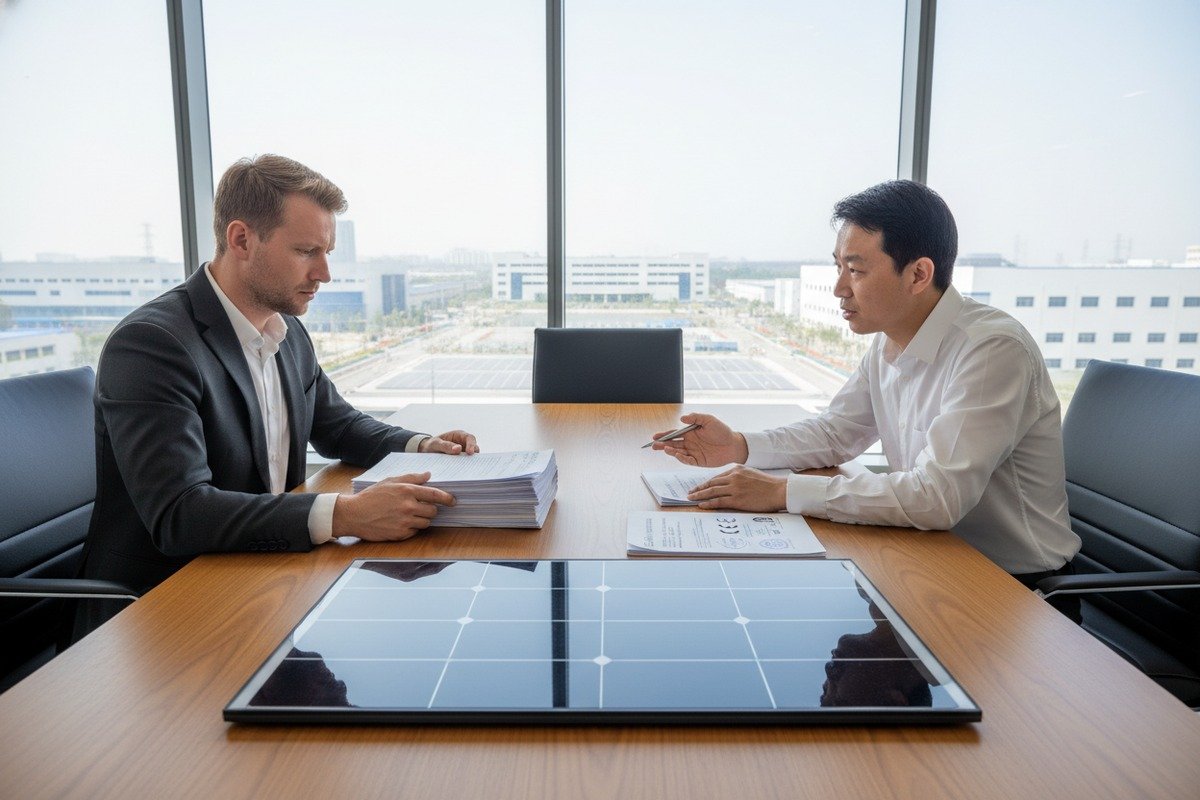
Every week, our sales team fields urgent calls from European importers who just discovered their solar shingle shipment is stuck at customs. The reason? Missing battery compliance documents or outdated WEEE registrations. With solar shingles integrating lithium-ion batteries 1 for energy storage, the EU now treats these products under dual regulatory frameworks — and the penalties for getting it wrong can reach 4% of annual turnover.
To verify EU battery and waste compliance when sourcing solar shingles from China, importers must request CE marking, battery passport pre-documentation, carbon footprint declarations, WEEE registration proof, and recycled content certifications from suppliers. Third-party audits by bodies like TÜV or SGS confirm validity. Importers bear full Extended Producer Responsibility under both the EU Battery Regulation and WEEE Directive.
This guide breaks down every certification you need, how to check if documents are real, what EPR obligations you carry as an importer, and how to prevent costly customs delays. Let’s walk through it step by step.
Which EU battery and WEEE certifications should I request from my Chinese solar shingle supplier?
When we prepare export documentation for our European partners, we've learned that incomplete paperwork is the single biggest cause of border rejections. Many buyers don't realize solar shingles trigger two separate compliance tracks.
You should request CE marking with a Declaration of Conformity, IEC 61215/61730 test reports, EU Battery Regulation documentation (carbon footprint declaration, recycled content data, future battery passport readiness), WEEE producer registration proof, RoHS compliance certificates, and third-party test reports from notified bodies like TÜV or SGS.

Understanding the Dual Compliance Framework
Solar shingles are not simple PV panels. When they integrate lithium-ion batteries for energy storage, they fall under two distinct EU regulatory umbrellas. The first is the PV module framework — CE marking 2 under the Low Voltage Directive (LVD) and Electromagnetic Compatibility (EMC) Directive. The second is the EU Battery Regulation 3 (Regulation (EU) 2023/1542), which replaced the old Battery Directive in August 2023.
From our production floor, we see this confusion regularly. A roofing distributor in France ordered 5,000 solar shingles last year. They had perfect CE marking for the PV component but zero documentation for the integrated battery cells. French customs flagged the shipment. It sat in a bonded warehouse for six weeks.
The Essential Certification Checklist
Here is a clear breakdown of what you need to collect from your Chinese supplier:
| Certification / Document | Applicable Regulation | Required From | Key Details |
|---|---|---|---|
| CE Marking + DoC | LVD (2014/35/EU), EMC (2014/30/EU) | Now | Must cover both PV module and battery components |
| IEC 61215 / IEC 61730 | EU harmonized standards | Now | Performance and safety testing for PV modules |
| Carbon Footprint Declaration | EU Battery Reg. Art. 7 | July 2024 | Full lifecycle emissions data per ISO 14067 4 |
| Recycled Content Certification | EU Battery Reg. Art. 8 | 2031 (first phase) | 16% cobalt, 6% lithium, 6% nickel minimum |
| Battery Passport 5 (digital) | EU Battery Reg. Art. 77 | February 2027 | For batteries >2kWh; QR code with lifecycle data |
| WEEE Producer Registration | WEEE Directive 6 (2012/19/EU) | Now | Must register in each EU country of sale |
| RoHS Compliance Certificate | RoHS Directive 7 (2011/65/EU) | Now | Restricts lead, cadmium, mercury, etc. |
| UN 38.3 Transport Test Report 8 | ADR / IMDG Code | Now | Mandatory for lithium battery shipping safety |
What Many Suppliers Get Wrong
In our experience shipping to over 15 European countries, we've noticed that many Chinese manufacturers provide generic CE certificates that only cover the solar cell portion. They treat the battery as an accessory. Under EU law, this is insufficient. The battery must have its own compliance documentation, separate from the PV module.
Also watch for test reports from non-accredited labs. The EU requires testing by notified bodies or labs accredited under ISO 17025. A report from an unrecognized Chinese testing facility will not pass customs scrutiny. Always cross-check the lab's accreditation number against the EU NANDO database 9.
RoHS: The Overlooked Risk
Many importers assume RoHS only applies to consumer electronics. It applies to solar shingles too. The directive restricts six hazardous substances. China has its own version of RoHS (China RoHS 2), but the thresholds and testing methods differ. A product compliant with China RoHS may still fail EU RoHS testing. Request EU-specific RoHS test reports, not Chinese equivalents.
How do I verify that the compliance documents provided by a manufacturer are valid for the European market?
Our quality assurance team has reviewed thousands of compliance files over two decades. We can tell you that forged or outdated certificates are more common than most buyers expect, especially in an industry growing as fast as BIPV.
Verify compliance documents by cross-referencing certificate numbers against the EU NANDO database for notified bodies, checking test lab ISO 17025 accreditation, confirming the Declaration of Conformity lists correct EU directives, validating carbon footprint data against ISO 14067 methodology, and commissioning independent third-party audits through TÜV, SGS, or Bureau Veritas.
Step-by-Step Document Verification Process
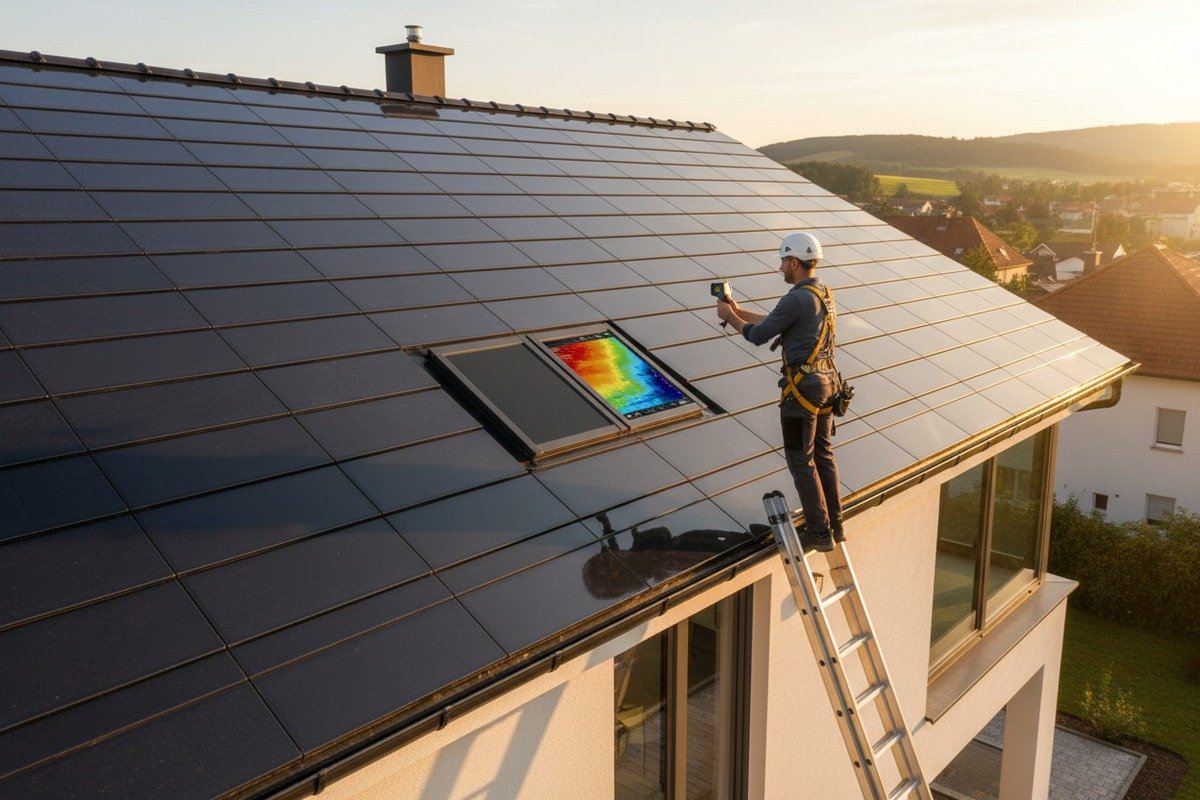
Receiving a stack of PDFs from your supplier is not verification. Real verification requires active checking. Here is a practical process we recommend to our OEM partners.
Step 1: Check the Notified Body. Every CE-marked product requires testing or assessment by a notified body. The EU maintains the NANDO database (New Approach Notified and Designated Organisations). Go to the European Commission's NANDO website. Search by the notified body number printed on the certificate. Confirm the body is authorized for the relevant directives (LVD, EMC, Battery Regulation). If the number doesn't match, the certificate is invalid.
Step 2: Validate the Test Lab. For IEC 61215/61730 10 reports, the testing lab must hold ISO 17025 accreditation. Ask for the accreditation certificate. Then verify it on the accreditation body's website — for example, CNAS in China or DAkkS in Germany.
Step 3: Read the Declaration of Conformity Carefully. A valid DoC must list the specific EU directives, the harmonized standards used, the product model number, the manufacturer's name and address, and the date of issue. Vague or generic DoCs that don't reference specific directives are red flags.
Red Flags in Supplier Documentation
| Red Flag | What It Means | What To Do |
|---|---|---|
| Certificate issued by unknown lab | Lab may not be accredited | Check NANDO or ISO 17025 registry |
| DoC does not list specific EU directives | Likely a template, not product-specific | Request reissue with correct references |
| Carbon footprint report missing ISO 14067 reference | Data methodology may not meet EU standards | Demand ISO-compliant LCA report |
| Test report older than 5 years | Product design may have changed | Request updated testing |
| Recycled content claim with no third-party verification | Unsubstantiated marketing claim | Require independent mineral tracing |
| Battery passport data in non-EU format | May not integrate with EU digital systems | Ask for EU-compatible data structure |
The Carbon Footprint Declaration Challenge
Since July 2024, most batteries placed on the EU market need a carbon footprint declaration. This requires a full lifecycle assessment (LCA) — from raw material extraction through manufacturing, transport, use, and end-of-life recycling. The LCA must follow ISO 14040/14044 and ISO 14067 methodologies.
Here's the reality: many Chinese battery cell manufacturers lack the internal capability to produce compliant LCA reports. In our own supply chain, we invested heavily in building LCA competence. We work with certified environmental consultants to generate accurate carbon data for every battery cell we integrate. Not every manufacturer does this.
When reviewing a supplier's carbon footprint declaration, check for three things. First, does it reference ISO 14067 explicitly? Second, does it cover the full lifecycle including raw material sourcing? Third, has it been reviewed or validated by an independent third party? If any answer is no, the document likely won't satisfy EU authorities.
On-Site Audits: When Documents Aren't Enough
For high-value contracts, paper checks alone are insufficient. We always welcome buyer audits at our Hainan facility because transparency builds trust. If your supplier resists an audit, that tells you something important.
Commission a third-party audit through TÜV Rheinland, SGS, or Bureau Veritas. These firms have offices in China and can inspect production lines, verify raw material sourcing records, and confirm that the products being manufactured match the products described in the certificates. An audit costs between €3,000 and €10,000 depending on scope — a fraction of the cost of a customs seizure.
What are my responsibilities for EPR and waste disposal when I import solar tiles under my own brand?
One of the most common misconceptions we hear from new European partners is that compliance is the manufacturer's problem. Our engineering and compliance teams handle the production side, but the moment solar shingles cross the EU border under your brand name, the legal responsibility shifts squarely to you.
As an EU importer selling solar tiles under your own brand, you become the legal "producer" under both the WEEE Directive and the EU Battery Regulation. You must register with EPR schemes in every EU member state where you sell, finance end-of-life collection and recycling, report annual volumes, and ensure proper waste treatment for both PV modules and integrated batteries.
What EPR Actually Means for You
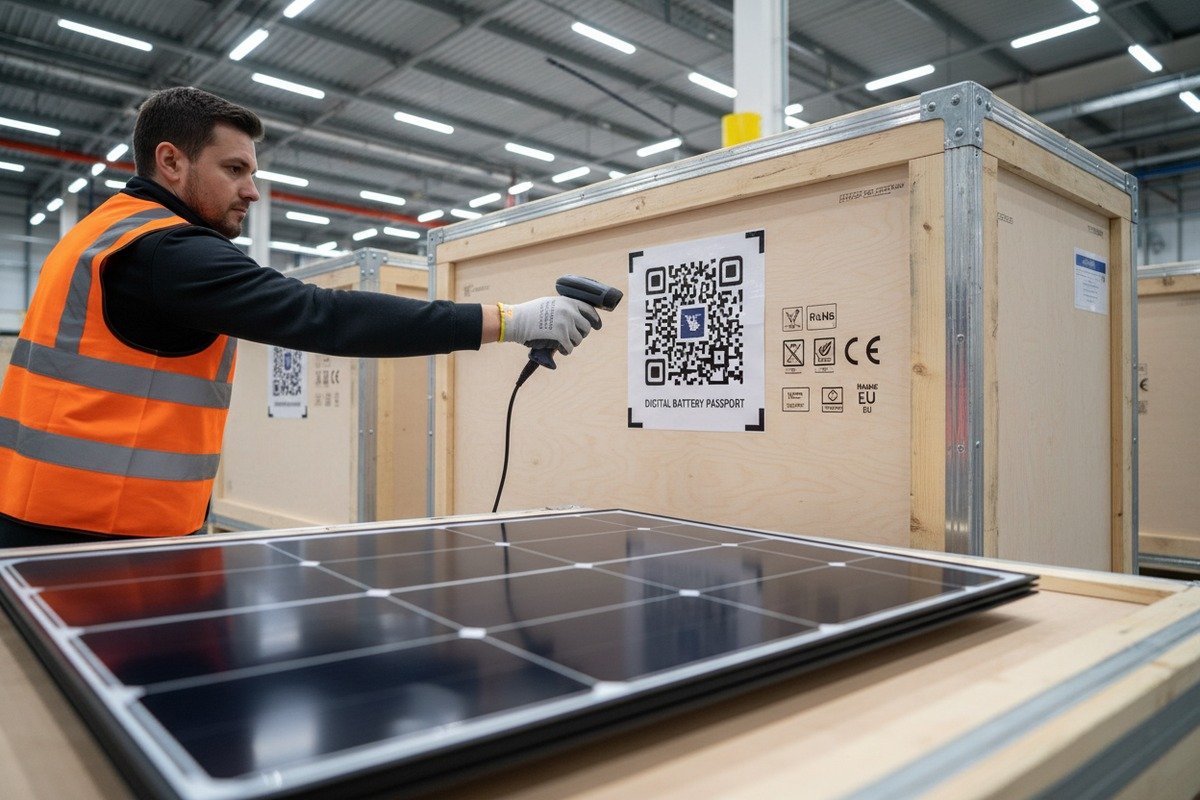
Extended Producer Responsibility is not a voluntary program. It is a legal obligation. Under the WEEE Directive, photovoltaic modules are classified as electrical and electronic equipment. Under the EU Battery Regulation, integrated batteries carry their own separate EPR obligations. As a private-label importer, you are the "producer" for both.
This means you must:
- Register with a WEEE compliance scheme in every EU country where your products are sold.
- Register separately under battery EPR schemes in those same countries.
- Pay fees to finance collection, treatment, and recycling infrastructure.
- Report the weight and quantity of products placed on the market annually.
- Mark products with the crossed-out wheelie bin symbol and battery recycling symbol.
Country-by-Country Variations
The EU sets the framework, but each member state implements EPR differently. Registration procedures, fee structures, and reporting deadlines vary significantly. This is a major headache for importers selling across multiple markets.
| Country | WEEE Registration Body | Battery Registration Body | Key Difference |
|---|---|---|---|
| France | Ecosystem / Ecologic | Corepile / Screlec | Visible eco-fee required on invoices |
| Germany | Stiftung EAR | BattG Melderegister (UBA) | Pre-registration required before first sale |
| Netherlands | Wecycle / Stichting OPEN | Stibat | Combined PV + battery scheme available |
| Italy | Centro di Coordinamento RAEE | CDCNPA | Complex regional collection networks |
| Spain | Various authorized schemes | Various authorized schemes | Recent reforms; evolving requirements |
In Germany, for example, you cannot legally sell a single unit until you are registered with Stiftung EAR for WEEE and with the UBA (Federal Environment Agency) for batteries. Selling before registration can result in immediate sales bans and fines.
The Battery Regulation's Specific EPR Requirements
The new EU Battery Regulation goes further than the old Battery Directive. Starting from August 2025, producers must:
- Finance collection at no cost to end-users.
- Achieve minimum collection rates (45% by 2023, rising to 73% by 2030 for portable batteries).
- Ensure recycling efficiency targets are met (e.g., 80% for lithium-based batteries by 2031).
- Report on recycled content in new batteries starting 2031.
For solar shingles with integrated batteries, this creates a unique challenge. The battery is physically integrated into the building material. Removing it at end of life requires specialized processes. You need to work with your EPR scheme to establish a viable take-back and disassembly plan.
Financial Planning for EPR Costs
Many importers underestimate EPR fees. For PV modules under WEEE, fees in France range from €0.50 to €2.00 per panel depending on weight. Battery EPR fees vary widely by chemistry and weight. Budget 1-3% of product cost for EPR compliance across major EU markets. Factor this into your pricing from day one.
Our team helps OEM partners plan for these costs during the quotation phase. We include detailed product weight breakdowns and battery specifications so you can calculate EPR fees accurately before committing to orders.
How can I avoid customs delays and fines related to EU battery and waste compliance?
We ship containers of solar shingles to European ports every week. Our logistics team has seen what happens when documentation is incomplete — shipments held for weeks, demurrage charges stacking up, and sometimes goods returned to origin at the importer's expense.
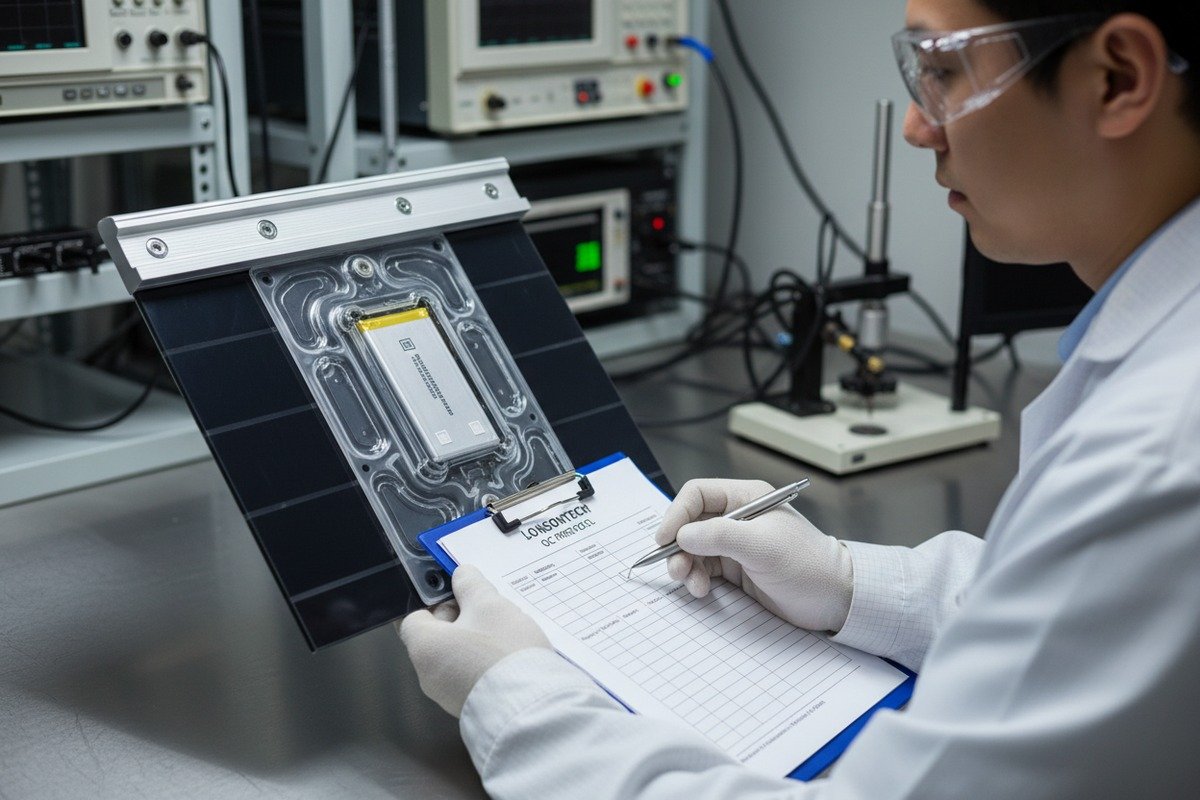
To avoid customs delays and fines, prepare all compliance documents before shipment, including CE certificates, DoC, UN 38.3 battery transport test reports, carbon footprint declarations, and proof of EPR registration. Use correct HS codes, pre-clear with customs brokers experienced in BIPV products, and ensure all battery labeling meets EU requirements before goods leave the factory.
The HS Code Problem for Solar Shingles
Solar shingles sit in a regulatory gray zone between building materials and photovoltaic equipment. This creates real problems at customs. Classify them as PV modules (HS 8541.40) and you may face different duty rates than if they're classified as building materials (HS 6905 or 7016). Misclassification triggers audits, delays, and potential anti-dumping duty exposure.
From 2013 to 2018, the EU imposed anti-dumping duties on Chinese solar panels. While those specific measures have expired, the classification precedent remains. Customs officers scrutinize Chinese PV imports more carefully than products from other origins.
Our recommendation: work with a customs broker who specializes in BIPV products. Get a Binding Tariff Information (BTI) ruling from EU customs before your first shipment. This ruling is valid for three years and eliminates classification uncertainty.
Pre-Shipment Documentation Checklist
Before any container leaves our factory, we ensure the following documents are prepared and included:
- CE certificate and Declaration of Conformity (covering LVD, EMC, and battery requirements)
- IEC 61215 and IEC 61730 test reports
- UN 38.3 battery transport test summary (mandatory for lithium battery shipment)
- Material Safety Data Sheet (MSDS) for battery components
- Carbon footprint declaration (from July 2024)
- Packing list with exact product weights and battery specifications
- Commercial invoice with correct HS codes
- Proof of EPR registration in the destination country
Missing even one of these documents can trigger a customs hold. UN 38.3 is particularly important — without it, carriers may refuse to load the container, and customs will not release it.
Common Mistakes That Cause Delays
Incorrect battery labeling. The EU Battery Regulation requires specific labels on batteries, including the crossed-out wheelie bin symbol, chemical symbols for hazardous substances, and capacity ratings. Labels must be visible, legible, and indelible. We apply these labels during production, not after arrival in Europe.
Outdated certificates. Customs officers check certificate validity dates. If your IEC test report is from 2018 and the product design changed in 2022, expect questions. Keep certificates current.
No proof of EPR registration. Some EU member states require proof of EPR registration for customs clearance. Germany is strict about this. If you cannot show your Stiftung EAR registration number, goods may be held at the port of Hamburg indefinitely.
Penalty Structures You Should Know
Non-compliance penalties vary by member state and regulation:
- EU Battery Regulation: fines up to 4% of annual turnover for serious violations.
- WEEE non-registration: sales bans plus fines ranging from €10,000 to €100,000 depending on the country.
- Customs misclassification: back-payment of duties plus penalties of up to 300% of the underpaid amount.
- Shipping lithium batteries without UN 38.3: carrier penalties plus potential criminal liability.
These are not theoretical risks. EU market surveillance authorities actively monitor imports through the RAPEX system. In 2023, over 2,000 products were flagged for non-compliance with battery and electrical safety rules.
Working With Your Supplier to Prevent Problems
The best way to avoid customs issues is to solve them at the source. We work with our European partners to pre-validate every document before production begins. Our DDP logistics service includes customs pre-clearance support, correct HS code classification, and complete documentation packages.
If your current supplier cannot provide this level of support, that's a warning sign. A manufacturer who understands EU compliance will proactively prepare documentation — not scramble to produce it after you've placed an order.
Conclusion
EU battery and waste compliance for solar shingles is complex but manageable with the right preparation, documentation, and supplier partnership. Verify every certificate, register for EPR in each target market, and solve compliance issues before goods leave the factory — not at the customs dock.
Footnotes
1. General information about lithium-ion battery technology and applications. ↩︎
2. Information on CE marking requirements and directives from the European Commission. ↩︎
3. Official text of the EU Battery Regulation (Regulation (EU) 2023/1542). ↩︎
4. Replaced HTTP 404 link with an authoritative and informative page from SGS, a recognized certification body. ↩︎
5. Explanation of the EU Battery Passport concept and its implementation. ↩︎
6. Official text of the WEEE Directive (2012/19/EU) on waste electrical and electronic equipment. ↩︎
7. Official text of the RoHS Directive restricting hazardous substances in electrical equipment. ↩︎
8. Requirements for the transport of lithium batteries, including UN 38.3 testing. ↩︎
9. Official European Commission database for notified bodies under EU directives. ↩︎
10. Standard for terrestrial photovoltaic (PV) modules – Design qualification and type approval. ↩︎