
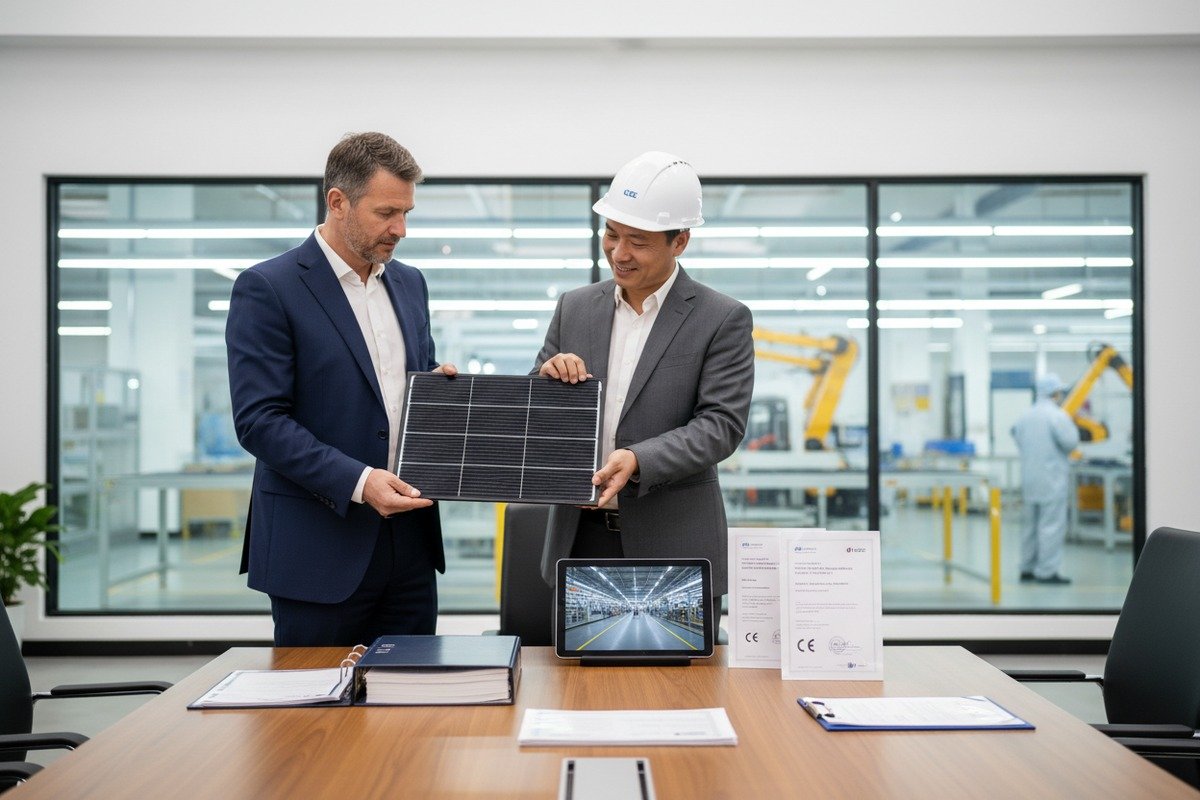
Every year, we field hundreds of inquiries from brand owners across Europe who want private-label solar shingles but feel overwhelmed trying to separate genuine OEM-capable factories from traders who simply relabel stock products.
To verify if a China solar roof shingle supplier truly offers OEM customization, you should audit their factory credentials, request certified product samples matching your specs, confirm certifications like CE and TUV, review R&D capabilities through design documentation, and negotiate clear IP-protection contracts before committing to mass production.
This guide walks you through each verification step in detail Construction Products Regulation (CPR) 1. We will cover R&D experience checks, certification requirements for the European market, aesthetic consistency controls, and sample validation processes. Let’s start with the most fundamental question.
How do I confirm if a Chinese factory has the R&D experience to handle my private label solar shingle designs?
Over the past 20 years on our production floor, we have seen many buyers place trust in flashy websites only to discover the "factory" was a trading company with zero design capability fire classification per EN 13501-1 2.
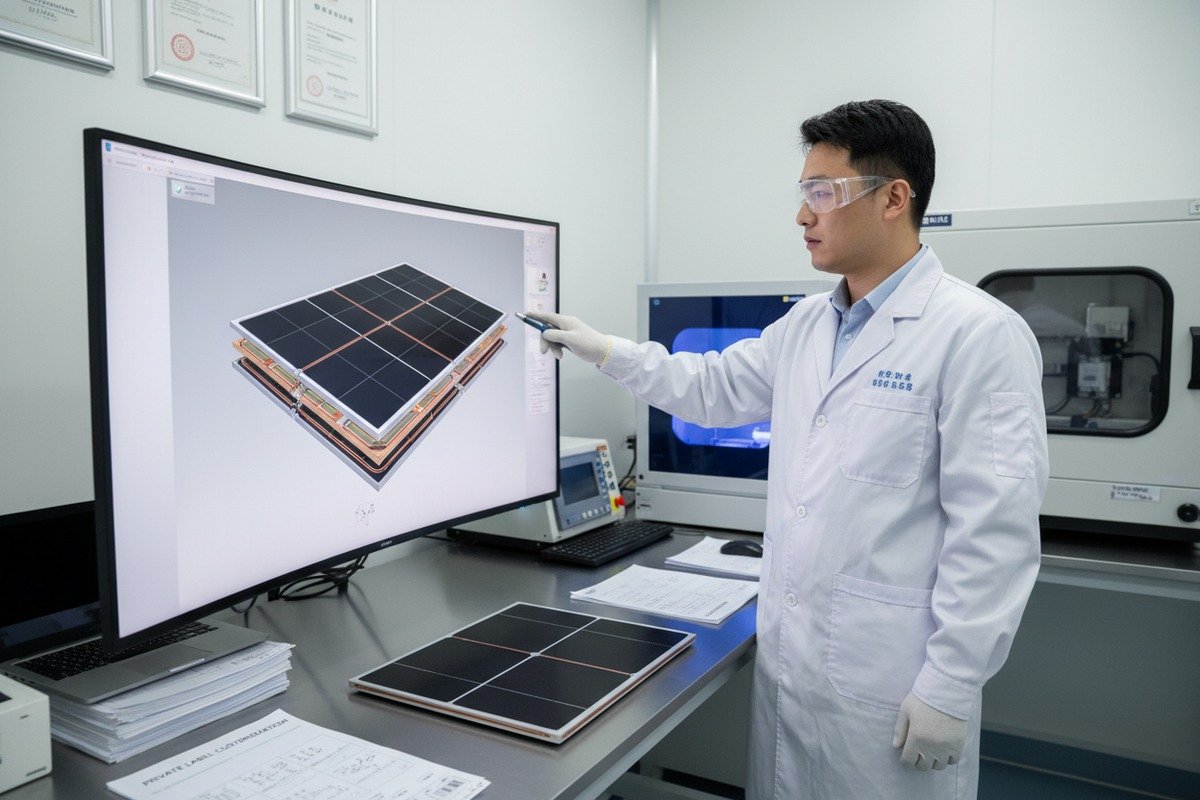
To confirm R&D experience, request the supplier's patent portfolio, ask for detailed engineering drawings of past custom projects, verify their in-house testing lab equipment, and demand a face-to-face or virtual walkthrough of their product development workflow from cell selection to lamination.
Why R&D Experience Matters for Private Label Solar Shingles
Solar roof shingles are not standard flat panels. They must integrate photovoltaic cells into a building envelope component Delta E (ΔE) color deviation limits 3. That means the factory must understand both electrical engineering and construction material science. A supplier without genuine R&D will struggle to adapt cell layouts, adjust lamination layers, or redesign mounting hooks for your specific tile profile.
When our engineers develop a new shingle model, the process involves at least six stages: cell string design, glass tempering specification, EVA/PVB lamination testing, frame tooling, electrical junction configuration, and waterproof integration. If a supplier cannot explain these stages clearly, that is a red flag.
Key Questions to Ask During Verification
Ask these pointed questions during your first call or factory visit:
- How many custom shingle models have you developed in the last three years?
- Can you show me the prototype iteration history for a past OEM client?
- Do you have an in-house environmental testing chamber for thermal cycling and humidity freeze tests?
- Who owns the mold tooling if I commission a custom tile profile?
R&D Capability Comparison Table
| Verification Item | Genuine OEM Factory | Trading Company / Assembler |
|---|---|---|
| In-house design team | 5–20 engineers with BIPV experience | Outsources design to third party |
| Patent portfolio | Holds utility or invention patents | No patents or uses supplier's patents |
| Prototype turnaround | 15–30 days with iteration support | 45–60 days, limited revisions |
| Testing lab | Owns EL tester, flash tester, hail simulator | Relies on third-party test reports |
| Mold/tooling ownership | Offers client-owned tooling agreements | Vague or refuses to discuss |
| Past custom projects | Provides case studies with NDA-redacted data | Generic catalog only |
Watch for These Warning Signs
If a supplier only shows you a product catalog with fixed specs and says "we can put your logo on it," that is rebranding, not OEM customization 4. True OEM means they can adjust dimensions, power output, cell type, glass coating, and mounting system to your requirements. Also check their business registration on China's National Enterprise Credit Information Publicity System (NECIPS) 5 to confirm they are a manufacturer, not a trader.
Our team regularly invites clients to our facility so they can see the R&D lab, the lamination line, and the quality inspection stations firsthand. If a supplier resists a factory tour, virtual or physical, proceed with caution.
What certifications should I request to ensure my customized solar tiles comply with European building regulations?
When we first began exporting to France and Germany, we quickly learned that European buyers need more than just an electrical safety certificate — they need proof the product meets strict building material standards too.
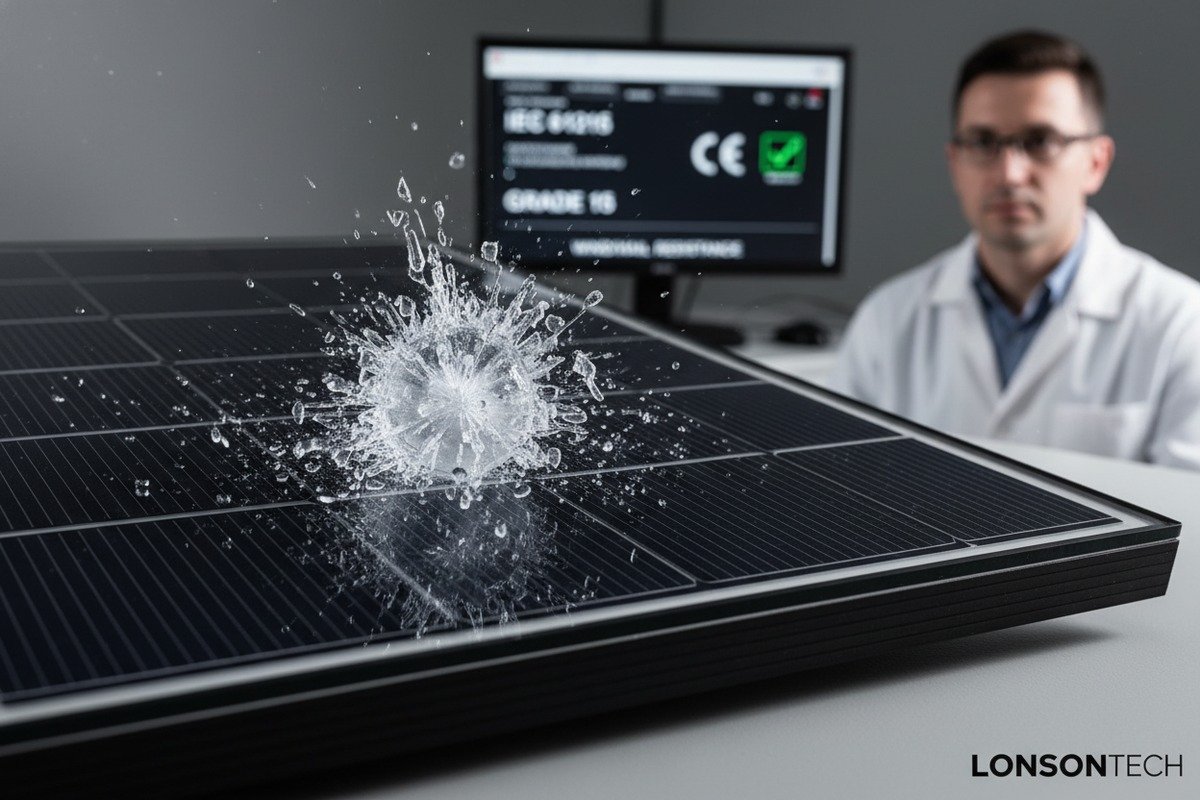
For European compliance, request IEC 61215 and IEC 61730 for photovoltaic performance and safety, CE marking under the Construction Products Regulation (CPR), TUV certification, fire classification per EN 13501-1, and wind/snow load test reports per EN 1991. These cover both the PV and building-material sides of solar roof shingles.
The Dual-Certification Challenge
This is the number one compliance pain point we hear from European distributors. Solar roof shingles sit at the intersection of two regulatory worlds: photovoltaic equipment and construction products. A product can pass all IEC electrical tests but still be rejected at a building inspection if it lacks proper fire rating or structural load documentation.
In France, for example, the CSTB (Centre Scientifique et Technique du Bâtiment) may require an Avis Technique for novel roofing products. In Germany, the DIBt approval matters. These are above and beyond CE marking.
Essential Certification Checklist
| Certification / Standard | What It Covers | Why It Matters |
|---|---|---|
| IEC 61215 6 | PV module design qualification and type approval | Proves electrical performance and durability under standard test conditions |
| IEC 61730 | PV module safety qualification | Ensures the product will not cause fire or electrical hazard |
| CE Marking (CPR) | Construction product compliance in the EU | Legally required for products permanently installed in buildings |
| EN 13501-1 | Fire classification of construction products | Determines the fire rating (A1 to F) needed for roofing use |
| EN 1991 (Eurocode 1) 7 | Actions on structures — wind and snow loads | Validates structural integrity under regional climate loads |
| TUV Rheinland / TUV SÜD | Third-party testing and certification | Widely recognized in Europe; adds buyer and end-user confidence |
| ISO 9001 / ISO 14001 8 | Quality and environmental management systems | Demonstrates factory-level process control and sustainability commitment |
How to Verify Certificates Are Genuine
Do not just accept a PDF. Cross-check the certificate number on the issuing body's online database. TUV, for example, maintains a public certificate search tool. Also confirm the certificate covers the exact model and specification you plan to order — not a different product line from the same factory.
At our facility, we maintain CE and TUV certifications for our core solar shingle lines and proactively update them when specs change. We also provide hail resistance test reports (35mm ice ball impact) and wind resistance data (Grade 15, approximately 60 m/s) because these are the questions European building inspectors ask first.
Regional Nuances
France, Germany, the Netherlands, and Italy each have slightly different building code interpretations. A good OEM partner will know these differences and help you prepare the right documentation package for your target market. Ask your supplier: "Have you exported this exact product to my country before? Can you share the customs clearance and building approval documentation?"
If they hesitate, you may need to budget for additional third-party testing in Europe, which adds cost and time.
How can I verify that the supplier will maintain aesthetic consistency and color matching for my brand?
Batch color variation is the silent profit killer in the solar shingle business. We learned this lesson early when a European client rejected an entire container because the charcoal tone shifted slightly between production runs.
To verify aesthetic consistency, request a sealed reference sample as a contractual color standard, demand Delta E (ΔE) color deviation limits in your purchase agreement, ask about the supplier's glass coating process controls, and insist on pre-shipment visual inspections with photographic documentation under standardized lighting.
Why Color Matters More Than You Think
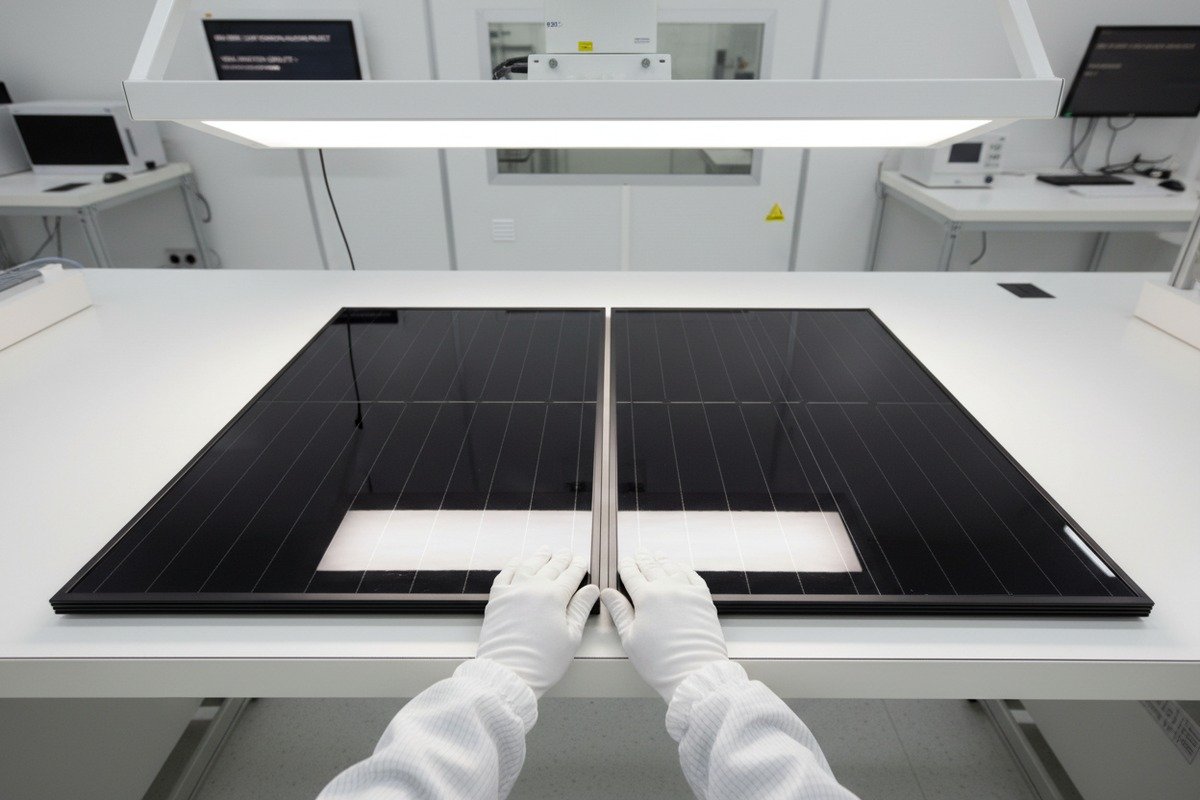
European homeowners choose solar shingles over standard panels primarily for looks. A deep obsidian black shingle that seamlessly mimics traditional slate creates curb appeal. But if tiles from batch one are warm charcoal and tiles from batch three are cool graphite, the finished roof looks patchy. The property owner rejects it. The contractor demands replacement. And the brand owner — you — absorbs the cost.
The root cause is usually the anti-reflective or colored glass coating. Different coating thicknesses, furnace temperatures, or raw glass suppliers can shift the final appearance. Without tight process controls, every batch is a gamble.
How Our Production Line Controls Color
Our anti-glare coating process uses spectrophotometer readings at three checkpoints: raw glass inspection, post-coating measurement, and post-lamination final check. We set a ΔE tolerance of ≤1.5 for all OEM orders. Any tile outside that range is diverted to our non-branded stock.
Here is what to include in your supplier agreement:
Color Control Specification Checklist
| Control Point | Requirement | How to Verify |
|---|---|---|
| Reference sample | Sealed and signed by both parties | Store one set at your office and one at the factory |
| ΔE tolerance | ≤1.5 (imperceptible to the human eye under normal conditions) | Request spectrophotometer reports per batch |
| Glass supplier consistency | Same raw glass source across all batches | Ask for material traceability certificates |
| Coating process | Automated thickness control with real-time monitoring | Verify during factory audit |
| Pre-shipment inspection | Photos under D65 standard illumination | Hire a third-party QC inspector or use your own |
| Tile surface finish | Uniform semi-reflective or matte, no visible cell misalignment | Check EL (electroluminescence) images for cell placement consistency |
Texture and Profile Consistency
Color is not the only aesthetic variable. The tile profile — whether it is a flat shingle, S-Tile, or Roman Tile hook — must be dimensionally identical across production runs. Even a 1mm deviation in the overlap edge can create visible shadow lines on the finished roof.
Ask the supplier about their glass tempering molds and frame stamping dies. Are they dedicated to your product, or shared across multiple orders? Dedicated tooling costs more upfront but guarantees dimensional repeatability.
Request a Pilot Batch
Before committing to a full container order, request a pilot batch of 50–100 pieces. Install them on a test section or display rack. Examine them at different times of day under natural light. This small investment can save you from a catastrophic field rejection.
We routinely offer pilot production runs to new OEM partners. It builds trust on both sides and catches any aesthetic issues before they scale.
Will the manufacturer provide physical samples and technical support to validate the installation process for my project?
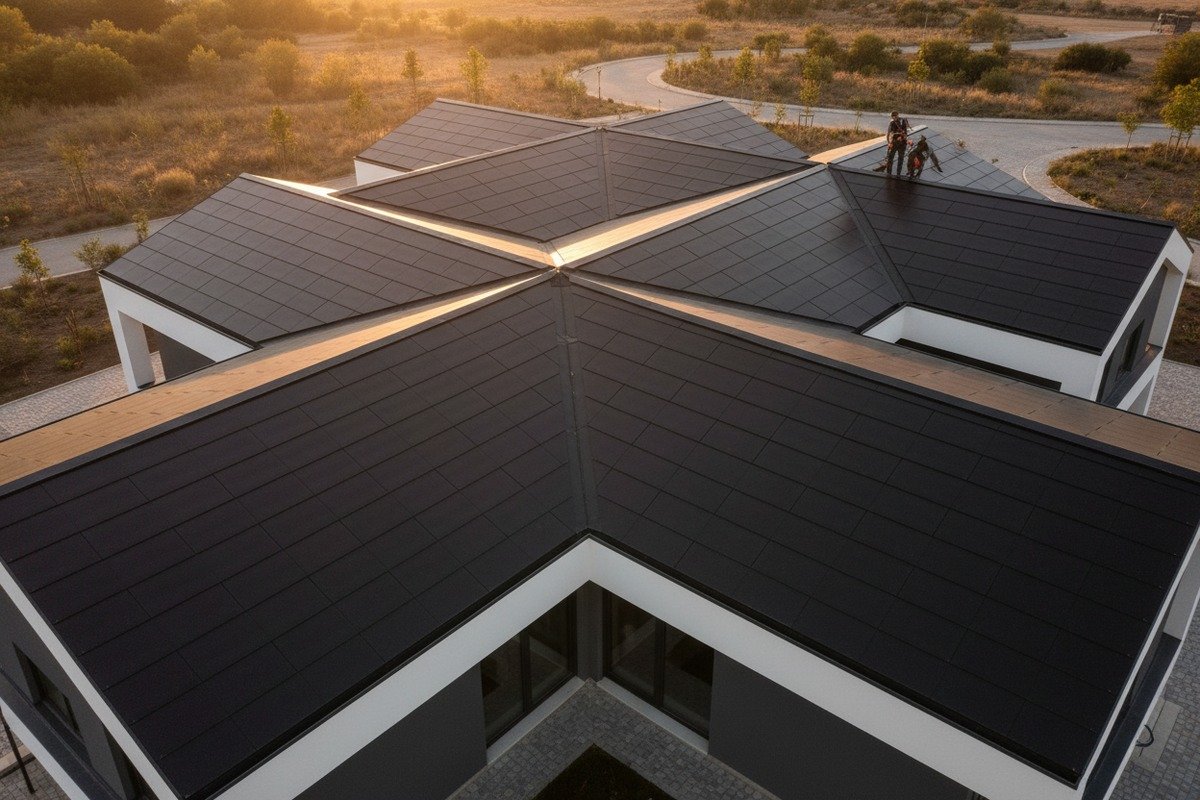
When we ship samples to a new partner, we do not just send tiles in a box. We include a full installation kit — mounting clips, wiring harness, waterproof gaskets, and a step-by-step manual — because the real test happens on the roof, not on a desk.
A reliable manufacturer will provide physical product samples with all mounting accessories, detailed installation manuals with wiring diagrams, remote or on-site technical support during your first installation, and structural load calculation assistance tailored to your regional building codes and roof geometry.
Why Samples Alone Are Not Enough
Receiving a single shingle tile tells you about appearance and weight. But it tells you nothing about how four tiles interlock, how water drains at the overlap seam, or how the MC4 connectors 9 route beneath the tile when laid at a 25-degree pitch. Installation validation requires a multi-tile test assembly.
Ask the supplier to send at least 6–10 sample tiles so you can build a small mock-up. Better yet, request a "starter kit" that includes edge tiles, ridge tiles, and standard field tiles. This lets your installation team evaluate the full system, not just one component.
What Technical Support Should Look Like
Good technical support goes far beyond a PDF manual. Here is what to expect from a capable OEM partner:
- Pre-installation: Roof layout drawings showing tile placement, string configurations, and flashing details for your specific project.
- During installation: Video call support with a factory engineer who can answer real-time questions about wiring, sealing, and structural attachment.
- Post-installation: Commissioning checklist, IV curve testing guidance, and warranty activation documentation.
Our team provides 24/7 after-sales support via WhatsApp, email, and video call. For large first-time orders, we have sent engineers to European project sites to supervise the initial installation and train local crews.
Sample Evaluation Checklist
When your samples arrive, evaluate them systematically:
- Physical integrity: Check for micro-cracks using an EL tester if available. Inspect glass edges for chips from shipping.
- Dimensional accuracy: Measure length, width, and thickness against the spec sheet. Tolerance should be within ±1mm.
- Interlocking fit: Assemble multiple tiles and check overlap, gap uniformity, and drainage channel alignment.
- Electrical output: Flash test each sample tile and compare to the rated wattage. Accept deviation within ±3%.
- Waterproof test: Simulate rain on your mock-up assembly. Observe water flow at joints, fastener points, and cable entry points.
- Mounting system: Test the hook or clip mechanism on a rafter mock-up. Confirm compatibility with standard European batten spacing (e.g., 335mm or 345mm depending on the region).
Installation Complexity and Labor Cost Impact
European labor costs for roofing work range from €40 to €80 per hour. If the shingle interlocking design is poorly engineered, installers spend extra time on each tile. Over a 150 m² roof, even 30 extra seconds per tile adds hours of labor. This directly cuts into your profit margin.
A well-designed solar shingle should install no slower than a traditional concrete or slate tile. Our interlocking rail system allows each tile to click into place with a single motion, and pre-wired MC4 connectors eliminate on-roof soldering. Ask your supplier for a documented installation time per square meter. If they cannot provide this figure, they likely have not optimized the system for real-world conditions.
Shipping and Packaging for Fragile Samples
Solar shingles contain tempered glass 10 and are heavy — typically 16 to 18 kg per piece. Ask the supplier how they package samples for international courier shipment. Proper packaging includes individual foam cradles, corner protectors, and a rigid outer crate. If your samples arrive damaged, it signals how the full container shipment might perform.
At our facility, we use custom wooden crates with internal foam dividers for sample shipments. For full container loads, we conduct drop and vibration testing on the packaging design to simulate ocean freight conditions and ensure breakage stays below 0.5%.
Conclusion
Verifying a China solar roof shingle supplier's OEM capability takes structured effort — but it protects your brand, your margins, and your reputation in the European market for decades to come.
Footnotes
1. Replaced with the official European Commission website detailing the Construction Products Regulation (CPR). ↩︎
2. Describes the European standard for classifying the reaction to fire of construction products. ↩︎
3. Explains Delta E as a metric for color accuracy and its importance in visual consistency. ↩︎
4. Replaced with Wikipedia definition of Original Equipment Manufacturer for authoritative explanation. ↩︎
5. Authoritative source for verifying Chinese company registration and credit information. ↩︎
6. Replaced with an authoritative government source (OSTI.gov) explaining IEC 61215 design qualification and stress tests for solar modules. ↩︎
7. Provides an overview of Eurocode 1 for actions on structures, including wind and snow loads. ↩︎
8. Compares and contrasts ISO 9001 (quality) and ISO 14001 (environmental) management systems. ↩︎
9. Replaced with Wikipedia for an authoritative explanation of MC4 connectors. ↩︎
10. Replaced with Wikipedia for an authoritative explanation of tempered glass. ↩︎