
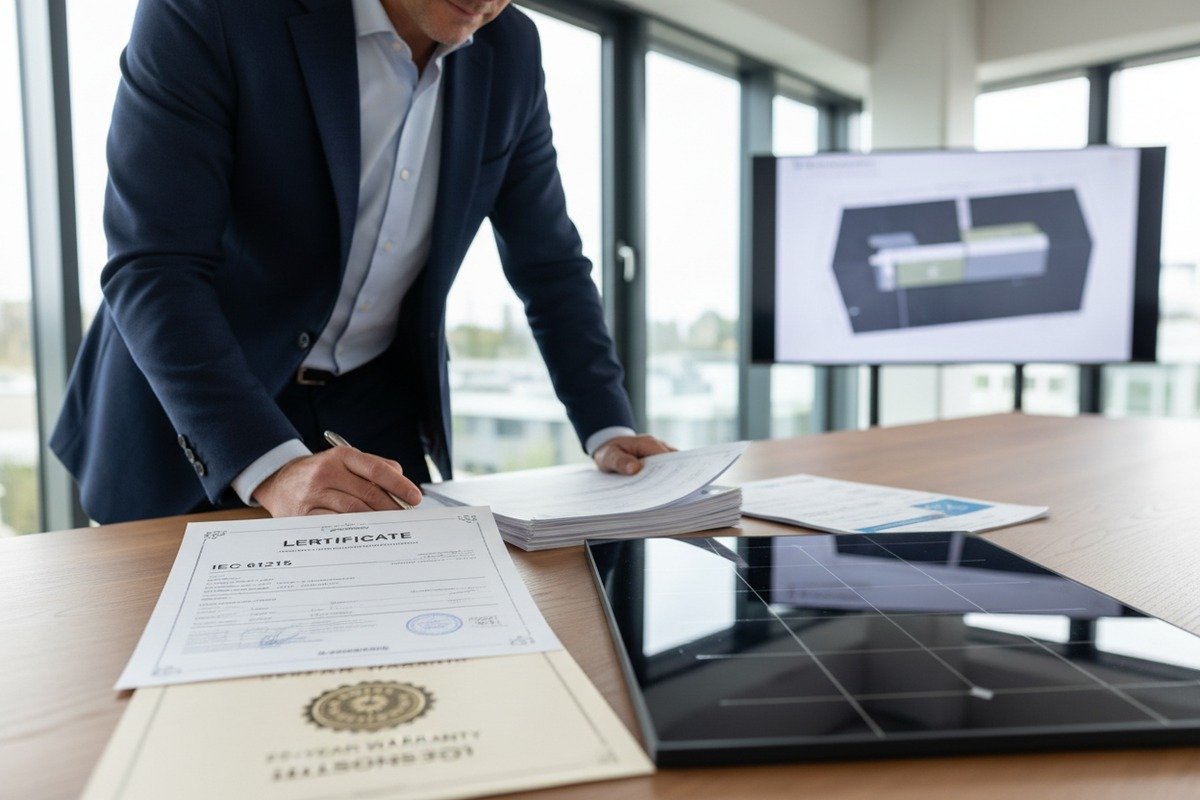
Every year, our engineering team reviews damage reports from European storms that shatter inadequately tested solar roofing POE (polyolefin elastomer) 1. The photos are painful — cracked glass, exposed cells, water pouring into living rooms. These failures are preventable. Yet buyers still receive products with vague certifications and hollow promises. The problem is not a lack of standards. The problem is that most purchasers do not know exactly what to demand, what to verify, and where the gaps hide.
To verify solar roof shingles meet European hail resistance standards, demand IEC 61215 and IEC 61730 certificates, confirm the product appears on national hail registers, request independent lab reports for your specific production batch, and examine the warranty for explicit hail damage clauses covering at least 25 years.
This guide walks you through every step. We cover the exact certifications, how to spot fake test results, what material properties matter, and how to read the fine print in your warranty. Let’s start with the certifications themselves.
Which specific TUV or IEC certifications should I demand to prove hail resistance?
When we prepare documentation packages for European distributors, the first question is always about certifications. It is the right question. But most buyers stop at asking "Do you have CE?" That is not enough.
You should demand IEC 61215 as the mandatory baseline for hail resistance, IEC 61730 for electrical safety, and look for voluntary higher hail classes such as HW 3 or HW 4 certified by TÜV Rheinland, VDE, or Fraunhofer — especially if your installation is in a hail-prone region like the Alps or Central European plains.
The Mandatory Baseline: IEC 61215
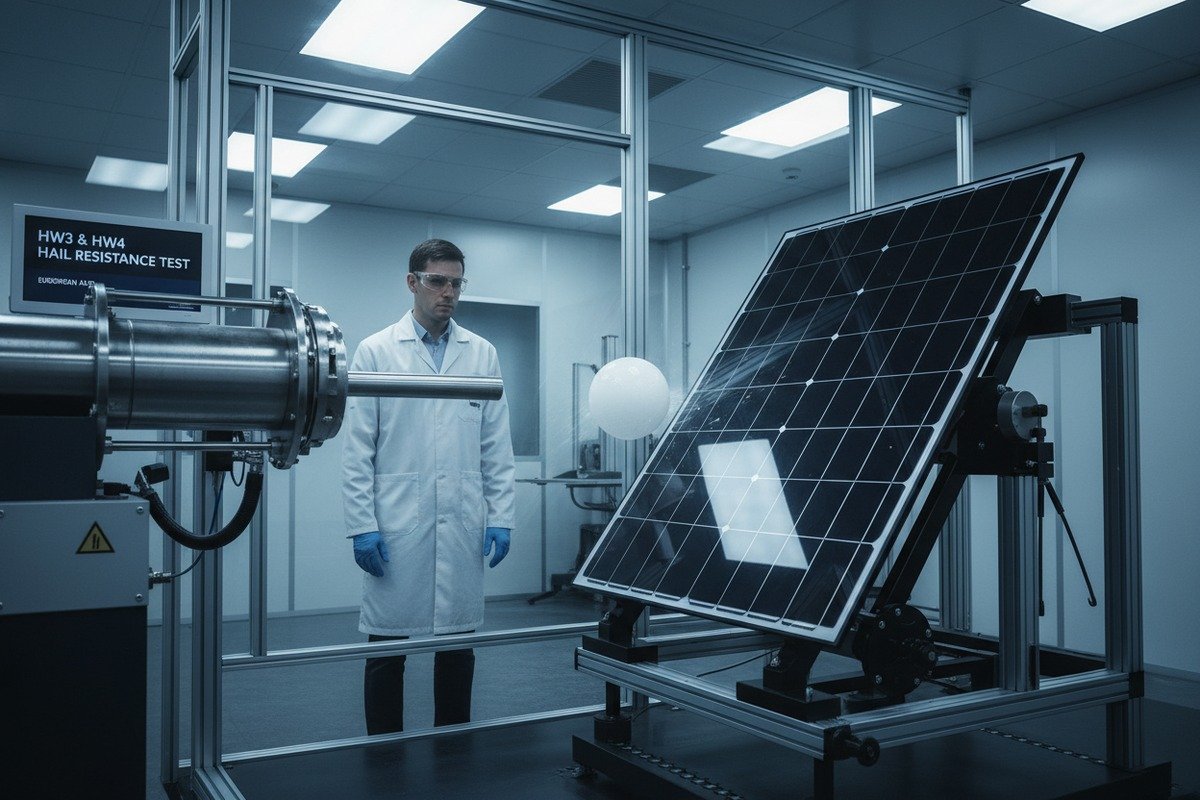
IEC 61215 2 is the entry ticket to the European solar market. Every photovoltaic module — including BIPV solar shingles — must pass this standard to carry CE marking. The hail test within IEC 61215 fires 25mm ice balls weighing 7.5 grams at 23 m/s (about 83 km/h) at 11 specific points on the module. After impact, the module must show no visible damage and no measurable performance loss.
This sounds robust. But here is the catch: real European hailstorms regularly produce hailstones of 30mm, 40mm, or even larger. The IEC 61215 test simulates a moderate storm, not an extreme one.
Voluntary Hail Classes: HW 2, HW 3, and HW 4
European testing bodies have created additional voluntary hail classifications that go beyond IEC 61215. These classes are critical for buyers in high-risk areas.
| Hail Class | Ice Ball Diameter | Ice Ball Weight | Impact Speed | Typical Glass Build |
|---|---|---|---|---|
| IEC 61215 (Baseline) | 25 mm | 7.5 g | 23 m/s | 1.6+1.6 mm or thinner |
| HW 3 | 30 mm | 12.3 g | 29.2 m/s | 2+2 mm dual-glass |
| HW 4 | 40 mm | 29 g | 27.5 m/s | 3.2 mm glass-foil or thicker |
| HW 5 | 50 mm | 56 g | 31 m/s | Specialty builds |
Our solar roof shingles are tested to withstand 35mm hail, which sits between HW 3 and HW 4. We chose this threshold deliberately — it covers the vast majority of European hail events while keeping the product weight suitable for residential roof structures.
Which Testing Bodies Should You Trust?
Not all test labs carry the same weight with European insurers and building authorities. The three most recognized are:
- TÜV Rheinland — the gold standard for PV module testing in Europe.
- VDE (Verband der Elektrotechnik) — highly respected in Germany and growing in influence.
- Fraunhofer ISE — independent research institute with deep credibility.
When a supplier shows you a certificate, check the issuing body. If it is from an unrecognized lab or a self-declared test, treat it as a red flag. Our own products carry CE and TÜV certification 3 because we know European buyers — and their insurers — will not accept anything less.
What About IEC 61730?
IEC 61730 4 is the safety standard. It covers electrical insulation, fire resistance, and mechanical integrity. It does not replace IEC 61215 for hail testing, but it complements it. A product that passes IEC 61215 but fails IEC 61730 cannot be legally installed in the EU. Always demand both.
How can I verify that the 35mm hail impact test results are authentic for my batch?
During our 20 years of production experience, we have learned that certificates alone are not enough. A certificate proves a sample passed a test. It does not prove your specific shipment was built to the same standard.
To verify authentic hail test results for your batch, request the full test report with serial numbers, cross-reference the product model on national hail registers (such as hagelregister.ch), ask for batch-specific quality control documentation, and consider commissioning an independent third-party inspection before shipment.
Step 1: Request the Full Test Report, Not Just the Certificate
A certificate is a summary. The full test report contains critical details:
- Exact model and serial numbers of tested samples.
- Number and location of impact points (IEC 61215 requires 11 points).
- Pre-test and post-test performance measurements (power output, insulation resistance).
- Photographic evidence of each impact site.
- Electroluminescence (EL) images 5 showing whether micro-cracks formed.
If a supplier cannot provide this report, or if the model number on the report does not match what you are buying, walk away.
Step 2: Cross-Reference on Hail Registers
Switzerland, Austria, and Germany maintain public hail registers. These are searchable databases of products that have been independently verified for hail resistance. The most important ones are:
| Register | Country | URL | What It Lists |
|---|---|---|---|
| VKF Hail Register | Switzerland | hagelregister.ch 6 | PV modules, roofing, facades with hail class ratings |
| Austrian Hail Register | Austria | hagelregister.at | Similar to Swiss register, recognized by insurers |
| German Hail Register | Germany | hagelregister.de | Growing database, increasingly required by insurers |
If your solar shingle model appears on these registers with the correct hail class, that is strong independent verification. If it does not appear, ask your supplier why.
Step 3: Batch-Specific Quality Control
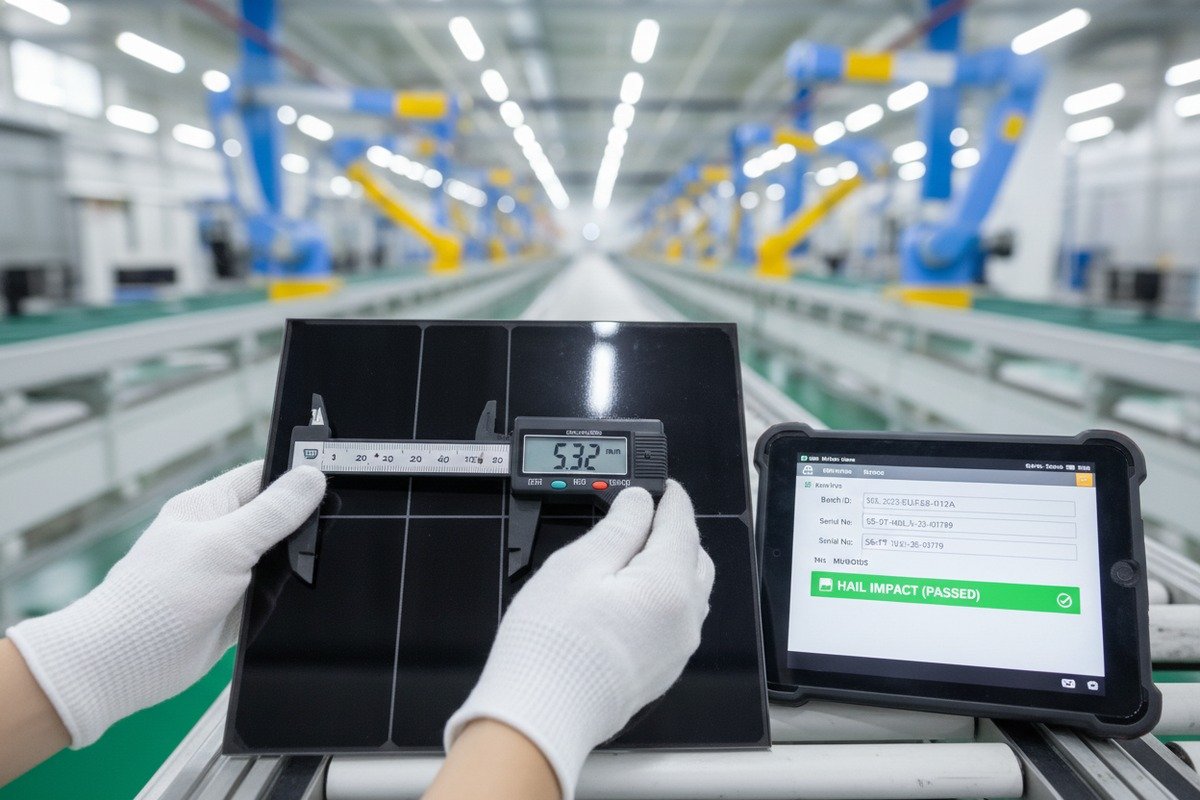
At our factory, every production batch undergoes in-line quality checks including EL imaging to detect micro-cracks before packaging. We provide batch-specific QC reports upon request. This is standard practice for serious manufacturers. If your supplier cannot provide batch documentation, the risk of receiving inconsistent quality is real.
Step 4: Independent Third-Party Inspection
For large orders — especially first-time purchases — we recommend hiring an independent inspection company (like SGS, Bureau Veritas, or TÜV) to visit the factory before shipment. They can verify that the actual production matches the certified design. This costs a fraction of what a failed installation would.
Watch for These Red Flags
- Test reports with blurry or missing serial numbers.
- Certificates issued by unknown or non-accredited labs.
- Suppliers who refuse to share full test reports, citing "confidentiality."
- Products with no listing on any European hail register.
- Inconsistencies between the certified model name and the product label.
We have seen competitors present test reports for one product while shipping a different, cheaper version. This is not theoretical. It happens. Protect yourself.
What physical material properties should I check to ensure my shingles withstand extreme European storms?
Our R&D engineers spend months selecting glass types, encapsulant films, and cell interconnection methods. Every material choice affects how a shingle responds to a 40mm hailstone hitting at 100 km/h. The physics are unforgiving.
Check glass thickness (minimum 2+2mm dual-glass for HW 3), tempered glass grade, encapsulant type (EVA or POE), cell technology (half-cut or shingled to resist micro-cracking), frame rigidity, and the interlocking or mounting system's wind uplift rating — these properties collectively determine real-world storm survival.
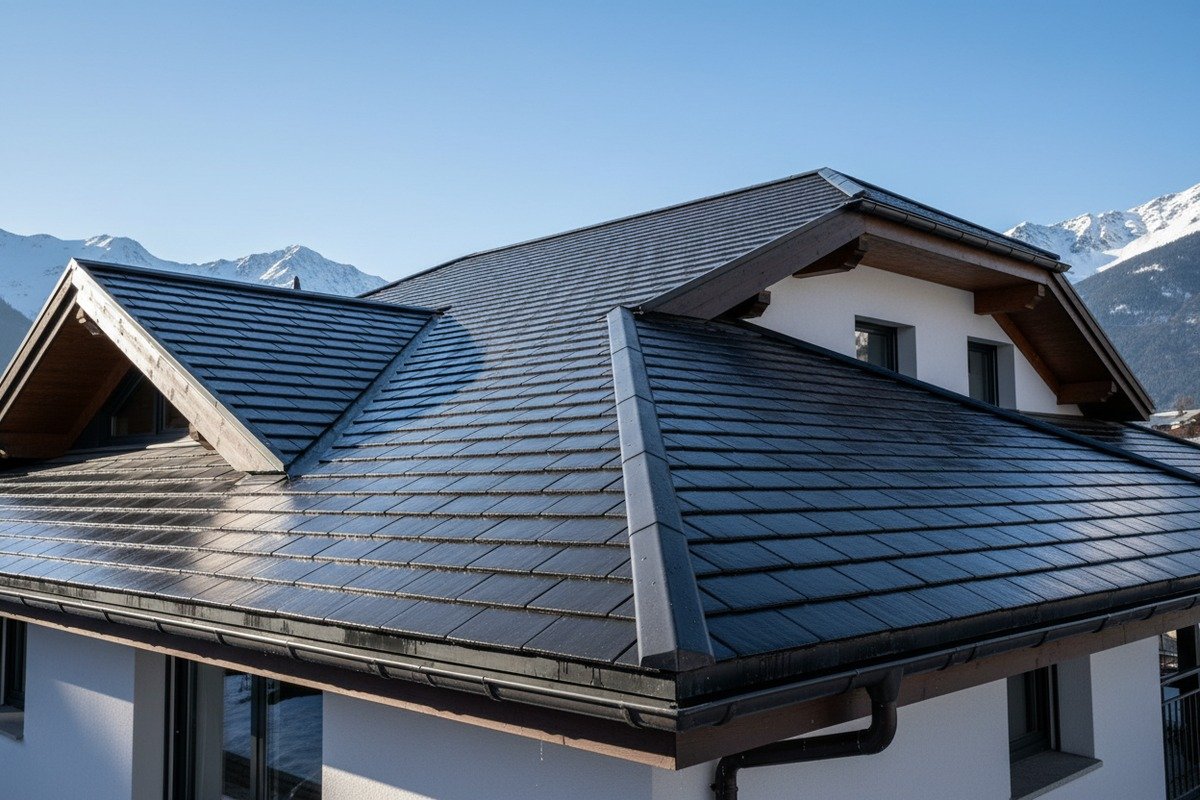
Glass: The First Line of Defense
Glass thickness is the single most important factor in hail resistance. Thicker glass absorbs more impact energy before cracking. But thickness alone is not the full story — the type of glass matters just as much.
| Glass Configuration | Hail Class Achievable | Weight per m² | Notes |
|---|---|---|---|
| 1.6+1.6 mm dual-glass | IEC 61215 only | ~3.5 kg | Lightweight, but limited protection |
| 2+2 mm dual-glass | HW 3 (30 mm) | ~5 kg | Good balance of weight and protection |
| 3.2 mm glass + backsheet | HW 4 (40 mm) | ~5.5 kg | High protection, traditional panel build |
| 3.2+3.2 mm dual-glass | HW 4+ | ~8 kg | Maximum protection, heavy |
Our solar shingles use a construction designed to handle 35mm hail impacts. The front glass is tempered — meaning it has been heat-treated to be roughly four to five times stronger than regular annealed glass 7. Always ask if the glass is fully tempered, not just heat-strengthened. There is a significant difference in impact resistance.
Encapsulant: The Hidden Layer
Between the glass and the solar cells sits the encapsulant. This polymer layer holds everything together and absorbs shock. The two main options are EVA (ethylene-vinyl acetate) 8 and POE (polyolefin elastomer).
POE has superior moisture resistance and maintains flexibility in cold temperatures, which matters in Northern European winters. When hail hits cold glass, a rigid encapsulant can transmit more stress to the cells. A flexible one cushions the blow. We use encapsulant materials optimized for temperature cycling between -40°C and +85°C.
Solar Cell Design: Micro-Cracks Are the Silent Killer
A hailstone may not crack the glass but can still create micro-cracks in the silicon cells beneath. These invisible fractures cause progressive power loss — sometimes 5% to 15% over a few years. Half-cut cells and shingled cell designs are more resistant to micro-cracking because the smaller cell segments distribute stress more evenly.
After any major hailstorm, we recommend electroluminescence inspection to detect micro-cracks. This should be part of your maintenance plan.
Wind Resistance: Hail Rarely Comes Alone
Extreme European storms combine hail with high winds. Storm Ciaran in 2023 brought winds exceeding 200 km/h. If your shingles lack proper wind uplift resistance 9, the wind can lift edges, creating entry points for hail damage and water infiltration.
Our shingles are rated for Grade 15 wind resistance. The interlocking design and concealed fastener system prevent uplift. When evaluating any product, ask for the wind load test results alongside hail data. A shingle that survives hail but flies off in wind is worthless.
Roof Orientation and Real-World Exposure
South-facing and west-facing pitched roofs in Europe are most exposed to hail-bearing storms. Studies show damage risk roughly doubles on these exposed faces compared to sheltered orientations. If your project involves a steep south-facing roof in a hail-prone region, push for HW 4 or higher.
How do I confirm my supplier's 25-year warranty actually covers structural damage from hail?
We offer a 25-year product warranty because we trust our engineering. But I have seen warranty documents from other suppliers that sound generous until you read the exclusions. The devil lives in the fine print.
Confirm your supplier's 25-year warranty covers hail damage by checking for explicit hailstone size thresholds, ensuring "structural damage" is clearly defined, verifying the claim process includes timelines and replacement commitments, and confirming the warranty is backed by insurance or a bankable guarantee — not just the supplier's word.
What Should the Warranty Document Explicitly State?
A meaningful hail warranty must include specific language. Vague promises like "covers weather damage" are nearly useless. Here is what to look for:
- Covered hailstone size: The warranty should state the maximum hailstone diameter covered (e.g., "structural damage from hailstones up to 35mm").
- Definition of structural damage: Does it include glass cracking, delamination, water ingress, and cell micro-cracking? Or only visible breakage?
- Performance guarantee after hail: Does the warranty guarantee power output will remain above a threshold (e.g., 80% of rated power at year 25) even after documented hail events?
- Claim process: Clear steps, required documentation (photos, weather reports), and response timelines.
- Replacement vs. repair: Will the supplier replace the damaged shingle, or only provide a partial credit?
Common Warranty Traps
Many buyers discover the hard way that their warranty is not what they thought. These are the most common traps:
"Act of God" exclusions. Some warranties exclude damage from "extreme weather events" or "acts of God." If hail is excluded as an extreme event, your warranty is worthless in precisely the situation you need it.
Pro-rated depreciation. A 25-year warranty that depreciates the product value annually might only cover 20% of replacement cost by year 15. Ask if coverage is linear or full replacement.
Supplier insolvency risk. A warranty is only as good as the company behind it. Our team of 100 employees and 20 years of operational history provide stability, but some newer suppliers may not survive 25 years. Ask whether the warranty is underwritten by a third-party insurer.
Questions to Ask Your Supplier
Before signing any contract, put these questions in writing and demand written answers:
- Does the warranty explicitly cover hail damage up to a stated diameter?
- Is micro-cracking from hail covered, or only visible glass breakage?
- What documentation do I need to file a claim?
- What is the guaranteed response time for warranty claims?
- Is the warranty transferable if I sell the property?
- Is there a third-party insurance policy backing the warranty?
- What happens to the warranty if the supplier ceases operations?
Insurance and Premium Benefits
Products listed on European hail registers with HW 3 or HW 4 classification often qualify for reduced building insurance premiums. This is a tangible financial benefit that offsets the higher cost of certified products. We recommend asking your insurer specifically about discounts for hail-registered solar roofing before making your purchase decision.
When we deliver DDP to European destinations, we include all certification documentation needed for insurance filings. This saves our clients time and ensures a smooth process with their local insurers.
Long-Term Maintenance Obligations
Most warranties require the buyer to perform regular maintenance — typically an annual visual inspection and periodic electrical testing per IEC 62446 10. If you skip maintenance, the supplier can void the warranty. Make sure you understand these obligations and budget for them.
Conclusion
Verifying hail resistance requires specific actions: demand IEC 61215 and higher hail class certifications, validate test reports against hail registers, inspect material properties, and scrutinize every warranty clause before you commit.
Footnotes
1. AZoM provides a detailed article on the properties and applications of polyolefin elastomers (POE). ↩︎
2. Official standard for PV module design qualification. ↩︎
3. Explains the importance of TÜV certification for European buyers. ↩︎
4. Official standard for PV module safety qualification. ↩︎
5. Technique for detecting micro-cracks and damage in solar cells. ↩︎
6. Official website for the Swiss hail register, providing information on hail-tested building components. ↩︎
7. Wikipedia provides an authoritative and detailed explanation of annealed glass. ↩︎
8. Wikipedia offers a comprehensive overview of ethylene-vinyl acetate (EVA). ↩︎
9. Kreo Glossary offers a clear definition and purpose of wind uplift. ↩︎
10. Official standard for PV system testing, documentation, and maintenance. ↩︎