Every week, our sales team fields urgent calls from distributors who just discovered their landed cost is 40–60% higher than the factory quote Anti-Dumping and Countervailing Duties (AD/CVD) 1. The frustration is real. You budget for a container of solar roof shingles, and then customs duties, Section 301 tariffs 2, anti-dumping levies, and processing fees stack up like hidden tolls on a highway. One European roofing company we work with almost abandoned their first US-bound project because the tariff math simply did not add up at the quote stage.
Solar roof shingles sourced from China and imported into the United States face multiple layered costs: base customs duties of 0–2.5%, Section 301 tariffs up to 50–60%, potential anti-dumping and countervailing duties that vary by company, merchandise processing fees, and state-level sales taxes of 0–10% on the landed value.
Understanding each layer is essential before you sign a purchase order. Below, we break down HS code classification 3, total tax costs, DDP shipping options, and how to check for anti-dumping exposure — step by step, with real numbers.
How do I find the correct HS code for solar shingles to ensure I pay the right duty?
Getting the HS code wrong on solar roof shingles is one of the most expensive mistakes an importer can make. Our export compliance team has seen shipments detained at US ports simply because the declared code did not match the product.
Solar roof shingles typically fall under HS 8541.43 (photovoltaic cells assembled into modules) or HS 6808/6907 (roofing tiles with integrated solar), and the correct code determines whether your base duty is 0% or 2.5% — before any additional tariffs are applied.
Why classification is tricky for solar shingles
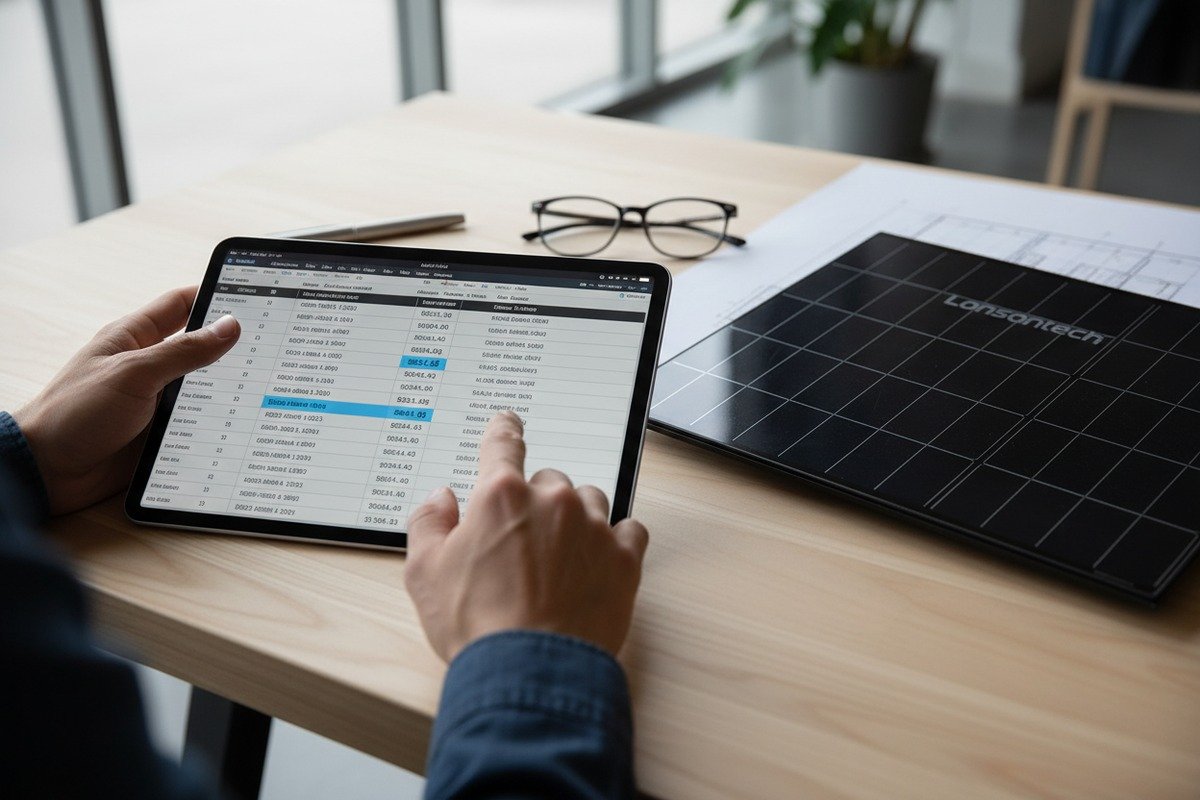
Solar roof shingles sit at the intersection of two product categories: building materials and photovoltaic equipment. A standard solar panel is clearly HS 8541.43. A ceramic roof tile is clearly HS 6907. But a solar roof shingle — a product that generates electricity and replaces traditional roofing — can be argued either way.
US Customs and Border Protection (CBP) 4 uses the product's "essential character" to decide. If the primary function is power generation, it goes under Chapter 85 (electrical machinery). If the primary function is roofing protection, it may fall under Chapter 68 or 69. In our experience shipping to over 30 countries, most customs authorities classify integrated solar shingles under HS 8541.43 because the photovoltaic function is the defining feature. However, this is not guaranteed.
How to get a binding ruling
The safest path is to request a binding ruling 5 from CBP before your first shipment. You submit a detailed product description, photos, and technical specs through the CBP CROSS (Customs Rulings Online Search System) database or via eRuling. The ruling is legally binding and prevents surprises at the port.
Common HS codes for solar roofing products
| Product Type | Likely HS Code | Base Duty Rate | Notes |
|---|---|---|---|
| Photovoltaic modules (standard panels) | 8541.43.0010 | 0% | Most common for solar products |
| Solar generators/inverters | 8501.31 | 2.5% | Applies if product includes inverter |
| Roofing tiles (non-solar, ceramic) | 6907.21 | 0–8.5% | Risk if misclassified |
| Solar roof shingles (integrated PV) | 8541.43 (most likely) | 0% base | Subject to Section 301 + AD/CVD on top |
| BIPV glass panels | 7007.19 or 8541.43 | 0–5% | Depends on essential character ruling |
What happens if you use the wrong code
If CBP reclassifies your shipment at the port, you face penalties, delays, and retroactive duty adjustments. We have seen cases where importers declared solar shingles under a roofing tile code to avoid Section 301 tariffs. CBP flagged the shipment, applied the correct PV classification, and charged the full Section 301 rate plus a penalty. The total additional cost was over 70% of the CIF value.
Our recommendation: always classify conservatively, get a binding ruling, and work with a licensed customs broker who has solar product experience.
What are the total VAT and import tax costs I should expect when sourcing from China?
When our clients ask for a price quote, the factory gate number is just the starting point. The real question — the one that determines whether the project is profitable — is the total landed cost after every tax and fee is added.
For solar shingles imported from China to the US, expect total additional costs of 30–65% above CIF value, comprising 0–2.5% base duty, 50–60% Section 301 tariffs, potential AD/CVD duties, a 0.3464% merchandise processing fee, a 0.125% harbor maintenance fee, and state sales tax of 0–10%.
The tariff stack explained
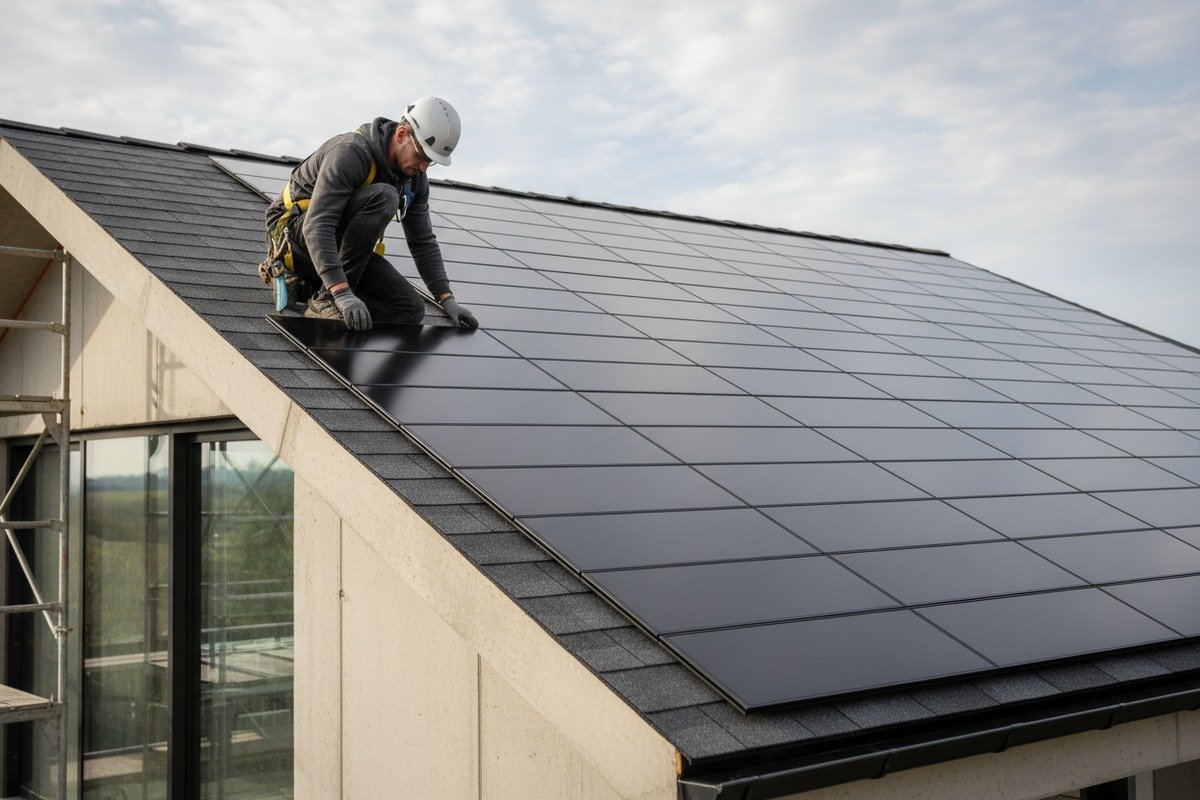
The US does not charge a federal VAT. But it stacks multiple tariff layers on Chinese solar products. Here is how each one works:
Section 301 tariffs were imposed starting in 2018 to address unfair trade practices. For solar components — polysilicon, wafers, cells, and modules — the rate has escalated dramatically. As of early 2025, polysilicon and wafers face a 50% Section 301 tariff, plus a 10% reciprocal tariff added in February 2025, bringing the effective rate to roughly 60% on key components. If your solar shingles contain Chinese-origin cells, this tariff applies to the full declared value.
Anti-Dumping and Countervailing Duties (AD/CVD) have been in place since 2012 on crystalline silicon cells and modules from China. Rates are company-specific. Some Chinese manufacturers face rates of 20–50%, while others face much higher assessments. These duties are separate from Section 301 and stack on top.
Base customs duty under the Harmonized Tariff Schedule 6 is typically 0% for PV modules under HS 8541.43. This is the one piece of good news.
Complete cost breakdown example
| Cost Component | Rate | On $10,000 CIF Shipment |
|---|---|---|
| Base customs duty (HS 8541.43) | 0% | $0 |
| Section 301 tariff | 50% | $5,000 |
| Reciprocal tariff (Feb 2025) | 10% | $1,000 |
| AD/CVD (estimated average) | 30% | $3,000 |
| Merchandise Processing Fee 7 | 0.3464% | $34.64 |
| Harbor Maintenance Fee (sea) | 0.125% | $12.50 |
| State sales/use tax (avg 6.5%) | 6.5% on landed cost | ~$1,238 |
| Total additional costs | — | ~$10,285 |
| Total landed cost | — | ~$20,285 |
In this scenario, the landed cost is more than double the CIF price. This is why so many importers get shocked when their first shipment clears customs.
China's export rebate changes add more pressure
Starting December 2025, China reduced the VAT export rebate on PV products from 13% to 9%. This does not directly appear as a US import tax, but it raises the factory price from Chinese suppliers. In practice, our production team absorbed part of this increase to remain competitive, but the market-wide effect has been a 3–5% rise in FOB prices.
State-level taxes matter too
The US has no federal VAT, but most states charge a sales or use tax on imported goods. California charges up to 10.25% in some jurisdictions. Texas charges 6.25% at the state level plus local additions. These apply on the landed cost — meaning they are calculated after all duties and fees are included. This final layer is often forgotten in budgeting.
The UFLPA compliance cost
The Uyghur Forced Labor Prevention Act 8 requires importers to prove their solar supply chain does not involve forced labor from the Xinjiang region. Over 80% of the world's polysilicon originates from this area. If you cannot provide full traceability documentation, CBP will detain your shipment. We maintain complete supply chain documentation for all our polysilicon sources and provide certificates of origin to every client. But the audit and documentation process itself adds cost and lead time — typically 2–4 weeks and $500–$2,000 in compliance consulting fees per shipment.
Can I use DDP shipping to simplify the customs clearance process for my solar roof project?
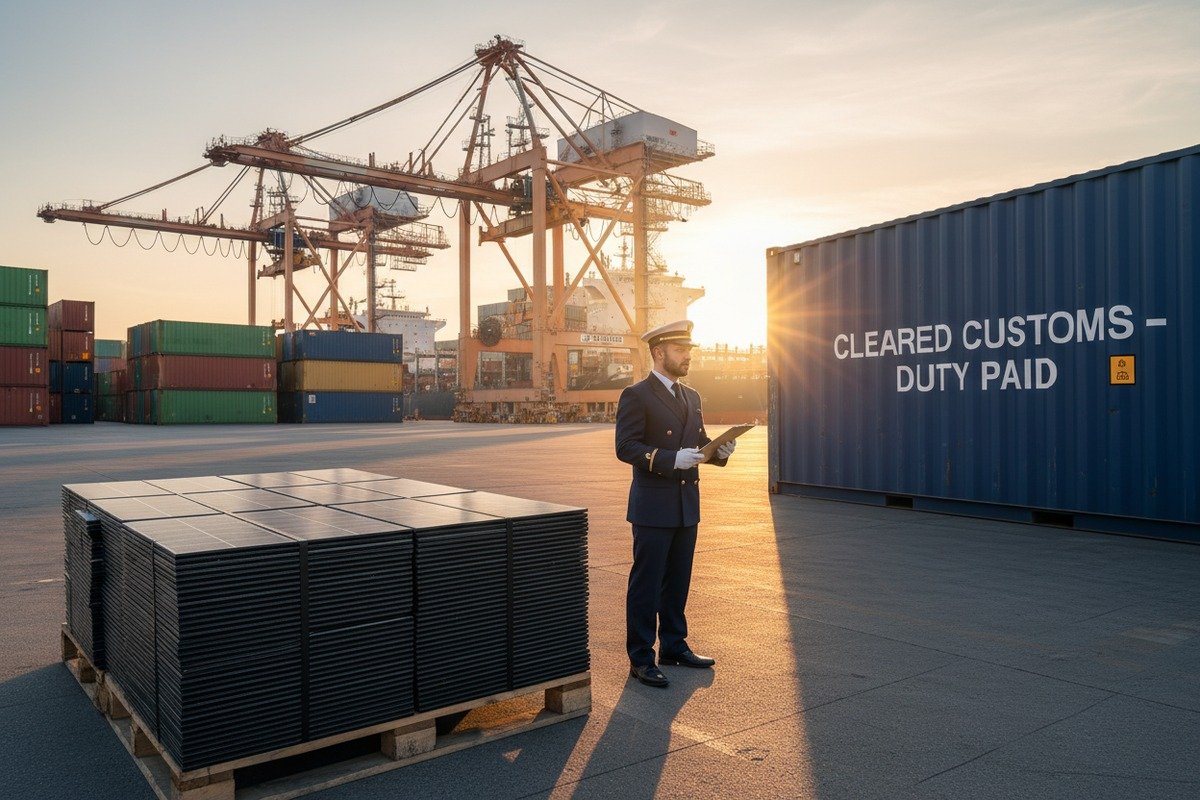
Our logistics department handles DDP (Delivered Duty Paid) 9 shipments every month for clients who want a single, all-inclusive price without the headache of navigating customs themselves. It is one of the most common requests we receive, especially from first-time importers.
Yes, DDP shipping transfers the entire customs burden — duties, tariffs, processing fees, and clearance paperwork — to the seller or freight forwarder, giving you a single landed price and significantly reducing your administrative risk and complexity.

How DDP works in practice
Under DDP Incoterms, the seller is responsible for everything: export clearance in China, ocean or air freight, import clearance in the destination country, payment of all duties and taxes, and delivery to the buyer's specified address. The buyer simply receives the goods.
For solar shingles, this is particularly valuable because the tariff environment is so complex. A single shipment may involve base duties, Section 301 tariffs, AD/CVD assessments, merchandise processing fees, harbor maintenance fees, and potentially UFLPA compliance documentation. Managing all of this requires expertise in both Chinese export regulations and US (or EU) import rules.
We offer DDP logistics services as part of our standard export package. Our freight partners handle the documentation, and we provide full supply chain traceability for UFLPA compliance. The client receives one invoice with no hidden charges.
DDP vs. other Incoterms for solar shingles
| Incoterm | Who Pays Freight? | Who Pays Duties? | Who Handles Customs? | Risk Level for Buyer |
|---|---|---|---|---|
| EXW (Ex Works) | Buyer | Buyer | Buyer | Highest |
| FOB (Free on Board) | Buyer | Buyer | Buyer (import side) | High |
| CIF (Cost, Insurance, Freight) | Seller | Buyer | Buyer | Medium |
| DDP (Delivered Duty Paid) | Seller | Seller | Seller | Lowest |
When DDP makes sense
DDP is ideal when you are importing solar shingles for a specific project with a fixed budget. You know exactly what you will pay. There are no surprises at the port. You do not need to hire a customs broker separately.
It also makes sense when the tariff situation is volatile. In 2025, tariff rates on Chinese solar products changed multiple times within months. Under CIF or FOB terms, the buyer absorbs that risk. Under DDP, the seller has already factored the current rates into the price.
When DDP might not be the best choice
DDP pricing includes a risk margin. The seller or freight forwarder will typically add 3–8% above the actual duty costs to cover potential rate changes or unexpected fees. If you have an experienced customs broker and want maximum control over costs, CIF plus your own clearance may save money.
Also, if you are importing large volumes regularly, you may qualify for programs like the US Foreign Trade Zone (FTZ) or bonded warehouse storage that can defer or reduce duties. These strategies are not available under DDP because the seller handles clearance before the goods reach you.
Our approach at Lonsontech
We provide a detailed DDP cost breakdown before the client commits. This includes the current tariff rates, freight costs, insurance, and all fees. If tariff rates change between the quote date and the shipping date, we communicate the adjustment immediately. Transparency is non-negotiable — our 25-year warranty means nothing if the client does not trust the invoice.
How do I check if my solar shingle order is subject to anti-dumping duties or trade barriers?
When we prepare shipment documentation for a new client, one of the first things our compliance team verifies is whether the specific product and its components fall under any active AD/CVD orders. This check can save tens of thousands of dollars in unexpected charges.
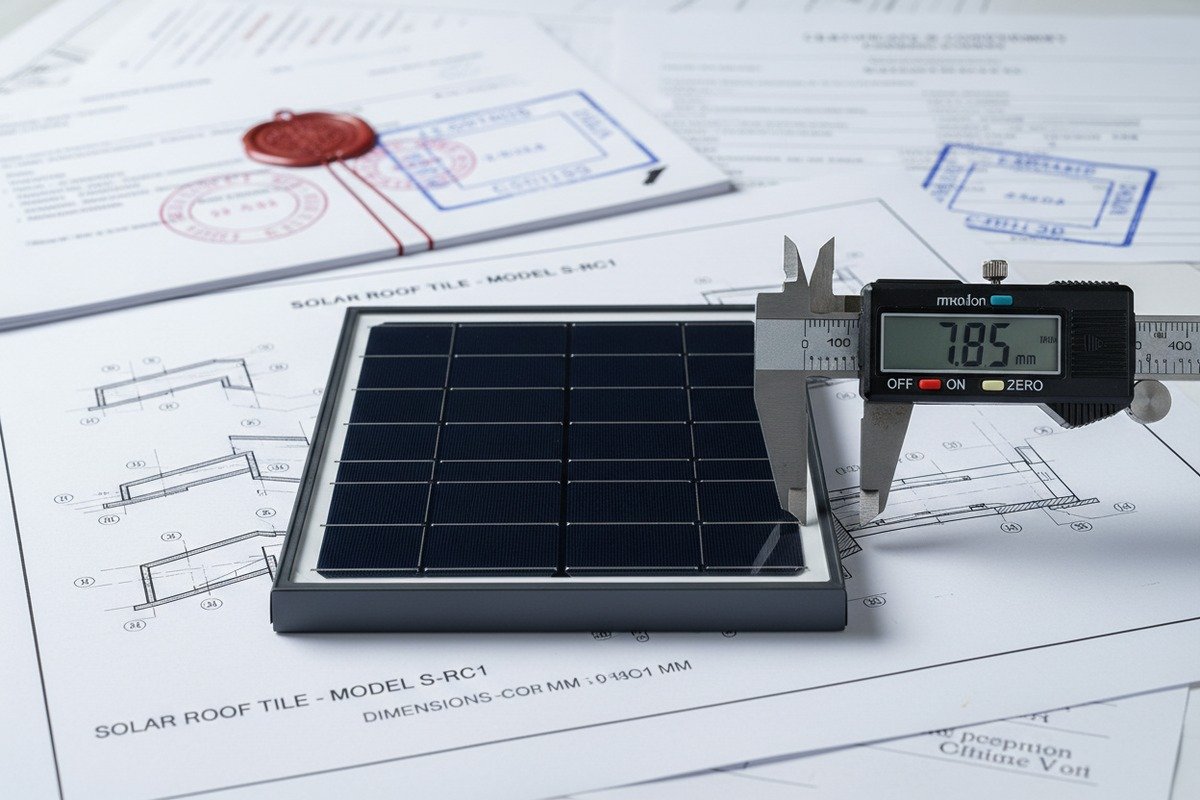
To check for anti-dumping duties, search the US International Trade Commission (USITC) AD/CVD database and CBP's ACE portal using your product's HS code; crystalline silicon solar cells and modules from China have been under active AD/CVD orders since 2012, with rates varying by manufacturer.
The AD/CVD landscape for solar products
Anti-dumping duties (AD) are imposed when a foreign manufacturer sells goods in the US below fair market value. Countervailing duties (CVD) are imposed when a foreign government subsidizes its manufacturers. For Chinese solar products, both have been in effect since 2012.
The original investigation targeted crystalline silicon photovoltaic cells 10 and modules. If your solar shingles use crystalline silicon cells — and most do — they are almost certainly covered by these orders.
How to verify your exposure
Step one is to identify your supplier's AD/CVD rate. The US Department of Commerce publishes company-specific rates. Some Chinese exporters have been individually investigated and received lower rates. Others receive the "China-wide" rate, which can be extremely high — sometimes exceeding 200%.
Here is the process:
- Go to the USITC AD/CVD database at usitc.gov
- Search for "crystalline silicon photovoltaic" or the relevant HS code (8541.43)
- Identify the active order and its case number
- Look up your specific supplier's rate in the Federal Register notices
- Cross-reference with CBP's ACE portal for current deposit rates
The Southeast Asia circumvention issue
Many importers tried to avoid China tariffs by sourcing from Vietnam, Malaysia, Thailand, and Cambodia — countries where Chinese-owned factories assembled modules using Chinese cells and wafers. In April 2025, the US Commerce Department finalized anti-circumvention duties on these shipments. The rates are staggering:
- Malaysia (e.g., Jinko Solar): 41.56%
- Thailand (e.g., Trina Solar): 375%+
- Cambodia: up to 3,521%
- Vietnam: varies by company, but significant
This effectively closed the "China proxy" loophole. If your supplier reroutes through Southeast Asia but uses Chinese-origin cells, you will likely face these duties.
What this means for solar shingle buyers
The practical impact is clear: any solar shingle containing Chinese-origin crystalline silicon cells faces a combined tariff burden that can easily exceed 60–80% of CIF value when you stack base duty + Section 301 + AD/CVD. This is why supply chain transparency is critical.
At Lonsontech, we provide full bill of materials documentation showing the origin of every component — cells, glass, encapsulant, junction box, and frame. This allows our clients' customs brokers to accurately assess duty exposure and file correct entries. We also maintain alternative cell sourcing arrangements for clients who need to minimize AD/CVD exposure, though this affects lead times and pricing.
Bonding requirements
When importing goods subject to AD/CVD, CBP requires a continuous bond or a single-entry bond sufficient to cover the estimated duties. For high-rate AD/CVD products, the bond amount can be substantial. Some importers have been required to post bonds equal to several times the shipment value. Work with your customs broker early to understand the financial requirements.
Conclusion
Sourcing solar roof shingles from China requires careful navigation of HS codes, stacked tariffs, AD/CVD orders, and compliance regulations. Work with experienced suppliers and customs brokers — the upfront diligence protects your margins and your project timeline.
Footnotes
1. Provides a general overview of anti-dumping and countervailing duties. ↩︎
2. Explains Section 301 tariffs and their implications for trade. ↩︎
3. Official explanation of the Harmonized System (HS) codes and their classification. ↩︎
4. Official website of the U.S. Customs and Border Protection. ↩︎
5. Explains the CBP Binding Ruling Program for importers to get classification decisions. ↩︎
6. Official Harmonized Tariff Schedule of the United States (HTS) website. ↩︎
7. Official information on the Merchandise Processing Fee charged by U.S. Customs and Border Protection. ↩︎
8. Official information from CBP regarding the Uyghur Forced Labor Prevention Act. ↩︎
9. Wikipedia page providing a definition and context for DDP Incoterms. ↩︎
10. Provides basic information on crystalline silicon photovoltaic cells from a government source. ↩︎